
What Happened and Why It Matters
RALEIGH, N.C. — North Carolina opened fiscal year 2025–26 on July 1 without a full state budget, an outcome driven by a months-long standoff between House and Senate Republicans over a proposed children’s hospital in Wake County and the size and timing of income tax cuts. When the temporary stopgap measure the legislature had approved in summer fell $319 million short of what NCDHHS needed to fund Medicaid, the state’s health department faced a choice: cut provider rates or wait.
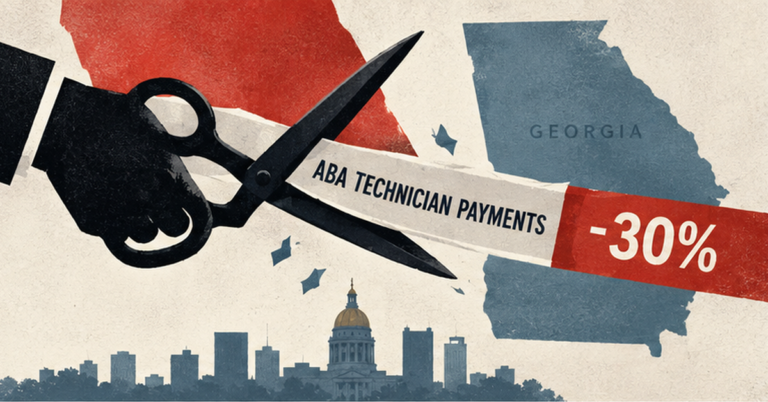
NCDHHS Secretary Devdutta “Dev” Sangvai chose to cut. On October 1, 2025, the agency implemented reductions of 3 percent to 10 percent across Medicaid providers statewide. Research-Based Behavioral Health Treatments — the category under which ABA therapy is billed — received the maximum 10 percent reduction. Within 30 days, the families of 21 children with autism filed a lawsuit in Wake County Superior Court. Within five weeks, a judge blocked the cuts. Within ten weeks, the governor ordered the rates restored to their September 30, 2025 levels, with retroactive reimbursement for providers for claims filed after October 1.
No other state in the country has produced a faster or more complete reversal of ABA Medicaid rate cuts. The mechanism that produced that reversal — a disability-discrimination theory, a credentialed plaintiff’s attorney, personal testimony from families and providers, and a sequenced court strategy — represents something close to a tested playbook for the ABA industry. As Nebraska, Colorado, and Indiana continue to implement or discuss their own reductions, and as the federal government’s One Big Beautiful Bill threatens far larger cuts to Medicaid nationally, what happened in North Carolina between October and December 2025 deserves close study.
The Spending Trajectory That Triggered the Cut
To understand the rate cut, you have to understand the numbers. North Carolina’s Medicaid spending on ABA therapy was $122 million in fiscal year 2022. By fiscal year 2023, before a rate increase took effect, that figure had risen to $199 million. On January 1, 2024, NCDHHS implemented a 15 percent rate increase for ABA providers. Spending accelerated sharply in response. The projected total for fiscal year 2026 is $639 million — a 423 percent increase over four years. North Carolina legislators were notified in early 2026 that the trajectory was on course to exceed $1 billion in annual ABA spending within two years.
NCDHHS’s own data showed that after the January 2024 rate increase, five providers accounted for 41 percent of the increased spending. Even with the 10 percent reduction in place, Sangvai’s attorneys would later tell the court, North Carolina’s Medicaid would still be paying more for ABA than it had in 2023, and at rates higher than 42 other states. That framing — the state’s rate increase had been generous, the cut was a correction, and NC remained well above the national average — formed the basis of the state’s defense.
Sangvai laid out the justification explicitly in an August 11, 2025 letter to legislative leaders: “Utilization of this service in North Carolina has grown much faster than expected.” He described the 10 percent rate reduction as a tool “to help control costs while exploring and implementing other controls to manage the program.” He also promised that if the legislature fully funded Medicaid, the department would reevaluate all cuts and take action to reverse or modify them. That conditional promise would become a critical element of the litigation that followed.
“Increased utilization — that’s the word they use for our kids and our families. That’s increased verbalization, interaction, decreased segregation, the ability to interact, to hold their mother’s hands, to brush their teeth, to put on their PJs.” — Michael Easley Jr., closing argument, Wake County Superior Court, November 10, 2025
The Lawsuit: 21 Families, One Theory, Three Judges
The lawsuit was filed on October 31, 2025 — thirty days after the rate cuts took effect — in Wake County Superior Court by the parents of 21 children with autism who were receiving or waiting to receive ABA therapy. The attorney leading the case was Michael Easley Jr., a former U.S. Attorney for the Eastern District of North Carolina and the son of former Democratic Governor Mike Easley, now practicing at the Raleigh office of Virginia-based McGuireWoods.
The central legal claim was not simply that the cuts were too deep or economically damaging. It was that ABA received the steepest cut because the children who depend on it have a disability — autism spectrum disorder — and that targeting a protected class for the highest reduction while giving every other Medicaid service a more moderate cut constituted unlawful discrimination under federal disability law. “NC DHHS has committed facial discrimination,” Easley argued in closing. “If everybody across the board was treated the same in Medicaid, we wouldn’t be here right now.”
The lawsuit alleged the rate cuts violated the Americans with Disabilities Act, Section 504 of the Rehabilitation Act of 1973, and the federal Medicaid anti-discrimination statute. The plaintiffs argued the cuts placed children with autism at “increased risk of institutionalization and segregation” — language drawn directly from the U.S. Supreme Court’s Olmstead v. L.C. decision, which established a constitutional right to community-based services for people with disabilities. Framing the case in Olmstead terms elevated it from a Medicaid rate dispute into a civil rights matter.
The court sequence: Three separate Wake County Superior Court judges handled different phases of the case. Judge Bryan Collins issued the first temporary restraining order blocking the cuts on November 5, 2025 — four days after the lawsuit was filed. NCDHHS announced the same day it would comply. The more consequential hearing came on November 10, when Judge Clayton Somers conducted a full preliminary injunction hearing with testimony from providers and families. Somers — a Republican appointee who had served as chief of staff to former House Speaker Tim Moore — was pointed in his questioning, pressing the state’s attorney about whether NCDHHS Secretary Sangvai could be trusted to reverse the cuts if the legislature appropriated the money. “At the end of the day, this is about trust,” Somers said. He granted the preliminary injunction.
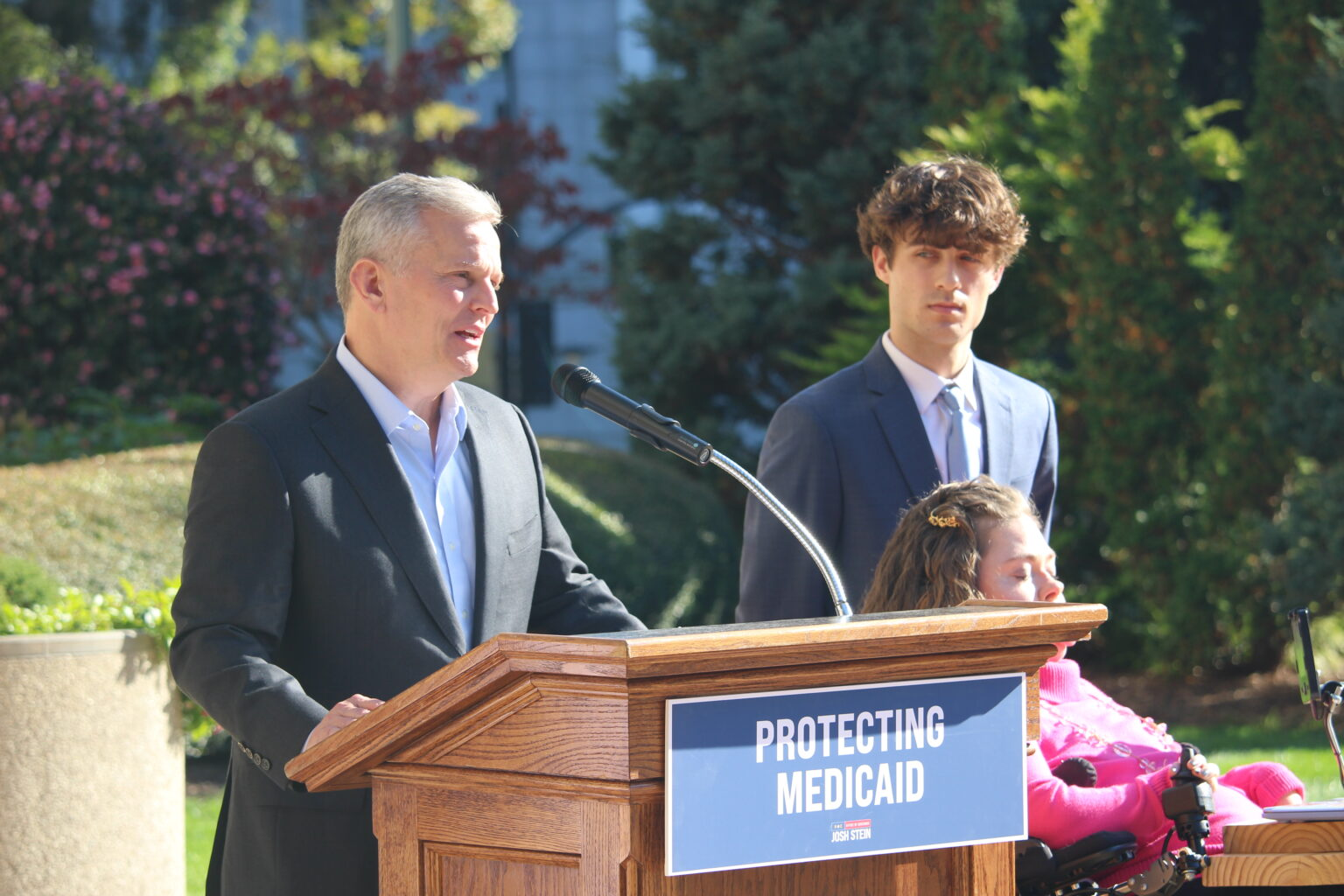
The state did not appeal. On December 10, 2025, Governor Stein directed NCDHHS to restore all Medicaid rates to September 30, 2025 levels, citing court orders that had made continued reductions “untenable.” He also announced that providers would receive retroactive reimbursements for the difference between the reduced and full rates for all claims filed after October 1. Stein blamed the legislature: “The legislature forced these cuts onto the program. It was absolutely nothing that the department or I wanted to have happen.” Republican legislators responded that the cuts were premature and unnecessary, that Medicaid would not have run out of funds until April, and that Stein had “manufactured a crisis out of thin air.”
What the Provider Testimony Did
The injunction was not won on legal theory alone. The declarations submitted in support of the lawsuit by ABA providers — and the testimony of the families who attended the hearings — shaped the court’s understanding of the stakes in ways that abstract legal arguments cannot.
Adi Khindaria, CEO of Compleat Kidz, which operates clinics across 24 communities in North Carolina and serves children on Medicaid, submitted a declaration estimating that more than 100 children were on a waitlist for treatment at the company’s Rocky Mount location. The average wait was already six months. Khindaria said the rate cut would double that timeline to more than a year. He also quantified the workforce math: Compleat Kidz uses approximately 70 percent of its Medicaid revenue to pay the clinicians and technicians who deliver the therapy. Because each child requires roughly one full-time position, any revenue reduction directly requires a corresponding workforce reduction. The rate cut, Khindaria said, would force the elimination of 100 jobs.
The family testimony was equally direct. Rhonda Huey of Charlotte, who attended the November 10 hearing with other parents, said she has two sons with autism — an 8-year-old and an 11-year-old. She had attended school every day with her eldest son for six years before ABA made that unnecessary. He had moved out of exceptional children’s classes and into a regular classroom. “ABA just turned it around,” she said. Her provider had told her they might no longer accept Medicaid if rates were cut. “You could see the difference and impact. My baby had missed a lot of birthday parties. We couldn’t go to church. We couldn’t do a lot of things.” Naomi Morales of Harnett County described driving to Wake County for her daughter’s ABA sessions — a commute she was making because accessible providers closer to home were already limited.
These testimonials accomplished two things in the courtroom. First, they made concrete what “reduced access” means in the lives of specific children — not an abstraction about provider economics, but a 6-year-old who could now hold his mother’s hand, facing regression if care was interrupted. Second, they established that harm was not theoretical. ABA providers were already warning families they might stop accepting Medicaid. Waitlists that were already six months long would become a year. The Olmstead standard requires courts to prevent unnecessary institutionalization. The testimony drew a direct line from the rate cut to that risk.
“Those significant threats to plaintiffs’ ongoing treatment and care are the natural consequences of the cuts’ impact on therapy providers, who will be forced to reduce their staffing, cancel or change planned expansions, reduce services to Medicaid patients, and further delay accepting new patients off already long waitlists.” — Complaint filed by 21 NC families, October 31, 2025
Why the Case Did Not End When the Rates Were Restored
When Governor Stein ordered the rates restored on December 10, the state moved quickly to have the lawsuit dismissed as moot. NCDHHS argued in court filings that because the rate reductions were no longer in effect and the state was not submitting the State Plan Amendment that would have formalized them, the plaintiffs had no remaining claim. The case was over.
The families’ attorneys disagreed. In filings led by Easley, the plaintiffs argued that without a judicial ruling on the underlying discrimination claim, nothing prevented NCDHHS from reimposing the same cuts if the budget standoff continued — or the next time a budget shortfall materialized. The state had already demonstrated it would use ABA as a budget lever when financial pressure mounted. The plaintiffs argued the threat was ongoing and real.
Wake County Superior Court Judge Vince Rozier agreed. He denied the state’s motion to dismiss and denied the alternative motion to stay proceedings, allowing the case to continue toward trial. North Carolina lawmakers received notification in early 2026 that ABA spending was projected to exceed $1 billion within two years. With that projection on the legislative record, the families’ argument that the issue was far from resolved looked prescient. The case remains active as of this writing.
The lasting precedent: A preliminary injunction issued by a state court against an ABA Medicaid rate cut on disability-discrimination grounds, followed by a gubernatorial reversal and retroactive reimbursement, followed by a denial of a mootness dismissal — this is a more complete legal record than most rate disputes produce. The sequence tells future plaintiffs in other states how the theory holds up at each stage of litigation, not just in theory but tested against a state’s active opposition.
The National Rate-Cut Environment
North Carolina’s story is not an outlier. Across the country, states are confronting the same arithmetic: ABA spending that has grown by triple or quadruple digits in a decade, state budgets under pressure from both enrollment-driven Medicaid costs and pending federal cuts, and a therapy whose clinical evidence base — however strong relative to alternatives — has not been insulated from the scrutiny applied to any rapidly growing line item.
Nebraska implemented reimbursement reductions ranging from 28 percent to 79 percent depending on the service category, along with a 30-hour-per-week cap on ABA without additional prior authorization review. Nebraska’s highest rates had been the highest in the nation, and some in the industry described the cut as a market correction. But Above and Beyond Therapy, which received more than $28.5 million from Nebraska’s Medicaid managed care program in 2024 — roughly a third of the state’s total ABA spend — announced it would terminate its Medicaid participation. After a family and community outcry, the company reversed course within a week. Nebraska Medicaid spending on ABA had risen from $4.6 million in fiscal year 2020 to $85 million by the most recent year — a roughly 1,700 percent increase. Indiana’s increase over a similar period was approximately 2,800 percent, from $21 million in 2017 to $611 million in 2023.
Colorado and Indiana have both seen provider and parent lawsuits filed in response to rate reduction proposals or prior authorization requirements. Colorado’s HHS OIG audit found $77.8 million in improper ABA payments for 2022 and 2023, a finding that, as in Indiana and Wisconsin, has provided state fiscal officials with audit-based justification for tighter oversight and lower reimbursement. The audit findings and the rate cut proposals are arriving simultaneously — the enforcement environment and the reimbursement environment are reinforcing each other.
Looming over all of this is the federal reconciliation package that cuts federal Medicaid spending by an estimated $911 billion over a decade. The cuts fall most heavily on states that expanded Medicaid under the ACA, include work and reporting requirements for the expansion population, restrict provider tax arrangements, and increase redetermination frequency. North Carolina expanded Medicaid in 2023 and serves more than 3 million people through the program. A state already struggling with a $319 million annual funding gap on ABA alone, in a budget that could not be passed at all in 2025, faces a materially harder fiscal environment going forward.
The Playbook: What ABA Operators Should Take From North Carolina
The North Carolina case produced a tested sequence of legal and advocacy tools for the ABA industry to understand and potentially replicate. It is not the only model — Nebraska’s reversal was driven by family and community pressure on a major provider rather than court action — but it is the most complete legal record of a rate cut challenged under a disability-discrimination theory.
The theory that worked: The core argument — that targeting children with a disability for the steepest Medicaid rate cut while giving other services lower cuts constitutes facial discrimination under the ADA, Section 504, and the Olmstead integration mandate — held up through three judges and survived a motion to dismiss after the rates were restored. ABA’s classification as a medically necessary service for a defined diagnostic category (autism spectrum disorder) makes this theory specifically available: the cut can be characterized as discrimination against the people who need the cut service, not just a market-rate adjustment. Not every rate cut will be vulnerable to this theory. A uniform across-the-board cut applied equally to all services would likely not meet the legal test. A cut that singles out the service most relied upon by a protected class at a disproportionate percentage almost certainly does.
The attorney selection matters enormously: Michael Easley Jr. brought specific credibility to this case: prosecutorial background, disability rights framing, and institutional standing in a state where his family name carries weight. ABA operators in states where rate cuts are being threatened should identify disability rights attorneys in their jurisdiction before the cuts take effect, not after. The thirty-day window between the cuts taking effect and the lawsuit being filed was fast. Having legal relationships in place makes that timeline achievable.
Provider declarations are litigation assets: Khindaria’s declaration connecting the percentage rate cut to specific workforce consequences — 100 jobs, doubled wait times for 100 children — gave the court concrete numbers to work with. Providers in other states considering rate cuts should begin documenting now: current Medicaid revenue as a percentage of total revenue, current workforce headcount tied to Medicaid-funded positions, waitlist data, geographic access data showing how many communities are served. When a rate cut is announced, those numbers can move from a spreadsheet into a court declaration within days.
Family testimony is not supplementary — it is essential: The families who attended the Wake County hearings in person, who testified about waitlists they were already on and gains their children had made, shaped the court’s moral understanding of the stakes. The legal doctrine of Olmstead requires that the risk of institutionalization be real, not theoretical. Family testimony establishes that reality in terms judges can evaluate. ABA advocacy organizations in states with threatened rate cuts should begin organizing family witness networks immediately.
The case does not end when the rates are restored: The families’ decision to resist the state’s mootness argument and keep the case active was strategically significant. If the underlying discrimination claim is not adjudicated, nothing prevents future rate cuts on the same theory. The active litigation creates ongoing legal risk for the state that the restoration alone does not eliminate. Providers and advocacy organizations in states where cuts have been reversed should evaluate with their attorneys whether continued litigation or monitoring consent decrees might create longer-term structural protections.
North Carolina proved something the ABA industry needed to see demonstrated: that a properly structured legal challenge to a discriminatory rate cut can move faster than a legislative fix, can produce retroactive reimbursement, and can survive the state’s attempt to close the case as soon as the immediate damage is repaired. That demonstration has value beyond North Carolina. Every state Medicaid director weighing an ABA rate cut now has to calculate the litigation risk alongside the budget savings.
AT A GLANCE
| Budget context: | NC is the only state in the U.S. without a full enacted budget; standoff between House and Senate Republicans over a children’s hospital and tax cut timing |
| Medicaid shortfall: | $319 million gap between what NCDHHS needed and what the stopgap appropriation provided |
| Rate cut effective: | October 1, 2025; 3%–10% for all Medicaid providers; ABA received maximum 10% cut |
| ABA spending trajectory: | $122M (FY2022) → $199M (FY2023, pre-increase) → projected $639M (FY2026) = 423% increase; projected to exceed $1B within 2 years |
| January 2024 rate increase: | NCDHHS gave ABA providers a 15% rate increase; 5 providers accounted for 41% of the subsequent spending increase |
| Lawsuit filed: | October 31, 2025; 21 families through their parents/guardians; Wake County Superior Court |
| Lead attorney: | Michael Easley Jr., former U.S. Attorney for Eastern District of NC; McGuireWoods (Raleigh) |
| Legal theory: | ADA, Section 504, and Olmstead integration mandate — singling out children with autism for the steepest cuts = facial disability discrimination |
| TRO issued: | November 5, 2025 — Judge Bryan Collins; NCDHHS complied same day |
| Preliminary injunction: | November 10, 2025 — Judge Clayton Somers after full hearing with provider/family testimony |
| Compleat Kidz testimony: | 100+ children on waitlist at Rocky Mount; rate cut would double wait from 6 months to 12+; would eliminate 100 jobs; 70% of Medicaid revenue goes to clinician pay |
| Governor’s reversal: | December 10, 2025 — Gov. Josh Stein directed NCDHHS to restore all rates to September 30, 2025 levels |
| Retroactive reimbursement: | Providers to receive difference between reduced and full rates for all claims filed Oct 1–Dec 10 |
| Dismissal motion: | State argued mootness after rates restored; Judge Vince Rozier denied motion to dismiss; case continues |
| Other states (Nebraska): | 28%–79% cuts depending on service; 30-hr/week cap; spending rose from $4.6M (FY2020) to $85M |
| Other states (Indiana): | $21M (2017) → $611M (2023) = 2,800% increase; ABA working group established; rate reductions planned |
| Other states (Colorado): | HHS OIG: $77.8M improper ABA payments (2022–23); prior authorization + rate reduction proposals; provider/parent lawsuit |
| Federal context: | OBBB reduces federal Medicaid spending ~$911B over 10 years; work requirements for expansion population; NC expanded Medicaid in 2023 |
SOURCES & REFERENCES
| 1. | North Carolina Health News. “Parents Win Medicaid Cuts Pause.” Jaymie Baxley. November 14, 2025. https://www.northcarolinahealthnews.org/2025/11/14/parents-win-medicaid-cuts-pause/ |
| 2. | North Carolina Health News. “Stein Restores Medicaid Rates, Ending Standoff with NCGA for Now.” Baxley/Fredde. December 11, 2025. https://www.northcarolinahealthnews.org/2025/12/11/stein-restores-medicaid-rates/ |
| 3. | Office of Governor Josh Stein. “Governor Stein Directs NCDHHS to Restore Medicaid Rates.” December 10, 2025. https://governor.nc.gov/news/press-releases/2025/12/10/governor-stein-continues-stand-3-million-medicaid-patients-north-carolina-directs-ncdhhs-restore |
| 4. | Becker’s Behavioral Health. “States Move to Cut ABA Therapy Payments as Medicaid Spending Spikes.” April 2026. https://www.beckersbehavioralhealth.com/behavioral-health-government-policies/states-move-to-cut-aba-therapy-payments-as-medicaid-spending-spikes/ |
| 5. | KFF Health News. “It’s the ‘Gold Standard’ in Autism Care. Why Are States Reining It In?” December 23, 2025. https://kffhealthnews.org/news/article/aba-therapy-applied-behavior-analysis-autism-medicaid-rate-cuts-north-carolina/ |
| 6. | NC Newsline. “NC Judge Freezes Medicaid Rates for Autism Treatment, Blocking DHHS Cut.” November 10, 2025. https://ncnewsline.com/briefs/nc-judge-freezes-medicaid-rates-for-autism-treatment-blocking-dhhs-cut/ |
| 7. | NC Newsline. “Wake Judge Temporarily Reverses NC Medicaid Rate Cut for Autism Therapy.” November 5, 2025. https://ncnewsline.com/briefs/wake-judge-temporarily-reverses-nc-medicaid-rate-cut-for-autism-therapy/ |
| 8. | Carolina Journal. “Judge Refuses to Dismiss Suit Over Funding NC Medicaid Autism Services.” April 2026. https://www.carolinajournal.com/judge-refuses-to-dismiss-suit-over-funding-nc-medicaid-autism-services/ |
| 9. | NPR / KFF Health News. “Why Medicaid Programs Are Cutting Back on a Popular Therapy for Autism.” December 23, 2025. https://www.npr.org/sections/shots-health-news/2025/12/23/nx-s1-5643014/autism-aba-therapy-medicaid-costs |
| 10. | Stateline. “Families Worry as Cost of Autism Therapy Comes Under State Scrutiny.” November 25, 2025. https://stateline.org/2025/11/25/families-worry-as-cost-of-autism-therapy-comes-under-state-scrutiny/ |
| 11. | Spectrum News NC. “Mom Calls Medicaid Services Crucial; Attorney Behind NCDHHS Lawsuit Talks.” November 8, 2025. https://spectrumlocalnews.com/nc/charlotte/news/2025/11/08/attorney-for-families-suing-ncdhhs-talks |
| 12. | Carolina Public Press. “Governor Reverses Medicaid Cuts.” December 11, 2025. https://carolinapublicpress.org/73846/nc-governor-stein-reverses-medicaid-cuts-funding-up-to-legislators/ |
| 13. | NC Newsline. “Medicaid Rate Cuts Will Cost State Providers $1.1 Billion, NCDHHS Says.” August 15, 2025. https://ncnewsline.com/2025/08/15/medicaid-rate-cuts-cost-billion-north-carolina-dhhs/ |
| 14. | Autism Society of North Carolina. “Protect Medicaid for People with Autism in North Carolina.” https://www.autismsociety-nc.org/protect-medicaid-for-people-with-autism-in-north-carolina/ |