Four States, Four Theories
NATIONAL — four states have moved on ABA policy in the current legislative cycle, and they have done so in ways that point in almost entirely opposite directions. Florida tried to remove a managed care tool that has blocked new providers from entering the Medicaid market for eight years, and the bill died in committee. Illinois is considering legislation that would undo a BCBA ownership requirement the state enacted just four years ago. Iowa is in the process of consolidating its autism funding onto a federal insurance track that eliminates a parallel state program. Indiana has done all of the following at once: capped hours, restricted EPSDT eligibility, cut rates, mandated accreditation, tightened supervision ratios, and required caregiver coaching in every prior authorization.
None of these four states is working from the same legislative theory. Florida is responding to a market access problem. Illinois is responding to a compliance burden problem. Iowa is responding to a funding architecture problem. Indiana is responding to a cost and program integrity problem. The unifying thread is that all four are reacting to the same national forces: rising ABA utilization, rising Medicaid ABA spending, federal enforcement pressure, and a political environment in which state health agencies are being scrutinized more closely than they have been in years.
This article documents the status and substance of each state’s action as of April 2026, the context that drove it, and the implications for providers operating in or entering those markets.
| State | Bill/Action | Category | Status |
|---|---|---|---|
| Florida | SB 1648 | Network adequacy / moratorium | Died in committee (March 13, 2026) |
| Illinois | SB 3807 / HB 5171 | Ownership / corporate structure | Pending (filed February 2026) |
| Iowa | HF 509 | Coverage / CHIP / program restructuring | Passed House 89-0; Senate subcommittee recommended passage (2025) |
| Indiana | SPA / FSSA bulletin | EPSDT restriction / rate cuts / caps | Effective April 1, 2026 (pending CMS approval) |
FLORIDA
The Moratorium Bill That Died in Committee
Florida Senate Bill 1648 was titled the “Access to Applied Behavior Analysis Services” act and sponsored by Sen. Garcia. Its most consequential provision was a prohibition on Medicaid managed care plans imposing a moratorium on ABA provider enrollment unless the plan could first demonstrate specified criteria to the Agency for Health Care Administration. The bill would also have required AHCA to consider network adequacy factors specific to ABA when evaluating managed care plan networks, required plans to take reasonable steps to support workforce retention and recruitment, and required plans to notify providers of credentialing deficiencies within a specified timeframe. The effective date would have been July 1, 2026. The bill died in the Health Policy Committee on March 13, 2026.
The moratorium provision was the core of the bill. To understand why, it helps to know what happened in South Florida beginning in 2018. In response to fraudulent ABA billing concentrated in Miami-Dade and Broward counties, the Florida Agency for Health Care Administration requested a moratorium from the Centers for Medicare and Medicaid Services that took effect May 14, 2018. The moratorium prohibited new group ABA providers from enrolling as Medicaid providers in those two counties. Under federal law, a state Medicaid agency may extend a moratorium indefinitely in six-month increments, so long as it can document continued necessity. AHCA has extended the South Florida moratorium continuously for eight years.
The practical consequences have accumulated over time. No new group ABA providers have been able to enroll in Medicaid in Miami-Dade or Broward since 2018. Individual practitioners can join groups already enrolled, but the pipeline of new clinics entering the Medicaid market in those counties is closed. Waiting lists have grown. For providers and practice groups looking to expand in South Florida, the moratorium is a hard stop that no amount of clinical credentialing or business development can work around.
SB 1648 was not a repeal of the moratorium. It was a prospective constraint on AHCA’s ability to impose or extend moratoriums without demonstrating necessity to a statutory standard. The bill’s death in committee means the South Florida moratorium remains in place under the same administrative authority it has always operated under, with no legislative check on its extension. For providers who have been waiting for a legislative correction to the market access problem in South Florida, the 2026 session produced no relief.
“The temporary ABA moratorium, requested so that AHCA could conduct a fraud and abuse investigation for ABA therapy services in South Florida, is still in large part in effect today.” — Wolfe Pincavage law firm analysis of the Florida ABA enrollment landscape
The bill’s committee referral path would have been lengthy even if it had survived the first stop. After Health Policy, it faced the Appropriations Committee on Health and Human Services and then the full Appropriations Committee. Whether a version of this legislation returns in a future session depends on whether the moratorium’s continuation continues to generate enough documented access harm to attract renewed legislative attention.
ILLINOIS
The Ownership Rule That May Come Undone
Illinois is one of two states in the country, along with New York, that expressly require ABA businesses to be owned by licensed behavioral analysts. The requirement was enacted through the Behavior Analyst Licensing Act, signed in 2022, which brought Illinois into a regulatory position that most other states have not adopted. Existing ABA businesses have until January 15, 2027, to come into compliance with the ownership requirement. New businesses must comply immediately.
Two bills filed in February 2026 would repeal that ownership requirement before the deadline arrives. Senate Bill 3807 and House Bill 5171 both propose to eliminate Section 150 of the Behavior Analyst Licensing Act, the provision that mandates BCBA business ownership. Both bills also add language confirming that clinical decisions must continue to be made by licensees, consistent with how other states handle the corporate practice of healthcare professions. The bills do not remove the licensing requirement for individual BCBAs. They remove only the ownership requirement for the businesses that employ or contract with BCBAs.
The two bills differ in one significant respect. SB 3807 and HB 5171 both amend the Professional Services Corporation Act to allow BCBAs to form professional corporations with two categories of allied professionals: mental health providers (psychologists, social workers, marriage and family therapists, licensed professional counselors) and rehabilitation therapy providers (occupational therapists, physical therapists, speech pathologists). The LLC pathway created by amending the Professional Limited Liability Company Act, however, includes only the mental health providers. Rehabilitation therapy providers are absent from the LLC amendment. Holland and Knight attorneys who analyzed both bills noted that stakeholders have described the omission of rehab providers from the LLC pathway as an oversight or error that should be corrected in future amendments.
“Market sources report that certain small and medium-sized providers have struggled to come into compliance, citing increased investment of time, energy and funds, and additional administrative complexities, as the main culprits.” — Holland & Knight alert, March 5, 2026
The practical problem the bills are responding to is that small and medium-sized ABA organizations have found the ownership requirement expensive and administratively complex to meet. For organizations that rely on non-BCBA investors, management companies, or multi-disciplinary corporate structures, restructuring to place a licensed behavioral analyst in the ownership seat requires legal work, governance changes, and in some cases new financing arrangements. Resources directed at compliance are resources not directed at clinical capacity or provider recruitment.
Professional associations are not unified on the bills. Some support repealing the ownership requirement on the grounds that it restricts investment and business formation without improving clinical quality. Others oppose repeal, arguing that BCBA ownership protects clinical decision-making from non-clinical financial pressure. That division is a meaningful obstacle. Healthcare professional licensing bills in state legislatures tend to move or stall based on whether the professional associations most directly affected are aligned. The bills remain pending as of April 2026, with the January 15, 2027 compliance deadline still on the calendar for organizations that have already begun restructuring under the existing law.
IOWA
Two Programs, One Destination
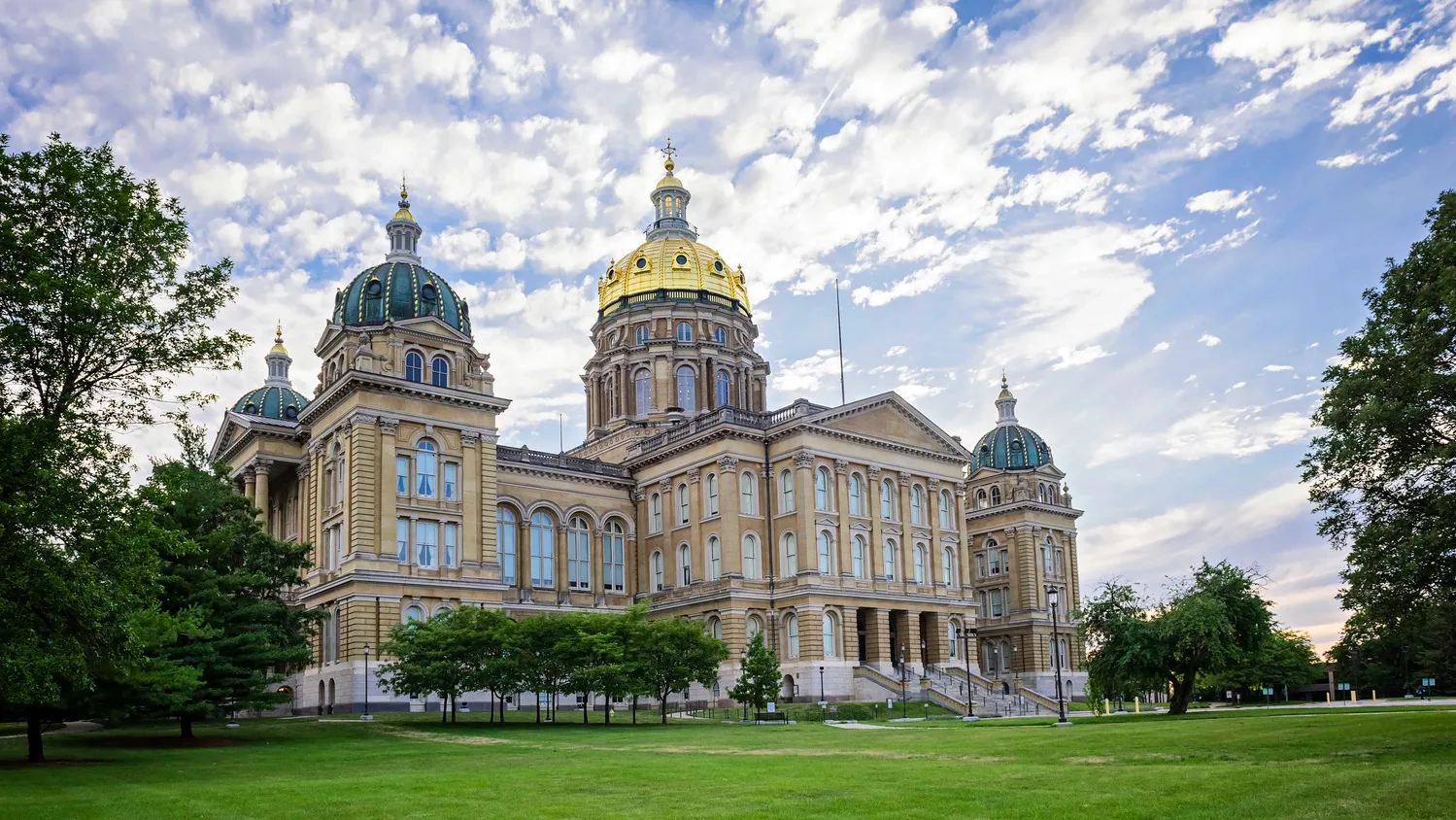
Iowa’s 2025 and 2026 ABA legislation is best understood as a funding architecture consolidation rather than a coverage expansion or restriction. The state currently funds ABA for children with autism through two parallel mechanisms. The first is Medicaid, which covers children who meet income eligibility requirements. The second is the Autism Support Program, a state-funded initiative that covers ABA for children who are not eligible for Medicaid or private insurance coverage.
The Autism Support Program serves approximately 678 children with an autism diagnosis as of the 2025 fiscal year. The per-member annual cost is approximately $24,000. The program is funded through the Autism Support Fund and operated by the Iowa Department of Health and Human Services.
House File 509 passed the Iowa House by a vote of 89 to 0 on March 20, 2025. The Senate Health and Human Services Committee’s subcommittee recommended passage on April 1, 2025. The bill would prohibit the state from accepting new applications to the Autism Support Program after June 30, 2025, and would repeal the program outright on July 1, 2027. In parallel, it requires the Iowa Medical Assistance Advisory Council to adopt rules adding ABA services as a covered benefit within Hawki, the state’s Children’s Health Insurance Program. The bill appropriates $750,000 from the existing Autism Support Fund to support the transition into the Hawki structure.
Hawki covers children whose family incomes are above the Medicaid threshold but who are not able to access or afford private insurance. Adding ABA as a Hawki benefit means children who currently receive services through the standalone Autism Support Program would instead receive them through a federally supported insurance structure, with the federal government sharing in the cost rather than the state bearing it alone.
Iowa had also enacted House File 330 in the prior session, signed into law with an effective date of January 1, 2026. That bill eliminates the age-based coverage caps that had governed private insurance ABA benefits: annual maximum benefits previously ranged from $36,000 for children through age six, to $25,000 for ages 7 through 13, to $12,500 for ages 14 through 18. HF 330 eliminated all of those caps, removed the under-19 age restriction entirely, and prohibited group insurance plans from limiting the number of visits to ABA providers. The combined effect of HF 330 and HF 509, if both fully take effect, is a Iowa ABA coverage landscape that is broader in private insurance, more federally integrated on the CHIP side, and free of the standalone state-funded program that currently provides a backstop for children who fall between coverage categories.
The risk in the transition is the gap. Children currently served through the Autism Support Program who do not qualify for Hawki will need private insurance coverage that may not exist at their income level. The 678 current ASP enrollees will need to be evaluated for Hawki eligibility as the program winds down. Iowa has not publicly released transition plans for ASP families as of this writing.
INDIANA
The Most Consequential ABA State Action of 2026
Indiana’s ABA Medicaid reform is not a single bill. It is a policy framework built over fourteen months through an executive order, a working group process, a state plan amendment, and an FSSA bulletin that translated recommendations into enforceable operational changes. The result is the most sweeping overhaul of a state Medicaid ABA program that has occurred anywhere in the country, at least in the current policy cycle.
The backstory begins with a number: $611 million. That is how much Indiana Medicaid spent on ABA services in 2023. In 2017, the figure was $17 million. The increase of roughly 3,400 percent over six years is not primarily a product of increased autism prevalence. Indiana has the third-highest RBT count of any state in the country, after Florida and Hawaii, and approximately seven RBTs per BCBA, which is double the national average. A federal OIG audit found $56 million in improper ABA Medicaid payments in the state for the 2019 to 2020 period. The combination of explosive spending growth and documented program integrity failures created the conditions for intervention.
Governor Mike Braun signed Executive Order 25-31 in February 2025, establishing a 21-member ABA Working Group to develop cost containment recommendations that minimized harm to enrollees. The working group, launched in May 2025, held four public listening sessions and received more than 170 written submissions. Its final report, delivered November 12, 2025, produced five interdependent recommendations that the FSSA converted into policy through a March 2026 bulletin.
The effective changes, as of April 1, 2026, pending CMS approval of the accompanying state plan amendment, are as follows: ABA coverage is restricted to EPSDT, the federal Medicaid benefit for individuals under 21, which means Indiana will no longer authorize or reimburse ABA for adults 21 and older starting October 1, 2026. A lifetime cap of 4,000 hours of comprehensive ABA is established, applied prospectively and non-retroactively, meaning the clock starts from the effective date regardless of prior treatment history. School-delivered ABA is exempt from the cap. Comprehensive ABA is defined as 16 or more hours per week. Weekly hour caps are set by ASD level: 30 hours for Level 1, 32 hours for Level 2, 38 hours for Level 3. Fee-for-service rates are reduced 6 percent effective April 2026, with an additional 4 percent reduction scheduled for April 2027. All providers must obtain accreditation through either the Autism Commission on Quality or the Behavioral Health Center of Excellence, both under the CASP umbrella, by October 1, 2027, with documentation of accreditation initiation required by August 1, 2026. Each prior authorization must include up to 16 hours of caregiver coaching. BCBA supervision is set at one face-to-face hour per eight RBT hours. BCBAs and health service providers in psychology may now bill directly for certain services previously limited to RBT rendering.
Governor Braun‘s approach was explicitly framed as a departure from the January 2025 state plan amendment that his predecessor’s administration had proposed, which would have applied a retroactive three-year lifetime cap that would have immediately removed roughly half of all current enrollees from services. Braun rejected that approach and mandated the working group process instead. The final framework is non-retroactive and graduated, and it includes a safety valve: if further comprehensive ABA is found medically necessary after the 4,000-hour cap is reached, continued coverage under EPSDT remains possible following FSSA review.
The Arc of Indiana, which participated in the working group process, has stated support for most of the changes while maintaining opposition to the lifetime cap. Its CEO Kim Dodson described the non-retroactive structure as a major victory compared to the January 2025 proposal, while continuing to press for the cap’s removal on the grounds that it does not reflect the long-term needs of individuals who may require ABA therapy beyond 4,000 hours to sustain progress.
Behavioral Health Business has described Indiana’s reform package as a potential bellwether for other states facing similar cost trajectories. The combination of EPSDT restriction, prospective hour caps, rate reductions, and accreditation requirements is a template that state Medicaid programs with rising ABA utilization are likely to study. Whether Indiana’s changes achieve sustainable spending levels while preserving meaningful access will depend on implementation and on how providers adapt to the rate cuts and new documentation requirements over the next 18 months.
“When Medicaid coverage for ABA therapy began in Indiana, the program was small and costs were manageable. The way Indiana’s Medicaid program has managed it since coverage began in 2015 has created serious challenges.” — FSSA Secretary Mitch Roob, November 12, 2025
What to Watch Next
These four states are not operating in isolation. The federal enforcement environment that drove Vermont’s concurrent billing policy change, Wisconsin’s OIG finding, and Indiana’s reform package is the same environment in which Florida, Illinois, and Iowa are making their decisions. States that have not yet confronted their ABA cost trajectories are watching Indiana closely. States that have placed structural access barriers in the market, like Florida’s South Florida moratorium, are facing organized provider and family pressure that will return in future sessions.
The Illinois bills present the clearest near-term decision point. The January 15, 2027 compliance deadline for BCBA ownership is less than nine months away. Organizations that have already restructured to comply with Section 150 have made legal and financial investments they cannot easily reverse. Organizations that have not yet restructured are watching the legislative calendar and making decisions about whether to begin compliance work or wait. If SB 3807 or HB 5171 passes before the deadline, the compliance investments organizations already made will have been unnecessary. If the bills fail, organizations that waited will have missed the window.
Iowa’s transition out of the Autism Support Program is the most operationally concrete near-term event. The prohibition on new ASP applications was set to take effect June 30, 2025. Organizations that serve ASP-funded children in Iowa should be tracking Hawki benefit implementation and family eligibility redeterminations as the program wind-down accelerates toward the July 2027 repeal date.
Indiana’s implementation is ongoing. The August 1, 2026 accreditation documentation deadline is the first major compliance gate under the new framework. Providers operating in Indiana who have not yet initiated the CASP accreditation process should treat that deadline as urgent. CMS approval of the state plan amendment is pending; the timeline for that approval will determine when several of the hour cap and EPSDT provisions formally take legal effect.
Florida’s 2027 session is the next opportunity for SB 1648’s policy goals to return. Whether the moratorium continues to generate the kind of documented access harm that could build a coalition sufficient to move a bill through multiple committee stops in a busy session calendar remains to be seen.
AT A GLANCE
| STATE / BILL | KEY PROVISION | DRIVER | STATUS |
| FL SB 1648 | Prohibited managed care moratoriums on ABA providers; AHCA network adequacy factors; workforce retention requirements | South Florida moratorium active since May 2018; market access gap for new Medicaid providers | Died in Health Policy Committee March 13, 2026 |
| IL SB 3807 / HB 5171 | Repeal Section 150 BCBA ownership requirement; create professional corp/LLC pathways with mental health and rehab providers | Jan 15, 2027 compliance deadline; small/medium provider burden; IL + NY only states with BCBA ownership rule | Pending; professional associations divided; filed February 2026 |
| IA HF 509 | Wind down Autism Support Program by July 2027; add ABA as Hawki (CHIP) benefit; no new ASP applications after June 30, 2025 | Funding efficiency; federal cost-sharing through CHIP preferred over state-only ASP; 678 current ASP members at $24K/year | Passed House 89-0; Senate subcommittee recommended passage (April 2025) |
| IN SPA / FSSA | EPSDT-only (no adults 21+); 4,000-hr lifetime cap; hour caps by ASD level; 6%+4% rate cuts; CASP accreditation; 1:8 BCBA:RBT ratio; 16-hr caregiver coaching | ABA spending $17M (2017) to $611M (2023); $56M OIG improper payments finding; 3rd highest RBT count nationally | Effective April 1, 2026 (pending CMS SPA approval); accreditation docs due Aug 1, 2026 |
SOURCES & REFERENCES
| 1. | Florida Senate. “SB 1648: Access to Applied Behavior Analysis Services.” 2026 Session. https://www.flsenate.gov/Session/Bill/2026/1648 |
| 2. | Saran, John C., Madison Houghton, and John Arnold. “Proposed Illinois Bills Could Unwind Restructuring Deadline for ABA Businesses.” Holland & Knight Alert. March 5, 2026. https://www.hklaw.com/en/insights/publications/2026/03/proposed-illinois-bills-could-unwind-restructuring-deadline-for-aba |
| 3. | Holland & Knight. “Illinois Considers Legislation to Unwind Applied Behavior Analysis Restrictions.” AHLA Speaking of Health Law podcast. April 10, 2026. https://www.hklaw.com/en/insights/media-entities/2026/04/illinois-considers-legislation-to-unwind-applied-behavior-analysis |
| 4. | FastDemocracy. “Iowa HF 509 (2025-2026 Legislative Session).” https://fastdemocracy.com/bill-search/ia/2025-2026/bills/IAB00021166/ |
| 5. | Iowa Legislative Services Agency. Fiscal Note, HF 509. March 19, 2025. https://www.legis.iowa.gov/docs/publications/FN/1524770.pdf |
| 6. | BillTrack50. “IA HF 330.” Iowa 91st General Assembly. https://www.billtrack50.com/billdetail/1827594 |
| 7. | Iowa DD Council. “Bill of the Week.” Updated 2025 session end. https://www.iowaddcouncil.org/bill-of-the-week |
| 8. | Arc of Indiana. “Notice of State Plan Amendment for Applied Behavioral Analysis Coverage.” February 25, 2026. https://www.arcind.org/news/notice-of-state-plan-amendment-for-applied-behavioral-analysis-coverage/ |
| 9. | Arc of Indiana. “Governor Braun Establishes Work Group to Address ABA.” February 19, 2025. https://www.arcind.org/aba-update/ |
| 10. | Indiana FSSA. “Applied Behavioral Analysis Therapy Services.” In.gov. Updated February 14, 2025. https://www.in.gov/fssa/applied-behavioral-analysis-therapy/ |
| 11. | Indiana ABA Working Group. Final Report to Governor Braun. November 12, 2025. https://indianacapitalchronicle.com/wp-content/uploads/2025/11/EO-25-31-ABA-Working-Group-Recommendations-Final.pdf |
| 12. | Behavioral Health Business. “Indiana’s ABA Rate Cuts and Stricter Oversight Could Be a Bellwether for Other States.” April 8, 2026. https://bhbusiness.com/2026/04/08/indiana-medicaid-proposes-30-hour-weekly-lifetime-cap-for-aba-2/ |
| 13. | Acuity Media Network. “Indiana ABA Reform 2026: New Rates, Age Limits & Hour Caps.” 2026. https://acuity.news/regulation/indiana-medicaid-aba-reform-bulletin-bt202627/ |
| 14. | Wolfe Pincavage. “Applied Behavior Analysis (ABA) Therapy Medicaid Enrollment and Licensure in the Sunshine State.” September 2020. https://www.wolfepincavage.com/applied-behavior-analysis-aba-therapy-medicaid-enrollment-and-licensure-in-the-sunshine-state/ |
| 15. | Illinois General Assembly. Behavior Analyst Licensing Act, Section 150. https://www.ilga.gov/Legislation/ILCS/Articles?ActID=4308&ChapterID=24 |