One Insurer, Two Different Answers
Effective January 1, 2017, UnitedHealth Group extended coverage of applied behavior analysis to every fully-insured plan it sells. Less than three years later, the company’s behavioral health unit was in federal court defending the opposite position: a blanket ABA exclusion enforced against a 13-year-old with autism whose benefits ran through a self-funded plan sponsored by his father’s employer, the IT services firm Wipro.
Nothing clinical separated the two positions. United’s own clinical policy at the time described ABA as proven for the treatment of autism spectrum disorder, according to the complaint later filed over the denial. What separated them was the funding arrangement, a detail printed nowhere on the member’s card. Fully-insured plans answer to state insurance law and to the autism coverage mandates now on the books in all 50 states. Self-funded plans, in which the employer pays claims from its own assets and hires an insurer only to administer them, answer to a 1974 federal statute that overrides every one of those mandates.
The arrangement is not an edge case. In 2025, 67% of covered workers were enrolled in self-funded plans, according to KFF’s annual employer survey, including 80% at firms with 200 or more workers. For ABA operators, that is most of the commercially insured caseload, and it sits beyond the reach of every state mandate the industry spent two decades winning.
Where Fifty State Mandates Stop
The mandate campaign was the industry’s founding policy victory. Indiana enacted the first autism insurance mandate, effective July 2001. South Carolina followed in 2007, and the count kept climbing until August 2019, when a Tennessee insurance bulletin requiring autism coverage in state-regulated plans made it 50 of 50. Every one of those laws binds insurers selling policies inside the state’s borders. None of them binds a self-funded employer plan.
The wall between the two is the Employee Retirement Income Security Act, the 1974 federal benefits law. ERISA preempts state laws that relate to an employee benefit plan, then hands back to the states, through a savings clause, their traditional power to regulate insurance. That is why the Supreme Court held in Metropolitan Life v. Massachusetts in 1985 that a state mandated-benefit law, in that case a Massachusetts mental health mandate, applies to insured plans. A second provision, the deemer clause, says a self-funded plan may not be ‘deemed’ an insurer. In FMC Corp. v. Holliday in 1990, the Court confirmed what that drafting means in practice: a plan paying claims from the employer’s own assets sits outside state insurance regulation entirely.
The result is a two-track commercial market running through the middle of every payer’s book. An insurer selling a fully-insured policy in Boston or Dallas must cover ABA on the state’s terms. The same insurer administering a self-funded plan for an employer in the same city is bound only by the plan document the employer wrote. The logo, the network, and the claims system are identical; the governing law is not.
Nor is self-funding confined to the Fortune 500 anymore. KFF’s 2025 survey counts 27% of covered workers at firms with 10 to 199 workers in self-funded plans, and level-funded products, which attach a small self-funded core to stop-loss insurance, now cover 37% of covered workers at those small firms.
The Doe Case and the 78 Percent
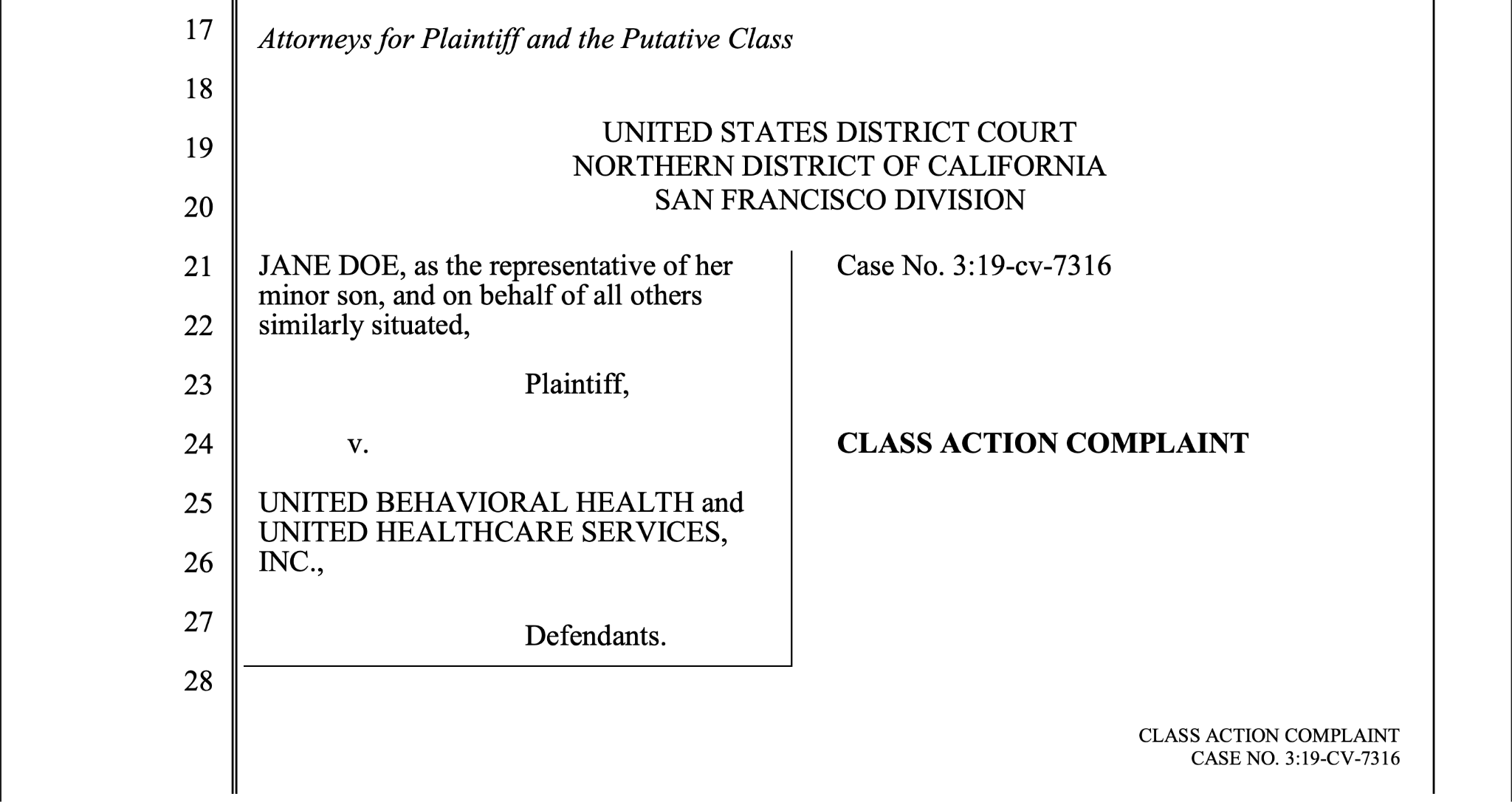
The clearest record of how the two tracks are managed inside one company is Doe v. United Behavioral Health, filed in the Northern District of California in November 2019. The plaintiff’s son was denied ABA under the Wipro Limited Plan, which covered autism while excluding “Intensive Behavioral Therapies such as Applied Behavior Analysis for Autism Spectrum Disorders” from 2017 through 2019. Those were the same years in which United covered ABA in every fully-insured plan it sold, a shift the complaint tied to the 46 states plus the U.S. Virgin Islands that mandated ABA coverage in insured plans by May 2016.
The complaint’s sharpest allegation was about incentives. United kept enforcing ABA exclusions in self-funded plans it administered, the suit argued, because doing so helps it win and keep the employers who hire it, and approximately 78% of United’s business involves self-funded plans. In the suit’s telling, an administrator that enforces an employer’s exclusion is an administrator the employer keeps.
In March 2021, U.S. District Judge Yvonne Gonzalez Rogers granted the mother partial summary judgment; by then she was litigating individually rather than for a class. The Mental Health Parity and Addiction Equity Act, the judge held, lets a plan exclude an entire condition outright. What a plan cannot do is cover the condition and carve out its primary treatment, because that creates a separate limitation applied only to mental health benefits, one that “violates the plain language of the statute.”
“Here, because the [plaintiff’s plan] chose to cover Autism, any limitation on such services must be applied with parity as required by law.” – U.S. District Judge Yvonne Gonzalez Rogers, Doe v. United Behavioral Health (2021)
A Backstop That Works Case by Case
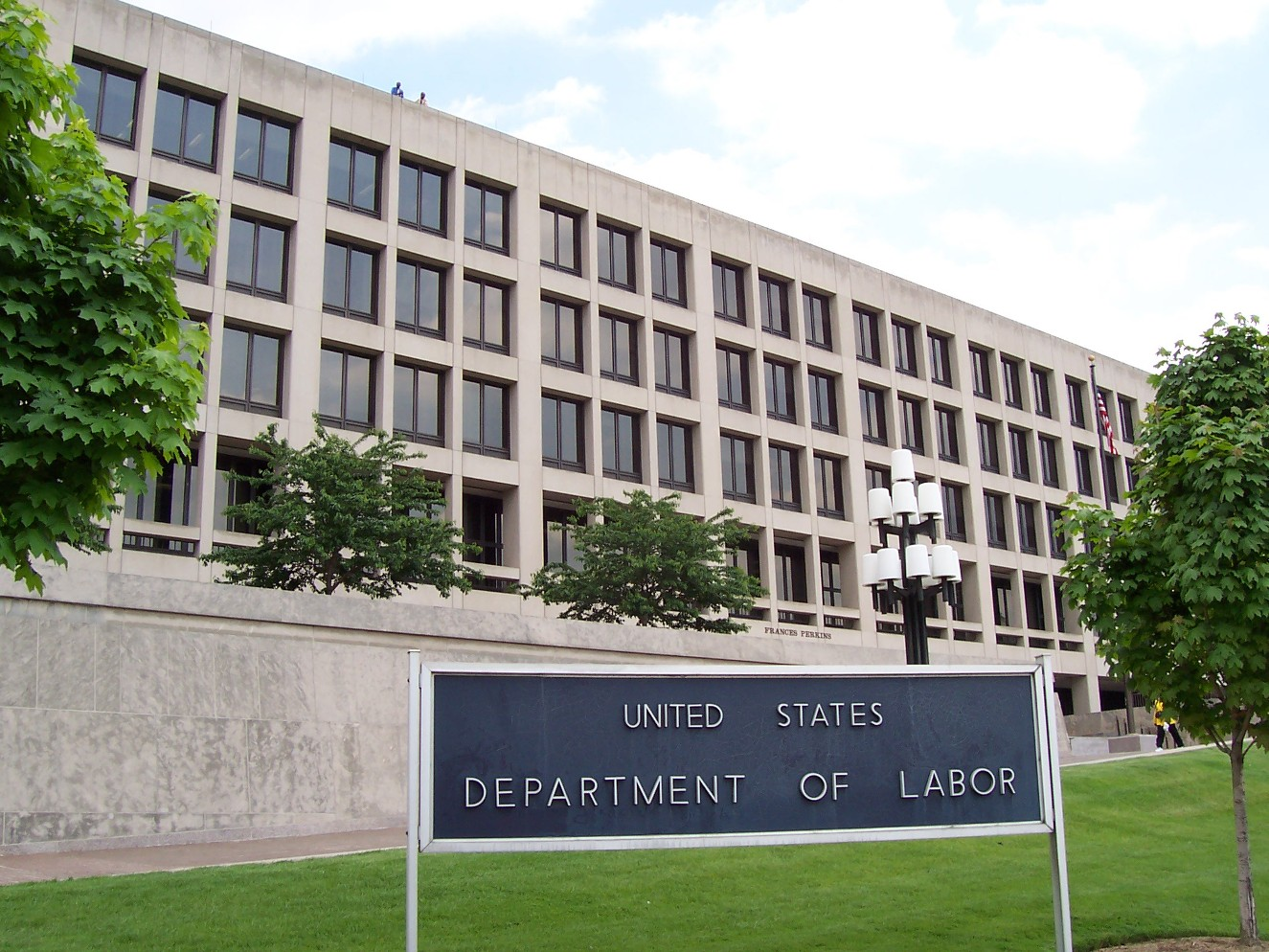
Doe shows the one federal lever that reaches self-funded plans. The Parity Act applies to them even though state mandates do not, and the Department of Labor enforces it. The protection is real and narrow at the same time. Parity does not require any plan to cover autism, or anything else. It polices how a plan that covers a condition limits treatment for that condition, and every fight turns on plan language and comparators.
The case law runs in both directions. In 2022, the First Circuit revived parity-based claims in N.R. v. Raytheon, where the company’s plan, administered by UnitedHealthcare, excluded non-restorative speech therapy and habilitative services for a child with autism while covering speech therapy that restores function lost to a stroke or injury. In August 2024, the Seventh Circuit went the other way in Midthun-Hensen v. Group Health Cooperative, upholding age limits on speech and sensory-integration therapy for autism because the insurer grounded them in the medical literature. Challenges win when the mismatch between mental health and medical limits is clean. They lose when it is not.
The Labor Department has also moved on exclusions directly. Its Employee Benefits Security Administration (EBSA) runs an enforcement initiative aimed at categorical exclusions of key treatments, ABA among them, and works through third-party administrators so a single correction strips the exclusion from every client plan at once. In one fiscal 2022 investigation, EBSA’s Los Angeles office flagged a self-insured plan’s ABA exclusion as impermissible; the sponsor removed it, restoring the benefit for 1,229 participants. The agency’s January 2025 parity report to Congress said it was devoting nearly a quarter of its enforcement program to treatment limits of this kind, and that parity corrections overall have removed barriers for more than 7.6 million participants across 72,000 plans.
One adjacent escape hatch has already closed. Self-funded plans sponsored by school districts, counties, and municipalities, which sit outside ERISA but for years could formally opt out of federal parity, lost that option under the Consolidated Appropriations Act of 2023; opt-out elections expiring on or after June 27, 2023 could not be renewed.
What Shows Up at Intake
None of this law announces itself at verification of benefits. The member card rarely discloses the funding arrangement, and the same payer logo sits on both kinds of plan. The tells are documentary. “Administrative services only” language in plan materials signals a self-funded arrangement, and the plan document or summary plan description, not the state insurance code, decides whether CPT 97153, the code for adaptive behavior treatment by protocol, is a covered service. Denials from these plans route through the plan’s internal appeals and then to federal remedies, including Labor Department complaints, rather than to the state insurance commissioner who enforces the mandate.
Exclusion is not the default, either. Many self-funded employers cover ABA voluntarily. Autism New Jersey reported in 2023 that more than 60% of self-funded plans covering that state’s residents include ABA, and national advocacy groups publish toolkits for employees lobbying their HR departments to add the benefit at the next plan year. The decision sits with one employer at a time, renewed annually, which is what makes the coverage durable in some books of business and fragile in others.
A Federal Rule Now in Limbo
The federal rulebook itself is in motion, and moving backward. A parity final rule issued in September 2024 would have pressed directly on exclusions by requiring plans that cover a condition to provide “meaningful benefits” for it. The ERISA Industry Committee, a trade group for large employers, sued in federal court in Washington in January 2025 to block the rule. That May, the Labor, Treasury, and Health and Human Services departments said they would not enforce the 2024 rule’s new provisions while the case runs, and on March 30, 2026, they told the court they will not defend the rule at all. The parity statute and its 2013 regulations remain in force.
The departments have committed to a replacement proposed rule by December 31, 2026. Whether it keeps the meaningful-benefits standard will decide how much pressure the federal backstop puts on the self-funded gap that 50 state mandates cannot touch.
AT A GLANCE
| Covered workers in self-funded plans: | 67% overall in 2025; 80% at firms with 200 or more workers (KFF Employer Health Benefits Survey, 2025) |
| Level-funded plans, small firms: | 37% of covered workers at firms with 10–199 workers (KFF, 2025) |
| State autism mandates: | All 50 states; Indiana first (effective July 2001), Tennessee 50th (August 2019) |
| Why mandates reach insured plans: | ERISA savings clause; Metropolitan Life v. Massachusetts, 471 U.S. 724 (1985) |
| Why they stop at self-funded plans: | ERISA deemer clause; FMC Corp. v. Holliday, 498 U.S. 52 (1990) |
| Key ABA exclusion ruling: | Doe v. United Behavioral Health, N.D. Cal., partial summary judgment March 5, 2021 |
| Self-funded share of United’s business: | Approximately 78%, per the 2019 Doe complaint |
| Federal backstop: | MHPAEA (2008) applies to self-funded ERISA plans; bars mental-health-only treatment limits |
| EBSA enforcement example: | Self-insured plan removed ABA exclusion covering 1,229 participants (FY 2022 fact sheet) |
| Next regulatory milestone: | Replacement federal parity proposed rule due by December 31, 2026 |
SOURCES & REFERENCES
| 1. | Rizzi C. “Class Action Claims United Healthcare Wrongfully Denied Coverage for Autism Behavioral Treatment.” ClassAction.org. November 8, 2019 (updated February 9, 2026). https://www.classaction.org/news/class-action-claims-united-healthcare-wrongfully-denied-coverage-for-autism-behavioral-treatment |
| 2. | Doe v. United Behavioral Health, No. 4:19-cv-07316-YGR, 523 F.Supp.3d 1119 (N.D. Cal., order of March 5, 2021). https://caselaw.findlaw.com/court/us-dis-crt-n-d-cal/2115925.html |
| 3. | KFF. 2025 Employer Health Benefits Survey, Summary of Findings. October 2025. https://files.kff.org/attachment/Employer-Health-Benefits-Survey-2025-Annual-Survey-Summary-of-Findings.pdf |
| 4. | Indiana Resource Center for Autism, Indiana University. “Indiana’s Health Insurance Mandate for Autism Spectrum Disorders and Pervasive Developmental Disorders.” https://iidc.indiana.edu/irca/articles/indianas-health-insurance-mandate-for-autism-spectrum-disorders-and-pervasive-developmental-disorders-pdds.html |
| 5. | Ollove M. “Coverage for Autism Treatment Varies by State.” Stateline. February 19, 2016. https://stateline.org/2016/02/19/coverage-for-autism-treatment-varies-by-state/ |
| 6. | Autism Speaks. “Autism Speaks commends Tennessee as it becomes 50th state requiring that insurance plans cover autism.” Press release. August 2019. https://www.autismspeaks.org/press-release/autism-speaks-commends-tennessee-it-becomes-50th-state-requiring-insurance-plans |
| 7. | Metropolitan Life Insurance Co. v. Massachusetts, 471 U.S. 724 (1985). https://supreme.justia.com/cases/federal/us/471/724/ |
| 8. | FMC Corp. v. Holliday, 498 U.S. 52 (1990). https://supreme.justia.com/cases/federal/us/498/52/ |
| 9. | N.R. v. Raytheon Co., 24 F.4th 740 (1st Cir. 2022). https://caselaw.findlaw.com/court/us-1st-circuit/2160275.html |
| 10. | Midthun-Hensen v. Group Health Cooperative of South Central Wisconsin, No. 23-2100 (7th Cir., August 5, 2024). https://law.justia.com/cases/federal/appellate-courts/ca7/23-2100/23-2100-2024-08-05.html |
| 11. | U.S. Department of Labor, Employee Benefits Security Administration. FY 2022 MHPAEA Enforcement Fact Sheet. https://www.dol.gov/agencies/ebsa/laws-and-regulations/laws/mental-health-parity/mhpaea-enforcement-2022 |
| 12. | U.S. Departments of Labor, Health and Human Services, and the Treasury. MHPAEA Comparative Analysis Report to Congress. January 2025. https://www.dol.gov/sites/dolgov/files/ebsa/laws-and-regulations/laws/mental-health-parity/report-to-congress-2024.pdf |
| 13. | Centers for Medicare & Medicaid Services. “Sunset of MHPAEA opt-out provision for self-funded, non-Federal governmental group health plans.” Bulletin. 2023. https://www.cms.gov/files/document/hipaa-opt-out-bulletin.pdf |
| 14. | Autism New Jersey. “Self-Funded Plans and ABA.” January 6, 2023. https://autismnj.org/article/self-funded-plans-and-aba/ |
| 15. | Ogletree Deakins. “Employer Group Sues to Block Mental Health Parity Rules.” January 2025. https://ogletree.com/insights-resources/blog-posts/employer-group-sues-to-block-mental-health-parity-rules/ |
| 16. | U.S. Departments of Labor, Health and Human Services, and the Treasury. “Statement regarding enforcement of the final rule on requirements related to the Mental Health Parity and Addiction Equity Act.” May 15, 2025. https://www.dol.gov/agencies/ebsa/laws-and-regulations/laws/mental-health-parity/statement-regarding-enforcement-of-the-final-rule-on-requirements-related-to-mhpaea |
| 17. | OPEN MINDS. “Federal Agencies Decline To Defend 2024 Mental Health Parity Rule & Prepare For New Proposal In 2026.” 2026. https://openminds.com/market-intelligence/news/federal-agencies-decline-to-defend-2024-mental-health-parity-rule-prepare-for-new-proposal-in-2026/ |