What the Task Force Is Considering
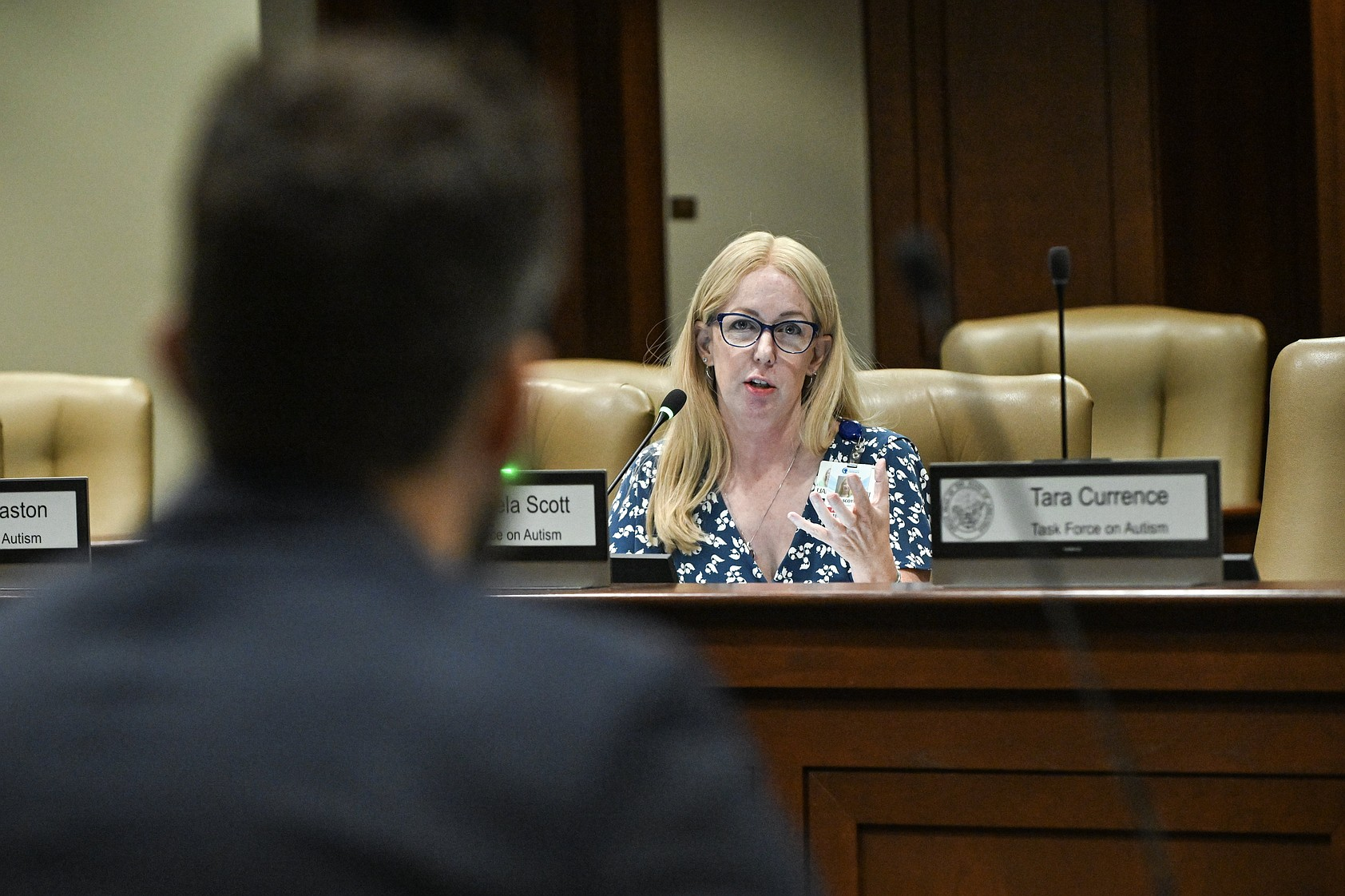
LITTLE ROCK, ARKANSAS – Expanding the types of professionals who can diagnose autism would cut wait times and let more children qualify for state services, a licensed psychological examiner told the Arkansas Legislative Task Force on Autism on June 4. The testimony, from Daniel Wysocki of Wysocki Psychological Testing and Counseling, put a long-standing access bottleneck in front of the legislators who can change it.
Under current Arkansas rules, a qualifying autism diagnosis requires the agreement of at least two of three types of licensed clinicians: a physician, a psychologist, and a speech-language pathologist. A primary care physician screens the child first and refers families either to a developmental center that performs a team evaluation or to a qualified psychologist or speech pathologist. The structure is built around consensus across clinician types, and it is the gate a child must pass through before a Medicaid program will authorize applied behavior analysis.
The change Wysocki urged would widen that pool. Practitioners such as licensed psychological examiners, who hold specialist-level training short of a doctoral psychology license, are not currently among the clinician types whose judgment counts toward a qualifying diagnosis. Wysocki himself is a psychological examiner who performs waiver-eligibility testing. Adding such evaluators, supporters argue, would expand capacity without building new clinics. The task force, co-chaired by Senator Justin Boyd of Fort Smith and Representative Denise Jones Ennett of Little Rock, advises the General Assembly on exactly this kind of statutory change, though it has not put a specific measure forward.
The Bottleneck Behind the Debate
The wait is the reason the question is live. Families in Arkansas can wait up to 16 months for a specialty developmental evaluation, according to James Atkins, a Monticello pediatrician who wrote about the rural diagnostic gap in Arkansas Money & Politics, with the University of Arkansas for Medical Sciences James L. Dennis Developmental Center serving as the primary site for diagnostic evaluations statewide. To relieve that load, the state stood up Community-Based Autism Liaison and Treatment teams, known as CoBALT, which pair a physician or advanced practice nurse with a speech pathologist, psychologist, or behavioral specialist to diagnose closer to where families live.
Arkansas is not unusual. A national survey found that nearly two-thirds of specialty centers conducting autism evaluations report wait times longer than four months, and that more than four in five evaluations take over three hours. Specialist shortages, long evaluations, and heavy documentation burden all exacerbate the delay. The consequence is uneven: rural families, lower-income families, and children of color are diagnosed later or missed.
The delay matters because the diagnosis is the trigger for everything downstream. Early intervention improves long-term outcomes, and a diagnosis is what unlocks Medicaid-funded ABA and waiver services. Time spent waiting for an evaluation is time a young child is not in therapy.
A diagnosis is not the end of the process for a family. It is the start, the document that unlocks Medicaid-funded therapy. Every month added to the wait is a month a young child is not in treatment.
Access Versus Rigor

The case for widening the pool is an access case. More qualified evaluators means more appointments, shorter queues, and more children reaching services during the early window when intervention does the most good. Wysocki argued the change could significantly reduce wait times and allow more children to qualify. For a state with one dominant diagnostic center and a 16-month wait, added capacity is the most direct lever available.
The case for caution is a rigor case. The two-of-three-clinician rule exists to guard accuracy through consensus across disciplines, and an autism diagnosis carries weight beyond the clinic: it determines Medicaid eligibility, drives years of services, and is difficult to undo. Critics of loosening diagnostic authority worry that faster, lower-threshold evaluations could reduce the accuracy of autism diagnoses, straining program budgets and, in some cases, placing children in services that do not fit their needs. The task force has not adopted a recommendation, and any change would require action by the General Assembly.
Why It Matters for ABA Providers
For Arkansas ABA providers, the diagnostic pipeline is the top of their referral funnel. A 16-month diagnostic wait throttles the number of children who reach an authorized ABA referral, and it does so independent of how much clinic capacity a provider has built. Widening who can diagnose would, in principle, increase the flow of eligible children into ABA programs, with direct effects on census, hiring, and waitlist length.
The same dynamic carries a caution for operators. Faster diagnostic throughput raises the volume of authorizations, and authorizations drive Medicaid spending, which invites the scrutiny that follows rising program costs. Providers that depend on a steady diagnostic pipeline also depend on that pipeline holding up under audit. How Arkansas resolves the question, capacity through more evaluators versus rigor through the existing consensus model, will shape both how many children reach ABA and how durable those authorizations prove to be.
AT A GLANCE
| Body: | Arkansas Legislative Task Force on Autism, co-chaired by Sen. Justin Boyd and Rep. Denise Jones Ennett |
| Meeting: | June 4, 2026, Arkansas State Capitol, Little Rock |
| Question: | Whether to expand the clinician types who can issue a qualifying autism diagnosis (under review) |
| Current rule: | Agreement of 2 of 3 clinician types: physician, psychologist, speech-language pathologist (Arkansas DHS) |
| Testimony: | Daniel Wysocki, licensed psychological examiner, Wysocki Psychological Testing and Counseling |
| Arkansas wait: | Up to 16 months for a specialty evaluation (J. Atkins, Arkansas Money & Politics, 2026) |
| Primary site: | UAMS James L. Dennis Developmental Center, Little Rock; CoBALT teams expand reach |
| National context: | ~2 of 3 specialty centers report autism-eval waits over 4 months (2023 survey) |
| Stakes for ABA: | Diagnosis gates Medicaid-funded ABA and waiver eligibility |
| Status: | Under task-force review; any change requires General Assembly action |
SOURCES & REFERENCES
| 1. | Northwest Arkansas Democrat-Gazette. “Arkansas panel reviews access to autism treatment, considers allowing more people to make diagnoses.” June 4, 2026. https://www.nwaonline.com/news/2026/jun/04/arkansas-panel-reviews-access-to-autism-treatment/ |
| 2. | Arkansas Department of Human Services. “Autism Services.” Accessed June 2026. https://humanservices.arkansas.gov/divisions-shared-services/developmental-disabilities-services/service-for-children-with-dd-id-needs/autism/ |
| 3. | Arkansas Senate. “Arkansas Autism Legislative Task Force Meeting.” 2026. https://senate.arkansas.gov/senate-news/posts/2026/04/arkansas-autism-legislative-task-force-meeting/ |
| 4. | Arkansas Autism Resource & Outreach Center. “Arkansas Autism Legislative Task Force.” Accessed June 2026. https://aaroc.org/resources/arkansas-autism-legislative-task-force/ |
| 5. | Atkins J. “The Difference a Diagnosis Can Have in Rural Arkansas.” Arkansas Money & Politics. May 4, 2026. https://armoneyandpolitics.com/difference-diagnosis-rural-arkansas/ |
| 6. | Community-Based Autism Liaison and Treatment Project (CoBALT). “About.” Accessed June 2026. https://www.cobaltar.org/about |
| 7. | Wysocki Psychological Services. “About.” Accessed June 2026. https://wpsychservice.com/about/ |
| 8. | Fierce Healthcare. “Report: High wait times, poor reimbursement drive autism diagnosis delays.” November 10, 2023. https://www.fiercehealthcare.com/providers/new-report-state-autism-care-reveals-barriers-diagnosis |
| 9. | McNally Keehn R, et al. “Whittling Down the Wait Time: Models to Minimize the Delay from Concern to Diagnosis of ASD.” (review). PMC. https://pmc.ncbi.nlm.nih.gov/articles/PMC5583718/ |
| 10. | Arkansas Autism Resource & Outreach Center. “Autism Diagnosis.” Accessed June 2026. https://aaroc.org/resources/training-info/ |