
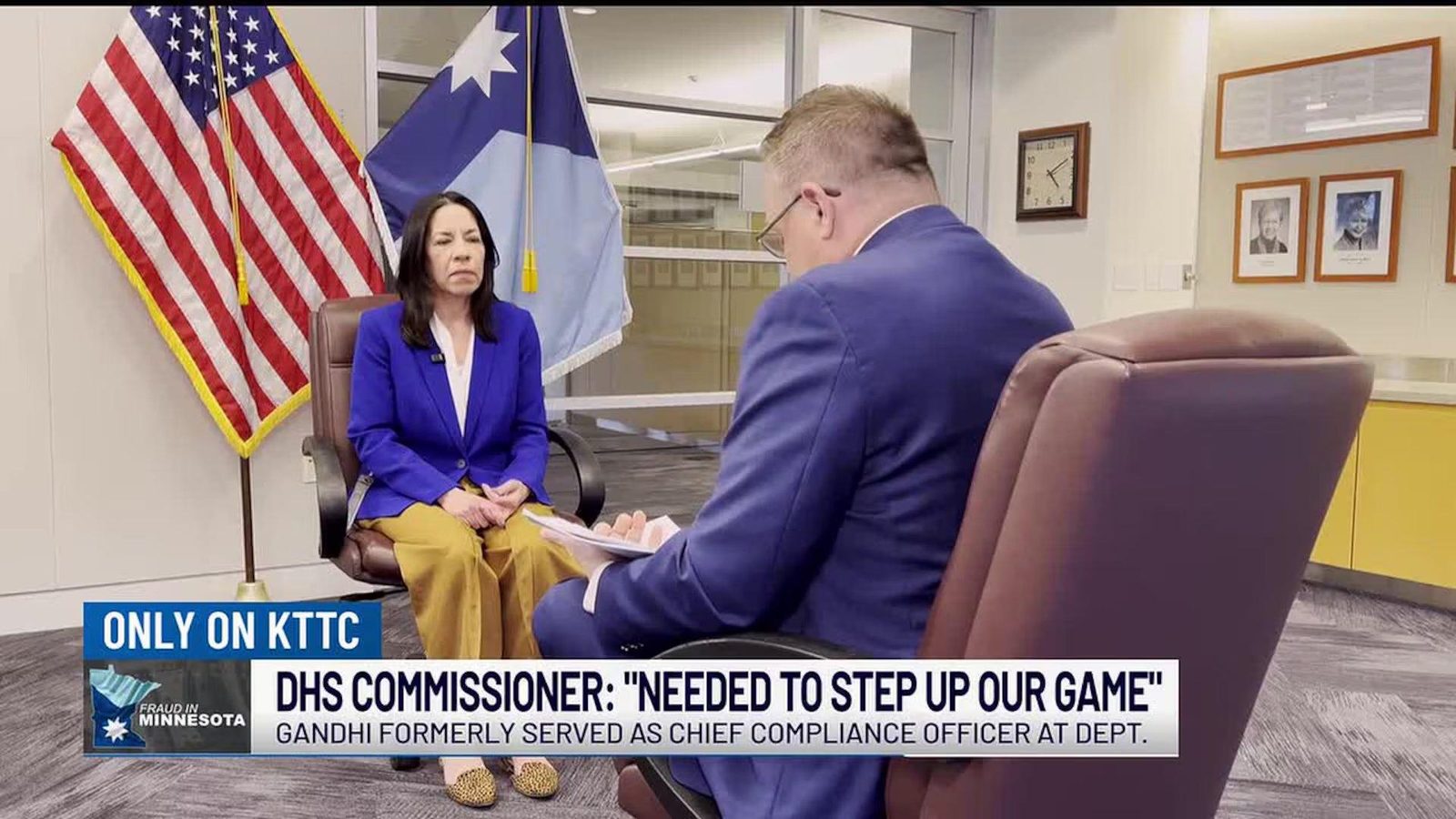
A Deadline the State Could Not Meet
Minnesota set out to clean fraud off its Medicaid rolls and ended up cutting off many of the providers it pays to treat some of its most vulnerable residents. By the night of May 31, 2026, the state had stopped payments to a majority of the roughly 5,600 provider agencies it was screening for fraud risk, autism-therapy companies among them, after a revalidation drive it could not finish on the federal government’s timetable.
The effort, called Minnesota Revalidate 2026, was meant to clear fraudulent and noncompliant operators out of 13 service categories the state had flagged as high risk. By its own late-May count, only about 1,000 of those providers had cleared the process, while more than 1,100 had already been disenrolled and some 3,300 were still pending days before the cutoff, according to figures the Association of Residential Resources in Minnesota (ARRM), a provider group, attributed to the state.
When the deadline passed, the Minnesota Department of Human Services (DHS) terminated providers whose files were unfinished, including, by multiple accounts, cases the agency itself had not reached in time. The Minnesota Reformer reported that funding was cut to more than 3,000 providers across the 13 services, roughly 60% of the group, from small operators to Dungarvin, a decades-old national company with more than 2,000 affected clients in the state.
Why the State Acted
The revalidation did not come from nowhere. It is the latest move in a fraud crisis that has run through Minnesota’s social services for 4 years, starting with the Feeding Our Future case, a pandemic child-nutrition scheme that prosecutors put at about $250 million and that, by the spring of 2026, had produced 65 convictions, including a 500-month prison sentence for its founder.
Investigators followed the money into other programs, and autism care became a target. On September 24, 2025, federal prosecutors charged the first defendant in what they called an ongoing investigation into the EIDBI autism program, alleging a $14 million scheme run through a Minneapolis agency. EIDBI, short for Early Intensive Developmental and Behavioral Intervention, is Minnesota’s Medicaid autism-therapy benefit for children, the rough equivalent of the ABA services other states fund.
The pattern repeated. On December 18, 2025, the Justice Department charged 6 more defendants across the autism and Housing Stabilization Services programs and announced a guilty plea in the EIDBI case. One operator, the owner of a St. Cloud autism center, was accused of paying kickbacks to families and collecting more than $6 million in Medicaid reimbursement. Minnesota Attorney General Keith Ellison’s Medicaid Fraud Control Unit worked the cases with the FBI and federal health investigators.
The political response was fast. On October 29, 2025, Governor Tim Walz ordered a third-party audit of Medicaid billing and a package of antifraud directives. The federal government applied its own pressure: the Centers for Medicare & Medicaid Services threatened to withhold up to $2 billion from the state’s Medicaid program unless DHS delivered a corrective action plan, the centerpiece of which was revalidating every provider in categories deemed high-risk.

A Years-Long Job in Months
Revalidation itself is routine in Medicaid. States recheck a provider’s credentials, ownership, and background on a fixed cycle, usually every 5 years, every 3 for higher-risk types. What Minnesota attempted was not routine. It moved to revalidate all 5,583 high-risk providers at once, on a clock that ran from the program’s launch on January 26, 2026 to a hard deadline of May 31, work normally spread across 3 to 5 years.
The state had been tightening enrollment for months. It set EIDBI to high-risk status on June 1, 2025, froze new EIDBI enrollments on November 1, 2025, and, in coordination with CMS, froze new enrollments across all 13 high-risk categories on January 27, 2026. Providers were told to watch their state portal mailboxes for revalidation letters, answer any Request for More Information within 30 days, and submit to an unannounced site visit. To staff those visits at scale, DHS pulled in workers from other state agencies.
The categories reach well beyond autism. They include Housing Stabilization Services, certified peer support, nonemergency medical transportation, and a range of disability and home-care services. But EIDBI sat near the center of the effort, both because it was among the first programs flagged and because the autism-fraud prosecutions had made it a prominent target.
Where It Broke for Providers
The promise of continuity assumed the screening would move quickly. It did not. Providers who say they submitted everything on time were terminated anyway, often on a technicality or because a site visit never happened. In Rochester, the compliance officer for MAC Midwest, which runs 18 autism centers, said its locations were first marked approved in the state portal, then tripped up over paperwork the agency misread and a site visit it never conducted at one location.
“There is no grace given by DHS.” – Jen Diedrich, compliance officer, MAC Midwest (June 2026)
Other autism providers told the same story. The director of the Rochester Center for Children, also an EIDBI provider, said the company was struggling with the process and still waiting on answers from the state. A nonemergency transportation company in Pine City was terminated, its backers said, because a scheduling manager who is not a company officer answered the door for inspectors. A group-home operator serving 24 adults with disabilities said a termination letter put its residents at risk.
Through the cutoff and the days after, DHS said little. The agency declined interview requests from several newsrooms and did not release updated numbers on how many providers had been cleared, terminated, or left pending, even as providers and the people who depend on them tried to work out what came next.
The Appeals Bottleneck
For terminated providers, the only near-term remedy is an appeal. DHS gives them 60 days to file and says they may keep serving Medicaid clients while it is pending. The catch is money. Termination cuts a provider off from claims payment, so a company can keep treating clients but cannot bill for the work, a hard squeeze on organizations whose revenue is mostly Medicaid and whose margins are thin.
DHS has said it can switch payments back on for providers who appeal and supply the missing information, before a site visit is even rescheduled, a bridge meant to carry compliant operators through. By early June, more than 800 providers had filed appeals. A lawyer for one provider association predicted the large majority would be reinstated, and suggested the 60-day window was as much about buying the state time as about due process.
Providers are improvising in the meantime. Some are funding payroll from personal savings, others are weighing lawsuits against the state. Advocacy groups describe confusion and inconsistent communication from an agency that, by its critics’ account, was handed an impossible task and is now passing the cost of its own backlog to the providers it regulates.
A Test Case for Other States
Minnesota’s experience is being watched well past its borders. The lever that forced the timeline, a federal threat to claw back billions in Medicaid funding over fraud, is one CMS has shown it will pull, and the agency has pressed states broadly to tighten screening of high-risk Medicaid providers. If revalidation drives like this one spread, autism-therapy operators have reason to watch closely: EIDBI and ABA providers run on Medicaid, carry thin margins, and would feel a payment freeze faster than almost any other specialty.
“A program built to catch fraud is now testing whether the state can tell a bad actor from a backlog.”
For now, the questions are administrative and local: how fast DHS can clear more than 800 pending appeals and turn payments back on, and how many terminated agencies fold before their cases are heard. The state spent its 2026 legislative session on other fights and passed nothing to streamline the process, which leaves the next move with DHS and CMS rather than the Legislature. The autism providers and group homes caught in the backlog are left waiting on appeals that DHS has not said how long it will take to decide.
AT A GLANCE
| What happened: | After a compressed fraud-screening deadline passed on May 31, 2026, Minnesota cut Medicaid payments to a majority of the high-risk providers it was revalidating |
| The program: | Minnesota Revalidate 2026, an off-cycle revalidation of 5,583 providers in 13 high-risk service categories, launched January 26, 2026 |
| Why: | Gov. Tim Walz’s October 29, 2025 order for a third-party Medicaid billing audit, after autism (EIDBI), housing, and Feeding Our Future fraud cases |
| Federal lever: | CMS threatened to withhold up to $2 billion unless Minnesota completed a corrective action plan built around the revalidation |
| The compression: | Screening normally spread over 3 to 5 years was attempted in about 4 months |
| High-risk categories: | Include EIDBI (autism therapy) and Housing Stabilization Services; EIDBI was set high-risk June 1, 2025, with an enrollment freeze from November 1, 2025 |
| Late-May status: | Per ARRM, DHS reported 1,009 providers revalidated, 1,151 disenrolled, and about 3,300 still pending days before the deadline |
| Reported cutoff: | The Minnesota Reformer reported funding cut to more than 3,000 providers, roughly 60% of the group, including Dungarvin (2,000-plus clients) |
| Autism examples: | MAC Midwest (18 autism centers) and Rochester Center for Children reported terminations or limbo over site-visit and paperwork issues |
| Appeals: | Terminated providers have 60 days to appeal and may keep serving clients, but termination halts Medicaid payments; 800-plus had appealed by early June |
| DHS response: | DHS says it can resume payments for appealing providers who submit missing information; it declined interviews and released no updated post-deadline data |
| Bottom line: | The disruption is real and rooted in a federally forced, compressed revalidation, not a targeted purge; autism and other high-risk providers face payment gaps of uncertain length |
SOURCES & REFERENCES
| 1. | Minnesota Department of Human Services. “Program Integrity” (high-risk designations; 18,109 inactive-provider terminations Oct. 2025–March 2026; $2 billion CMS threat; 5,583 high-risk revalidations). https://mn.gov/dhs/program-integrity/ |
| 2. | Minnesota Department of Human Services. “Minnesota Revalidate 2026 Provider FAQ” (off-cycle revalidation; May 31, 2026 deadline; unannounced site visits; disenrollment and 60-day appeal). https://mn.gov/dhs/partners-and-providers/news-initiatives-reports-workgroups/minnesota-health-care-programs/provider-news/mn-revalidate-provider-faq.jsp |
| 3. | Minnesota Department of Human Services. “Fighting fraud, waste and abuse” (Walz Oct. 29, 2025 order; program launched Jan. 26, 2026; Jan. 27, 2026 enrollment freeze for 13 categories; EIDBI moratorium). https://mn.gov/dhs/partners-and-providers/news-initiatives-reports-workgroups/minnesota-health-care-programs/provider-news/fighting-fraud-waste-and-abuse.jsp |
| 4. | Minnesota Department of Human Services. “Minnesota Revalidate 2026: Find Care” (disenrolled providers may close or appeal; services continue during appeal; recipient Notices of Action and EPSDT). https://mn.gov/dhs/find-care/ |
| 5. | Minnesota Reformer. “In rush to meet federal deadline, Minnesota cuts funding to 60% of providers in 13 Medicaid programs.” June 4, 2026. https://minnesotareformer.com/2026/06/04/in-rush-to-meet-federal-deadline-minnesota-cuts-funding-to-60-of-providers-in-13-medicaid-programs/ |
| 6. | Star Tribune. “State cuts off thousands of Medicaid providers in race to keep federal funds.” June 2026. https://www.startribune.com/minnesota-revalidate-providers-prevent-fraud-protect-medicaid-funds/601849195 |
| 7. | KARE 11. “DHS revalidation process terminates more than 1,000 Medicaid providers” (May 29 figures via ARRM: 1,009 revalidated, 1,151 disenrolled, 3,300 pending). June 2026. https://www.kare11.com/article/news/local/dhs-revalidation-process-terminates-1000-medicaid-providers/89-e4ea9e56-561d-4a7b-9739-9d82e221d62f |
| 8. | Post Bulletin (Forum Communications). “State Medicaid revalidation process leaves some providers in limbo” (MAC Midwest 18 autism centers; Rochester Center for Children; Jen Diedrich). June 2026. https://www.parkrapidsenterprise.com/health/state-medicaid-revalidation-process-leaves-some-providers-in-limbo |
| 9. | Duluth News Tribune. “Minnesota Medicaid revalidation system creates headache” (May 31 deadline; Lifts Transportation termination; Rep. Zeleznikar). June 2026. https://www.duluthnewstribune.com/news/minnesota/minnesota-medicaid-revalidation-system-creates-headache |
| 10. | FOX 9 Minneapolis-St. Paul. “Minnesota Medicaid crisis: Thousands of care providers cut off from funding after state revalidation deadline” (DHS declined interviews; providers weigh lawsuits). June 2026. https://www.fox9.com/news/minnesota-medicaid-crisis-thousands-care-providers-cut-off-from-funding-after-state-revalidation-deadline |
| 11. | U.S. Department of Justice, District of Minnesota. “Six Additional Defendants Charged, One Defendant Pleads Guilty in Ongoing Fraud Schemes” (Dec. 18, 2025; Star Autism Center; $6 million-plus EIDBI reimbursement). https://www.justice.gov/usao-mn/pr/six-additional-defendants-charged-one-defendant-pleads-guilty-ongoing-fraud-schemes |
| 12. | IRS Criminal Investigation. “First defendant charged in autism fraud scheme” ($14 million EIDBI scheme; “first in the ongoing investigation into the EIDBI Autism Program,” Acting U.S. Attorney Joseph Thompson). September 24, 2025. https://www.irs.gov/compliance/criminal-investigation/first-defendant-charged-in-autism-fraud-scheme |
| 13. | Minnesota Attorney General. “Ellison partners with federal law enforcement on indictments of Housing Stabilization Services and EIDBI providers.” December 18, 2025. https://www.ag.state.mn.us/Office/Communications/2025/12/18_HSS.asp |
| 14. | U.S. Department of Justice, Office of Public Affairs. “Feeding Our Future Ringleader Sentenced to 500 Months” (scheme obtained more than $240 million; founder sentenced to 500 months). 2026. https://www.justice.gov/opa/pr/feeding-our-future-ringleader-sentenced-500-months |
| 15. | U.S. Department of Justice, Office of Public Affairs. “Two More Defendants Plead Guilty in Feeding Our Future Fraud Scheme” (65 convictions scheme-wide). April 9, 2026. https://www.justice.gov/opa/pr/two-more-defendants-plead-guilty-feeding-our-future-fraud-scheme |