
What the Rule Requires
WASHINGTON — The federal prior-authorization clock now runs faster than most ABA payer workflows were built to handle, and the first state implementations are showing what operational compliance actually looks like.
The CMS Interoperability and Prior Authorization Final Rule, identified by its docket number CMS-0057-F, set two hard decision windows that began enforcement on January 1, 2026. Expedited prior authorization requests must receive a decision within 72 hours. Standard prior authorization requests must receive a decision within 7 calendar days. Before this rule, many impacted payers had operated under a 14-day standard window. The new floor cuts that window in half.
The rule defines a set of federal-program payers as “impacted payers”: Medicare Advantage organizations, state Medicaid fee-for-service programs, CHIP fee-for-service programs, Medicaid and CHIP managed care plans, and Qualified Health Plan issuers on the Federally-facilitated Exchanges. The new decision-timeframe requirements, however, specifically exclude QHP issuers on the FFEs, which remain subject to the rule’s denial-reason and metrics-reporting provisions but not the 72-hour and 7-day clocks. The rule does not cover drug prior authorizations, which sit under a separate regulatory framework, and it does not directly cover commercial group health plans that are not Exchange QHPs.
Two additional provisions sit alongside the decision windows. Payers must now provide a specific reason for any denial, giving providers and patients a concrete basis for appeals. And by March 31, 2026, impacted payers were required to publicly post annual metrics on their websites, including approval and denial rates and average decision times. The metrics publication requirement turns prior-authorization performance into a comparable, public-domain dataset, per the rule’s implementation guidance.
“The new floor cuts the standard window in half, and for QHPs on the Exchanges, the denial-reason requirement applies even though the decision clocks do not.” — BreakingNewsABA editorial analysis of CMS-0057-F
Michigan Goes First
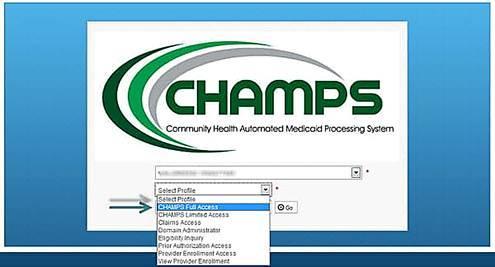
The first state-level operationalization visible to ABA providers came from Michigan. The Michigan Department of Health and Human Services updated CHAMPS prior-authorization screens on March 22, 2026, under policy bulletin MMP 26-02. The screen changes brought the state Medicaid prior-authorization workflow into alignment with the federal 72-hour and 7-day windows, added the denial-reason field that the rule now requires, and rebuilt the provider-facing portal to track decision timestamps.
A second Michigan bulletin, MMP 26-03, adopted updated HCPCS codes effective January 1, 2026. Separately, Michigan Medicaid raised its fee-for-service rate schedule by 2.5 percent for behavioral health providers, including ABA services, tracking the federal statutory rate update incorporated into the CY 2026 Medicare Physician Fee Schedule. The combined effect is a state Medicaid environment in 2026 that is operationally faster on prior authorization, slightly better-paying on direct service, and more tightly coded for billing review than in 2025.
Michigan’s March 22 CHAMPS update is the first concrete state implementation of CMS-0057-F that ABA providers will actually click through. The decision-timestamp tracking inside the portal is the part operators should study, because the same architecture will land in other state Medicaid systems through 2026 and 2027.
What Changes for ABA Specifically
ABA practices interact with the federal prior-authorization framework primarily through the Category I CPT codes for adaptive behavior treatment. The clinical functions are operationally distinct, and each one runs through prior authorization on its own track.
CPT 97151 (assessment): BCBA-administered behavior identification assessment. Initial authorizations typically run 6 to 12 hours of assessment time. Under CMS-0057-F, the standard 7-day window is now the floor on the initial-authorization decision. Practices that previously waited 10 to 14 days for an assessment authorization should now expect a decision within a week, with documentation specific enough for a same-day clinical referral if needed.
CPT 97153 (technician-delivered treatment): Adaptive behavior treatment by protocol, the highest-volume billing line for most center-based ABA. Reauthorizations on 97153 are where the 7-day window matters most. A 7-day decision floor means caseload-management cycles can be timed against a known interval, where 14-day cycles previously required scheduling buffers.
CPT 97155 and 97156 (BCBA direct and family guidance): BCBA-led treatment protocol modification (97155) and family adaptive behavior guidance (97156) are typically authorized in shorter blocks. The faster decision window matters less for monthly utilization but more for mid-quarter adjustments, where a denial that previously sat for two weeks now must be resolved or appealed inside one.
A second operational signal is on the documentation side. Michigan-specific guidance from billing-services providers reports that managed-care plans in 2026 are running automated reviews that flag sessions where notes lack trial data or behavioral objectives. The shift is from narrative-only session notes to data-driven documentation. The CMS-0057-F denial-reason requirement makes those automated flags more visible to providers when they convert to denials.
The January 2027 API Deadline
The next implementation milestone is the Prior Authorization FHIR API requirement, due January 1, 2027. Impacted payers must implement a Prior Authorization Application Programming Interface using HL7 FHIR standards, allowing providers to query a payer’s prior-authorization requirements, submit authorizations programmatically, and receive responses inside their electronic health record or practice management system, per the CMS Prior Authorization API FAQ. The API is the technology-side complement to the decision-window changes. Where the 2026 deadlines compress timing, the 2027 deadline compresses workflow friction.
For ABA practice-management vendors, the API deadline is the consequential one. Platforms that integrate the Prior Authorization API will let BCBAs submit authorizations directly from inside the EHR, receive payer responses without leaving the workflow, and track decision timestamps against the federal floor. Platforms that do not integrate will run on manual portal entry while competitors automate. CentralReach, Rethink, AccuPoint, Theralytics, AlohaABA, and the other named vendors in the market will be measurable by their integration roadmaps in late 2026 and through 2027.
What BCBAs and Operators Should Do
Three operational priorities frame the next 12 months for ABA practices working under federal-program payers.
First, retime the intake-to-services calendar. A 7-day standard decision window changes how a practice schedules first sessions after an assessment. Practices that have run on 10-to-14-day buffers can compress that interval, which improves intake throughput and reduces family wait. The compression requires intake coordinators to be ready with documentation packets that can stand up to a same-week clinical review.
Second, audit session-note structure against denial-reason triggers. CMS-0057-F requires payers to give specific reasons for denials. Practices should map their session notes for 97151, 97153, 97155, and 97156 against the specific elements payers flag in automated review: trial-by-trial data, operational definitions of target behaviors, antecedent and consequence documentation, and behavioral objective references. Notes that consistently produce denial reasons should be revised at the template level rather than the individual-clinician level.
Third, ask practice-management vendors about the FHIR API. Operators should be in conversation with their existing software vendor by mid-2026 about the company’s Prior Authorization FHIR API roadmap. Whether the platform will integrate the API by the January 1, 2027 payer deadline, or by 2028, or not at all, is the planning question. Practices on platforms that do not integrate will need to evaluate whether to migrate before payer-side API availability arrives.
AT A GLANCE
| Rule: | CMS Interoperability and Prior Authorization Final Rule (CMS-0057-F) |
| Standard PA decision window: | 7 calendar days, effective January 1, 2026 |
| Expedited PA decision window: | 72 hours, effective January 1, 2026 |
| Denial-reason requirement: | Payers must provide specific reasons for denials, effective January 1, 2026 |
| Metrics publication deadline: | Annual public posting, first deadline March 31, 2026 |
| Prior Authorization FHIR API: | Required of impacted payers by January 1, 2027 |
| Decision-timeframe scope: | Medicare Advantage; state Medicaid FFS; CHIP FFS; Medicaid/CHIP MCOs (QHP issuers on FFEs are excluded from the 72-hour and 7-day clocks) |
| QHP carve-in: | QHP issuers on FFEs remain subject to denial-reason and metrics-reporting provisions and the January 1, 2027 API requirements |
| Exclusion: | Drug prior authorizations not covered; commercial non-Exchange plans not directly covered |
| Michigan implementation: | CHAMPS portal prior-authorization screen update, March 22, 2026, under policy bulletin MMP 26-02 |
| Michigan ABA code map: | 97151 (BCBA assessment); 97153 (technician-delivered treatment); 97155 (BCBA direct); 97156 (family guidance) |
| Michigan rate update, 2026: | 2.5% FFS rate increase for behavioral health and ABA, tracking the federal CY 2026 Medicare Physician Fee Schedule statutory update |
| Vendor implication: | Practice-management platforms compete on FHIR API integration into 2027 |
| Operator priority: | Retime intake calendars; audit session-note structure against denial triggers; map vendor API roadmap |
SOURCES & REFERENCES
| 1. | Centers for Medicare & Medicaid Services. “CMS Interoperability and Prior Authorization Final Rule CMS-0057-F.” Fact Sheet, January 17, 2024. cms.gov/newsroom/fact-sheets/cms-interoperability-prior-authorization-final-rule-cms-0057-f |
| 2. | Centers for Medicare & Medicaid Services. “CMS Interoperability and Prior Authorization Final Rule (CMS-0057-F).” Landing page. cms.gov/priorities/burden-reduction/overview/interoperability/policies-regulations/cms-interoperability-prior-authorization-final-rule-cms-0057-f |
| 3. | Centers for Medicare & Medicaid Services. “Prior Authorization API.” Frequently Asked Questions. cms.gov/priorities/burden-reduction/overview/interoperability/frequently-asked-questions/prior-authorization-api |
| 4. | Michigan Department of Health and Human Services. “March 19, 2026 Reminder: CHAMPS Prior Authorization Screen Updates.” Provider alert. michigan.gov/mdhhs/assistance-programs/medicaid/portalhome/medicaid-providers/medicaid-provider-alerts/data/all-alerts-and-updates/march-19-2026-reminder-champs-prior-authorization-screen-updates |
| 5. | Michigan Department of Health and Human Services. Bulletin MMP 26-03, “Code Update,” issued January 22, 2026. michigan.gov/mdhhs/-/media/Project/Websites/mdhhs/Assistance-Programs/Medicaid-BPHASA/2025-Bulletins/Final-Bulletin-MMP-26-03-Code-Update.pdf |
| 6. | Michigan Department of Health and Human Services. CHAMPS Prior Authorization landing page. michigan.gov/mdhhs/assistance-programs/medicaid/portalhome/Medicaid-Providers/champs-a/champs/accordion/Pages-Functions/prior-authorization |
| 7. | Cube Therapy Billing. “Michigan Medicaid ABA Billing Updates 2026: What BCBAs and ABA Providers Must Prepare For.” cubetherapybilling.com/michigan-medicaid-aba-billing-updates |
| 8. | Myers and Stauffer LC. “Prior Authorization Provisions Implementation Timelines: Update.” myersandstauffer.com/insights/blog-prior-authorization-provisions-implementation-timelines-update/ |
| 9. | American Hospital Association. “CMS issues CY 2026 physician fee schedule final rule.” October 31, 2025. aha.org/news/headline/2025-10-31-cms-issues-cy-2026-physician-fee-schedule-final-rule |
| 10. | ABA Coding Coalition. Billing Codes Reference for CPT 97151, 97153, 97155, 97156. abacodes.org/codes/ |






Join the discussion ▾