What the IACC Is and Why It Matters
WASHINGTON, D.C. — The Interagency Autism Coordinating Committee has never been a household name, even within the autism research community. Created by Congress through the Combating Autism Act in 2006 and reauthorized through the Autism CARES Act, its mandate is straightforward: develop a strategic plan for autism research, coordinate federally funded activities across agencies, and report annually to Congress on the state of the science. What makes the committee significant is not its visibility but its reach. The IACC helps coordinate approximately $2 billion in annual federal funding for autism research and training programs.
That figure flows through the National Institutes of Health, the Centers for Disease Control and Prevention, the Department of Defense, the Health Resources and Services Administration, and other agencies. The IACC does not allocate that money directly. Its strategic plans, priority statements, and annual progress reports carry nonbinding but real influence over where agencies direct their research investments. For two decades, the committee functioned as a broadly scientific body. Its membership included autism researchers, NIH institute directors, autistic self-advocates, clinical practitioners, and representatives of major private funders like Autism Speaks and the Simons Foundation.
All of that changed on January 28, 2026.
The Overhaul: 21 New Members, Zero Continuity
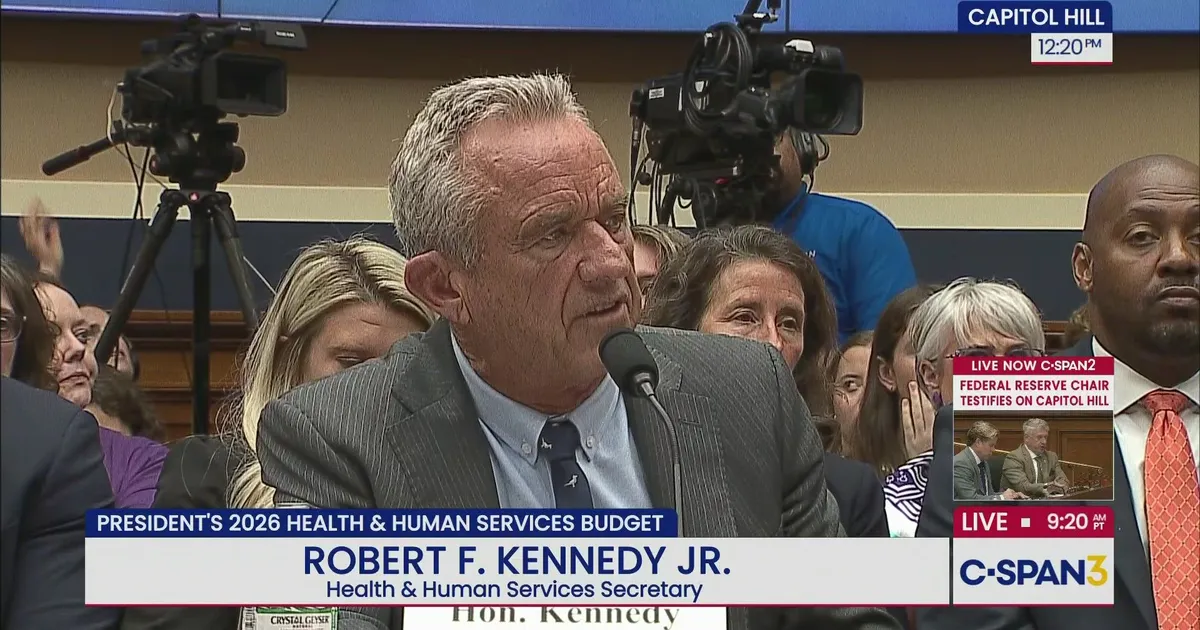
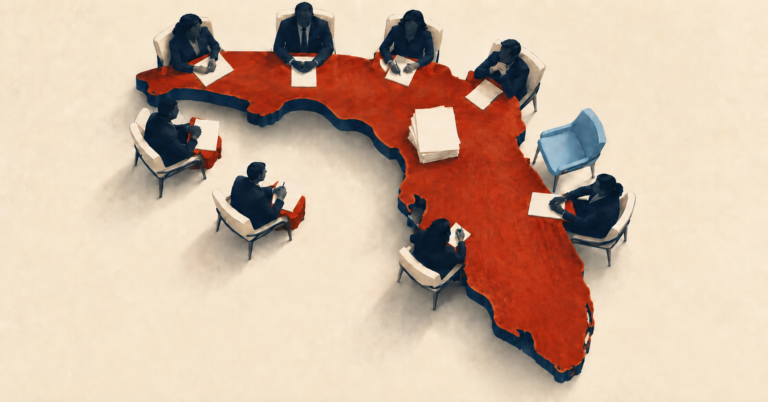
On January 28, 2026, HHS announced the appointment of 21 new public members to the IACC. Not one member of the prior committee was reappointed. Former members who had asked to continue serving were not brought back. The new slate included no representatives from Autism Speaks or the Simons Foundation, organizations that together represent a substantial share of private autism research investment in the United States. None of the new members, including the newly appointed chair, had ever served on the IACC before.
The announcement came days after STAT News reported that new committee members had gathered for a secret orientation before the full list had been made public, a departure from standard IACC practice. Prior administrations, according to former committee members, had not held private orientations in advance of public meetings.
Kennedy had spent his first year as HHS secretary describing autism as an epidemic and directing federal health agencies to identify its cause so that the condition could, in his words, be ended. He also launched a $50 million autism research initiative and, separately, directed the removal of federal agency webpages that documented the risks associated with non-evidence-based autism treatments. Those prior actions set the context for how the new IACC appointments were interpreted by the research and advocacy community.
Among the named appointees identified by STAT News: Ginger Taylor, former director of the Maine Coalition for Vaccine Choice and parent of an autistic child; Lisa Ackerman, co-founder of The Autism Community in Action, known as TACA, and parent of an autistic child; Tracy Slepcevic, organizer of the Autism Health Summit and host of a fundraiser for Kennedy during his 2024 presidential campaign; and Daniel Keely, a high school senior with autism. The new chair is Sylvia Fogel, a psychiatry instructor at Harvard Medical School and parent of a child with profound autism.
The scientific community’s objection was not to the presence of parent advocates on the committee. Parent advocates had served on prior iterations of the IACC. The objection was to the composition of the roster as a whole. “The newly constituted Kennedy-appointed IACC represents a complete and unprecedented overhaul, with no continuity from prior committees and a striking absence of scientific expertise,” said Alison Singer, president of the Autism Science Foundation and a former three-term IACC member, in a March 2026 statement. “It disproportionately represents a tiny subset of families who believe vaccines cause autism, while excluding the overwhelming majority of advocates and experienced autism researchers who support evidence-based science.”
Vaccines do not cause autism. That conclusion is supported by decades of research across multiple countries and study designs, including large-scale epidemiological studies that followed hundreds of thousands of children. HHS, in announcing the new members, described the appointees as committed to advancing the fight against autism and achieving breakthroughs in diagnosis, treatment, and prevention.
“The newly constituted Kennedy-appointed IACC represents a complete and unprecedented overhaul, with no continuity from prior committees and a striking absence of scientific expertise.” — Alison Singer, Autism Science Foundation (March 2026)
The I-ACC: A Shadow Committee Takes Shape
On March 3, 2026, a coalition of autism researchers and advocates announced the formation of the Independent Autism Coordinating Committee, referred to as the I-ACC. The group was convened largely at the initiative of Alison Singer. Its 12 founding members included two former directors of the National Institute of Mental Health who had each chaired the federal IACC: Joshua Gordon, who directed NIMH from 2016 to 2024 and chaired the IACC for eight years, and Tom Insel, who directed NIMH from 2002 to 2015 and chaired the IACC through 2015.
The rest of the I-ACC founding membership included Jim Greenwood, the Republican former congressman from Pennsylvania who sponsored the Children’s Health Act of 2000 that created the original IACC and who later served as CEO of BIO, the biotechnology trade association; Joseph Joyce, president and CEO of the Autism Society of America; Amy Lutz, a University of Pennsylvania researcher and autism parent; David Mandell, associate director of the Center for Autism Research at Children’s Hospital of Philadelphia and a former IACC member; Kristin Sohl, a pediatrician representing the American Academy of Pediatrics; Matthew State, scientific director of Aligning Research to Impact Autism at UCSF; Helen Tager-Flusberg, professor emerita at Boston University, founder of the Coalition of Autism Scientists, and a former IACC member from 2019 to 2025; and John Walkup, chair of psychiatry at Northwestern University and current president of the American Academy of Child and Adolescent Psychiatry.
The Autism Science Foundation agreed to serve as the administrative secretariat. Members are serving on a volunteer basis.
The I-ACC’s stated purpose is threefold: to develop a strategic research agenda for the autism community, to inform the funding decisions of non-governmental research organizations, and to serve as a near-real-time counterpoint to the federal committee whenever it meets. “The I-ACC will maintain an independent agenda and will also follow the meeting schedule of the Kennedy-appointed IACC so that it can respond quickly to any recommendations that are not supported by science,” the group stated in its founding announcement. If the federal IACC convenes a discussion about vaccines and autism, for example, the I-ACC plans to hold its own session the same day presenting the existing evidence.
The I-ACC also stated its intention to submit annual reports to Congress, directly paralleling one of the federal IACC’s statutory functions.
The Federal Meeting That Never Happened
The federal IACC had been scheduled to hold its first public meeting with the new membership on March 19, 2026. It would have been the committee’s first public session in more than a year, the prior meeting having taken place on January 14, 2025.
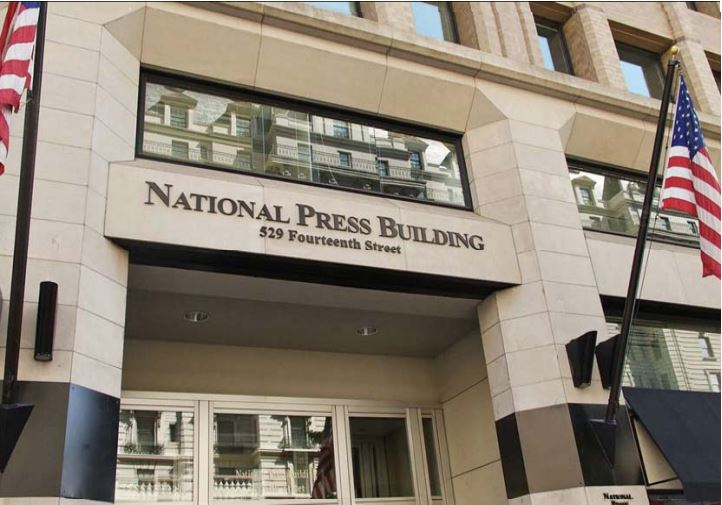
On March 7, 2026, HHS spokesperson Andrew Nixon announced the cancellation with no explanation: “The IACC will not meet later this month. Further information will be shared as available.” No reason was given publicly. The announcement came just days after the I-ACC had been formed and had announced its own March 19 meeting at the National Press Club in Washington.
The federal IACC was subsequently rescheduled to April 28, 2026, a date confirmed in a Federal Register notice published April 8, 2026. The HHS website noted, in a disclosure at the top of the IACC page, that due to current HHS and NIH restructuring, some content was not being updated regularly.
The I-ACC held its March 19 meeting as planned. At the National Press Club, Alison Singer opened with a funding update, noting in her remarks that total autism research funding in the United States had grown from $419 million to $568 million over the prior five years, with private organizations now representing approximately 40% of total funding. Singer was working from data compiled from public announcements, as the federal IACC had not released updated funding figures since the Trump administration began.
The March 19 I-ACC session focused on genetic biomarkers, co-occurring diagnoses, and the specific needs of autistic people with little or no speaking ability and higher support needs, a population that had been a persistent gap in the federal research agenda. Multiple members noted the relative absence of rancor at the independent meeting, compared to the often contentious sessions of the federal body in prior years, where researchers and vaccine-skeptic advocates had sometimes shared the same table.
“We don’t believe that the new federal IACC is going to pursue the kinds of areas and priorities that the mainstream scientific community feels are important at this point.” — Helen Tager-Flusberg, Boston University, I-ACC founding member (STAT News, March 2026)
HHS pushed back through spokesperson Andrew Nixon, saying: “many participants in the ‘independent’ committee have previously served multiple IACC terms, with limited real-world gains for individuals and families.” The agency did not provide specifics.
A Critique From the Left: Who Speaks for Autistic People?
The formation of the I-ACC drew criticism from a quarter that is rarely aligned with the federal IACC under Kennedy: the autistic self-advocacy community.
Ari Ne’eman, co-founder of the Autistic Self Advocacy Network and a health policy researcher at Harvard University, pointed out that the I-ACC’s initial roster of 12 members was entirely white and included only one autistic person. The federal committee under Kennedy had also reduced autistic representation compared to earlier iterations, which had brought in a larger number of autistic members after 2019. Ne’eman wrote that “at present autistic people are losing ground on political representation. I don’t think either [group] can be meaningfully said to represent our community at this moment,” according to STAT’s reporting on the March 19 session.
That critique applies pressure to both sides. The federal IACC’s composition concerns many in the scientific community. The I-ACC’s composition concerns many in the disability rights community. The tension between those two critiques reflects a broader unresolved question in autism policy: whether autism research should be driven primarily by scientific expertise, or primarily by the experiences and preferences of autistic people, or both, and how to weight those inputs when they conflict. The federal IACC, in its most effective iterations, had tried to hold both in the room at the same time. Neither of the two current committees does that well.
What This Means for ABA Research and Funding
For practitioners, practice owners, and researchers working in applied behavior analysis, the IACC fight matters for a specific reason. The federal IACC’s strategic plans have historically guided federal investment across the entire autism research continuum, from basic genetics to behavioral interventions to services. ABA is the most extensively studied behavioral intervention for autism and holds the largest body of evidence among therapeutic approaches. Federal research funding through the NIH, the Department of Defense’s autism research program, and HRSA has historically supported studies of ABA effectiveness, implementation, workforce development, and outcomes.
A federal IACC that redirects its strategic priorities toward environmental causation and vaccine-autism research, rather than services and treatment, could shift how agencies weight their funding portfolios. That shift would take time to materialize in actual funding levels, but strategic plan language from the IACC has historically carried real influence with program officers at NIH and other agencies who use it to frame their grant priorities.
The I-ACC has explicitly positioned itself as a steward of the services and treatment side of the research agenda. In its founding statement, the group said it would create a strategic plan covering the full translational continuum, including basic genetics, environmental causes, early detection, therapeutics, and services. It also said it would work to inform non-governmental funders, which now represent 40% of total autism research investment. If the I-ACC can establish credibility with those private funders, some of the federal funding influence lost through the IACC overhaul could be partially offset through private channels.
How that plays out is not yet clear. The federal IACC has statutory authority and federal dollars behind it. The I-ACC has scientific credibility and an increasingly visible platform, but no governmental standing. As Ari Ne’eman noted at the March 19 session: “Nothing replaces the official imprimatur of the U.S. federal government, and nobody can spend as much money as the U.S. federal government.” The field is watching to see whether the federal IACC, when it finally meets on April 28, pursues the research agenda the scientific community fears, or surprises it. Either way, the presence of an independent, credentialed shadow committee meeting on the same days and reporting to the same Congress is a development with no precedent in the history of the IACC.
| IACC established: | 2006 (Combating Autism Act); reauthorized under Autism CARES Act; reports to Congress |
| Federal funding coordinated: | Approximately $2 billion annually in autism research and training (IACC/STAT) |
| HHS overhaul date: | January 28, 2026; 21 all-new public members; zero continuity from prior committee |
| New IACC chair: | Sylvia Fogel, Harvard Medical School psychiatry instructor; first-time IACC member |
| Named new members: | Ginger Taylor, Lisa Ackerman (TACA), Tracy Slepcevic (Kennedy fundraiser host), Daniel Keely (STAT, January 2026) |
| Absent from new IACC: | Autism Speaks, Simons Foundation, prior committee members; mainstream autism scientists |
| I-ACC announced: | March 3, 2026; 12 founding members; secretariat: Autism Science Foundation |
| Key I-ACC members: | Joshua Gordon (former NIMH director, IACC chair 2016-2024); Tom Insel (former NIMH director, IACC chair 2002-2015); Jim Greenwood (R, wrote original legislation); Helen Tager-Flusberg, David Mandell, Alison Singer, AAP, AACAP |
| Federal IACC meeting: | Scheduled March 19, 2026; canceled March 7 with no explanation; rescheduled April 28, 2026 |
| I-ACC first meeting: | March 19, 2026, National Press Club, Washington D.C.; livestreamed; held as planned |
| Research priorities (I-ACC): | Genetic biomarkers, co-occurring diagnoses, higher support needs population; therapeutics and services |
| Private autism funding: | Grew from $419M to $568M over five years; now 40% of total funding (Singer, March 19, 2026) |
| I-ACC criticism: | Initial roster entirely white with one autistic member; inadequate disability representation (Ari Ne’eman, ASAN) |
SOURCES & REFERENCES
| 1. | Broderick, O. Rose. “HHS Appoints 21 New Members to Federal Autism Advisory Committee.” STAT News. January 28, 2026. https://www.statnews.com/2026/01/28/kennedy-names-new-autism-advisors-advocates-alarmed-vaccine-skeptics/ |
| 2. | Broderick, O. Rose. “Key Autism Committee Is Being Reshaped to Support Kennedy’s Vaccine Agenda.” STAT News. January 23, 2026. https://www.statnews.com/2026/01/23/kennedy-autism-advisors-new-panel-members-selection-lacks-transparency/ |
| 3. | Broderick, O. Rose. “Autism Researchers Rebuke Kennedy, Form Independent Advisory Group.” STAT News. March 3, 2026. https://www.statnews.com/2026/03/03/autism-researchers-rebuke-kennedy-form-independent-advisory-group/ |
| 4. | Broderick, O. Rose. “Federal Autism Advisory Board Cancels First Public Meeting Since Overhaul.” STAT News. March 7, 2026. https://www.statnews.com/2026/03/07/autism-committee-meeting-canceled/ |
| 5. | Broderick, O. Rose. “Independent Autism Committee Kicks Off Efforts to Counter RFK Jr., Influence Congress.” STAT News. March 19, 2026. https://www.statnews.com/2026/03/19/autism-scientists-organize-alternative-to-rfk-jr-advisors/ |
| 6. | Sun, Lena H. “Scientists Form Independent Autism Panel, Citing Concerns Over RFK Jr.” The Washington Post. March 3, 2026. |
| 7. | Rosenthal, Carl, and Ravi B. “Autism Research Leaders Launch Independent Committee to Counter RFK’s Panel.” AJMC. Accessed April 2026. https://www.ajmc.com/view/autism-research-leaders-launch-independent-committee-to-counter-rfk-s-panel |
| 8. | Autism Science Foundation. “Autism Research Leaders Announce Independent Autism Coordinating Committee (I-ACC).” Press release. March 3, 2026. https://autismsciencefoundation.org/press_releases/i-acc-announcement/ |
| 9. | Ault, Alicia. “Autism Experts Strike an Independent Committee to Counter Federal Panel.” Medscape. March 3, 2026. https://www.medscape.com/viewarticle/autism-experts-strike-independent-committee-counter-federal-2026a10006m1 |
| 10. | Hamilton, Jon. “Former Federal Advisers on Autism Who Were Let Go by RFK Jr. Form a New Committee.” NPR. March 18, 2026. https://www.npr.org/2026/03/18/nx-s1-5743563/former-federal-advisers-on-autism-who-were-let-go-by-rfk-jr-form-a-new-committee |
| 11. | Scientific American. “RFK Jr.’s Overhauled Autism Advisory Board Cancels First Public Meeting.” March 9, 2026. https://www.scientificamerican.com/article/rfk-jr-s-overhauled-autism-advisory-board-cancels-first-public-meeting/ |
| 12. | Disability Scoop. “Federal Autism Panel Cancels Meeting Without Explanation.” March 11, 2026. https://www.disabilityscoop.com/2026/03/11/federal-autism-panel-cancels-meeting-without-explanation/31900/ |
| 13. | Federal Register. “Office of the Secretary; Notice of Meeting.” (IACC meeting, April 28, 2026.) April 8, 2026. https://www.federalregister.gov/documents/2026/04/08/2026-06742/office-of-the-secretary-notice-of-meeting |
| 14. | Independent Autism Coordinating Committee (I-ACC). Home page and member bios. i-accautism.org. Accessed April 2026. https://www.i-accautism.org |
| 15. | Autistic Self Advocacy Network. “Interagency Autism Coordinating Committee (IACC).” autisticadvocacy.org. Accessed April 2026. https://autisticadvocacy.org/2026/02/interagency-autism-coordinating-committee-iacc/ |