The State Plan Amendment
LANSING, MICHIGAN — On February 19, 2026, the Centers for Medicare and Medicaid Services approved Michigan’s State Plan Amendment MI-25-0020, with an effective date of June 1, 2026. The amendment’s language is direct: it clarifies Behavioral Health Treatment, Applied Behavior Analysis service access for Medicaid beneficiaries and increases the ability for children with a diagnosis of Autism Spectrum Disorder to receive early interventions and supports. The approval covers changes to coverage, eligibility, preventive services, and prior authorization provisions within Michigan’s Medicaid State Plan.
Michigan’s ABA Medicaid benefit has existed since April 1, 2013, when the state first received CMS approval to provide ABA services for children ages 18 months through age 5 with an ASD diagnosis. The program was administered through local Community Mental Health service programs, with ABA services supervised by BCBAs or qualified behavioral health professionals. In its first year, the Michigan Department of Community Health projected serving approximately 1,600 children.
The June 2026 expansion represents a meaningful broadening of that original benefit. While the full details of the approved SPA pages are not yet publicly available in final form, the amendment’s description on Medicaid.gov indicates changes across four domains: coverage (what services are included), eligibility (who qualifies), preventive services (early-intervention access), and prior authorization (how services are approved). Taken together, these changes suggest a comprehensive modernization of Michigan’s ABA Medicaid framework—not a marginal adjustment but a structural expansion of access.
The timing is significant. SPA MI-25-0020 was submitted by the Michigan Department of Health and Human Services and approved by CMS during a period when the federal government is simultaneously signaling reduced Medicaid spending through the OBBBA provisions and increased fraud enforcement through the HHS Office of Inspector General. Michigan’s expansion suggests that the state’s health officials concluded that the clinical and economic case for early ABA intervention outweighs the fiscal risk of expanding coverage during a period of federal austerity.
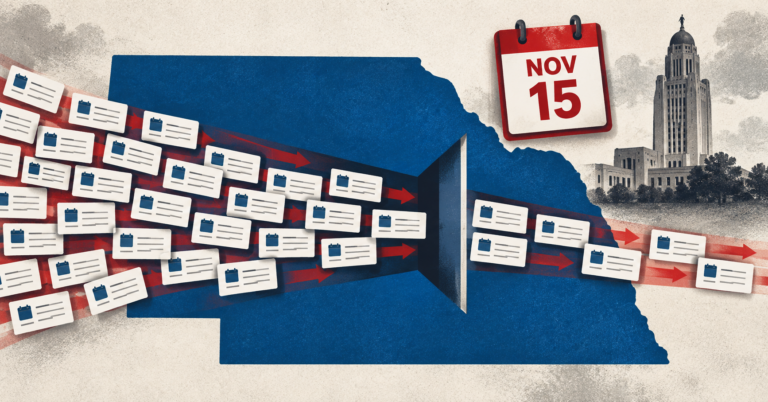
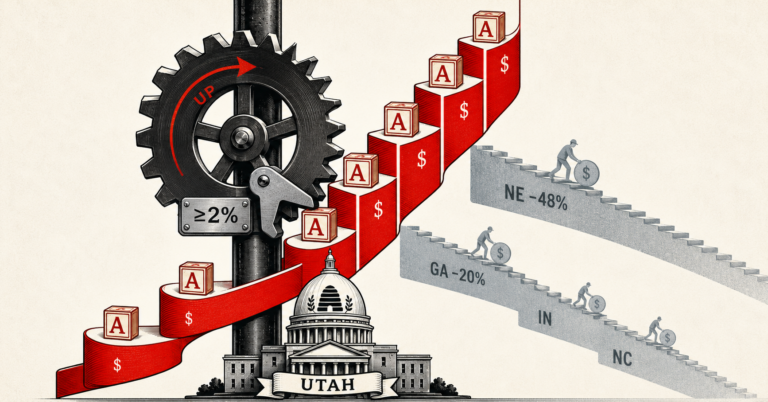
While Nebraska cuts rates by 48 percent and North Carolina braces for $900 billion in federal Medicaid reductions over the next decade, Michigan is expanding ABA access. The divergence is the most important policy story in ABA in 2026.
Why Michigan Is Expanding While Others Cut
The divergence between Michigan’s expansion and the national trend of ABA Medicaid cuts reflects several factors specific to Michigan’s political, clinical, and fiscal context. First, Michigan has a robust autism advocacy infrastructure. The Autism Alliance of Michigan, the Michigan Association for Behavior Analysis, and a network of parent advocacy organizations have maintained sustained pressure on state legislators and MDHHS officials to expand ABA access. These organizations have been effective at framing ABA as an early-intervention investment that reduces long-term care costs—an argument that resonates with fiscal conservatives and clinical advocates alike.
Second, Michigan’s Medicaid program operates through a community mental health system that provides a natural administrative framework for ABA service delivery. Unlike states where ABA is carved out of Medicaid managed care or administered through commercial-style fee-for-service arrangements, Michigan’s CMH system integrates behavioral health services within a coordinated care structure. This integration makes it operationally feasible to expand ABA coverage without building entirely new administrative infrastructure.
Third, the evidence base for early ABA intervention has strengthened considerably since Michigan first introduced its Medicaid ABA benefit in 2013. Multiple studies have demonstrated that intensive early intervention for children with ASD reduces the lifetime cost of care by improving functional outcomes, reducing the need for residential placement, and increasing the probability of independent living. Michigan’s SPA explicitly targets early-intervention access—an emphasis that aligns with the strongest evidence in the clinical literature.
Fourth, Michigan’s ABA provider workforce has grown significantly over the past decade. The state’s universities have expanded master’s programs in behavior analysis, the number of certified BCBAs practicing in Michigan has increased, and the state’s employment projections for behavior analysts show 27-percent growth through 2032. This workforce capacity makes it practical to expand coverage—there are enough clinicians to deliver the additional services that the SPA authorizes.

What Providers Will See on June 1
For ABA providers operating in Michigan, the June 1, 2026 effective date of SPA MI-25-0020 will bring several practical changes. The expansion of eligibility criteria is expected to broaden the population of children who qualify for ABA services, potentially including children who previously fell outside the program’s age or diagnostic thresholds. Changes to prior authorization provisions may streamline the approval process for ABA treatment plans, reducing the administrative burden that providers and families face when initiating or continuing services.
The expansion of preventive services is particularly significant. If the SPA includes provisions for ABA-based early-intervention services before a formal ASD diagnosis is confirmed—a model that some states have adopted to reduce the months-long diagnostic waitlists that delay access to treatment—it could materially increase the number of young children entering ABA services in Michigan. Early access is the variable that most consistently predicts positive long-term outcomes in the clinical literature.
Providers should prepare for the operational implications of expanded coverage: increased referral volume, longer waitlists during the initial ramp-up period, the need to recruit and retain additional BCBAs and behavior technicians, and the administrative requirements of serving a larger Medicaid population. Community Mental Health agencies will need to expand their ABA provider networks, update authorization workflows, and ensure that families are informed about the new eligibility criteria.
For PE-backed platforms operating in Michigan—including General Atlantic’s ACES, which operates in multiple states, and Renovus Capital Partners’ Behavioral Framework, which recently expanded through the Autism ETC acquisition—the Michigan expansion represents a market opportunity. States that expand ABA Medicaid coverage create demand for services that established platforms are positioned to absorb. The strategic implication is that Michigan’s Medicaid population becomes a more attractive growth market for ABA providers evaluating geographic expansion.
Michigan’s SPA MI-25-0020 is a bet that expanding early-intervention ABA access reduces long-term care costs. It is the strongest signal in 2026 that at least one major state believes investment in ABA is better policy than restriction.
The National Context: Expansion vs. Contraction
Michigan’s expansion stands in sharp contrast to the Medicaid ABA landscape nationally. Nebraska’s 48 percent Medicaid rate cut for ABA services—the largest single state reduction in ABA reimbursement—has forced providers to absorb losses that threaten the viability of practices serving Medicaid populations. North Carolina’s Medicaid spending on ABA therapy surged from $122 million in fiscal year 2022 to a projected $639 million in fiscal year 2026—a 423 percent increase that has attracted legislative scrutiny and federal attention.
The federal OBBBA provisions, which cut $900 billion from Medicaid over the next decade, create a structural headwind for all state Medicaid programs. States that expand ABA coverage in this environment are making a deliberate choice to prioritize early childhood behavioral health investment despite federal fiscal pressure. Michigan’s decision to do so—and CMS’s decision to approve the SPA—suggests that the federal government has not foreclosed state-level ABA expansion even as it reduces overall Medicaid funding.
The policy question is whether Michigan’s approach or Nebraska’s approach produces better outcomes over time. If Michigan’s early-intervention expansion reduces long-term care costs, residential placement rates, and special education expenditures for children who receive ABA services, the fiscal argument for expansion will be vindicated. If the expansion leads to cost growth that exceeds projections without corresponding improvements in clinical outcomes, the restriction model will gain support. The next five years will provide the data to answer this question—and other states will be watching closely.
AT A GLANCE
| SPA Number: | MI-25-0020; submitted by Michigan DHHS |
|---|---|
| CMS Approval: | February 19, 2026 |
| Effective Date: | June 1, 2026 |
| Scope: | Clarifies BHT/ABA access; increases early-intervention ASD supports; modifies coverage, eligibility, preventive services, and prior authorization |
| Michigan ABA History: | Medicaid ABA benefit since April 1, 2013; originally ages 18 months–5; administered through Community Mental Health system |
| Current Coverage: | ABA for individuals under 21 with ASD diagnosis meeting medical necessity; 5–25 hrs/week typical; BCBA-supervised |
| Service Model: | Comprehensive (16–25 hrs/wk) or Focused (5–15 hrs/wk) behavioral intervention; center, home, and community settings |
| Workforce: | 27% employment growth projected through 2032; growing BCBA pipeline from Michigan university programs |
| National Contrast: | Nebraska: 48% rate cut; NC: ABA Medicaid costs 423% increase ($122M→$639M); federal OBBBA: $900B Medicaid cuts over 10 years |
| PE Implications: | Michigan expansion increases market attractiveness for ACES, Behavioral Framework, and other multi-state ABA platforms |
| Advocacy Support: | Autism Alliance of Michigan, Michigan Association for Behavior Analysis, parent advocacy networks |
| Policy Signal: | First major ABA Medicaid expansion of 2026; signals early-intervention investment thesis remains viable despite federal fiscal pressure |
SOURCES & REFERENCES
| 1. | Medicaid.gov. SPA MI-25-0020 filing. Approved February 19, 2026, effective June 1, 2026. https://www.medicaid.gov/medicaid-spa/2026-02-27/189281 |
|---|---|
| 2. | Michigan DHHS. SPA MI-25-0020 Approval Document. https://www.michigan.gov/mdhhs/ |
| 3. | Michigan.gov. “Michigan Medicaid Approved to Provide ABA Therapy for Children with Autism.” April 1, 2013. |
| 4. | Michigan.gov. Medicaid Autism BHT/ABA Services page. https://www.michigan.gov/en/autism/medicaid-michild-autism-benefit |
| 5. | Autism Alliance of Michigan. Insurance resources. https://autismallianceofmichigan.org/resources/insurance/ |
| 6. | CMHCM. Autism Spectrum Disorder services page. https://www.cmhcm.org/services/autism-spectrum-disorder.html |
| 7. | SWMBH. Autism Services. https://www.swmbh.org/autism-services/ |
| 8. | DWIHN. Autism Services. https://www.dwihn.org/autism-services |
| 9. | PE Stakeholder Project. “PE Health Care Acquisitions – January 2026.” February 2026. https://pestakeholder.org/ |
| 10. | Behavioral Health Business. “Behavioral Framework Expands with Acquisition of Autism ETC.” January 13, 2026. |
| 11. | BACB. US Employment Demand for Behavior Analysts: 2010–2025. 2026. |
| 12. | CDC. Autism prevalence: 1 in 31 children diagnosed before age 8. 2025. |
| 13. | ABA Edu. “How to Become a Licensed Behavior Analyst in Texas.” March 2026. (TX employment growth 27.2% reference.) |
| 14. | Brown University School of Public Health. PE acquisition of 500+ autism therapy centers. January 2026. |
| 15. | CEPR. “Pocketing Money Meant for Kids: PE in Autism Services.” September 2025. https://cepr.net/ |