The Audit: A Perfect 100-for-100 Error Rate
AUGUSTA, MAINE — the numbers from the HHS Office of Inspector General’s January 2026 audit of Maine’s Medicaid program are unambiguous: every single one of the 100 sampled enrollee-months reviewed contained payments for one or more claim lines that were improper or potentially improper. The audit estimated that Maine made at least $45.6 million in improper fee-for-service Medicaid payments for rehabilitative and community support services provided to children diagnosed with autism, with the federal government demanding the return of $28.7 million representing its share.
The audit examined Maine’s 2023 fee-for-service Medicaid payments for RCS services and identified systemic documentation failures. Among the 100 sampled enrollee-months, 92 included confirmed improper payments due to documentation deficiencies. Eighty-one percent of sampled months lacked required comprehensive assessments or the necessary signatures of staff who conducted the assessments or the parents and guardians. Nearly two-thirds failed to meet basic documentation requirements for supporting the number of units billed.
Auditors also found that 92 percent of sampled enrollee-months included billing for nontherapy time — lunches, breaks, and naps — charged to taxpayers as therapeutic services. In some cases, providers used cloned session notes, identical descriptions copied and pasted across different visits, which failed to show any individualized progress for the child receiving services.
Every single one of the 100 sampled enrollee-months contained improper or potentially improper payments. The state had not performed a statewide postpayment review of RCS providers since the program began in 2010.
Pei Sun, an Assistant Regional Inspector General for Audit Services, told Maine media that the rapid spending increase is what first prompted the audit. Sun noted that based on the documentation reviewed, it was not clear that children were actually receiving effective therapy services, and that the failures were undermining the integrity of the state’s Medicaid program.
The RCS Classification: Why Maine Is Different
Maine’s audit is structurally distinct from the other HHS-OIG state audits in the series because of how the state classifies its autism services. While Indiana, Wisconsin, and Colorado all bill ABA therapy directly under ABA-specific procedure codes, Maine bundles applied behavior analysis and other evidence-based autism treatments under the broader category of rehabilitative and community support services. RCS services help children with developmental disabilities build skills in daily living and behavioral management.
This classification decision has operational consequences. Federal audit comparisons become more complicated because Maine’s billing codes do not map directly to the ABA-specific CPT codes used in other states. The RCS umbrella encompasses a broader range of services, which means that spending growth in this category reflects not only ABA therapy volume but also other developmental services delivered under the same billing framework.
The practical effect is that Maine’s $80.6 million in 2023 RCS spending is not directly comparable to, say, Colorado’s $163.5 million in ABA-specific Medicaid payments. The service mix is different, the billing codes are different, and the provider credentialing requirements are different. But the documentation failures — missing assessments, inadequate session notes, billing for nontherapy time — are identical in character to those found in the ABA-specific audits of other states.
Spending Growth: $52.2 Million to $80.6 Million in Four Years
Maine’s fee-for-service Medicaid payments for RCS services grew from $52.2 million in 2019 to $80.6 million in 2023, an increase of approximately 54 percent over four years. While this growth rate is significant, it is less dramatic than the spending trajectories seen in other audited states. Colorado’s ABA spending nearly tripled over the same period, from $60.1 million to $163.5 million. Indiana’s ABA spending rose from $21 million in 2017 to $611 million by 2023.
The more modest growth rate in Maine may reflect the smaller population base, but it also reflects the state’s unique policy environment. Maine expanded MaineCare eligibility multiple times during the period under review, which increased the number of children eligible for RCS services. The combination of expanded eligibility and rising autism prevalence created the conditions for spending growth, while the absence of meaningful oversight — no statewide postpayment review since 2010 — meant that documentation standards deteriorated without correction.
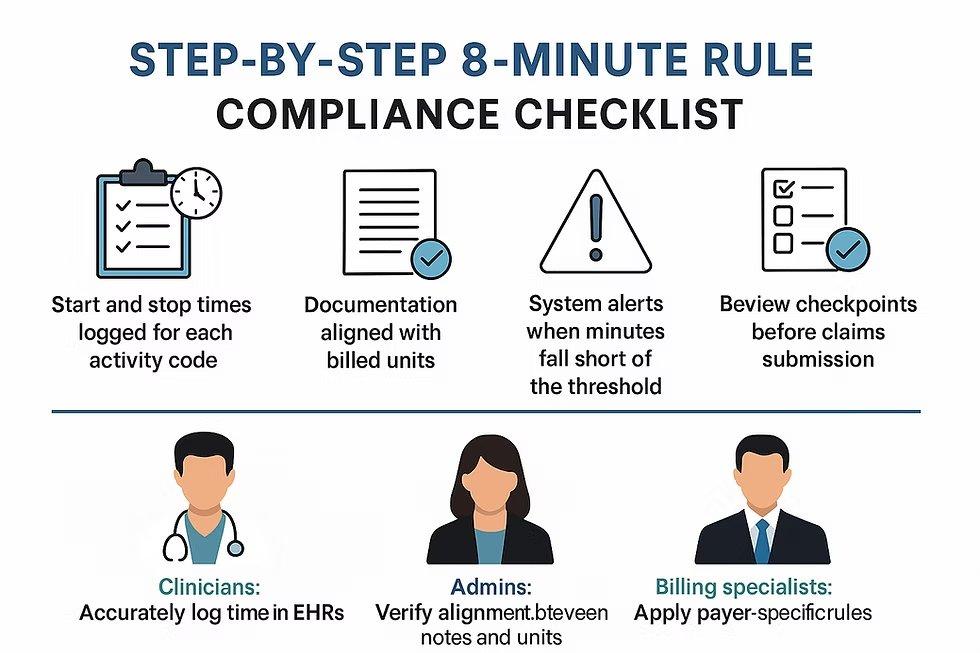
The HHS-OIG found cloned session notes, billing for nontherapy time, and missing comprehensive assessments across Maine’s RCS program.
The Oversight Vacuum: No Postpayment Review Since 2010
Perhaps the most striking finding in the Maine audit is that the state had not performed a statewide postpayment review of RCS services since the program began in 2010. For more than a decade, providers submitted claims and received payments without any systematic audit of whether those claims were supported by adequate documentation, delivered by appropriately credentialed staff, or consistent with the individualized treatment plans required by federal and state law.
The HHS-OIG made four recommendations to the Maine Department of Health and Human Services: refund $28.7 million to the federal government; provide additional guidance to providers on documenting RCS services, including session notes, billable time, and signature requirements; periodically conduct statewide postpayment reviews; and review potentially improper payments estimated at an additional $14.2 million in federal share.
Maine officials “potentially concurred” with the refund recommendation, indicating they would conduct their own reviews of flagged claims before determining the final repayment amount. The state concurred with the remaining three recommendations and outlined steps it plans to take to implement them.
Political Context and State Response
The audit landed in a politically charged environment in Maine. State Republicans characterized the findings as confirmation of longstanding warnings about fraud and abuse within MaineCare, while the Mills administration faced criticism over Medicaid program management. Maine’s Attorney General had previously directed DHHS employees not to cooperate with certain federal investigators, and the state’s DHHS Commissioner had expressed concern about potential congressional subpoenas related to MaineCare finances.
The U.S. House Committee on Energy and Commerce has taken an interest in Medicaid spending irregularities across multiple states. The Maine audit, combined with similar findings in Indiana, Wisconsin, and Colorado, has created a cumulative picture of systemic documentation failures in Medicaid-funded autism services that extends well beyond any single state’s program.
What This Means for ABA Providers in Maine
For ABA and RCS providers operating in Maine, the audit signals an immediate shift in the compliance landscape. Providers should expect postpayment reviews to begin for the first time in over a decade, along with updated guidance on documentation requirements. The state’s concurrence with the OIG’s recommendations means that session note standards, signature requirements, and billable time definitions will likely be tightened.
Providers should also be aware that the distinction between therapy time and nontherapy time will receive heightened scrutiny. The OIG’s finding that 92 percent of sampled months included billing for nontherapy activities like meals and breaks means that providers must ensure their time-tracking systems clearly differentiate between billable therapeutic services and custodial or non-clinical activities.
The broader pattern across all four completed state audits is consistent: documentation failures, not sophisticated fraud schemes, are the primary driver of improper payments. Providers who invest in robust documentation systems, regular internal audits, and staff training on billing compliance will be best positioned to survive the heightened scrutiny that is coming to every state’s ABA program.
AT A GLANCE
| Audit report date: | January 22, 2026 (HHS-OIG Report A-01-24-00006) |
| Improper payments: | At least $45.6 million total; $28.7 million federal share |
| Potentially improper: | Additional estimated $14.2 million federal share under review |
| Error rate: | 100 of 100 sampled enrollee-months contained improper or potentially improper payments |
| Documentation failures: | 81% lacked required assessments or signatures; 92% included nontherapy time billing |
| Spending growth: | $52.2 million (2019) to $80.6 million (2023) in RCS services |
| Service classification: | Maine bundles ABA under Rehabilitative and Community Support (RCS) services |
| Oversight gap: | No statewide postpayment review since program began in 2010 |
| OIG recommendations: | 4 — refund, provider guidance, postpayment reviews, review of potentially improper payments |
| State response: | Potentially concurred with refund; concurred with remaining recommendations |
SOURCES & REFERENCES
| 1. | HHS-OIG. “Maine Made at Least $45.6 Million in Improper Fee-for-Service Medicaid Payments for RCS Services Provided to Children Diagnosed With Autism.” Report A-01-24-00006. January 2026. oig.hhs.gov |
| 2. | HHS-OIG. “HHS-OIG Audit Finds Maine Made At Least $45.6 Million in Improper Medicaid Payments for Autism Services.” News release. January 22, 2026. oig.hhs.gov/newsroom |
| 3. | HHS-OIG. “Audits of Medicaid Applied Behavior Analysis for Children Diagnosed With Autism.” Work Plan Series SRS-A-25-029. Last modified February 25, 2026. oig.hhs.gov |
| 4. | WABI-TV. “Audit finds Maine made $45.6 million in improper Medicaid payments for autism services.” January 23, 2026. wabi.tv |
| 5. | WGME-TV. “Inspector General’s Office responds to report on Maine’s Medicaid program.” February 6, 2026. wgme.com |
| 6. | Maine Policy Institute. “Millions Misspent: How Maine Lost Control of Autism Medicaid Spending.” January 27, 2026. mainepolicy.org |
| 7. | The Maine Wire. “Maine Flagged for $45.6 Million In Improper Payments for Children’s Autism Care.” January 23, 2026. themainewire.com |
| 8. | Becker’s Behavioral Health. “Maine Medicaid audit flags $45.6M in improper autism-related payments.” January 24, 2026. beckersbehavioralhealth.com |