
The Setup: Why VC Suddenly Cared About Autism Therapy
SAN FRANCISCO — Venture capital does not typically find its way into pediatric behavioral health. The patients are children, the payers are insurance companies and Medicaid programs, the clinicians are scarce, and the unit economics of delivering ABA therapy — a labor-intensive, hours-heavy treatment requiring credentialed staff for every session — are difficult to compress. None of that changed between 2019 and 2023. What changed was the market size.
By 2019, all 50 states had enacted autism insurance mandates. The Affordable Care Act had embedded autism coverage requirements into marketplace plans. Medicaid’s 2014 behavioral health mandate had created a government-backed revenue stream covering an estimated 1.8 million families with autistic children. The total addressable market for ABA services was estimated at $50 to $70 billion. The industry was growing at roughly 25 percent annually. And virtually none of the technology stack serving that market had been built for it.
That last point was the VC thesis. ABA providers were running on general-purpose EHRs, scheduling in spreadsheets, and doing data collection on paper. Every workflow in the clinic was a candidate for a software product. And the provider market was large, fragmented, and underserved enough that a well-funded platform could potentially acquire significant market share. Investors who had missed the mental health telehealth wave — Lyra, Headway, Spring Health — were not going to miss what looked like the same opportunity in autism.
The Unicorn: Elemy / Sprout Therapy ($282M Total Raised)
Sprout Therapy (later Elemy) / Seed $10M (May 2020): Founded in 2019 by Yury Yakubchyk and Michael Ragheb, Sprout launched in May 2020 with $10 million in seed funding and a pitch built around what Yakubchyk called a broken system for chronic home care. The company paired in-home ABA therapy with a tech platform that managed scheduling, data collection, and family communication. Early investors included Bling Capital, Felicis Ventures, Founders Fund, General Catalyst, Headline, SignalFire, Bill Ackman’s TABLE Management, and 8VC.
Elemy / Series A $41M (October 2020): The company rebranded from Sprout to Elemy and raised a $41 million Series A led by General Catalyst, valuing the company at $104 million. At this point, Elemy was operating in 14 states and projecting $100 million in run-rate revenue by summer 2022. The pitch had evolved: the technology was not just a support layer for clinicians but the actual mechanism for improving outcomes and reducing the access gap.

Elemy / Series B $219M (October 2021) — Unicorn: The moment the ABA tech market became a mainstream VC story. SoftBank Vision Fund 2 led a $219 million Series B, valuing Elemy at $1.15 billion — an elevenfold increase from its valuation a year earlier. Co-investors included Goodwater Capital, Premji Invest, Chelsea Clinton’s Metrodora Ventures, Amity Ventures, Avidity Partners, Ashton Kutcher and Guy Oseary’s Sound Ventures, and Whale Rock Capital. Elemy planned to hire more than 2,000 clinicians in the next 18 months and expand nationally.
What followed was a case study in the structural tension between VC growth expectations and the realities of ABA delivery. By mid-2022, Elemy had conducted multiple rounds of layoffs. In July 2022, families in Illinois received emails approximately 15 minutes before scheduled sessions informing them that services were being suspended effective immediately, citing “market conditions” requiring a “refined focus.” Elemy retreated to three states. Forbes documented the abrupt service terminations. Former employees described same-day layoffs with immediate account deactivations.
By late 2022, Elemy was pivoting toward becoming a pure-play software platform and winding down its direct care operations. The company had raised $282 million total and achieved unicorn status. It had also left hundreds of families across 11 states without care, in some cases with 15 minutes’ notice. The company’s story became a reference point for what happened when consumer tech growth playbooks — blitz-scale, then optimize — met the reality of ABA therapy, where the “user” is a nonverbal child and the “service interruption” has clinical consequences.
The Care Infrastructure Bet: Cortica ($175M+ Total Raised)

If Elemy represented the consumer tech playbook applied to autism care, Cortica represented a different theory entirely: that the future of ABA was physician-led, value-based, and built around whole-child care rather than therapy hours. Founded in 2014 as a private autism clinic by Dr. Suzanne Goh in San Diego, Cortica spent its first several years building a clinical model before raising institutional capital.
Cortica / Series C $60M (2021): Cortica raised $60 million in a Series C round, using the capital to expand its integrated care model combining neurology, ABA, occupational therapy, speech therapy, and counseling into a single clinic experience. The round attracted Longitude Capital, .406 Ventures, Questa Capital, Ajax Health, Aperture Venture Partners, and the Autism Impact Fund.
Cortica / Series D $75M (April 2023): Led by Deerfield Management and Optum Ventures — UnitedHealth Group’s investment arm — with participation from RA Capital, Echo Health Ventures, and existing investors. Simultaneously, Cortica acquired Springtide Child Development, a six-clinic integrated autism provider in Connecticut and Massachusetts backed by Optum and Deerfield, and the Melmed Center, a developmental pediatrics clinical and research group in Scottsdale, Arizona. The combined entity operated 23 centers employing approximately 1,600 staff. The deal structure was notable: Springtide’s investors rolled their equity entirely into Cortica rather than taking a cash exit, signaling conviction in the combined platform. By the time of the Series D, Cortica had secured value-based care arrangements with five health plans, including Point32Health, making it one of the few ABA providers operating under outcomes-based reimbursement.
“Despite a very difficult fundraising macro environment, there is recognition that autism is still a very highly prevalent, financially important condition for the country to solve — and the solution is about a migration to being whole-child and value-based.” — Neil Hattangadi, M.D., Co-Founder and CEO of Cortica (April 2023)
The Data Layer: SpectrumAi ($29M Total Raised)
While Elemy and Cortica competed to build the best tech-enabled ABA provider, a different category of startup was betting that the real opportunity was in the data underneath ABA — not the therapy itself, but the measurement infrastructure that could prove outcomes and unlock value-based contracts.
SpectrumAi / Seed $9M (June 2022): Founded in Los Angeles in 2021, SpectrumAi raised $9 million in seed funding from F-Prime, Frist Cressey, and the Autism Impact Fund. The company’s product, Twyll, was an ABA electronic health record designed around objective outcome measurement — a direct response to the ABA industry’s well-documented data void. Clinical documentation in ABA had historically been subjective and provider-specific, making it nearly impossible for payers to compare outcomes across clinics or justify reimbursement rates.
SpectrumAi / Series A $20M (March 2023): Led by CVS Health Ventures, with participation from Cobalt Ventures and follow-on from seed investors. CVS’s managing partner described the investment as addressing ABA’s “significant data void” and enabling value-based care. The company also launched Patterns, a network analytics platform for payers seeking to understand utilization patterns across their ABA provider networks. Total raised: $29 million.
The Parent-Training Bet: Forta Health ($55M Raised)
Forta Health / Series A $55M (January 2024): Founded in 2021 as Montera Inc. and later renamed Forta after acquiring Houston-based CARE, an in-home ABA provider, Forta raised $55 million in a Series A led by Insight Partners, with participation from Exor Ventures, Alumni Ventures, and the founders of 23&Me, Warby Parker, Allbirds, Flexport, and Harry’s. The company’s model — training parents to become Registered Behavior Technicians and compensating them from payer reimbursements — was innovative enough to attract attention and controversial enough to draw a rebuke from the BACB, which warned in July 2023 that parents treating their own children violated its ethics codes. Forta subsequently pivoted, abandoning the parent-as-RBT model in July 2024 and relaunching as a virtual ABA provider in 47 states. By 2025, Forta operated in 47 states and accepted more than 300 insurance plans.
The Software Plays: CentralReach, Motivity, and AnswersNow
CentralReach / Insight Partners investment (2018, undisclosed): Insight Venture Partners made a significant investment in CentralReach, the ABA industry’s dominant EHR and practice management platform, in 2018. At the time of investment, CentralReach served over 500 customers and had grown sales by more than 65 percent in 2017. Over the next seven years, the company scaled from 20,000 to over 200,000 daily users. In April 2025, Roper Technologies acquired CentralReach from Insight for $1.65 billion net — one of the highest multiples ever recorded for a healthcare SaaS business of its scale. Insight’s return on the CentralReach investment was one of the strongest exits in behavioral health software history.
Motivity / Five Elms Capital $27M (March 2025): Founded in 2012 in Hawaii by Dr. Rex Jakobovits and funded initially through $11 million in NIH and National Institute of Mental Health grants, Motivity built its ABA data collection platform under a research-first model unusually rare in the startup world. After more than a decade of grant-funded development and organic growth to 550 organizations across seven countries, Motivity raised $27 million from Five Elms Capital in March 2025. The deal brought institutional capital and a new CEO while keeping Jakobovits in a chief strategy role.
AnswersNow / $11M Series A (2023), $40M Series B (January 2026): Founded in Richmond, Virginia, AnswersNow built a virtual ABA platform around a parent-mediated model using four to five hours of BCBA-delivered therapy per week rather than the 30-plus hours of traditional ABA. The company raised $11 million in a Series A in 2023 and $40 million in a Series B led by HealthQuest Capital in January 2026, with participation from Left Lane Capital and Owl Ventures. The platform’s claim — that its model produced outcomes comparable to traditional ABA at one-sixth the clinical hours, with up to 75 percent savings for payers — put AnswersNow at the intersection of the two most pressing forces in ABA: payer cost-containment and the BCBA shortage.
The Institutional Ecosystem: Autism Impact Fund
Running alongside the individual company stories was the Autism Impact Fund (AIF), a purpose-built venture fund co-founded by Christopher Male and a group of autism parents. Seeded in 2021 and reaching $60 million in capital by April 2024, AIF took an ecosystem approach — investing in a portfolio of companies across diagnostics, treatment technology, therapeutics, and workforce that were intended to reinforce each other.
AIF’s portfolio included Cortica, SpectrumAi, Joshin (employer benefits for caregivers of people with disabilities), Auticon (a technology consulting firm that employs adults on the autism spectrum), Healios (a U.K. telehealth startup operating in the U.S. as Meliora Health), Floreo (VR-based social skills training), Suggestic, and several pharma-stage companies. The fund announced plans to raise at least $100 million for a successor vehicle in 2024, and AIF co-founder Male became one of the most prominent voices in the autism investment community, speaking at CNBC, Stanford, and industry conferences about the venture capital model as an engine for autism innovation.
What Survived, What Pivoted, What Folded
The ABA tech VC wave produced a clear taxonomy of outcomes by 2025. The companies that survived and scaled shared a common characteristic: they were built around a specific, verifiable workflow problem — data collection, payer contracting, practice management, parent training — rather than around the ambition to become a vertically integrated provider at scale. CentralReach, Motivity, and SpectrumAi each had defensible products solving discrete pain points. Their growth was constrained by the market rather than by burn.
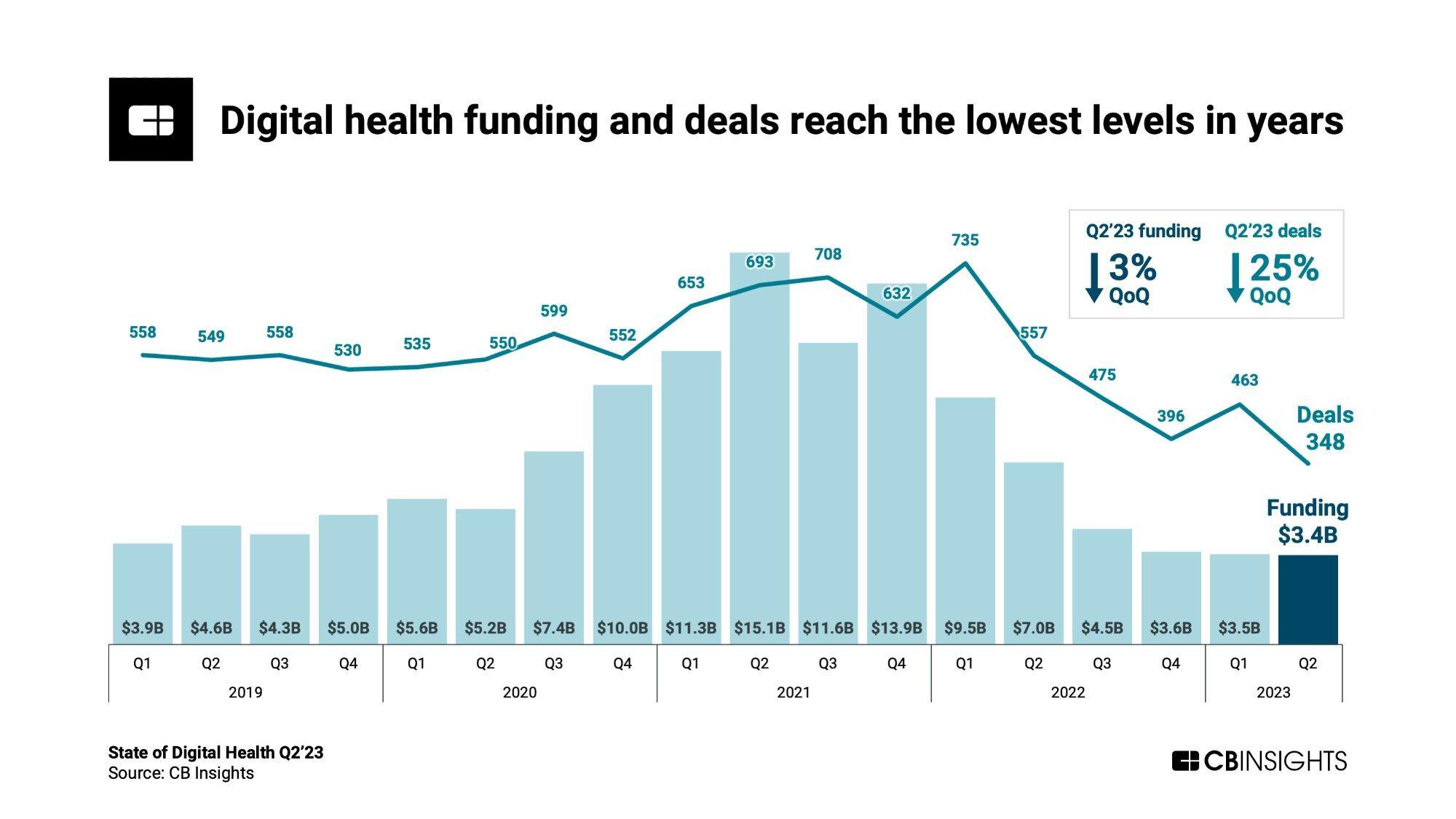
The companies that struggled or failed had typically raised at consumer-tech valuations to build something that looked more like a healthcare services business. Elemy’s $1.15 billion valuation implied growth multiples that ABA’s labor-intensive, Medicaid-constrained economics could not support. The same dynamics that made ABA attractive to PE — mandated coverage, steady demand, fragmented supply — also created a structural ceiling on margin. When SoftBank-style capital requirements met ABA-style unit economics, the model did not hold.
Forta’s pivot — from paying parents to be RBTs, to a conventional virtual ABA platform — illustrated the speed at which a well-funded startup could abandon a controversial model under regulatory and ethical pressure and find a new lane. The BACB ethics ruling in July 2023 effectively ended the parent-as-RBT thesis as a business model, and Forta’s $55 million gave it enough runway to pivot before the question became existential.
By 2025 and into 2026, the VC landscape in ABA tech had matured. Rounds were smaller and more disciplined. The $219 million Series B was a historical anomaly, not a template. The companies attracting new capital were those with proven clinical outcomes, payer contracts, and unit economics that could survive in a Medicaid environment with declining rates. The froth had cleared. What remained were the builders.
AT A GLANCE
| VC Peak Window: | 2019–2023; peak deal in October 2021 (Elemy Series B, $219M / $1.15B valuation) |
| Total Elemy Raised: | $282M (Seed 2020 + Series A 2020 + Series B 2021); pivoted to software 2022–2023 |
| Elemy Lead Investors: | SoftBank Vision Fund 2 (Series B); General Catalyst (Series A); Founders Fund, Felicis, 8VC (Seed) |
| Cortica Total Raised: | $135M+ (Series C $60M in 2021 + Series D $75M in 2023) |
| Cortica Lead Investors: | Deerfield Management and Optum Ventures (Series D); Longitude Capital, .406 Ventures (Series C) |
| SpectrumAi Total Raised: | $29M ($9M seed 2022 + $20M Series A 2023) |
| SpectrumAi Lead Investors: | CVS Health Ventures (Series A); F-Prime, Frist Cressey (Seed) |
| Forta Total Raised: | $55M Series A (January 2024); led by Insight Partners |
| Motivity Raised: | $27M from Five Elms Capital (March 2025); prior $11M in NIH grants |
| AnswersNow Raised: | $11M Series A (2023) + $40M Series B (January 2026); HealthQuest Capital, Left Lane, Owl Ventures |
| CentralReach Exit: | $1.65B net to Roper Technologies (April 2025); Insight Partners’ original investment in 2018 |
| Autism Impact Fund Size: | $60M (2024); 12+ portfolio companies; successor vehicle targeting $100M+ |
| Key Failure Pattern: | Consumer-tech valuations + ABA unit economics = unsustainable burn (Elemy) |
| Key Success Pattern: | Discrete workflow software + payer alignment + clinical outcomes data |
SOURCES & REFERENCES
| 1. | Fierce Healthcare. Elemy reaches unicorn status boosted by $219M investment from SoftBank, Chelsea Clinton and Ashton Kutcher. October 2021 |
| 2. | Behavioral Health Business. Elemy Lays Off Staff As it Winds Down Direct Care for Platform Business. December 5, 2022 |
| 3. | Forbes. SoftBank-backed Elemy raised $200 million to transform Autism care, abruptly cuts off care to kids. July 2022 |
| 4. | Crunchbase. Elemy company profile. Total funding: $282M. crunchbase.com (accessed March 2026) |
| 5. | Behavioral Health Business. Autism Provider Cortica Secures $75M Funding Round, Acquires Two Companies. April 17, 2023 |
| 6. | Fierce Healthcare. Autism care provider Cortica raises $75M, acquires 2 provider groups in New England, Arizona. April 2023 |
| 7. | PRNewswire. Cortica Closes $75 Million in New Funding Round and Acquires Springtide Child Development. April 18, 2023 |
| 8. | Behavioral Health Business. CVS Health Ventures Leads $20M Investment in ABA Data Collection Startup SpectrumAi. March 16, 2023 |
| 9. | Frist Cressey Ventures. SpectrumAi seed and Series A funding coverage. fcventures.com |
| 10. | Fierce Healthcare. Parent-led autism therapy provider Forta clinches $55M to expand practice, AI research. January 17, 2024 |
| 11. | Behavioral Health Business. Forta Raises $55M to Expand Parent-led ABA Therapy. January 17, 2024 |
| 12. | Behavioral Health Business. Virtual ABA Provider Forta Health Expands to 47 States. August 22, 2025 |
| 13. | Behavioral Health Business. ABA Software Startup Motivity Raises $27M. March 17, 2025 |
| 14. | PRNewswire. Forta Announces $55 Million Series A To Build AI Healthcare. January 17, 2024. fortahealth.com |
| 15. | Behavioral Health Business. AnswersNow Raises $40M, Plans to Double Clinician Headcount. January 21, 2026 |
| 16. | Insight Partners. Insight Venture Partners Invests in CentralReach. 2018. insightpartners.com |
| 17. | Behavioral Health Business. Roper Technologies to Buy ABA Software Company CentralReach for $1.65 Billion. March 24, 2025 |
| 18. | Axios. Autism-focused venture capital fund raises $60 million. April 3, 2024 |
| 19. | AIF LinkedIn. Autism Impact Fund portfolio companies and investment activity. linkedin.com/company/autismimpactfund |