The Rate-Cut Detour
RALEIGH, NORTH CAROLINA – The state could not cut autism reimbursement rates. So lawmakers cut the conditions for billing them.
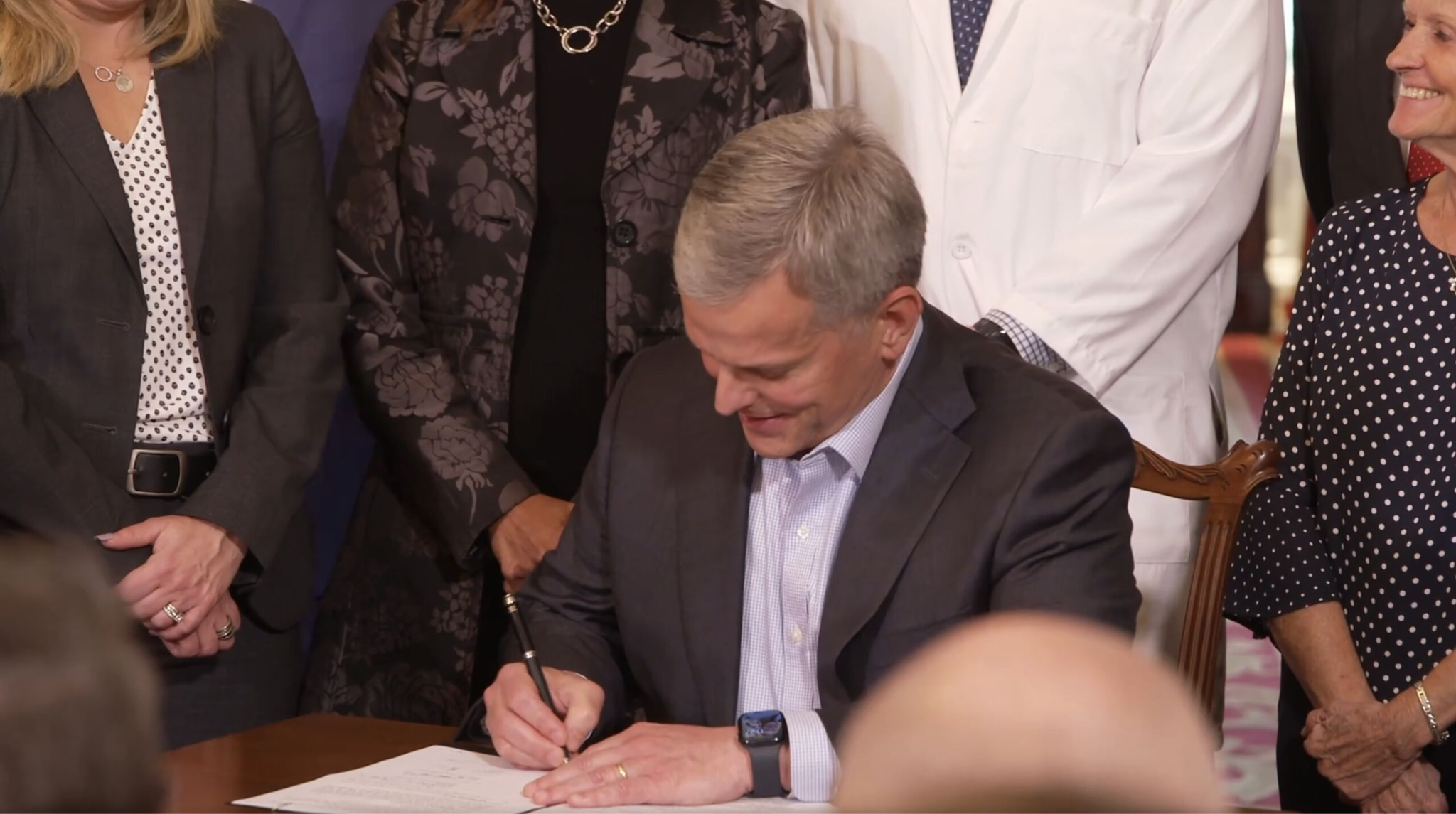
Gov. Josh Stein, a Democrat, signed House Bill 696 on April 30, 2026, enacting it as Session Law 2026-1. The headline number is $319 million in Medicaid funding pulled from the state Medicaid Contingency Reserve to close a fiscal year shortfall. The fine print is a Section 3C.18 that directs the Division of Health Benefits (DHB), the Medicaid agency within NCDHHS, to rewrite Clinical Coverage Policy 8F, the rule governing Research-Based Behavioral Health Treatment (RB-BHT) for autism, including applied behavior analysis. The new restrictions on Medicaid-funded ABA are among the most far-reaching state-level changes enacted in 2026.
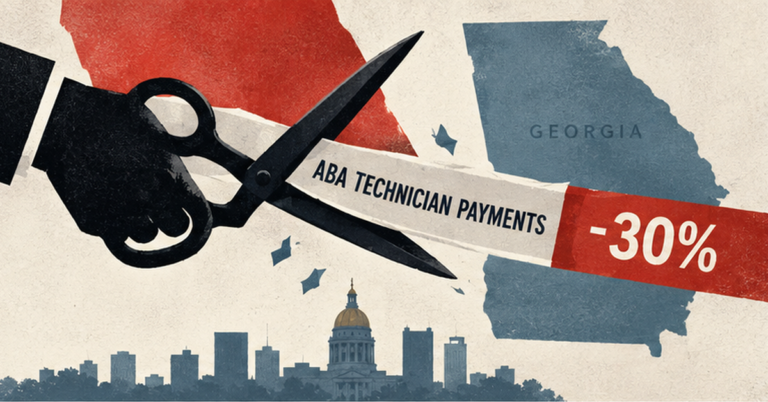
The path that produced them runs through court. In fall 2025, after the General Assembly failed to enact a full biennial budget, the North Carolina Department of Health and Human Services imposed reimbursement rate cuts across Medicaid services. Most categories took a 3% reduction. RB-BHT, the category that includes ABA, was singled out for a 10% cut, the highest in the program. DHHS framed the move as a partial reversal of a 15% rate increase the same category had received on January 1, 2024.
Twenty-one families sued. Their attorneys, led by former US Attorney Michael Easley Jr., argued that singling out autism services for the steepest cut violated the North Carolina Persons With Disabilities Protection Act. Wake County Superior Court Judge Bryan Collins issued a temporary restraining order. Judge Clayton Somers followed in November 2025 with a preliminary injunction. Stein directed DHHS to restore all rates in December 2025.
The legislature responded by writing a different kind of cost-containment bill. HB 696 leaves the reimbursement rate alone. Every other lever moved.
“Without the protection this Court put in place in November for North Carolinian children with autism, Defendants could once again seek to impose devastating reductions to autism services.” — Plaintiffs’ attorneys, court filing in 21-family lawsuit (March 2026)
What HB 696 Changes
Section 3C.18 directs DHB to amend Clinical Coverage Policy 8F with nine specific changes and to seek federal approval from CMS where required. The Legislative Reporting Service summary confirms that the changes include limits on telehealth, with DHB authorized to grant exceptions for documented medical necessity. The same section blocks Board Certified Behavior Analysts (BCBAs) and Qualified Autism Services Practitioner Supervisors (QASPS) from enrolling in North Carolina Medicaid as out-of-state providers, codified in GS 108C-9.
Reporting by Behavioral Health Business and the Autism Society of North Carolina has filled in the operational specifics that the bill summary does not enumerate. According to those accounts, the rewrite of Policy 8F includes a 16-hour weekly threshold above which treatment plans require monthly re-authorization, a baseline requirement that at least 10% of paraprofessional-delivered hours be observed by a Licensed Qualified Autism Service Provider (LQASP), an additional documentation requirement for cases exceeding 200 paraprofessional hours over six months (where between 10% and 20% of those hours must be LQASP-observed), a 40-mile border exception for out-of-state providers, a national RBT (registered behavior technician) certification requirement, and a ban on telehealth-delivered direct services by paraprofessionals. Parent and family training may still be delivered via telehealth. Assessments conducted by an LQASP must be done in person to be reimbursable.
Section 3C.12 of the same bill gives Prepaid Health Plans, the state’s Medicaid managed care organizations, explicit authority to develop closed provider networks for designated service categories. PHPs must obtain DHHS approval before closing a network. The provision is general, but ABA is the most likely first application, since it is the only service category the same bill restructures by name.
DHHS released the draft Policy 8F revisions on May 14, 2026. Public comment closes June 14, 2026. The final policy has not yet been promulgated.
The Spending Pressure
The numbers driving the rewrite are large and recent. Data presented to the Joint Legislative Oversight Committees on Health and Human Services and Medicaid on March 10, 2026, showed that North Carolina Medicaid spending on autism therapy services grew by 347% between 2022 and 2025. The number of children receiving services rose from 3,844 to 13,447 over the same period. Average patient care hours per month moved from 47.5 to 54.1.
State Auditor Dave Boliek, a Republican elected in 2024, has been more pointed. “A system that went from $1.4 million or so in total billings for autism therapy to more than $660 million a year in billings on autism therapy within a five-year range, that begs an audit,” Boliek told Fox News in an interview cited by the Carolina Journal in May. His office has opened a performance review of ABA spending. HB 696 appropriates $500,000 from the General Fund to fund a broader audit of the Medicaid program.
Boliek has been careful about what the audit has and has not found. He told the Carolina Journal his office has not uncovered the type of widespread fraud schemes alleged in Minnesota, where a Department of Justice case alleged providers recruited families, obtained questionable diagnoses, and billed Medicaid for services never delivered. NCDHHS, for its part, projected in a court filing that RB-BHT spending would rise from $199 million in fiscal year 2022-23 to $639 million in fiscal year 2025-26, even with the blocked 10% rate cut in place. The department separately projected total RB-BHT spending to grow 425% over the period covered by its analysis.
No fraud findings have been announced.
The Industry Reshape
For practice owners and private equity operators with North Carolina exposure, the bill changes the operating environment along four dimensions at once.
Out-of-state freeze-out. BCBAs and QASPS (a supervisor credential issued by the Qualified Applied Behavior Analysis Credentialing Board, or QABA) can no longer enroll in NC Medicaid from outside the state, with a 40-mile border exception. Multi-state platforms that staff North Carolina cases from regional hubs in Virginia, South Carolina, Tennessee, or Georgia will need to re-credential locally or exit the Medicaid book.
Telehealth model dead for paraprofessionals. Direct ABA service delivered by an RBT or other paraprofessional via telehealth is no longer reimbursable, with exceptions only for documented medical necessity. Companies whose growth in North Carolina relied on telehealth-extended paraprofessional capacity will need to convert to in-person delivery or shrink their NC patient panels.
Closed networks coming. PHPs now have express authority to limit ABA enrollment by designated service category. The barrier to entry for new providers in any closed-network catchment area rises sharply, and the leverage of incumbent networks rises with it.
Monthly reauthorizations for 16+ hour-per-week cases. High-utilization cases trigger monthly treatment plan re-approval, multiplying the documentation burden on practices serving the children with the most intensive needs. Companies with revenue concentrated in 20-to-40-hour-per-week treatment plans, a common intensity range in clinic-based ABA, will see administrative costs rise across their highest-revenue cases.
Stein’s signing statement on April 30 did not mention the ABA provisions. The governor flagged three concerns in the same bill, none of them touching autism: the elimination of Medicaid coverage for an estimated 27,000 lawfully present pregnant women and children, a three-month delay in benefit access from new community engagement requirements, and an increase in Medicaid expansion copays. “We are committed to continually improving Medicaid to contain costs and to eliminate fraud, waste, and abuse at every turn,” Stein said in the signing statement.
“After Gov. Stein and his administration let costs run wild, we’re tightening things up by adding common-sense guardrails that cut down on waste, fraud, and abuse in the program.” — Destin Hall, NC House Speaker (April 2026)
The Auditor Question
HB 696 also moves Medicaid fraud oversight money to Boliek’s office rather than to Democratic Attorney General Jeff Jackson, whose Medicaid Fraud Investigation Division had requested partial funding for one additional data-mining investigator. That request was not funded. At an April 16 House oversight hearing, Jackson testified that North Carolina ranks eighth nationally in Medicaid fraud recoveries over the past six years.
House Minority Leader Robert Reives, a Democrat from Chatham County, called the routing decision “an electoral document” at an April 22 press conference, tying it to a broader pattern of authority shifting from Democratic-held statewide offices to the Republican State Auditor since the 2024 elections. Senate Leader Phil Berger, asked about Jackson’s funding request, said: “If he’s got enough staff to file lawsuits all over the country, then maybe he doesn’t need us to fund another one.” Reives voted for the package anyway. He told reporters that funding Medicaid was the priority and that the caucus was “in triage.”
Where It Stands
Three things remain unresolved as the rewrite of Policy 8F moves to final rule.
The 21-family lawsuit is still alive. Wake County Superior Court Judge Vince Rozier denied the state’s motion to dismiss on March 23, 2026, consistent with the plaintiffs’ argument that the voluntary cessation exception to mootness applies, meaning the court should retain jurisdiction even after Stein restored the rates. The plaintiffs’ attorneys argued, in writing, that without continued court protection the state could attempt cuts again. With HB 696 now showing what a non-rate-cut version of cost containment looks like, that warning takes on a different meaning.
Public comment on the draft Clinical Coverage Policy 8F closes June 14, 2026.
AT A GLANCE
| Law: | Session Law 2026-1 (House Bill 696), enacted April 30, 2026 |
| Signed by: | Gov. Josh Stein (D) |
| Final vote: | House 112Y-3N; Senate 45Y-3N |
| Medicaid appropriation: | $319 million from the Medicaid Contingency Reserve |
| ABA provision: | Section 3C.18: nine changes to Clinical Coverage Policy 8F (RB-BHT) |
| Closed network authority: | Section 3C.12: PHPs may close designated service category networks with DHHS approval |
| Out-of-state ban: | GS 108C-9: BCBAs and QASPS cannot enroll in NC Medicaid as out-of-state providers (40-mile border exception per BHB) |
| Monthly reauthorization: | Required above 16 weekly service hours, per Behavioral Health Business and Autism Society of NC reporting |
| Telehealth restriction: | Paraprofessional-delivered services no longer reimbursable via telehealth except for parent and family training; medical necessity exceptions permitted |
| Spending growth, NC ABA Medicaid: | $1.4 million annually to more than $660 million annually over five years, per State Auditor Dave Boliek |
| RB-BHT spending projection: | $199 million in FY 2022-23 to $639 million projected in FY 2025-26, per NCDHHS court filing |
| Active lawsuit: | 21 families v. NCDHHS; motion to dismiss denied March 23, 2026 (Wake County Superior Court, Judge Vince Rozier) |
| Coverage Policy 8F draft: | Released for public comment May 14, 2026; comment period closes June 14, 2026 |
SOURCES & REFERENCES
| 1. | North Carolina General Assembly. House Bill 696 / Session Law 2026-1 (Health Care Practitioner Transparency Act / Medicaid Funding Conference Substitute). Enacted April 30, 2026. https://www.ncleg.gov/BillLookup/2025/H696 |
| 2. | UNC School of Government Legislative Reporting Service. Bill Summaries: H696 (2025-2026 Session). April 30, 2026 summary of Conference Committee Substitute PCCS10584-LUxr-3. https://webservices.ncleg.gov/BillDigests/2025/H696 |
| 3. | Office of Governor Josh Stein. Governor Stein Takes Action on One Bill. Press release. April 30, 2026. https://governor.nc.gov/news/press-releases/2026/04/30/governor-stein-takes-action-one-bill |
| 4. | Pomeranz, Andrew. Boliek talks autism therapy spending probe amid Medicaid fraud fears. Carolina Journal. May 11, 2026. https://www.carolinajournal.com/boliek-talks-autism-therapy-spending-probe-amid-medicaid-fraud-fears/ |
| 5. | Bass, David N. Medicaid fraud provision deepens fight over NC executive branch powers. Carolina Journal. April 23, 2026. https://www.carolinajournal.com/medicaid-fraud-provision-deepens-fight-over-nc-executive-branch-powers/ |
| 6. | Carolina Journal Staff. Judge refuses to dismiss suit over funding NC Medicaid autism services. Carolina Journal. March 23, 2026. https://www.carolinajournal.com/judge-refuses-to-dismiss-suit-over-funding-nc-medicaid-autism-services/ |
| 7. | Larson, Chris. North Carolina Limits Telehealth In Autism Therapy, Bans Out-of-State Providers. Behavioral Health Business. May 5, 2026. https://bhbusiness.com/2026/05/05/north-carolina-limits-telehealth-in-autism-therapy-bans-out-of-state-providers/ |
| 8. | Autism Society of North Carolina. Policy/Legislative Update, May 19, 2026: Why ABA Treatment Is in the News in North Carolina. May 19, 2026. https://www.autismsociety-nc.org/policy-legislative-update-may-19-2026-why-aba-treatment-is-in-the-news-in-north-carolina/ |
| 9. | North Carolina Health News. NC moves to rein in soaring autism therapy costs. April 27, 2026. https://www.northcarolinahealthnews.org/2026/04/27/autism-therapy-costs/ |
| 10. | NCDHHS court filing in 21-family lawsuit, opposition to preliminary injunction. November 2025. RB-BHT FY 2022-23 to FY 2025-26 projections cited in Carolina Journal, March 23, 2026. |