
A Bill That Wasn’t There Before
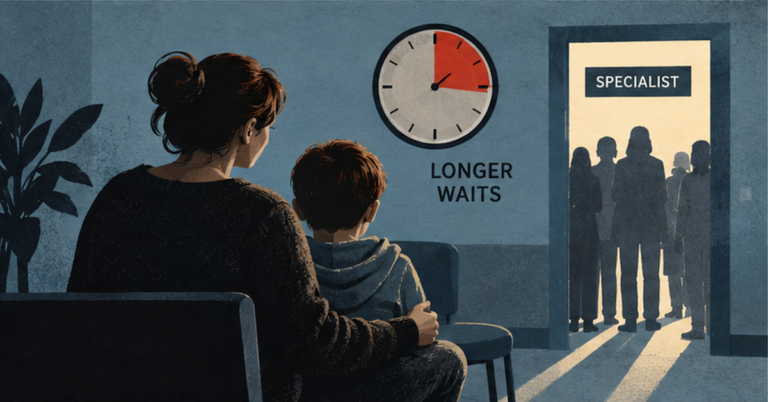
LAS VEGAS – For one Las Vegas mother, the change arrived as a number that had not existed before. Elina Sverdlova told FOX5 that her eight-year-old son with autism had been in therapy nearly every day and was making real progress. Then, this year, her coverage through the Health Plan of Nevada changed. A specialist visit that had carried no co-pay now cost $80, she said, and the family began going into debt to keep her son in care. She cut his ABA from five days a week to three. As his therapy was disrupted, his behavior grew more aggressive, and he was suspended from school.
Her account, reported across investigations by FOX5 Vegas, the Nevada Current, and the Las Vegas station 8 News Now over the winter and spring of 2026, is not isolated. Heather Kobes, another Nevada parent, described a plan that capped ABA at 1,500 hours a year and required her family to pay the full cost out of pocket. With ABA priced between roughly $76 and $120 an hour, and a child who needs several hours of therapy a day, the math turns quickly into an impossible choice. Kobes eventually switched to a different plan that remained expensive and still capped coverage at 1,500 hours, but at least returned her daughter to therapy.
What Actually Changed
Two distinct forces are squeezing Nevada families at once, and untangling them matters. The first is a set of benefit changes by the Health Plan of Nevada, the state’s largest and oldest HMO, which parents and providers say limited ABA coverage beginning early in 2026 through tighter caps, setting restrictions, and a wave of denials that forced clinicians to appeal. Chantal Rainford, clinical director of the Nevada Autism Center, told FOX5 that her staff learned of one change only when a parent brought in a notice, and that interruptions in care are not benign: children can lose toileting and communication skills and, in some cases, resume self-injurious behavior when therapy stops.
The 1,500-hour ceiling that families keep hitting is not arbitrary. Nevada’s autism mandate, in force since 2011, requires state-regulated plans to cover ABA but caps the benefit at the actuarial equivalent of $72,000 a year, which the state Division of Insurance says works out to roughly 1,500 hours and can vary by carrier. The mandate sets a floor for coverage; it does not stop a plan from administering that coverage through caps, prior authorization, and limits on where therapy is delivered.
The second force is federal. The cost increases families are seeing stem in large part from the expiration of enhanced Affordable Care Act premium subsidies, which had held down the price of marketplace coverage. Health-insurance watchdog figures cited by FOX5 put premium increases for subsidized Nevada enrollees between roughly 75% and 114%, while private plans rose between 21% and 26%. The result is a compounding burden: a family may face both a higher premium to keep a plan and reduced benefits within it, so the same therapy costs more even as coverage for it narrows. Advocates say some families were not clearly warned, learning the scope of the change only after the bills arrived.
“The only one paying the price is the kid.” – Yasodora Cabrera, Families for Effective Autism Treatment of Southern Nevada (2026)
The Insurer’s Answer, and Who Owns It

The Nevada State Capitol in Carson City. The Division of Insurance and the Governor’s Council on Developmental Disabilities oversee the state’s autism-coverage mandate, but say they cannot fully investigate without formal complaints. Photo: Wikimedia Commons (CC0).
The Health Plan of Nevada did not answer detailed questions about the changes, according to FOX5, but issued a statement saying it empathizes with families using ABA and remains committed to helping members access the benefits available under their plans. It said it covers essential services, consistent with the Affordable Care Act, including ABA therapy “in approved settings.” That phrase sits at the center of the dispute. To the insurer, it describes coverage delivered through appropriate channels; to families and providers, the practical effect has been narrower access, higher cost-sharing, and denials that must be appealed case by case.
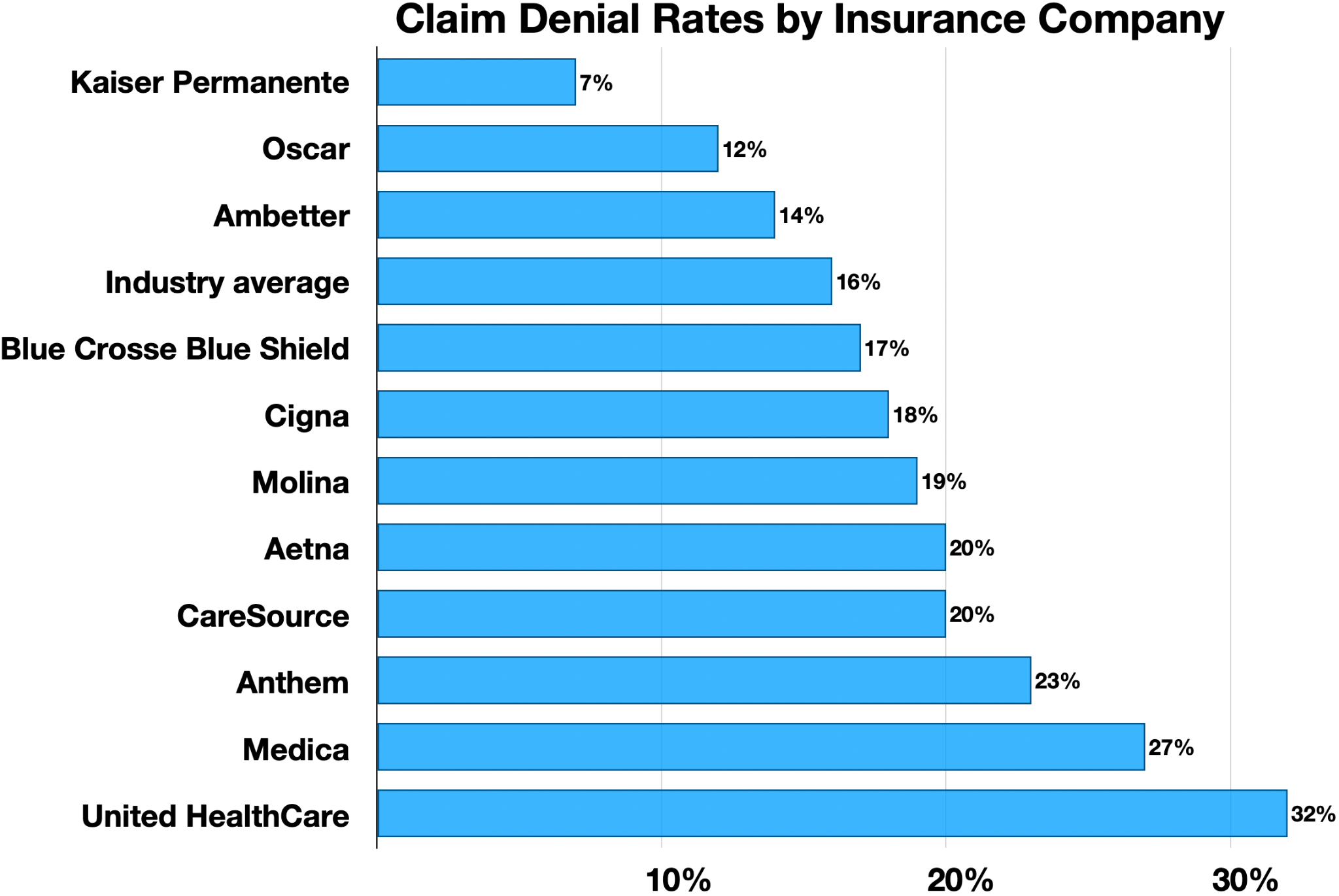
The Health Plan of Nevada is not a small regional carrier. It is a UnitedHealthcare company, part of Sierra Health Services, the Las Vegas insurer that UnitedHealth Group acquired in 2008, which makes it a local face of the largest health carrier in the United States. The Nevada Current built its investigation around that ownership, reporting that UnitedHealth’s Nevada companies had limited benefits for autistic children. That corporate scale matters to the policy conversation, because the decisions that determine what families actually receive, how a benefit is administered, what counts as an approved setting, how many hours are authorized, and how readily claims are denied, are the levers a large insurer uses to manage the cost of an expensive, fast-growing category of care.
A Problem No One Can Count
How many children have been affected is, remarkably, unknown. The Governor’s Council on Developmental Disabilities says an undetermined number of autistic children in Nevada have either lost access to ABA or are now paying significantly more, yet without formal complaints it cannot fully investigate. As of mid-April, not a single formal complaint had been filed with the state insurance bureau, even as families described losing coverage. The council’s Las Vegas chair, Anna Binder, told reporters that the agency responsible for oversight cannot act on family stories alone, even as she stressed that Nevada’s autism coverage mandate remains in force. “Mandatory coverage is not being repealed,” she said.
State officials have drawn a careful line between Medicaid and commercial coverage. In a joint statement, the Governor’s Council and the Nevada Health Authority said ABA remains a covered benefit under Nevada law and that Medicaid coverage policies for the therapy have not changed, even as they acknowledged that families and providers continue to report higher out-of-pocket costs, provider-availability problems, and administrative barriers. Catherine Nielsen, who directs the Governor’s Council, put the equity concern bluntly in a letter to lawmakers, writing that families on government-subsidized and marketplace plans appear to be “bearing a disproportionate share of these cost increases, network reductions, and access limitations.” By one figure from ProPublica, cited in the Nevada Current’s reporting, Nevada families already pay an estimated $2,945 a year out of pocket for an autistic child.
Why It Matters for the Field
For the autism-care industry, the Nevada episode is a case study in how the economics of ABA can shift without any change in the underlying clinical need. Autism diagnoses have climbed sharply: the Centers for Disease Control and Prevention estimates in its most recent data that about 1 in 31 eight-year-olds is autistic, up from 1 in 68 a decade earlier. ABA, widely described as the dominant evidence-based intervention, is expensive and overwhelmingly insurance-funded, which makes it a natural target for the utilization-management tools payers use to control spending: hour caps, setting restrictions, prior authorization, and denials. None of those tools repeals a coverage mandate. Together, they can still narrow what families actually receive.
The practical consequences land on providers as much as families. Denials force clinics to divert clinical staff into appeals, lengthening the path to authorized care and adding administrative cost that smaller practices can least afford. When families reduce hours or drop out, providers lose revenue and children lose the continuity of care that clinicians warn is hardest to rebuild. The Nevada case shows how federal and state policy interact: a lapse in federal subsidies can hollow out the value of a state coverage mandate without touching the mandate itself.
For operators, payers, and policymakers, the questions Nevada raises are worth tracking elsewhere: how setting and hour limits are defined and enforced, whether families get clear notice when benefits change, and whether regulators have the data to see a problem they cannot currently count. For now, the Governor’s Council is urging Nevada families to file formal complaints with the Division of Insurance, the paper trail it says regulators need before they can act. As of mid-April, the bureau had received none.
AT A GLANCE
| The story: | Nevada families of autistic children report paying thousands out of pocket for ABA after insurance changes took effect in early 2026 |
| Primary insurer: | Health Plan of Nevada, the state’s largest and oldest HMO and a UnitedHealthcare company (Sierra Health, acquired by UnitedHealth Group in 2008) |
| Reported benefit limits: | 1,500-hour annual ABA cap; full out-of-pocket cost in some cases; “approved settings” restrictions; denials forcing appeals |
| State mandate: | Nevada has required ABA coverage since 2011; benefit capped at the actuarial equivalent of $72,000 a year, about 1,500 hours (Nevada Division of Insurance) |
| ABA cost: | Roughly $76 to $120 per hour; many children need several hours daily (figures via FOX5 reporting) |
| Federal driver: | Expiration of enhanced ACA subsidies; subsidized enrollees faced ~75–114% premium increases, private plans ~21–26% (watchdog figures via FOX5) |
| Insurer’s position: | Health Plan of Nevada says it covers ABA, consistent with the ACA, “in approved settings”; declined to answer specific questions |
| Medicaid status: | State officials say Nevada Medicaid ABA coverage policies have not changed; ABA remains a covered benefit under Nevada law |
| Oversight gap: | Governor’s Council on DD says an unknown number of children are affected; zero formal complaints were on file as of mid-April, limiting investigation |
| Existing OOP burden: | Nevada families pay an estimated $2,945 a year out of pocket per autistic child (ProPublica, via Nevada Current) |
| Prevalence backdrop: | CDC’s most recent estimate: about 1 in 31 eight-year-olds is autistic, up from 1 in 68 in 2012 |
| Why it matters: | A live example of how utilization-management tools and a federal subsidy lapse can narrow a state-mandated benefit |
SOURCES & REFERENCES
| 1. | Kirkland, Talia. “Nevada families face thousands in out-of-pocket costs after autism therapy coverage changes.” FOX5 Vegas (KVVU). April 16, 2026. fox5vegas.com |
| 2. | Sturgis, Lisa. “FOX5 Investigates: Insurance changes force Nevada families to choose between autism therapies.” FOX5 Vegas (KVVU). February 17, 2026. fox5vegas.com |
| 3. | Kirkland, Talia. “Advocates say lack of formal complaints hinders fight against autism therapy coverage cuts.” FOX5 Vegas (KVVU). April 17, 2026. fox5vegas.com |
| 4. | Gentry, Dana. “UnitedHealth’s Nevada companies limit benefits for autistic children, say parents and providers.” Nevada Current. January 23, 2026. nevadacurrent.com |
| 5. | “Las Vegas families say they face ABA therapy insurance hikes, sky-rocketing co-pays.” 8 News Now (KLAS). January 27, 2026. 8newsnow.com |
| 6. | “Autism is lifelong: Advocates say new law expanding autism coverage to adults will make a difference.” The Nevada Independent. thenevadaindependent.com |
| 7. | “UnitedHealth completes Sierra Health acquisition.” Pacific Business News. February 2008. pbn.com |
| 8. | Nevada Governor’s Council on Developmental Disabilities, with Nevada Medicaid, Nevada Health Link, and the Division of Insurance. “ABA Community Webinar.” March 17, 2026. nevadaddcouncil.org |
| 9. | Centers for Disease Control and Prevention. Autism and Developmental Disabilities Monitoring (ADDM) Network prevalence estimates, surveillance years 2012 (1 in 68) and 2022 (1 in 31). MMWR Surveillance Summaries. cdc.gov |
| 10. | Nevada Governor’s Council on Developmental Disabilities, with Nevada Medicaid, Nevada Health Link, and the Division of Insurance. “ABA Community Webinar.” March 17, 2026. nevadaddcouncil.org |
| 11. | Centers for Disease Control and Prevention. Autism and Developmental Disabilities Monitoring (ADDM) Network prevalence estimates, surveillance years 2012 (1 in 68) and 2022 (1 in 31). MMWR Surveillance Summaries. cdc.gov |









Join the discussion ▾