
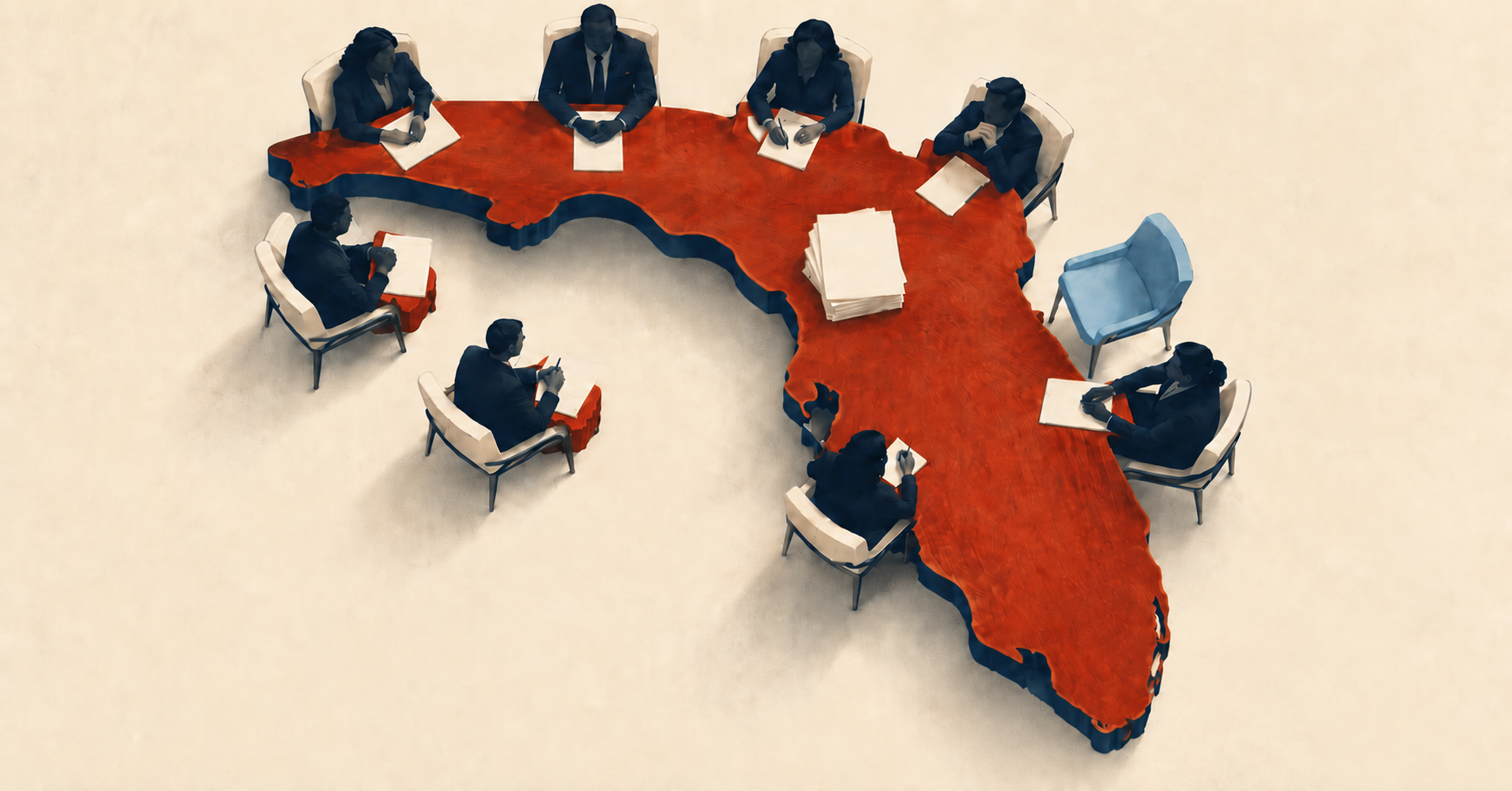
TALLAHASSEE, FLORIDA – Florida paid $6.57 billion for ABA through Medicaid and CHIP from 2023 through 2025, more than any other state, the state’s Medicaid agency told a new task force in August. The Legislature created the task force in June and gave it until December 31 to recommend changes, including whether to cap the number of months a child can stay in treatment.
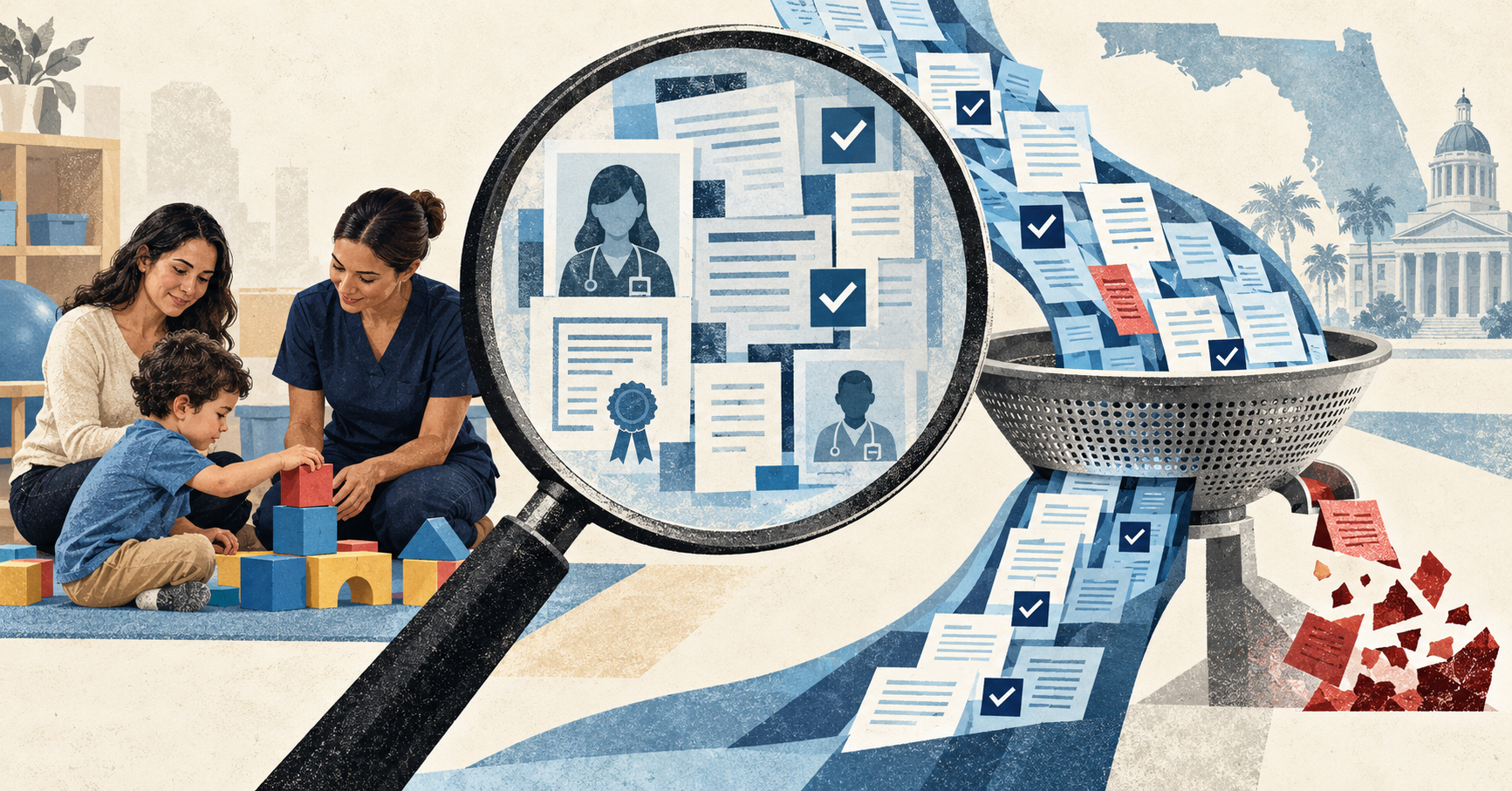
The law that created the panel, Section 40 of the budget implementing bill Gov. Ron DeSantis signed June 29, lists 6 things for it to evaluate. Two go to how long a child stays in treatment: whether to limit how long any one authorization can run, and whether to cap the number of months a child can receive ABA at all. A third asks for stronger standards on who can enroll as a Medicaid ABA provider and how they bill, “to promote program integrity and fiscal accountability.” The other 3 ask for care models tied to the right ages, for how children should move between developmental, educational, and community settings, and for quality metrics.
The panel, chaired by Shevaun Harris, secretary of the Agency for Health Care Administration (AHCA), was scheduled to hold its third meeting September 28 in Tallahassee. The agenda called for representatives of Simply Healthcare, Sunshine Health, and Humana Healthy Horizons to explain how the plans decide how much ABA to approve; a provider’s view of prior authorization from Cayer Behavioral Group; and a session on focused versus comprehensive ABA, the field’s shorthand for targeted treatment and broader, more intensive programs, from Thomas Frazier, chief clinical officer of the ABA software company CentralReach and national board chair of Autism Speaks. AHCA had not posted minutes from the meeting as of publication.
The Charge and the Clock
The law’s purpose sentence asks the panel to evaluate ABA delivery “in a manner that promotes high-quality, family-centered care while ensuring long-term financial sustainability of the Medicaid program and cost predictability without disrupting access for current enrollees and families.” Its report must include “advantages and disadvantages of each recommendation.”
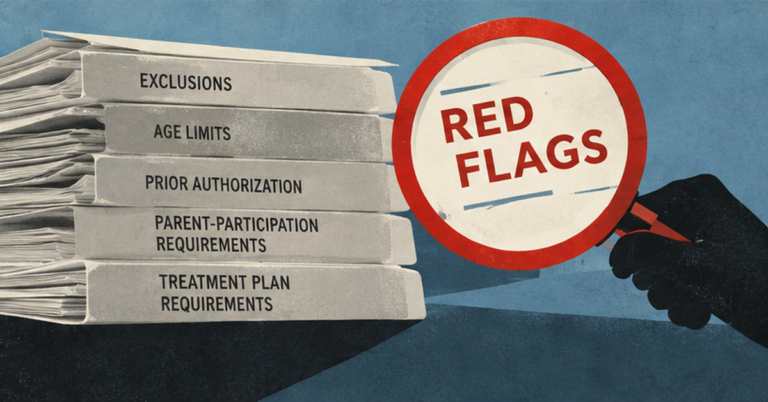
Any cap would also have to fit federal rules. In a September 2024 letter to state health officials, CMS said states may not put hard limits on the amount, duration, or scope of services covered under EPSDT, the Medicaid benefit for children under 21 that pays for ABA, though they may set limits that can be exceeded with prior authorization or a medical necessity review.
Harris has told members she wants most of the recommendations finished by the end of October, a schedule she has said is not “set in stone.” The panel made no recommendations at its first two meetings, which went to AHCA’s program data, a 173-page federal ABA toolkit that a CMS official told members is “not binding,” and a comparison of Florida’s Medicaid coverage with other states’.
“There’s something unusual happening … that deserves a closer look.” – Shena Grantham, Assistant Deputy Secretary for Medicaid Policy and Quality, Florida Agency for Health Care Administration (2026)
What AHCA Told the Panel
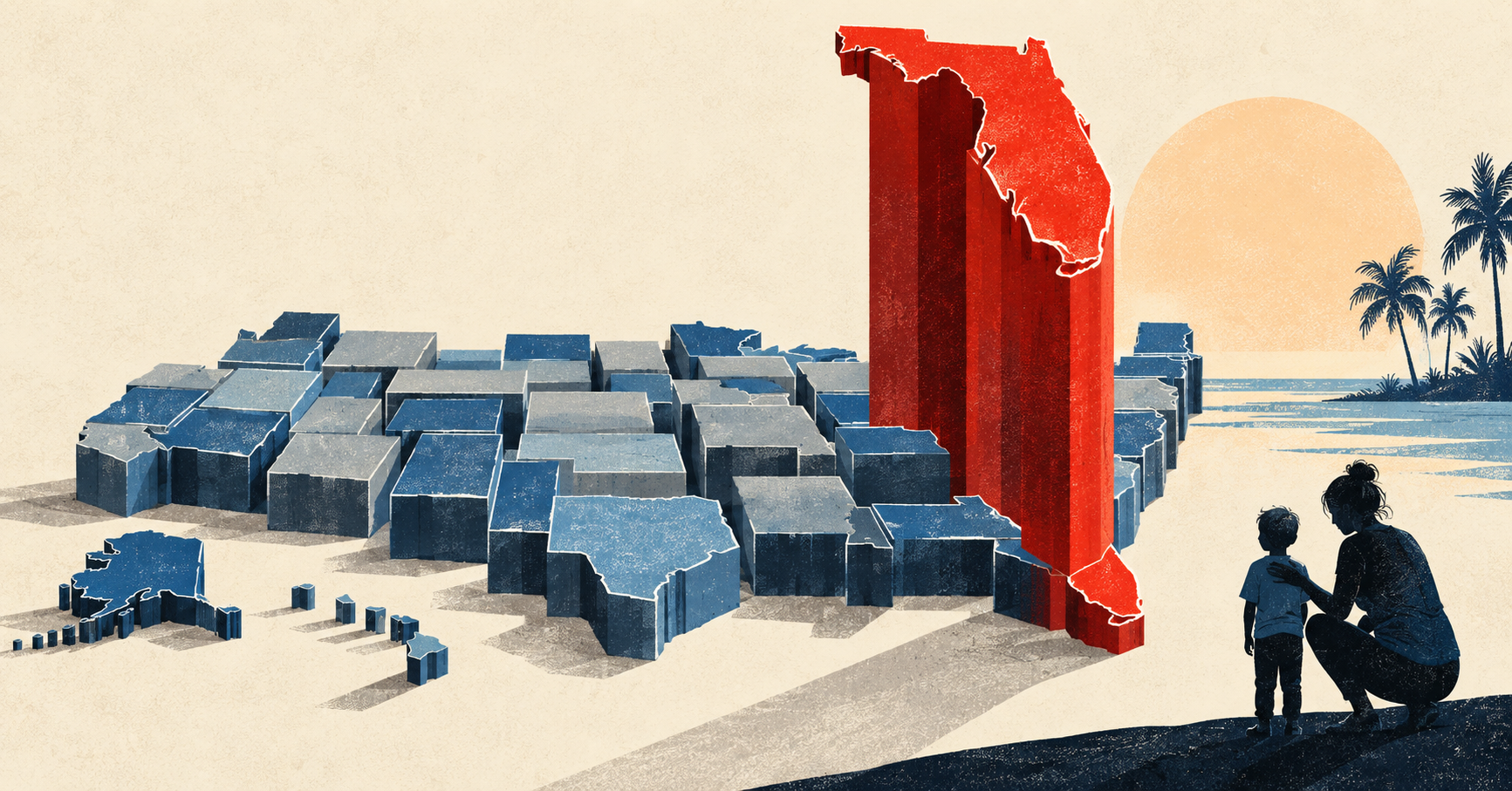
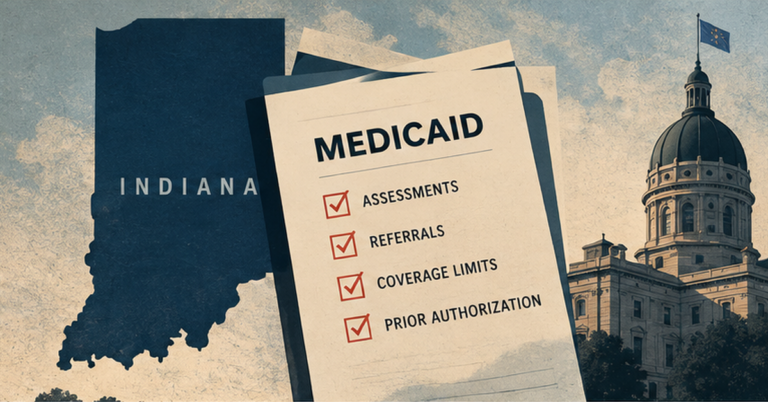
Shena Grantham, AHCA’s assistant deputy secretary for Medicaid policy and quality, gave the panel its baseline at the first meeting on August 12. Florida’s $6.57 billion compared with $1.65 billion in Indiana, the next-highest state, and $1.53 billion in North Carolina, the Florida Phoenix reported from her presentation; the AHCA slide cites federal claims data for 2023 through 2025 that the CMS toolkit says cover both Medicaid and CHIP. “There’s something unusual happening … that deserves a closer look,” Grantham told the panel.
She put the program’s cost at about $2.3 billion for about 60,000 children, without saying which year, and said the state spent more on ABA for those children than on hospital care for about 967,000 children, physician visits for 1.75 million, or prescription drugs for about 1.4 million.
About 25% of the 55,226 Medicaid recipients with ABA claims in a 6-month period ending June 26 had no autism diagnosis recorded in the encounter data, according to her presentation. Florida’s Medicaid coverage policy does not limit ABA to autism; it covers medically necessary services for recipients under 21 whose behavior impairs a major life activity. The law asks the panel for care models tied to “the appropriate ages”; on that point, about a quarter of Florida’s Medicaid ABA went to children ages 3 to 5, compared with about 40% nationally, the Phoenix reported at the first meeting.
On August 31, Grantham added the duration numbers that bear most directly on the cap question. Among recipients in ABA from December 2025 through July 2026, with service history counted back to state fiscal year 2019-20, the average length of service was 32.5 months; about 10,000 had been in ABA for 5 years or longer, and about 8,000 for less than 6 months.
What the State Economist Sees
Florida moved Medicaid ABA for plan enrollees into its Statewide Medicaid Managed Care plans on February 1, 2025; about 99% of ABA recipients are enrolled in one, according to AHCA’s August presentation. Before that, providers billed the state directly, on a fee-for-service basis, and worked outside the plans’ networks; since then, they have had to contract with the plans, which now handle prior authorization. The Phoenix has reported provider disruptions and access problems since the shift, and the task force’s first meeting drew public comment about “provider terminations and continuity of care,” according to the minutes.
Florida’s top economist has since given lawmakers an early read on ABA costs, the Phoenix reported. Pressed by Sen. Gayle Harrell, a Stuart Republican, at a recent meeting of the Legislative Budget Commission, the joint legislative panel that handles budget changes between sessions, Amy Baker, coordinator of the Legislature’s Office of Economic and Demographic Research, said the “escalation and costs associated with kids with autism or other related issues is starting to slow down some and soften a little bit.” “I think in part that had to do with some changes that had been made to how we service those children,” she said. The Phoenix identified the February 2025 move to managed care as one of those changes.
Harrell also asked whether the state’s estimates made any adjustment for fraud in ABA. Not to her knowledge, Amy Baker said: “So, I think the best I could say, at this point, is we’re silent on that.”
Who Sits on the Panel
The law gives the AHCA secretary the chair without a vote and splits 9 appointments among the governor, the Senate president, and the House speaker, naming 4 groups to draw from: autism and ABA researchers, ABA providers, Medicaid managed care plan representatives, and physicians.
The Senate president’s 3 seats went to Kerri Peters, a University of Florida behavior analyst and a former president of the Florida Association for Behavior Analysis; David Childers, an associate professor of pediatrics at the UF College of Medicine in Jacksonville; and Stella Johnson, chief executive of Hope Haven. The House speaker named Yanerys León, a University of Miami behavior analyst who served as the association’s 2025–26 president, and two people from the Medicaid managed care plan Florida Community Care: Kali Wilson, a program director at the plan, and Carol Gormley, vice president of government affairs at its parent, Independent Living Systems.
DeSantis’s office announced two of the governor’s appointments on September 25, both already listed as his appointees on the panel’s August 31 agenda: Kale Baker, a vice president at Molina Healthcare, which also holds a Florida Medicaid managed care contract, and David Brown, president and co-founder of Family Initiative. That puts people from Medicaid managed care plans in 3 of the 9 appointed seats, a category the law names. The family-member seat the law reserves for a governor’s appointment was still listed as pending on the September 28 agenda.
The panel is scheduled to meet next on October 5 at AHCA headquarters in Tallahassee, and its report is due December 31.
AT A GLANCE
| Created by: | Section 40 of HB 5003-E (Chapter 2026-233, Laws of Florida), signed June 29, 2026, and effective July 1, 2026; the section expires July 1, 2027 |
| Charge: | Limits on authorization length; potential caps on months of service; provider enrollment and billing standards; care models by age; transitions across settings; quality metrics |
| Report due: | December 31, 2026, to the governor, the Senate president, and the House speaker, with advantages and disadvantages of each recommendation |
| Chair and seats: | AHCA Secretary Shevaun Harris, ex officio and nonvoting; 9 appointed seats, one (family member) still pending as of September 28, 2026 |
| Florida Medicaid and CHIP ABA spending, 2023–2025: | $6.57 billion; Indiana next at $1.65 billion (Grantham to the task force, August 12, 2026, as reported by the Florida Phoenix; AHCA slide cites federal Medicaid and CHIP claims data, T-MSIS) |
| Program size: | About $2.3 billion for about 60,000 children (Grantham; year not specified) |
| Recipients with ABA claims, Dec. 2025 to June 2026: | 55,226; 13,698 (about 25%) with no ASD diagnosis identified in the encounter data (AHCA) |
| Length of service: | 32.5 months on average; about 10,000 recipients at 5 years or longer (recipients Dec. 2025 to July 2026; AHCA, August 31, 2026) |
| Managed care: | ABA reimbursed by Statewide Medicaid Managed Care plans since February 1, 2025 (AHCA) |
| Next meeting: | October 5, 2026, AHCA, 2727 Mahan Drive, Tallahassee; comments to BACOMMENTS@ahca.myflorida.com |
SOURCES & REFERENCES
| 1. | Sexton, Christine. “Why does Florida spend so much money on treatment for children with autism and special needs?” Florida Phoenix. August 17, 2026. https://floridaphoenix.com/2026/08/17/why-does-florida-spend-so-much-money-on-treatment-for-children-with-autism-and-special-needs/ |
| 2. | Florida Agency for Health Care Administration. Florida Medicaid Behavior Analysis Services: Program History, Current Structure, and Key Data. Presentation to the Applied Behavior Analysis Task Force by Shena Grantham. August 12, 2026. https://ahca.myflorida.com/file/aba-task-force/Final_FLMedicaidBAServices_ProgramHistory_CurrentStructure_andKeyData_PPT.pdf |
| 3. | Laws of Florida, Chapter 2026-233 (House Bill 5003-E, Implementing the 2026-2027 General Appropriations Act), Section 40. Approved June 29, 2026. http://laws.flrules.org/2026/233 |
| 4. | The Florida Senate. House Bill 5003-E (2026E), bill history and votes. https://www.flsenate.gov/Session/Bill/2026E/5003E |
| 5. | Florida Agency for Health Care Administration. “Applied Behavior Analysis Task Force” (members, meeting schedule, and materials). Accessed September 29, 2026. https://ahca.myflorida.com/aba-task-force.html |
| 6. | Florida Agency for Health Care Administration. Applied Behavior Analysis Task Force, Meeting 3 Agenda. September 28, 2026. https://ahca.myflorida.com/file/aba-task-force/FINAL_ABATF_Meeting 3_Agenda_092826.pdf |
| 7. | CentralReach. “Thomas Frazier, Chief Clinical Officer.” Leadership biography. Accessed September 29, 2026. https://centralreach.com/about/leadership/thomas-frazier/ |
| 8. | Sexton, Christine. “No recommendations on autism care as task force completes second meeting.” Florida Phoenix. August 31, 2026. https://floridaphoenix.com/2026/08/31/no-recommendations-on-autism-care-as-task-force-completes-second-meeting/ |
| 9. | Florida Agency for Health Care Administration. Applied Behavior Analysis Task Force, Meeting 2 Agenda. August 31, 2026. https://ahca.myflorida.com/file/aba-task-force/UPDATED_FINAL_ABA%20Task%20Force%20Agenda%208.31.2026_082626.pdf |
| 10. | Florida Agency for Health Care Administration. Applied Behavior Analysis Task Force, Meeting 1 Minutes (August 12, 2026; approved August 31, 2026). https://ahca.myflorida.com/file/aba-task-force/APPROVED_Meeting1Minutes_083126.pdf |
| 11. | Florida Agency for Health Care Administration. Organizational Chart. June 2026. https://ahca.myflorida.com/file/about-the-agency-for-health-care-administration/AHCA%20Org%20Chart%20June%202026.pdf |
| 12. | Sexton, Christine. “Autism Speaks chair, managed care plans up on next ABA task force agenda.” Florida Phoenix. September 24, 2026. https://floridaphoenix.com/2026/09/24/autism-speaks-chair-managed-care-plans-up-on-next-aba-task-force-agenda/ (republished as “Florida weighs changes to $2.3 billion autism therapy program,” Islander News, September 25, 2026, https://www.islandernews.com/lifestyle/health/florida-weighs-changes-to-2-3-billion-autism-therapy-program/article_6d2befa6-cbed-4e54-b919-f6c0f4fd50fa.html) |
| 13. | Florida Agency for Health Care Administration. Applied Behavior Analysis Task Force, Meeting 2 Materials (behavior analysis expenditures and utilization, SFY 2025-26). August 31, 2026. https://ahca.myflorida.com/file/aba-task-force/Meeting2Materials_083126a.pdf |
| 14. | Florida Agency for Health Care Administration. “Behavior Analysis Services Information.” Accessed September 29, 2026. https://ahca.myflorida.com/medicaid/medicaid-policy-quality-and-operations/medicaid-policy-and-quality/medicaid-policy/medical-and-behavioral-health-coverage-policy/behavioral-health-and-health-facilities/behavior-analysis-services-information.html |
| 15. | Florida Agency for Health Care Administration. “Statewide Medicaid Managed Care (SMMC) New Program Highlight: Behavior Analysis.” October 18, 2024. https://ahca.myflorida.com/content/download/25045/file/SMMC%203.0_BA%20Program%20Highlight_10182024.pdf |
| 16. | Florida Association for Behavior Analysis. “AHCA ABA Task Force Updates.” Accessed September 29, 2026. https://www.fabaworld.org/aba-task-force |
| 17. | Independent Living Systems. “Florida Community Care Awarded New Medicaid Managed Care Contract.” Press release via GlobeNewswire. August 14, 2024. https://www.globenewswire.com/news-release/2024/08/14/2930338/0/en/Florida-Community-Care-Awarded-New-Medicaid-Managed-Care-Contract.html |
| 18. | Executive Office of Governor Ron DeSantis. “Governor Ron DeSantis Appoints Two to the Applied Behavior Analysis Task Force.” Press release. September 25, 2026. https://www.flgov.com/eog/news/press/2026/governor-ron-desantis-appoints-two-applied-behavior-analysis-task-force |
| 19. | Centers for Medicare & Medicaid Services. “Best Practices for Adhering to Early and Periodic Screening, Diagnostic, and Treatment (EPSDT) Requirements.” State Health Official Letter SHO #24-005. September 26, 2024. https://www.medicaid.gov/federal-policy-guidance/downloads/sho24005.pdf |
| 20. | Florida Agency for Health Care Administration. Florida Medicaid Behavior Analysis Services Coverage Policy (Rule 59G-4.125, F.A.C.). Adopted effective February 10, 2025. https://ahca.myflorida.com/content/download/25728/file/Florida%20Medicaid%20Behavior%20Analysis%20Services%20Coverage%20Policy.pdf |
| 21. | Centers for Medicare & Medicaid Services. State Medicaid & Children’s Health Insurance Program Applied Behavior Analysis Toolkit. August 2026. Figure 3b, “Total Medicaid and CHIP Payments for Applied Behavior Analysis Services, by State, 2023–2025.” As posted by the Florida Agency for Health Care Administration. https://ahca.myflorida.com/file/aba-task-force/autism-services-aba-toolkit_1.pdf |




Join the discussion ▾