

The six new ABA billing codes that the American Medical Association’s coding panel approved a year ago now have numbers. They are 97148, 97149, 97159, 97160, 97173, and 97180, and they take effect January 1, 2027, the same day the two temporary codes ABA has used since 2014 for clients whose behavior puts themselves or others in danger disappear, and 97155, the code BCBAs bill for modifying protocols and directing technicians, is rewritten.
The AMA published the 2027 edition of CPT, the medical billing code system, on September 9; the book files ABA under the heading “adaptive behavior services.” The release ended a year-long wait. The coding panel approved the changes in September 2025, but AMA confidentiality rules kept the ABA Coding Coalition, the group of professional organizations that wrote the code application, from publishing the descriptors until CMS’s July proposal put them on the record, and the five-digit numbers stayed unpublished until this month.
The Coalition, now made up of the field’s two professional associations, ABAI and APBA; its certification board, the BACB; and its provider trade group, CASP, posted the full 14-code list by September 12 and scheduled three webinars, starting September 21.
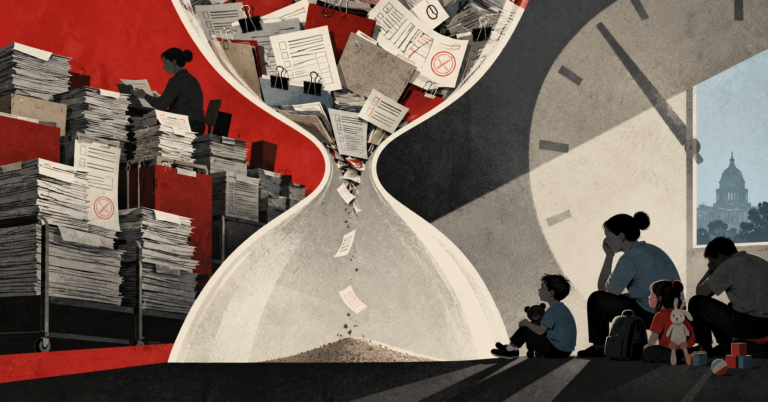
As of September 23, providers have 100 days. They have to rework billing software and prior authorizations that straddle January 1 around a code set that grows from 10 codes to 14, and around prices that stay a payer-by-payer negotiation, as the Coalition told providers in July: CMS proposed to keep the existing codes carrier-priced and to price the six new ones the same way, which means Medicare sets no national fee for any of them.

What the New Codes Cover
Four of the six are the permanent replacements for the temporary codes that covered what the code book now calls “harmful behavior,” a category the Coalition’s code page says includes repetitive and stereotypic behaviors and behavior that risks physical harm to the client, others, or property; the deleted codes called it “destructive.” There are two for assessment and two for treatment, each pair built as a base code that requires two technicians plus an add-on code for the third through fifth technicians. The descriptors require a patient who exhibits harmful behavior and an environment customized to that behavior, and they count technician time face-to-face with the patient. The descriptors say nothing about the supervising clinician, but the Coalition’s crosswalk says a physician or other qualified health care professional (QHP) must be on site and immediately available to join the session, a requirement it says telehealth can satisfy where medically necessary and clinically appropriate. For an assessment staffed by four technicians, 97148 covers the first two, and a single 97149 reports the combined time of the third and fourth, rather than a separate add-on for each. The fifth, 97173, is for a physician or other QHP treating a client face-to-face, with analysis, one patient at a time. In ABA, that clinician is usually a BCBA, where state licensure and payer rules allow.

The sixth, 97180, is the one that changes what a BCBA can bill for. Its descriptor covers five kinds of work done away from the client: reviewing data and session notes; deciding whether to change targets, goals, or protocols; deciding whether more assessment is needed; writing discharge or transition plans; and training technicians on revised protocols. The work must be performed personally by the physician or other QHP and is billed in 15-minute units; the Coalition’s crosswalk says it may be reported once a week by summing the qualifying time from the preceding seven days. Under the current set, the Coalition’s guidance says the only indirect work billable with CPT codes is what falls inside the assessment code, 97151; everything else, including day-to-day treatment planning, is bundled into the treatment codes unless a payer supplements the set with a HCPCS or other code, which the Coalition says some do.
97155 Splits in Two
The revision to 97155 is the one that moves work from one code to another. Today the code covers “adaptive behavior treatment with protocol modification” by the clinician, face-to-face with one patient, “which may include simultaneous direction of technician.” In 2027, it becomes “adaptive behavior direction of technician and analysis,” still face-to-face with a patient. The treatment half of the old code moves to 97173. That work, the billing firm Cube Therapy Billing wrote in August, “splits across two codes next year.”

The panel edited the rest of the set rather than rebuilding it: the family-guidance codes 97156 and 97157 add the words “with analysis,” the group code 97158 swaps “with protocol modification” for them, and the technician codes 97152, 97153, and 97154 lose the phrase “under the direction of” a clinician. “Analysis” is the word the revision leans on, and the Coalition’s code page does not define it. The Coalition says its webinars will cover “important definitions within the CPT book that providers and billers will need to understand to accurately report these services.” Or, as the software firm ABA Matrix put it in its own guide, “a familiar code does not necessarily mean a familiar rule.”
CMS Leaves the Rates to Payers
The Coalition is running three briefings before the end of September. ABAI scheduled the first for providers, billers, and software vendors on September 21; APBA will host a second for providers on September 28; and CASP will host an invitation-only session for payers and regulators on September 30.
CMS has proposed no national price. In its July 14 proposed Medicare fee schedule for 2027, the agency listed all 14 adaptive behavior codes as carrier-priced, according to the Coalition’s summary, leaving each contractor and payer to set its own rate. “The existence of a CPT code does not guarantee coverage or reimbursement,” Ashleigh Evans, a BCBA who tracked the release for the ABA Resource Center, wrote on September 18.
The same Coalition summary says the proposal kept 97151 through 97158 on Medicare’s permanent telehealth list and did not say whether the six new codes would join it; the Coalition said it would press CMS to add them before the rule is final. Comments closed September 14. The final rule, due in November, will show whether the new codes made the telehealth list.
AT A GLANCE
| Harmful-behavior assessment: | 97148 (two technicians required) plus add-on 97149 for each additional technician, up to five technicians total; replaces temporary code 0362T (ABA Coding Coalition, September 12, 2026) |
| Harmful-behavior treatment: | 97159 (two technicians required) plus add-on 97160 for each additional technician, up to five technicians total; replaces temporary code 0373T (ABA Coding Coalition, September 12, 2026) |
| BCBA direct treatment: | 97173: adaptive behavior treatment with analysis, face-to-face with one patient (2027 CPT descriptor, via ABA Coding Coalition) |
| BCBA non-face-to-face work: | 97180: review of data and session notes, target and protocol decisions, assessment decisions, discharge or transition planning, and technician training on revised protocols (2027 CPT descriptor, via ABA Coding Coalition) |
| 97155 in 2027: | Direction of technician and analysis, face-to-face with a patient; the treatment half of the old code moves to 97173 |
| Deleted: | 0362T and 0373T, temporary (Category III) codes in use since July 1, 2014 (deletion: AMA CPT Editorial Panel, September 2025; 2014 date: Cube Therapy Billing) |
| Pricing: | All 14 codes carrier priced in CMS’s July 14, 2026 proposal, per the ABA Coding Coalition; no national Medicare rate; final rule due November 2026 |
| Effective: | January 1, 2027 |
SOURCES & REFERENCES
| 1. | American Medical Association. “AMA releases CPT 2027 code set.” Press release. September 9, 2026. https://www.ama-assn.org/press-center/ama-press-releases/ama-releases-cpt-2027-code-set |
| 2. | ABA Coding Coalition. “Billing Codes” (2027 CPT code set, effective January 1, 2027). Updated September 12, 2026. https://abacodes.org/codes/ |
| 3. | American Medical Association, CPT Editorial Panel. Summary of Panel Actions, September 2025 meeting, Tab 56. September 2025. https://www.ama-assn.org/system/files/sept-2025-summary-of-panel-actions.pdf |
| 4. | Cruz V. “2027 ABA CPT Code Changes: Every New, Revised, and Deleted Code.” Cube Therapy Billing. August 6, 2026. https://www.cubetherapybilling.com/2027-aba-cpt-code-changes-every-new-revised-and-deleted-code |
| 5. | Carr J. “AMA Releases 2027 CPT Code Set.” ABA Coding Coalition. September 10, 2026. https://abacodes.org/ama-releases-2027-cpt-code-set/ |
| 6. | Carr J. “ABA CPT Codes Update.” ABA Coding Coalition. October 7, 2025. https://abacodes.org/aba-cpt-codes-update/ |
| 7. | Council of Autism Service Providers. “ABA Coding Coalition Announces AMA Approval of Code Change Application.” October 8, 2025. https://www.casproviders.org/news/aba-coding-coalition-announces-ama-approval-of-code-change-application |
| 8. | ABA Coding Coalition. “About Us.” Accessed September 21, 2026. https://abacodes.org/about/ |
| 9. | ABA Coding Coalition. “CMS Releases Proposed 2027 Medicare Physician Fee Schedule (MPFS).” July 15, 2026. https://abacodes.org/cms-releases-proposed-2027-medicare-physician-fee-schedule-mpfs/ |
| 10. | Association of Professional Behavior Analysts. “ABA Coding Coalition: CMS Announces 2027 New and Revised CPT Codes for Adaptive Behavior Services.” July 15, 2026. https://www.apbahome.net/news/aba-coding-coalition-cms-announces-2027-new-and-revised-cpt-codes-for-adaptive-behavior-services |
| 11. | Centers for Medicare & Medicaid Services. “Medicare and Medicaid Programs; CY 2027 Payment Policies Under the Physician Fee Schedule and Other Changes to Part B Payment and Coverage Policies.” Proposed rule, CMS-1848-P, 91 FR 43842. Federal Register, July 16, 2026. https://www.federalregister.gov/documents/2026/07/16/2026-14327/medicare-and-medicaid-programs-cy-2027-payment-policies-under-the-physician-fee-schedule-and-other |
| 12. | Severson C, Whitney J. “Report ABA Therapy Services With Confidence.” AAPC Knowledge Center. August 1, 2022. https://www.aapc.com/blog/85614-report-aba-therapy-services-with-confidence/ |
| 13. | Evans A. “2027 ABA CPT Codes Are Official: Here Are the Six New Codes.” ABA Resource Center. September 18, 2026. https://www.abaresourcecenter.com/post/2027-aba-cpt-codes |
| 14. | ABA Matrix. “New ABA CPT Codes for 2027: What Providers Need to Know.” September 14, 2026. https://www.abamatrix.com/new-aba-cpt-codes-for-2027-what-providers-need-to-know/ |
| 15. | Dickson S. “The Six New 2027 Adaptive Behavior CPT Codes & Impact on your Tech Stack.” Mission Viewpoint. July 16, 2026. https://www.missionviewpoint.com/the-six-new-adaptive-behavior-cpt-codes-impact-on-your-tech-stack/ |
| 16. | ABA Coding Coalition. “Frequently Asked Questions.” Updated December 10, 2024. https://abacodes.org/frequently-asked-questions/ |
| 17. | Thomas L. “CMS Proposes Six New ABA Codes for 2027.” BreakingNewsABA. July 23, 2026. https://breakingnewsaba.com/policy/cms-proposes-six-aba-codes-2027 |
| 18. | ABA Coding Coalition. “2027 Adaptive Behavior Assessment and Treatment Code Conversion Table” (2027 CPT code crosswalk). September 11, 2026. https://abacodes.org/wp-content/uploads/2026/09/2027-CPT-Code-Crosswalk.pdf |




Join the discussion ▾