

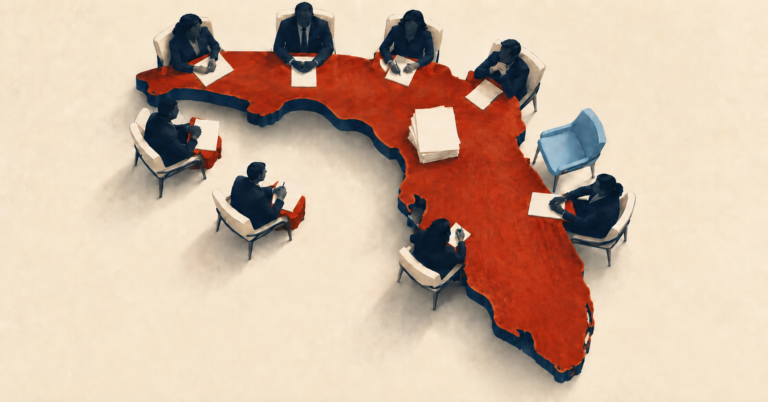
TALLAHASSEE, FLORIDA – Centria Autism told Florida’s applied behavior analysis (ABA) task force on October 5 that the state should license every provider location, charge each one $1,000 a year for inspections, and reduce Medicaid payments at locations that fail. The company operates in 11 states but does not provide ABA in Florida, according to the Florida Phoenix.
Shevaun Harris, secretary of the Agency for Health Care Administration (AHCA), which runs Florida Medicaid, chairs the task force but does not vote. She said she found it “interesting” that a provider would advocate licensing ABA facilities. “I just want to note our agency has been very intrigued by that concept,” she said, according to the Florida Phoenix. “We’ve had the same conversation here at the agency,” she added, citing “individuals going into people’s homes of very vulnerable kids.”
Florida recorded $6.57 billion in Medicaid and Children’s Health Insurance Program (CHIP) payments for ABA from 2023 through 2025, the highest state total in federal data AHCA presented in August. Lawmakers created the panel in 2026 to recommend changes to the program, from authorization limits to provider billing standards.
Private equity firm Thomas H. Lee Partners acquired Centria in 2019 in a deal reported at $415 million. The 74’s September analysis of federal Medicaid payment data ranked Centria first among the ABA providers it identified, with more than $440 million in payments recorded from 2019 through 2024. CEO David Harbour, who made the licensing pitch, said it could help “create standardization around the services,” according to the Phoenix.
AHCA separately asked whether required technician supervision should rise from at least 5% of service hours to 10% to 20%. Minutes approved at the meeting also document discussion of limits on approved hours. These remain proposals, rather than final task force recommendations.

Centria’s Licensing and Payment Plan
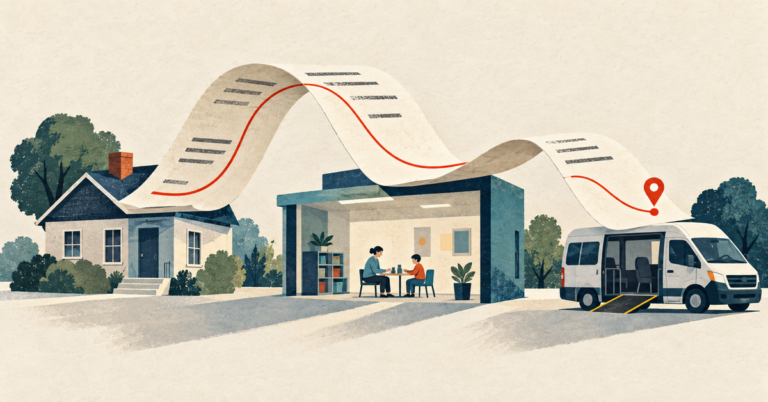
Centria’s slides, credited to Chief Clinical Officer Timothy Yeager, BCBA, call for a separate state license for each provider location, covering Medicaid and privately insured clients and services delivered in centers or homes. Each location would pay $1,000 annually to fund state inspections conducted every one or two years. A location that fails would have a state-set correction window, such as 90 or 180 days, and forfeit 10% of revenue billed for all Medicaid services there during that period. Full payment would resume when compliance is restored.
Harbour said failed surveys “should carry a Medicaid reimbursement penalty” and acknowledged that “no state has done this yet,” the Phoenix reported.
Harbour recommended Florida’s home health licensing and survey system as a model, the Phoenix reported. Harris said Medicaid enrollment inspections are “not the same as a licensure process.”
The slides also propose a “case rate,” one payment per case tied to defined clinical outcomes in place of hourly billing, with services ending when a child meets “defined graduation criteria.” Centria acknowledged the current financial incentive: “Billable units reward more hours; reduction or discharge reduces revenue, for Centria too.” Its broader clinical proposal also preserves appeals and reassessment and calls for testing unintended effects, including premature discharge.
Centria also proposed requiring attendance at 80% to 85% of clinically recommended services. Families below that threshold would lose eligibility for an unspecified period. The slides say eligibility would resume when attendance returns to that range but leave the re-entry process unexplained.
“Medicaid departments must be willing to tell a family no.” – Centria presentation to Florida’s ABA Task Force (2026)
How Texas Handles Attendance
Harbour acknowledged that requiring attendance is “a really hard thing to do,” but said some states do it. He named Texas, which he said has a “minimum attendance that the family has to attend, or they could lose their services,” according to the Phoenix.
Mariel Fernandez, vice president of government affairs at the Council of Autism Service Providers (CASP), a national trade group, described the Texas policy more narrowly during public testimony, the Phoenix reported. She said Texas expects attendance at 85% of scheduled parent-training sessions but sets no monthly minimum, and that a lack of caregiver involvement does not by itself mean ABA will be denied.
The October 2026 Texas Medicaid manual expects children and caregivers to attend at least 85% of their respective scheduled sessions. If either falls short, the provider must submit justification to the health plan for physician review to continue services at the previously approved level. Attendance below 85% without documentation supporting continued medical necessity can lead to discharge or discontinued authorization. Services cannot be denied solely because a caregiver is uninvolved. These attendance provisions do not specify a fixed period of ineligibility.
Supervision and Other Proposals
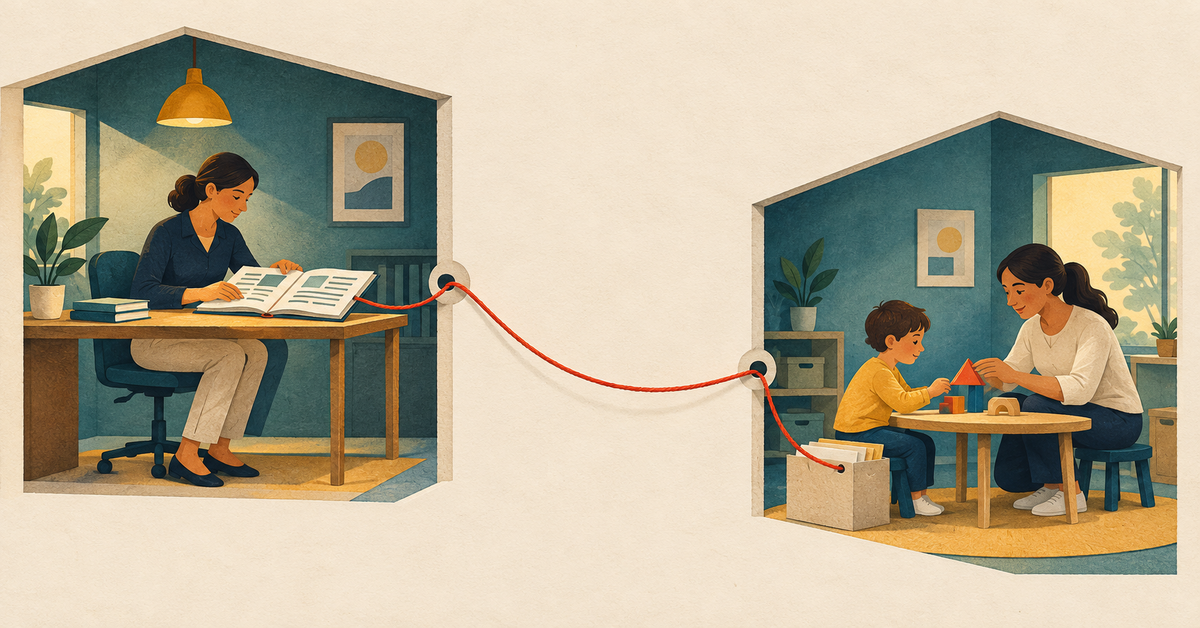
AHCA’s presentation, delivered by Shena Grantham, assistant deputy secretary for Medicaid policy and quality, framed several options as questions. The agency said Florida Medicaid defers to the Behavior Analyst Certification Board (BACB) minimum: supervision for at least 5% of a registered behavior technician’s (RBT’s) monthly service hours. It asked whether that should rise to 10% to 20% and whether to cap caseloads for board-certified behavior analysts (BCBAs) using clinical practice guidelines.
The Florida Association for Behavior Analysis (FABA) cited CASP guidance recommending one to two hours of clinical case supervision for every 10 hours of direct treatment. That case oversight is broader than the BACB’s minimum RBT supervision requirement. FABA’s materials, presented by Executive Director Melissa Olive, also said Florida’s Medicaid claims system and most health-plan portals do not link the supervising BCBA to the RBT on each claim, limiting the state’s ability to identify the clinician responsible for oversight.
FABA asked the state to require a named supervisor on claims for technician-delivered services and to end billing arrangements that allow RBTs to bill independently. AHCA likewise suggested updating the billing system to link supervisors with the technicians they oversee. Its slides also floated a standard treatment-plan template and closer tracking of hours delivered against hours authorized.
Speech-language pathologist Sheryl Rosin, founder of Palm Beach Speech & OT Specialists, urged diagnostic checks and progress-based renewals in place of what she called “default 40-hour renewals.” Florida already requires a comprehensive diagnostic evaluation, but eligibility is not restricted to autism. AHCA’s August presentation found no autism diagnosis for about one in four recipients in the encounter data reviewed; this does not establish that they lacked a diagnosis or were ineligible. Rosin also urged coverage of approaches such as DIR/Floortime, listed in an August Centers for Medicare & Medicaid Services (CMS) toolkit. The toolkit does not endorse any particular treatment.
Ideas Already in the Minutes
Minutes of the September 28 meeting, approved October 5, list four ideas raised for further consideration and note that they “were not presented as task force-approved recommendations.” One would set limits on the number of hours approved, with exceptions for children with the most intense needs. Another calls for considering limits on Medicaid-funded ABA during school hours, while supporting caregiver training across settings.
The other two would add oversight: blind peer reviews of treatment plans, possibly by outside BCBAs, and a state licensure framework for behavior analysts, “potentially under the Department of Health.” That idea would license individual clinicians; Centria’s would license each location.
Meeting Dates Remain Unsettled
The Phoenix reported on October 5 that two more meetings were planned. AHCA’s webpage, however, describes five meetings in total and, as of October 12, lists a fifth meeting with its date still to be determined. The sources therefore differ on the remaining schedule. Harris had sought to finish recommendations in October, but members could not settle the next meeting date on October 5, the Phoenix reported.
The recommendations are due to the governor, the Senate president, and the House speaker by December 31, 2026.
AT A GLANCE
| Centria’s licensing proposal: | Separate licenses for each location, covering centers and in-home services; $1,000 annually; inspections every one or two years |
| Penalty for a failed survey: | Proposed forfeiture of 10% of Medicaid revenue billed during a correction period; full payment resumes with compliance |
| Centria’s attendance proposal: | Proposed 80% to 85% attendance threshold; temporary ineligibility below it, with exclusion period and re-entry process unspecified |
| Texas, the state Harbour cited: | 85% attendance expected for respective child and caregiver sessions; physician review after shortfalls; no denial solely for caregiver noninvolvement |
| Supervision: | AHCA asked about raising the 5% RBT supervision minimum to 10% to 20%; clinical case oversight has separate guidance |
| Ideas in September 28 minutes: | Possible limits on approved hours, with high-acuity exceptions; school-hours limits; blind peer reviews; and licensure for individual behavior analysts. These were not adopted recommendations |
| Florida ABA payments: | $6.57 billion in Medicaid and CHIP payments for 2023–2025, the highest state total in the federal data presented by AHCA |
| What comes next: | Fifth meeting date undetermined as of October 12; remaining meeting count disputed; report due December 31, 2026 |
SOURCES & REFERENCES
| 1. | Florida Agency for Health Care Administration. Applied Behavior Analysis Task Force, Meeting 4 Materials. October 5, 2026. Centria, pp. 19–52; FABA, pp. 53–128; AHCA, pp. 129–142; Rosin, pp. 1–18. https://ahca.myflorida.com/file/aba-task-force/Meeting4Materials_100526.pdf |
| 2. | Christine Sexton. “Autism-treatment task force inches closer to finalizing recommendations.” Florida Phoenix. October 5, 2026. https://floridaphoenix.com/2026/10/05/autism-treatment-task-force-inches-closer-to-finalizing-recommendations/ |
| 3. | Florida Agency for Health Care Administration. Applied Behavior Analysis Task Force: charge, members, and meeting schedule. Accessed October 12, 2026. https://ahca.myflorida.com/aba-task-force.html |
| 4. | Shena Grantham. Florida Medicaid Behavior Analysis Services. AHCA, August 12, 2026. Eligibility, p. 10; diagnosis data, p. 12; payments, p. 21. https://ahca.myflorida.com/file/aba-task-force/Final_FLMedicaidBAServices_ProgramHistory_CurrentStructure_andKeyData_PPT.pdf |
| 5. | Beth Hawkins and Nicholas Perez. “Private Equity Is Cashing in on Autism Therapy. Children Are Paying the Price.” The 74. September 15, 2026. https://www.the74million.org/article/private-equity-is-cashing-in-on-autism-therapy-children-are-paying-the-price/ |
| 6. | Martis Capital. “Martis Capital Completes Sale of Centria Healthcare.” December 9, 2019. https://www.martiscapital.com/martis-capital-completes-sale-of-centria-healthcare/ |
| 7. | Levin Associates. “Autism Therapy Tops PE’s List in December.” Health Care M&A News. December 19, 2019. https://healthcare.levinassociates.com/2019/12/19/autism-therapy-tops-pes-list-in-december/ |
| 8. | Florida Agency for Health Care Administration. Applied Behavior Analysis Task Force Meeting Minutes, September 28, 2026, pp. 3–4. Approved October 5, 2026. https://ahca.myflorida.com/file/aba-task-force/APPROVED_Meeting3Minutes_100526.pdf |
| 9. | Council of Autism Service Providers. Staff & Board of Directors. Accessed October 12, 2026. https://www.casproviders.org/staff-and-board |
| 10. | Texas Medicaid & Healthcare Partnership. Texas Medicaid Provider Procedures Manual, October 2026, Children’s Services Handbook, §§ 2.3.5, 2.3.7.5, 2.3.7.7, and 2.3.7.15. https://www.tmhp.com/sites/default/files/file-library/resources/provider-manuals/tmppm/pdf-chapters/2026/2026-10-october/2_04_childrens_services.pdf |
| 11. | Centers for Medicare & Medicaid Services. State Medicaid & Children’s Health Insurance Program Applied Behavior Analysis Toolkit. August 2026, pp. 7, 16, 51–54. https://www.medicaid.gov/medicaid/downloads/autism-services-aba-toolkit.pdf |
| 12. | Florida Legislature. HB 5003-E, enrolled, 2026E Legislature, § 40: task force authority, membership, and reporting deadline. https://www.flsenate.gov/Session/Bill/2026E/5003E/BillText/er/PDF |
| 13. | Florida Agency for Health Care Administration. Behavior Analysis Services Coverage Policy. December 2024, § 2.2, incorporated in Rule 59G-4.125, F.A.C. https://ahca.myflorida.com/content/download/25728/file/Florida%20Medicaid%20Behavior%20Analysis%20Services%20Coverage%20Policy.pdf |



Join the discussion ▾