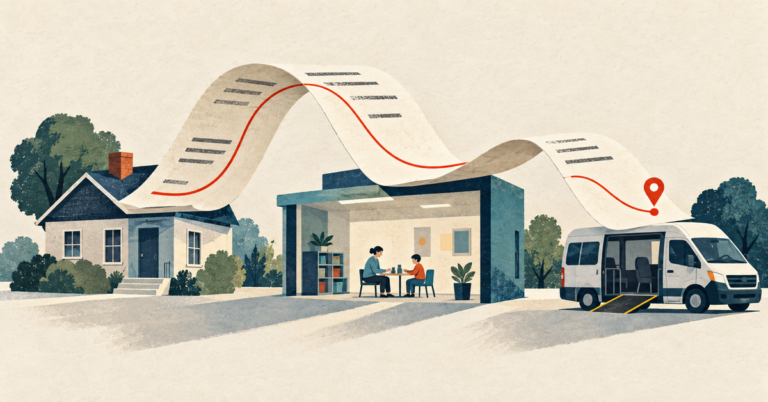
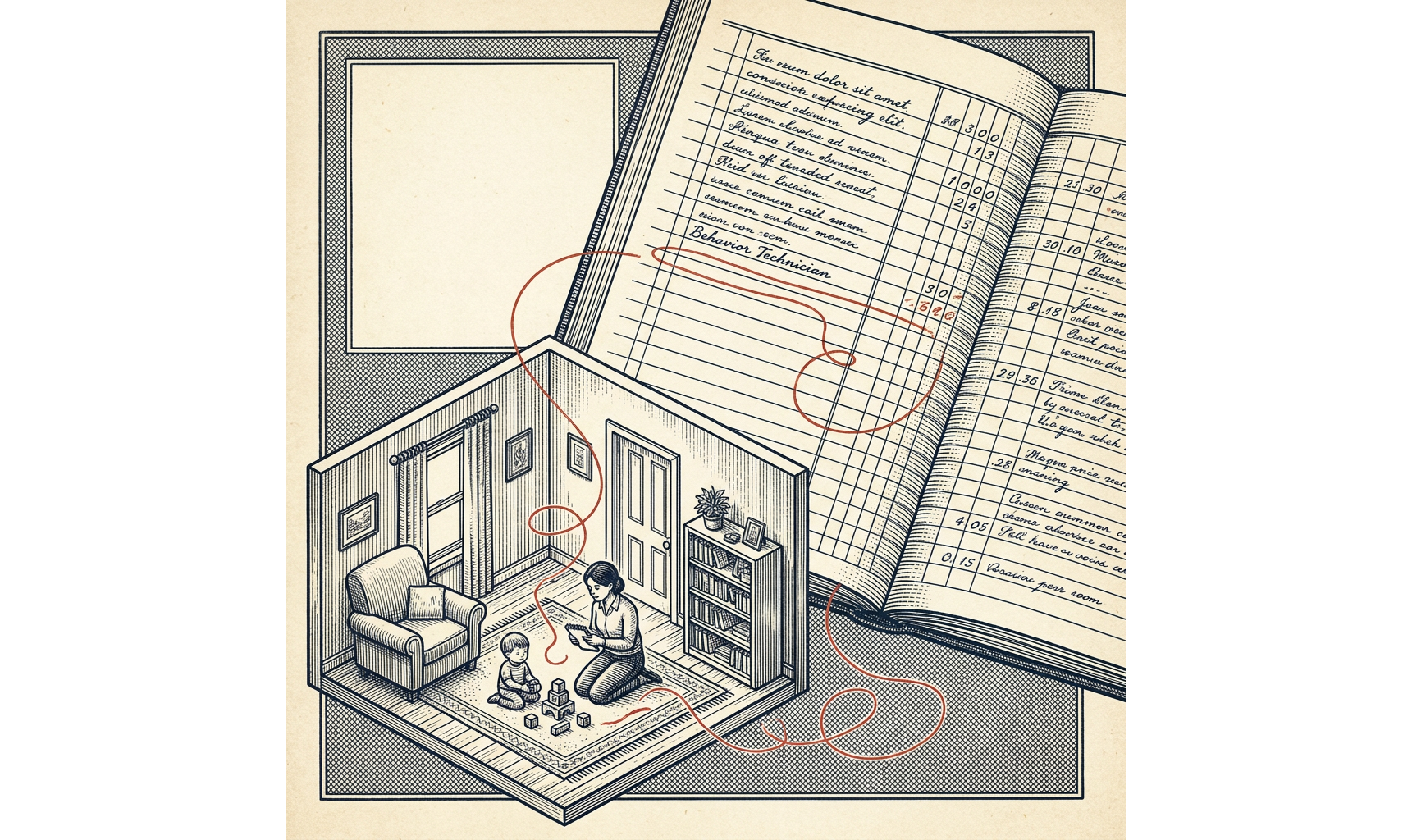
ACROSS THE UNITED STATES — A home-based applied behavior analysis session can be authorized in advance, delivered exactly as planned, and still go unpaid, not because of the care but because a visit record never reached a state database. Where a state requires electronic verification for ABA, that gap between the service and its electronic proof is the difference between a paid claim and a denied one.
The mechanism is a “hard edit,” an automated billing rule that rejects a Medicaid claim outright when it cannot be matched to an electronic visit verification record. Through 2026, a growing number of state Medicaid programs are dropping the soft “pay and warn” grace period that let flawed claims through with a flag, and switching hard edits on.
Electronic visit verification, or EVV, was never federally required for ABA. The mandate that created it covers personal care and home health, not behavioral therapy. But several states have extended EVV to home-based ABA on their own, and in at least one of them the denials are already running.
What the Cures Act Actually Requires
Section 12006(a) of the 21st Century Cures Act requires states to run EVV for all Medicaid personal care services and home health services that need an in-home visit, with deadlines of January 1, 2020 for personal care and January 1, 2023 for home health. States that miss them lose up to 1 percent of their federal match.
The law does not name ABA. EVV captures six data points on every visit. Those data include the service performed, the person receiving it, the date, the location, the person providing it, and the time the service begins and ends. Nothing in the statute requires a behavior analyst to collect any of this. The requirement appears only when a state chooses to fold behavioral services into its own EVV program, and a handful have.
Colorado’s Rule Already Denies Unmatched ABA Claims
Colorado is the clearest case. The Department of Health Care Policy and Financing expanded EVV “to other services similar in nature and service delivery,” and its list of EVV-required services includes behavioral therapies delivered in the home or community and pediatric behavioral health.
The enforcement is not theoretical. Colorado has required EVV for those services since August 3, 2020, and since February 1, 2022 every claim that requires EVV has run through a pre-payment review. A claim with a missing or incomplete EVV record returns code EOB 3054, “EVV Record Required and Not Found,” and does not pay. Behavioral therapy billed via telehealth is exempt; in-home and community sessions are not.
Providers can use the state’s free system, run by Sandata Technologies, or contract with a vendor of their own under Colorado’s hybrid model. In 2026 the state has tightened further: its May provider bulletin lists “EVV Billing Alignment and Review of Unjustified Payments” guidance for home health and home- and community-based providers, and the agency ran a pediatric behavioral therapy review in January.
In a hard-edit state, a clinically sound session that never reaches the EVV aggregator is, for billing purposes, a session that never happened.
Florida Shows How Messy the Rollout Gets
Florida moved earlier and then retreated. The Agency for Health Care Administration launched EVV for behavior analysis on December 1, 2020 in a pilot covering Regions 9, 10, and 11, ordering providers to bill through the Tellus EVV system; claims sent the old way through the state’s management information system would not be paid.
The rollout drew a fight. In June 2021, Health News Florida reported that Positive Behavior Support Corp., described as the state’s largest provider of autism services, filed an administrative complaint alleging the system blocked reimbursement and overstepped the agency’s authority, and that the EVV system, or someone with access to it, was altering behavior-analysis claims after submission and rendering them invalid.
The agency suspended EVV for behavior analysis effective February 5, 2022, and providers went back to billing directly through the Florida Medicaid Secure Web Portal as the state moved behavior-analysis services onto national CPT codes. The suspension still stands, while Florida’s home health EVV program runs separately. For ABA, the episode is a reminder that an EVV mandate can be imposed and then withdrawn, leaving providers to adjust twice.
The 2026 Shift From Warnings to Denials
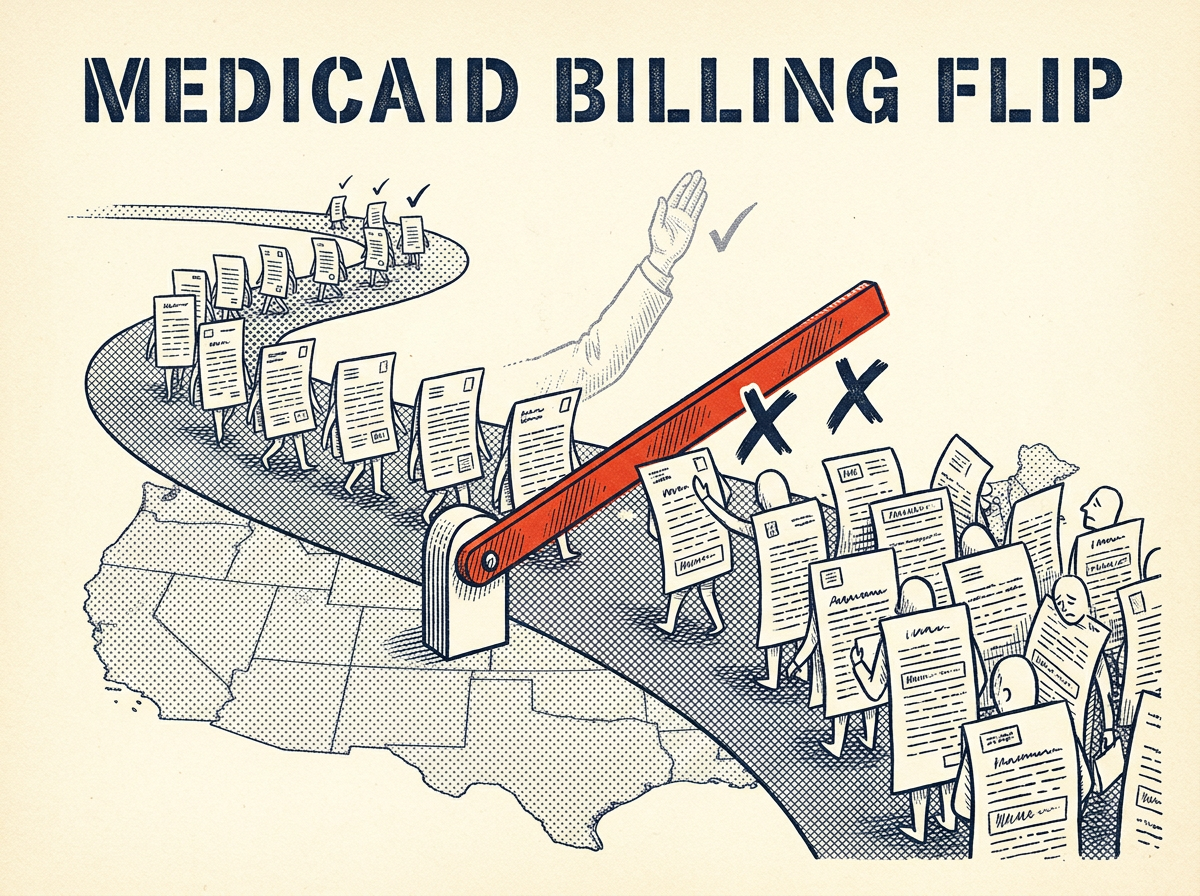
What makes 2026 different is enforcement, not new ABA-specific rules. At least five states are turning on new hard-edit waves this year. Missouri began a soft launch of claims validation on January 7, 2026, flagging mismatches with a generic alert (code N363); its first hard-launch phase is set for April 1, 2026, when claims for EVV-required services with no matching visit in the state aggregator will be denied. Minnesota started enforcing EVV for personal care in January, Ohio is tightening edits this spring, and Indiana and Pennsylvania follow later in the year. Massachusetts has said its hard denials will begin no earlier than July 2026.
Those programs target personal care, home health, and waiver services rather than ABA. The risk for behavior analysis is indirect but real: the same agencies keep extending EVV beyond the federal floor, and the machinery that now denies a home health claim is the machinery that would deny an ABA claim the day a state adds it.
The mismatches are mundane. Missouri’s own list includes claims submitted before the vendor uploads the visit, visits left in an unverified status, provider or participant IDs that do not line up, and units that do not match. Add the edits other states flag, missing start or end times, location data that puts the session somewhere other than the home, and service codes that do not match the authorization, and a clean-looking claim can still bounce. Clearing one denial, correcting the record and resubmitting, typically takes weeks.
What Home-Based ABA Operators Can Do
The fixes are specific. Capture each visit electronically at the point of care rather than reconstructing it later, and confirm the EVV vendor transmits verified visits to the state aggregator every day, not in batches that lag the claim.
Match every claim to its authorization before it goes out, because EVV data that does not match the authorization is a denial waiting to happen, and document any change to a scheduled visit with the required reason codes. Watch the remittance advice for warning codes during any soft-launch window, because those warnings are the only free practice runs a provider gets before the hard edit switches on. And track the agency’s EVV match rate; states commonly expect 95 percent or better and impose corrective action below roughly 90 percent.
For now most states still do not require EVV for behavior analysis. The trend line is the story. Colorado is increasing its EVV requirements, Florida tried it and pulled back, and the 2026 wave shows how fast a warning becomes a denial once a state decides behavioral services belong in the system.
AT A GLANCE
| Federal EVV mandate: | Personal care and home health only, under Sec. 12006(a) of the 21st Century Cures Act (CMS, 2026) |
| ABA status federally: | Not required; states may add it on their own (CMS; Operant Billing, 2021) |
| Six EVV data points: | Service, recipient, date, location, provider, start and end times (Colorado HCPF, 2026) |
| Colorado ABA rule: | In-home behavioral therapy requires EVV; non-matching claims deny (EOB 3054) since Feb. 1, 2022 (Colorado HCPF) |
| Colorado model: | Free state Sandata system or a provider-choice vendor, hybrid model (Colorado HCPF) |
| Florida ABA EVV: | Launched Dec. 1, 2020 (Regions 9–11, Tellus); suspended Feb. 5, 2022 (Florida AHCA; Vitale Health Law) |
| Missouri hard launch: | Claims-validation soft launch Jan. 7, 2026; first denials April 1, 2026 (Missouri MMAC) |
| Other 2026 movers: | Minnesota, Ohio, Indiana, Pennsylvania; Massachusetts no earlier than July 2026 (ShiftCare; StatWise) |
| Soft vs. hard edit: | Soft edit pays and warns; hard edit denies before payment (ShiftCare, 2026) |
| Denial cleanup: | Correcting and resubmitting a rejected EVV claim typically takes weeks; states target ~95% match rates (ShiftCare) |
SOURCES & REFERENCES
| 1. | Centers for Medicare & Medicaid Services. “Electronic Visit Verification.” Medicaid.gov. Accessed June 2026. https://www.medicaid.gov/medicaid/home-community-based-services/home-community-based-services-guidance-additional-resources/electronic-visit-verification |
| 2. | Operant Billing Services. “Electronic Visit Verification FAQ for ABA Therapy.” 2021. https://operantbilling.com/electronic-visit-verification-faq-for-aba-therapy/ |
| 3. | Colorado Department of Health Care Policy & Financing. “Electronic Visit Verification Overview.” Accessed June 2026. https://hcpf.colorado.gov/electronic-visit-verification-overview |
| 4. | Colorado Department of Health Care Policy & Financing. “Provider News” (May 2026, Issue 143) and Pediatric Behavioral Therapy Review (January 2026). https://hcpf.colorado.gov/provider-news |
| 5. | Florida Agency for Health Care Administration. “Behavior Analysis Electronic Visit Verification (EVV) Implementation,” Medicaid Health Care Alert. October 27, 2020. https://fl.acentra.com/wp-content/uploads/sites/14/2024/03/AHCA-Bulletin-BA-EVV-Implementation.pdf |
| 6. | Health News Florida (WUSF). “Autism provider challenges state over Medicaid verification system.” June 12, 2021. |
| 7. | Health Law Offices of Anthony C. Vitale. “EVV for Behavior Analysis to be Suspended.” January 17, 2022 (updated October 3, 2024). https://vitalehealthlaw.com/evv-for-behavior-analysis-to-be-suspended/ |
| 8. | Missouri Medicaid Audit & Compliance. “Electronic Visit Verification (EVV) Claims Validation: Key Updates for Providers.” February 20, 2026. https://mmac.mo.gov/electronic-visit-verification-evv-claims-validation-key-updates-for-providers/ |
| 9. | ShiftCare. “EVV Compliance Deadlines 2026: State-by-State Requirements and Timeline.” March 17, 2026. https://shiftcare.com/us/blog/evv-compliance-deadlines-2026-state-by-state-requirements-and-timeline |
| 10. | StatWise. “Massachusetts’s EVV Soft Launch Is Over — The Hard Deadline Is Coming.” 2026. https://statewise.com/blog/massachusettss-evv-soft-launch-is-over-the-hard-deadline-is-coming |
| 11. | CentralReach. “Are you ready for Electronic Visit Verification (EVV)?” 2019 (updated 2021). https://centralreach.com/blog/are-you-ready-for-electronic-visit-verification-evv/ |