
None of the three letters in ABA stands for autism. Applied behavior analysis is a science of behavior, and for decades its methods turned up in classrooms, factories, nursing homes, and on athletic fields. The field looks narrower today. By various industry estimates, roughly three-quarters to four-fifths of the country’s more than 83,000 board-certified behavior analysts work primarily in autism services, a concentration built over fifteen years of insurance mandates and rising diagnoses.
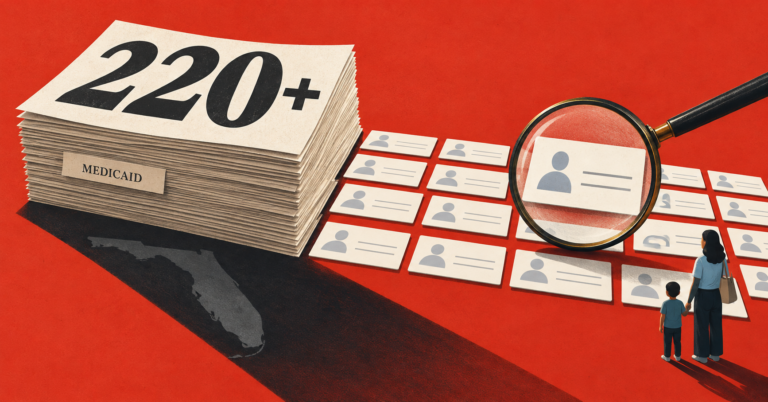
That concentration is now a liability. Through late 2025 and into 2026, state Medicaid programs began cutting autism reimbursement, the dominant revenue source for the entire sector. The cuts have revived a question most behavior analysts have avoided since the autism boom began: if the science was never only about autism, why is almost the whole profession?
A Profession Built on One Diagnosis
The numbers describe a young field growing fast in one direction. As of April 2026, 83,586 people held the BCBA credential, according to the Behavior Analyst Certification Board, supported by more than 253,000 registered behavior technicians (RBTs) who deliver most of the hands-on therapy. Both counts keep climbing. Demand has risen every year since 2010, and employers posted 132,307 jobs requesting BCBA certification in 2025, up 28% from the year before, according to a Lightcast analysis prepared for the certification board.
Almost all of that growth traces to autism. Every state now mandates some autism coverage, the diagnosis rate has reached 1 in 31 children, and insurers pay for behavior-technician hours by the unit. Medicaid is the largest single funder of ABA in the country. The result is a profession whose revenue rises and falls with one diagnosis and one payer.
Behavior analysts saw the risk years ago. In a 2010 paper titled “Looking to the Future: Will Behavior Analysis Survive and Prosper?,” Western Michigan University’s Alan Poling listed the field’s “growing focus on autism spectrum disorders and little else” among five trends he believed threatened its long-term health. Poling’s mentor, Travis Thompson, had described the strategy behind the boom in plain terms: behavior analysts needed to “find a disease,” an area taxpayers valued and would pay to treat. Autism fit. The warning was that fitting too neatly into one market is its own kind of exposure.
“The growing focus of applied behavior analysis on autism spectrum disorders and little else.” – Alan Poling, “Will Behavior Analysis Survive and Prosper?”, The Behavior Analyst (2010)
The Squeeze Arrives
The pressure is no longer hypothetical. In July 2025, Nebraska, once among the most generous states, cut reimbursement by roughly half. Indiana moved to cap ABA coverage, and a state working group recommended lifetime limits on therapy hours and a temporary moratorium on new ABA sites. Idaho reclassified ABA out of its behavioral-health managed care program in November 2025, a change that stops its contractor, Magellan, from paying the usual ABA billing codes. Providers and families have gone to court over proposed cuts in Colorado and North Carolina.
Commercial insurers are following the states. Centene, one of the largest Medicaid managed-care companies, told investors in October 2025 that it had formed a task force to address what it called elevated ABA spending. The strain has reached payrolls: in June 2026, Centria Autism announced layoffs in California and ABA Centers of America cut staff. Much of the state pressure traces to Medicaid funding gaps left by the 2025 federal budget law, the One Big Beautiful Bill Act, which sent states hunting for programs to trim. ABA, large and fast-growing, was an obvious target.
Where Else the Science Works
Behavior analysis has a long record outside the autism clinic, and two of its oldest applications have nothing to do with healthcare. The first is organizational behavior management, or OBM, which applies the same reinforcement principles to workplace performance, safety, and culture. Its commercial roots run deep. Aubrey Daniels founded the consultancy Aubrey Daniels International in 1978 and launched the Journal of Organizational Behavior Management the year before, building a business that advised manufacturers and large corporations on safety and productivity long before insurers paid for autism therapy. Behavior-based safety, which cuts workplace injuries by reinforcing specific actions, is still a recognized specialty.
The second is sport. Behavioral sport psychology dates to 1974, when a study of competitive swimmers became the first sports paper published in the Journal of Applied Behavior Analysis. Single-subject research has since documented coaching gains in football, gymnastics, tennis, and other sports, using the clinic’s own tools: goal-setting, feedback, and reinforcement. The certification board lists OBM and behavioral sport psychology among its recognized practice areas, alongside behavioral gerontology, clinical behavior analysis, and even environmental sustainability. A 2022 paper in Perspectives on Behavior Science catalogued roughly 350 distinct domains where the science has been put to work.
Diversification is a hedge the field is debating, not yet a business it has built.
Why the Pivot Is Hard
None of this makes diversification easy, because the applications outside autism share a structural problem: none has a payer remotely the size of Medicaid. OBM is sold to employers as consulting, sport work is a thin and largely academic market, and behavioral gerontology leans on the same strained public budgets now cutting autism. A profession that grew up billing insurers by the 15-minute unit is not built to sell consulting contracts to corporations.
Even the surveys that look like evidence of appetite describe something narrower on a second read. A 2023 study in Frontiers in Integrative Neuroscience reported that 92.6% of BCBAs were open to “diversified treatment combining aspects of multiple disciplines.” That openness was about how they treat autism, folding in technology, wearables, and neuroscience, not about whether they would leave it. Training pulls the same way: graduate coursework, supervised fieldwork, and the certification exam all point toward clinical practice, and most clinical practice is autism.
AT A GLANCE
| BCBAs certified, April 2026: | 83,586, plus 5,223 BCaBAs and 253,397 RBTs (Behavior Analyst Certification Board) |
| Estimated share in autism: | Roughly 75% to 85% of BCBAs, by industry workforce analyses (2024–2025) |
| BCBA job postings, 2025: | 132,307, up 28% from 103,150 in 2024 (Lightcast for the BACB, January 2026) |
| U.S. autism prevalence: | 1 in 31 children, up from 1 in 45 a decade ago (CDC, via Behavioral Health Business) |
| Nebraska Medicaid cut, July 2025: | 48% reduction to behavior-technician direct therapy (Behavioral Health Business) |
| Indiana proposals, 2025: | Lifetime caps on ABA hours and a moratorium on new ABA sites (Behavioral Health Business) |
| Idaho, November 2025: | ABA reclassified out of behavioral-health managed care; Magellan to stop paying ABA codes (Behavioral Health Business) |
| Centene ABA task force: | Formed October 2025, citing elevated ABA spending (Behavioral Health Business) |
| Organizational behavior management: | Workplace performance and safety; benchmark firm Aubrey Daniels International, founded 1978 (BACB; ADI) |
| Behavioral sport psychology: | First JABA sports study published 1974; a BACB-recognized practice area (BACB) |
| Documented application domains: | About 350 across the science (Perspectives on Behavior Science, 2022) |
| Field-identity warning: | Autism focus flagged as a survival risk in 2010 (Poling, The Behavior Analyst) |
SOURCES & REFERENCES
| 1. | Lightcast (for the Behavior Analyst Certification Board). US Employment Demand for Behavior Analysts: 2010–2025. January 2026. https://www.bacb.com/ |
| 2. | Behavior Analyst Certification Board. BACB Certificant Data (counts as of April 1, 2026). Accessed June 2026. https://www.bacb.com/bacb-certificant-data/ |
| 3. | Poling A. Looking to the Future: Will Behavior Analysis Survive and Prosper? The Behavior Analyst. 2010;33(1). https://www.ncbi.nlm.nih.gov/pmc/articles/PMC2867507/ |
| 4. | Poling A, et al. Perspectives on the Future of Behavior Analysis: Introductory Comments. The Behavior Analyst. 2010;33(1). https://www.ncbi.nlm.nih.gov/pmc/articles/PMC2867499/ |
| 5. | Lovett L. How Providers Can Future Proof Themselves as State Medicaid Agencies Cut ABA Rates. Behavioral Health Business. November 13, 2025. https://bhbusiness.com/2025/11/13/how-providers-can-future-proof-themselves-as-state-medicaid-agencies-cut-aba-rates/ |
| 6. | Behavioral Health Business. Nebraska Medicaid Rolls Out Steep Cuts to ABA Services. July 14, 2025. https://bhbusiness.com/2025/07/14/nebraska-medicaid-rolls-out-steep-cuts-to-aba-services/ |
| 7. | Behavioral Health Business. Centria Autism to Lay Off California Employees (June 16, 2026); ABA Centers of America Lays Off Staff (June 12, 2026). https://bhbusiness.com/ |
| 8. | Behavior Analyst Certification Board. Organizational Behavior Management. https://www.bacb.com/about-behavior-analysis/organizational-behavior-management/ |
| 9. | Behavior Analyst Certification Board. Behavioral Sport Psychology. https://www.bacb.com/about-behavior-analysis/behavioral-sport-psychology/ |
| 10. | Aubrey Daniels International. About ADI (firm founded 1978; Journal of Organizational Behavior Management founded 1977). Accessed June 2026. https://www.aubreydaniels.com/about |
| 11. | McKenzie TL, Rushall BS. Effects of self-recording on attendance and performance in a competitive swimming training environment. Journal of Applied Behavior Analysis. 1974;7(2). |
| 12. | Torres EB, Twerski G, Varkey H, et al. The time is ripe for the renaissance of autism treatments: evidence from clinical practitioners. Frontiers in Integrative Neuroscience. 2023;17:1229110. doi:10.3389/fnint.2023.1229110 |
| 13. | ABA from A to Z: Behavior Science Applied to 350 Domains of Socially Significant Behavior. Perspectives on Behavior Science. 2022. doi:10.1007/s40614-022-00336-z |