What the Court Found
HARTFORD, CONNECTICUT – Glenroy Patterson, a board-certified behavior analyst who owned a Glastonbury autism-services company, was sentenced on June 4 for billing Connecticut’s Medicaid program for applied behavior analysis sessions that were never delivered. Patterson, 49, of Jersey City, New Jersey, and formerly of East Hartford, received three years in prison, suspended, followed by five years of conditional discharge, according to Chief State’s Attorney Patrick J. Griffin.
Superior Court Judge Michael J. Gustafson ordered Patterson to pay $102,084.17 in restitution and barred him from ever again serving as a Medicaid provider. Patterson pleaded guilty on March 6 to one count of health insurance fraud, a Class B felony. This is a conviction by guilty plea, not an unproven allegation.
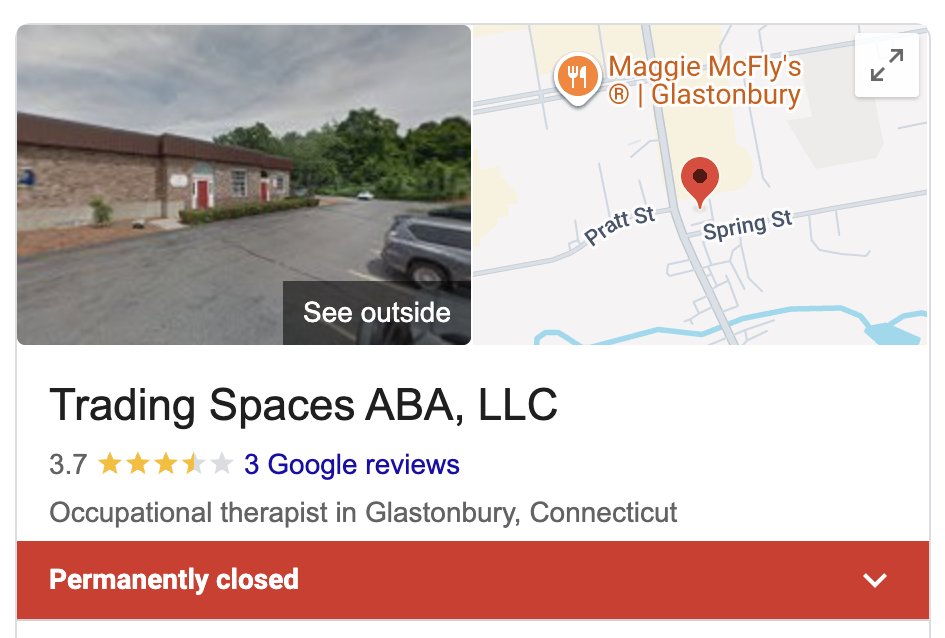
Patterson owned Trading Spaces ABA LLC, an autism specialty group in Glastonbury. According to the Medicaid Fraud Control Unit in the Office of the Chief State’s Attorney, between March 2020 and December 2021 the company was not meeting with clients as reported, yet Patterson submitted claims to the Connecticut Department of Social Services, which administers the state’s Medicaid program, for payment. The unit determined he was paid $102,084.17 for services not rendered.
When Patterson was arrested in July 2023, prosecutors charged him with health insurance fraud and first-degree larceny by defrauding a public community, each a Class B felony carrying up to 20 years. He pleaded to the single fraud count.
A Familiar Pattern
The mechanics of the case are the most common in ABA fraud prosecutions. Billing for therapy that was never provided, sometimes called a ghost session, appears in nearly every major ABA Medicaid case in the current enforcement wave. The client, the diagnosis, and the provider enrollment are often real; the session simply did not happen, but the claim was filed anyway.
Connecticut has seen larger versions of the same scheme. In a separate federal case, Minds Cornerstone, another Connecticut autism provider, billed Medicaid for ABA services that were not provided, including sessions billed for patients who were in inpatient hospital care at the time, causing a loss of about $1.9 million to the state. Both principals, Suhail Aponte and Ramon Apellaniz, pleaded guilty to conspiracy to commit health care fraud, and Apellaniz was sentenced in late 2025. The Patterson case is far smaller in dollars but identical in method.
The client is real, the diagnosis is real, the provider is enrolled, and the claim is submitted. No one showed up, and no service was delivered. That is the ghost session, the most basic pattern in ABA Medicaid fraud.
Why Enforcement Is Intensifying

The case lands as regulators turn sustained attention to ABA billing. Medicaid spending on autism therapy rose from about $660 million in 2019 to roughly $2.2 billion in 2023, making ABA one of the fastest-growing services in the program. Rapid growth in a high-reimbursement service has drawn scrutiny from auditors.
Federal auditors have documented the scale of the problem at the state level. State Medicaid Fraud Control Units have named ABA an enforcement priority; at a 2025 health-law forum, a Massachusetts MFCU official described billing for services never provided as the most frequent basis for criminal charges his unit brought in the space.
What It Means for Providers
For legitimate ABA operators, cases like Patterson’s carry a cost beyond the individual defendant. Each conviction reinforces the regulatory view of ABA as a fraud-prone category, which feeds the documentation demands, prepayment reviews, and audit intensity that compliant providers absorb. The same billing anomalies that expose fraud, sessions logged on days a client was hospitalized or a clinic was closed, are detectable through claims analysis, and payers are building the cross-referencing capacity to catch them.
The practical takeaway for owners is that defensible documentation is now a business necessity, not a back-office afterthought. Treatment notes, time logs, and authorization records that clearly tie each billed unit to a delivered service are what separate a provider from scrutiny when the audit arrives. Patterson’s lifetime bar from the Medicaid program is the other reminder. In this enforcement climate, a fraud finding can cost a clinician the credential and the career, well beyond the dollars repaid.
AT A GLANCE
| Defendant: | Glenroy Patterson, 49, of Jersey City, NJ; board-certified behavior analyst |
| Company: | Trading Spaces ABA LLC, autism specialty group, Glastonbury, CT |
| Conduct: | Billed Medicaid for ABA sessions not provided, March 2020 to December 2021 |
| Amount: | $102,084.17 in Medicaid funds for services not rendered |
| Plea: | Guilty, March 6, 2026, to one count of health insurance fraud (Class B felony) |
| Sentence: | 3 years prison, suspended; 5 years conditional discharge (Hartford Superior Court, June 4, 2026) |
| Restitution: | $102,084.17, plus a lifetime bar from serving as a Medicaid provider |
| Prosecutor: | Medicaid Fraud Control Unit, Office of the Chief State’s Attorney (Patrick J. Griffin) |
| Context: | Medicaid ABA spending rose from ~$660M (2019) to ~$2.2B (2023) |
| Enforcement: | OIG found $18.5M (Wisconsin) and $77.8M (Colorado) in improper ABA payments |
SOURCES & REFERENCES
| 1. | Connecticut Division of Criminal Justice. “Former East Hartford Man Charged in Scheme to Defraud Medicaid.” July 26, 2023. https://portal.ct.gov/dcj/press-room/press-releases/07262023patterson |
| 2. | Patch (Greater Hartford). “Ex-East Hartford Resident Sentenced For Medicaid Fraud.” June 2026. https://patch.com/connecticut/hartford/ex-east-hartford-resident-sentenced-medicaid-fraud |
| 3. | WTNH News 8. “Former East Hartford resident sentenced for defrauding Medicaid of over $100K.” June 2026. https://www.wtnh.com/news/connecticut/hartford/former-east-hartford-resident-sentenced-to-prison-for-defrauding-medicaid-of-over-100k/ |
| 4. | Daily Voice. “Man Who Stole $102K From CT Medicaid With Fake Autism Treatments In Glastonbury Sentenced.” June 8, 2026. https://dailyvoice.com/ct/rocky-hill/man-who-stole-102k-from-ct-medicaid-with-fake-autism-treatments-in-glastonbury-sentenced/ |
| 5. | U.S. Attorney’s Office, District of Connecticut. “Middletown Man Sentenced for Scheme That Defrauded Connecticut’s Medicaid Program of More Than $1.8 Million.” November 2025. https://www.justice.gov/usao-ct/pr/middletown-man-admits-role-scheme-defrauded-connecticuts-medicaid-program-more-18 |
| 6. | Morgan Lewis Health Law Scan. “Applied Behavioral Analysis: Key Service for Children with Autism Is Under Payment Scrutiny.” November 14, 2025. https://www.morganlewis.com/blogs/healthlawscan/2025/11/applied-behavioral-analysis-key-service-for-children-with-autism-is-under-payment-scrutiny |
| 7. | Benesch. “OIG Finds Significant Improper Medicaid Payments For ABA Services In Wisconsin And Indiana.” January 9, 2026. https://www.beneschlaw.com/insight/oig-finds-significant-improper-medicaid-payments-for-aba-services-in-wisconsin-and-indiana-signaling-greater-enforcement-efforts-for-aba-on-the-horizon/ |
| 8. | Health Affairs Forefront. “The Business of Autism Treatment: Private Equity Implications for State Medicaid Programs.” 2026 (citing Wall Street Journal analysis of national Medicaid billing data). https://www.healthaffairs.org/content/forefront/business-autism-treatment-private-equity-implications-state-medicaid-programs |
| 9. | BreakingNewsABA. “The ABA Billing Fraud Playbook: The 7 Schemes That Keep Appearing in Federal Indictments.” April 14, 2026. https://breakingnewsaba.com/business/the-aba-billing-fraud-playbook-7-schemes-keep-appearing-in-federal-indictments |