

Coalition Math, Waitlist Math
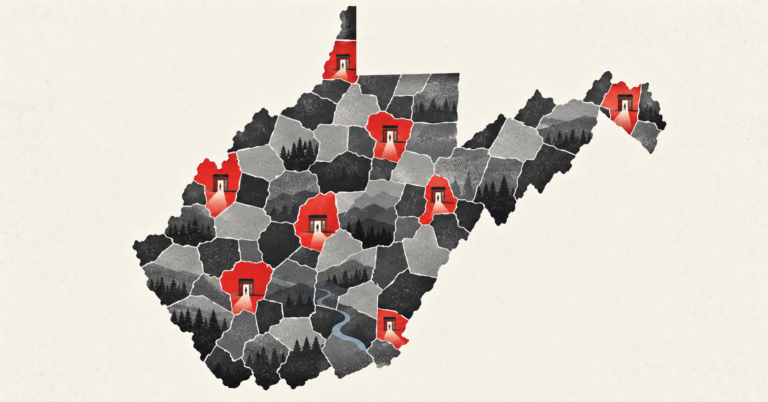
WHEELING, WEST VIRGINIA — Two of the state’s largest ABA providers and West Virginia’s leading autism-advocacy nonprofit are running a coordinated workforce campaign called We Develop ABA. The combined public-and-philanthropic budget for the initiative is roughly $118,000: a $50,000 grant from the Appalachian Regional Commission and $68,000 in private matching funds from five foundations and provider organizations. West Virginia’s statewide autism services waitlist exceeds 2,000 families.
That math is the story. Mountaineer Autism Project (MAP), Augusta Levy Learning Center, and Bright Futures Learning Services are doing what a state-level coalition can do with the budget on hand. What they cannot do, on $118,000, is fix the structural shortage of Board Certified Behavior Analysts in a rural state where roughly 2,000 children sit on autism services waitlists statewide.
They know it. The strategy reflects it. The coalition is not trying to credential BCBAs in a year. It is building an entry-level pipeline of Registered Behavior Technicians, an in-state supervision pipeline for graduate students aiming at BCBA certification, and a statewide data picture of who is already practicing and where the gaps are. That is the playbook other rural states facing similar shortages should be reading. It is also a useful example of what these efforts can realistically accomplish at this funding level.
What the Coalition Is
We Develop ABA, formally Workforce and Development for Applied Behavior Analysis, is a 2026 coalition of West Virginia ABA stakeholders spearheaded by three organizations and supported by five funders.
Mountaineer Autism Project. A Huntington-based advocacy nonprofit founded in 2010 by West Virginia parents and professionals. MAP led the 2011 campaign that made West Virginia the 25th state to mandate autism insurance coverage, secured Medicaid expansion for autism services in 2020, and now coordinates statewide ABA workforce development. The coalition’s mapping work has identified at least 17 ABA provider locations operating across West Virginia and a statewide waitlist of more than 2,000 families seeking autism services.
Augusta Levy Learning Center. Founded in Wheeling in June 2005 by Kathy Shapell; current executive director Angie Wood. The first and largest autism treatment program in West Virginia, serving children from West Virginia, Ohio, and Pennsylvania. In September 2025 the organization marked its 20th anniversary, rebranded as Augusta Levy Behavioral Services, and expanded into broader behavioral health.
Bright Futures Learning Services. Founded in 2007 by Jill Scarbro-McLaury; clinics in Hurricane and Winfield. Began as a single-client home program and grew into a multi-clinic provider; Scarbro-McLaury was named the SBA’s West Virginia Woman-Owned Small Business of the Year in 2019.
Funding for the campaign comes from the Appalachian Regional Commission, which awarded the coalition $50,000, and from $68,000 in matching commitments from Augusta Levy Learning Center, Bright Futures Learning Services, Community Autism Resources and Education Systems, the Disabilities Opportunity Fund, and the Larch Foundation. Total combined campaign budget: $118,000.
A $118,000 coalition budget against a 2,000-family waitlist is not a contradiction. It is the right unit of measurement for a state-level pipeline project that has to compound over years to matter.
How the Workforce Pipeline Actually Works
The campaign is built around the credential ladder of ABA practice and targets it from the bottom up.
Entry level: Registered Behavior Technicians. The RBT credential requires no college degree, 40 hours of training, a competency assessment, and a passed exam. The coalition is recruiting from rural and underserved parts of the state where unemployment is high and conventional healthcare careers are out of reach for residents without a four-year degree. RBTs are the front-line providers who deliver direct one-to-one therapy, and any meaningful expansion of in-state ABA capacity starts there.
Middle of the ladder: Assistant behavior analysts. The BCaBA credential requires a bachelor’s degree, additional supervised fieldwork, and a separate exam. It is the step that allows a working RBT with a degree to take on more clinical responsibility while continuing to practice.
Top of the ladder: Board Certified Behavior Analysts. The BCBA credential requires a master’s degree, between 1,500 and 2,000 hours of supervised fieldwork depending on intensity, and a passed national exam. The coalition is working with university and clinic partners to make sure West Virginia graduate students can complete that fieldwork in-state, rather than leaving the state to find supervision and never coming back.
Each rung of that ladder is its own bottleneck. Rural states cannot solve the BCBA shortage by recruiting BCBAs in the open market because the open market does not have them. They have to grow their own, which means making the RBT path attractive in the right communities and making the BCaBA and BCBA paths reachable without relocation.
A Five-Year, Multi-Funder Strategy
The 2026 ARC-funded campaign is not the first move from this group of partners. In 2020, the Claude Worthington Benedum Foundation awarded $100,000 to a similar coalition of Augusta Levy Learning Center, Bright Futures Learning Services, and WVU Medicine Children’s Neurodevelopment Center to coordinate supervised fieldwork across the three sites. The three centers contributed $515,000 in matching funds, bringing the 2020 initiative budget to $615,000. The grant covered 15 graduate students through their supervised hours toward BCBA certification, with a one-year post-certification in-state work commitment built into the program.
What the 2026 coalition is doing is layering an RBT-and-public-awareness campaign on top of an established BCBA-supervision program, with the same two flagship ABA providers, Augusta Levy and Bright Futures, anchoring both efforts. That continuity is what makes it a model worth studying. Workforce pipelines are not built in single-grant cycles. They compound across funders over time.
What Other Rural States Could Copy
Four elements of the West Virginia model are portable to any rural state running into a similar shortage.
A named coalition rather than a single provider. Workforce work that lives inside one clinic stays a recruiting problem. Workforce work that lives inside a multi-provider coalition becomes a policy story, attracts foundation interest, and gives state legislators something specific to support. Three lead partners, named publicly, is the right baseline.
A federal funding anchor and private matching funds. The Appalachian Regional Commission funds rural workforce work in Appalachia specifically, and the coalition built its budget around an ARC anchor with five matching funders behind it. Other federal sources, including the Department of Labor’s Apprenticeship Building America program, target similar workforce purposes in non-Appalachian regions.
RBT-first recruitment in underserved communities. The credential requires no degree. The compensation is real, even if not high. The job exists in rural places where conventional healthcare careers do not. Targeting recruitment to high-unemployment rural counties is workforce development and access expansion in the same move.
An in-state supervision pipeline tied to a state-commitment clause. The 2020 Benedum-funded initiative required a one-year in-state work commitment from each BCBA candidate it supported. That is the lowest-cost retention lever available to a state that is investing in clinical training, and it is enforceable.
What the Model Cannot Fix
The honest framing. More than half of U.S. counties have no Board Certified Behavior Analyst at all, and ABA job postings hit 132,307 in 2025. A $118,000 state-coalition campaign is not going to close that. Neither is a $615,000 supervision pipeline that puts 15 newly-credentialed BCBAs in the field with a one-year commitment.
What these programs do is meaningful and what they do not do is also meaningful. The cap on what any state-level coalition can accomplish is set by two structural variables the coalition cannot control: Medicaid reimbursement rates and the commercial-payer rate environment. If RBT wages stay below what a rural healthcare worker can earn in adjacent jobs, the entry-level pipeline does not fill. If BCBA reimbursement does not justify the clinical-supervision cost a new credential requires, the supervisors are not there to certify the next cohort.
Other states should copy the playbook. They should also be honest about what the playbook can and cannot do at the scale of the national gap.
What to Watch
Two milestones will tell whether the West Virginia coalition is producing measurable workforce expansion or simply maintaining presence. The first is the next state-level ABA workforce count, which is the baseline metric the coalition itself committed to tracking. The second is the BCBA exam pass rate from candidates supervised through the in-state pipeline, and the percentage of those candidates still practicing in West Virginia after their one-year commitment expires. Both numbers are knowable. Both will be visible by late 2026.
For operators in other rural states, the questions to ask are about transferability. What is your equivalent of the Appalachian Regional Commission? Which three providers in your state would form a credible coalition? Which foundations have already funded workforce work in your geography? The West Virginia model did not start with $118,000. It started with three named organizations willing to put themselves on the same letterhead.
AT A GLANCE
| Campaign name: |
We Develop ABA (Workforce and Development for Applied Behavior Analysis) |
| Lead coalition partners: |
Mountaineer Autism Project, Augusta Levy Learning Center, Bright Futures Learning Services |
| Primary funder: |
Appalachian Regional Commission ($50,000 grant) |
| Matching funders: |
Augusta Levy Learning Center, Bright Futures Learning Services, Community Autism Resources and Education Systems, Disabilities Opportunity Fund, Larch Foundation ($68,000 combined) |
| Total campaign budget: |
~$118,000 |
| Statewide waitlist: |
2,000-plus West Virginia families awaiting autism services |
| ABA provider locations statewide: |
17 (identified by coalition mapping) |
| 2020 predecessor initiative: |
Claude Worthington Benedum Foundation $100,000 + $515,000 in provider matching funds = $615,000 total; covered 15 BCBA candidates |
| 2020 in-state commitment clause: |
One year of in-state practice required after BCBA certification |
| National shortage context: |
More than half of U.S. counties have no BCBA; 132,307 ABA job postings in 2025 |
| Coalition strategy focus: |
RBT entry-level pipeline + in-state BCBA supervised fieldwork + statewide workforce data |
| Replication elements: |
Named multi-provider coalition; federal funding anchor; rural recruitment focus; in-state work commitment |
SOURCES & REFERENCES
| 1. |
WAJR. “Mountaineer Autism Project takes part in We Develop ABA campaign to increase workforce development in WV.” May 20, 2026. https://wajr.com/2026/05/20/mountaineer-autism-project-takes-part-in-we-develop-aba-campaign-to-increase-workforce-development-in-wv/ |
| 2. |
Mountaineer Autism Project. “We Develop ABA.” Coalition page with funders and partners listed. https://mountaineerautismproject.com/we-develop-aba/ |
| 3. |
Mountaineer Autism Project. Organization homepage. https://mountaineerautismproject.com/ |
| 4. |
Augusta Levy Behavioral Services. “About.” Founder Kathy Shapell, executive director Angie Wood. https://www.augustalevy.org/about/ |
| 5. |
The Intelligencer (Wheeling). “Augusta Levy Celebrates 20th Anniversary, Enters New Era as Behavioral Health Facility.” September 2025. https://www.theintelligencer.net/news/top-headlines/2025/09/augusta-levy-celebrates-20th-anniversary-enters-new-era-as-behavioral-health-facility/ |
| 6. |
Bright Futures Learning Services. Organization homepage. https://www.brightfuturesaba.com/ |
| 7. |
West Virginia Small Business Development Center. “In the business of changing lives: Bright Futures provides ABA therapy for autistic children.” Founder Jill Scarbro-McLaury background. https://wvsbdc.com/business-changing-lives-bright-futures-provides-aba-therapy-autistic-children/ |
| 8. |
WVU Medicine. “Benedum Foundation awards $100,000 for Applied Behavior Analysis Workforce Development Initiative.” 2020 grant announcement. https://wvumedicine.org/news/article/benedum-foundation-awards-100-000-for-applied-behavior-analysis-workforce-development-initiative/ |
| 9. |
WTOV 9. “Augusta Levy Center leads effort to close autism treatment gap across West Virginia.” https://wtov9.com/news/local/augusta-levy-center-leads-effort-to-close-autism-treatment-gap-across-west-virginia |
| 10. |
WAJR. “Marion County ABA service providers aim to increase workforce in NCWV.” May 22, 2026. https://wajr.com/2026/05/22/marion-county-aba-service-providers-aim-to-increase-workforce-in-ncwv/ |
| 11. |
BreakingNewsABA. “Half of U.S. Counties Have No BCBA. Demand Hit 132,307 Job Postings in 2025. Can Telehealth Close the Gap?” 2025. https://breakingnewsaba.com/industry-analysis/half-of-u-s-counties-have-no-bcba-demand-hit-132307-job-postings-in-2025-can-telehealth-close-the-gap |
| 12. |
TYGES. “Applied Behavioral Analysis (ABA) Care Deserts in the U.S.: A State-by-State Look at BCBA Shortages.” https://tyges.com/healthcare-practice/behavioral-health-care-deserts/ |
| 13. |
Mountaineer Autism Project. “Become a Registered Behavior Technician (RBT) in West Virginia.” Workforce recruitment page. https://mountaineerautismproject.com/rbt/ |
| 14. |
Appalachian Regional Commission. https://www.arc.gov/ |
| 15. |
Apprenticeship.gov. “Apprenticeship Building America Grant Program.” https://www.apprenticeship.gov/investments-tax-credits-and-tuition-support/apprenticeship-building-america-aba-grant-program |





Join the discussion ▾