A Milestone in Hoxie
HOXIE, ARKANSAS – A new clinic called Outcomes ABA is preparing to open here at 1600 SW Broad Street, and according to the announcement of its launch it will be the first applied behavior analysis therapy clinic in Lawrence County. For a county of roughly 16,000 people in the rolling farm country of Northeast Arkansas, that is presented as a first, and the local chamber of commerce welcomed it as an addition to the area’s thin roster of family health services.
The clinic is owned and operated by Holly Ellis, a board certified behavior analyst and, by the announcement’s account, a Lawrence County native who grew up in nearby Black Rock and is the mother of a child with autism. She earned a bachelor’s degree in secondary education from Arkansas State University and a master’s in applied behavior analysis from Ouachita Baptist University before returning home to open the practice. Outcomes ABA describes a clinic-based, family-centered model built around communication, daily living skills, school readiness, and caregiver coaching.
The launch announcement is promotional, and the particulars of a single small clinic are not, on their own, the story. What makes the opening worth attention is the backdrop it throws into relief. A rural county marking its first ABA clinic in 2026 is a useful reminder of how unevenly ABA and autism care reaches the country.
The Desert Behind the Milestone
The defining fact of rural ABA access is scarcity, and it is well documented. Research on the geographic distribution of behavior analysts has found that more than half of all United States counties have no board certified behavior analyst at all. The prevalence of autism in a county does not reliably drive the supply of providers, and affluent and urban counties enjoy by far the highest access. A 2021 county-level analysis found that roughly 37 percent of counties had no BCBA in residence, and about 8 percent had none in either the county itself or any bordering county, leaving families in those places with no local provider within a reasonable drive.
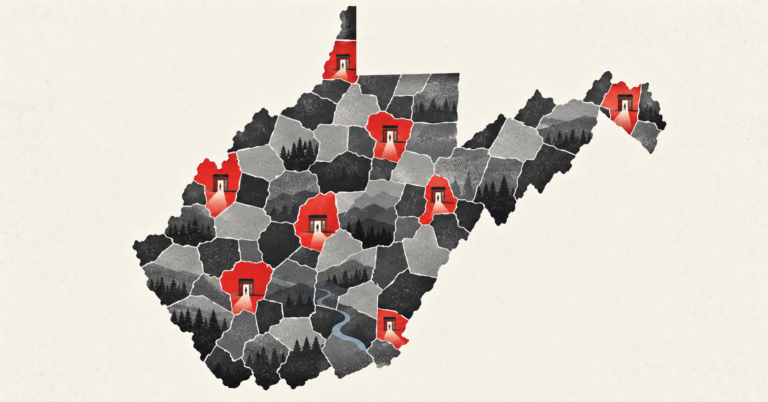
The shortage of frontline staff tracks the same map. Studies of registered behavior technicians, the supervised providers who deliver most direct therapy hours, found that close to a quarter of counties had neither a BCBA nor an RBT in residence, and more than 28 percent had neither a BCBA nor a practicing RBT. These no-provider counties are not scattered at random. They form a swath running from the upper Mountain and Plains states down through Texas, with heavy concentrations across the Southeast and the Appalachian counties of West Virginia and Kentucky. The number of BCBAs nationally grew about 65 percent between 2018 and 2021, yet the rural map barely changed, because new analysts overwhelmingly settled where access was already strongest.
A county celebrating its first ABA clinic in 2026 is a milestone and an indictment at once. Most rural counties still have no behavior analyst at all.
Why the Map Looks This Way
The geography is not an accident of where clinicians happen to live. It follows the economics of how ABA therapy is reimbursed. Commercial insurance reimburses ABA at higher rates than Medicaid in most states, and providers chasing sustainable margins tend to cluster in commercially insured, higher-income ZIP codes. Independent analysts who serve Medicaid-dependent families in mid-sized and rural markets often carry full caseloads and long waitlists while operating on thinner margins than competitors concentrated in commercial-heavy metros. The same logic that has drawn private equity and national platforms into dense suburban markets pulls them away from places like Lawrence County, where the patient base skews toward Medicaid and the population is too sparse to support the multi-site footprint those operators favor.
The workforce shortage compounds the imbalance. National demand for behavior analysts has run far ahead of supply, with employers posting roughly 132,000 listings requiring BCBA or BCBA-D certification in 2025 against a credentialed pool of about 81,566 active analysts. When clinicians are scarce everywhere, the markets that lose first are the ones that pay least and sit farthest from population centers. When a rural county tries to recruit a behavior analyst, its real competition is affluent suburbs nationwide, not the county next door.
The Arkansas Picture
Arkansas funds ABA for children through its Medicaid program, where coverage runs through the Early and Periodic Screening, Diagnostic and Treatment benefit for beneficiaries from 18 months to 21 years of age, requires a physician’s recommendation of medical necessity, and is coordinated for many enrollees through the state’s PASSE managed-care structure. State law also requires commercial health plans to cover the diagnosis and treatment of autism, including ABA delivered by or under the supervision of a board certified behavior analyst. Coverage on paper, however, does not conjure a provider in a county that has none.
The bottleneck begins before therapy. Children in rural areas tend to wait longer than urban peers simply to receive an autism diagnosis, the gateway to any covered ABA services, and once a diagnosis is in hand the nearest clinic may be an hour or more away. For a working family in a place like Hoxie, that distance can be the practical difference between starting early intervention and not starting at all. A local clinic collapses a multi-county drive into a short one, which is why a single opening can matter more in a rural market than a new center would in a saturated metro.
What It Takes to Fill the Gap
Outcomes ABA fits a pattern that recurs wherever rural autism care exists at all. Access in these markets tends to arrive not through the chains and capital reshaping the industry elsewhere, but through an individual clinician with a personal reason to be there. Holly Ellis is from Lawrence County and is raising a child with autism; she trained out of state-adjacent programs and brought the credential home. That model fills real gaps, but it is fragile. A practice that depends on one behavior analyst, serves a heavily Medicaid population, and operates on rural margins has little cushion against staff departures, rate cuts, or the administrative weight of prior authorization and audits that has driven larger operators out of low-rate states.
That fragility is the policy story underneath the ribbon-cutting. The levers most often discussed for closing rural gaps, including telehealth-delivered supervision, loan repayment tied to underserved practice, and university training programs that recruit and place graduates in their home regions, all aim at the same problem the access maps describe. None of them substitute for the basic economics: until reimbursement and workforce supply make rural, Medicaid-heavy practice viable at scale, access in counties like Lawrence will keep depending on clinicians willing to build something where the market, left to itself, would not. A first clinic is worth marking. It is also worth asking how many counties still have none.
AT A GLANCE
| Who: | Outcomes ABA, owned and operated by Holly Ellis, BCBA |
| Where: | 1600 SW Broad Street, Hoxie, Lawrence County, Northeast Arkansas |
| Claim: | Billed in its launch announcement as Lawrence County’s first ABA therapy clinic |
| Model: | Clinic-based, family-centered; communication, daily living skills, school readiness, caregiver coaching |
| Owner background: | Lawrence County native; parent of a child with autism; Arkansas State (B.S.), Ouachita Baptist (M.S. in ABA), per the announcement |
| National access: | More than half of U.S. counties have no BCBA; ~37% had none in 2021 (county-level research) |
| Frontline gap: | ~23% of counties have neither a BCBA nor an RBT; ~28% lack a BCBA or practicing RBT |
| Why: | Commercial insurance pays more than Medicaid; providers cluster in commercially insured, urban ZIP codes |
| Workforce: | ~132,000 BCBA job postings in 2025 vs. ~81,566 active BCBAs (BACB, end of 2025); turnover ~77–103% |
| Arkansas coverage: | Medicaid ABA via EPSDT, ages 18 months–21 years, physician-referred, PASSE-coordinated; commercial mandate in state law |
| Source note: | Launch details come from a promotional press-release announcement; market context is independently sourced |
SOURCES & REFERENCES
| 1. | NEA Report. “Lawrence County’s First Autism Behavior Analysis Therapy Clinic Coming to Hoxie” (press-release announcement). June 9, 2026. https://neareport.com/2026/06/09/lawrence-countys-first-aba-therapy-clinic-coming-to-hoxie/ |
| 2. | Yingling, M. E., et al. “Trends in Geographic Access to Board Certified Behavior Analysts Among Children with Autism Spectrum Disorder, 2018–2021.” https://www.ncbi.nlm.nih.gov/pmc/articles/PMC8727480/ |
| 3. | Yingling, M. E., et al. “Geographic Access to Registered Behavior Technicians Among Children with Autism Spectrum Disorder.” https://pmc.ncbi.nlm.nih.gov/articles/PMC9263038/ |
| 4. | Yingling, M. E., et al. “Impact of County Sociodemographic Factors and State Policy on Geographic Access to Behavior Analysts.” Administration and Policy in Mental Health, 2021. https://link.springer.com/article/10.1007/s10488-021-01120-y |
| 5. | TYGES. “Applied Behavioral Analysis (ABA) Care Deserts in the U.S.: A State-by-State Look at BCBA Shortages.” April 2026. https://tyges.com/healthcare-practice/behavioral-health-care-deserts/ |
| 6. | VG Soft / State of ABA Therapy 2026. “Industry Report for Practice Owners” (payer-mix and provider-distribution analysis). April 2026. https://vgsoft.co/blog/state-of-aba-therapy |
| 7. | Behavior Analyst Certification Board with Lightcast. “US Employment Demand for Behavior Analysts: 2010–2025.” 2026. https://www.bacb.com/us-employment-demand-for-behavior-analysts/ |
| 8. | Arkansas Department of Human Services / Acentra Health. “Applied Behavioral Analysis (ABA)” (Medicaid EPSDT coverage, ages 18 months–21; PASSE coordination). Accessed June 2026. https://ar.acentra.com/applied-behavioral-analysis-aba/ |
| 9. | Applied Behavior Analysis Edu. “Autism Insurance Laws by State” (Arkansas commercial coverage mandate; BCBA requirement). March 2026. https://www.appliedbehavioranalysisedu.org/state-by-state-guide-to-autism-insurance-laws/ |
| 10. | Special Needs Care Network. “ABA Therapy Cost by State (2026)” (rural staffing and access notes). March 2026. https://specialneedsusa.com/tools/aba-therapy-cost |