The Termination
INDIANAPOLIS, INDIANA – Indiana’s Family and Social Services Administration issued letters this week revoking the Medicaid provider agreements for all seven Piece by Piece Autism Centers locations — a move that, if not successfully appealed, will bar the company from billing the state’s Medicaid program within 60 days.
The action followed a March 10 Wall Street Journal investigation that identified Piece by Piece as the highest-reimbursed autism therapy provider in the country per patient. In 2023, Indiana paid the company $29 million to treat 84 children with autism — approximately $340,000 per child — according to the Journal’s analysis of Medicaid billing records. From 2019 through 2023, total direct Medicaid payments to Piece by Piece reached $58 million, the Journal reported.
Marcus Barlow, deputy chief of staff at FSSA, said the termination was explicitly tied to the provider’s conduct and to the national attention it generated. “They obviously abused Indiana taxpayers and then went and bragged about it, so we terminated them,” Barlow told the Journal.
Piece by Piece founder Meghann Mitchell, who did not respond to follow-up requests for comment this week, told the Journal last month that her company had complied with Indiana’s rules and that audits by government programs, private insurers, and a third-party auditor had found no evidence of fraud or intentional wrongdoing. In a message to employees, Mitchell said the state had singled out her company due to “recent negative publicity” and stated the company would fight the termination.
“Fraud, waste, and abuse occur in ABA — and it has to stop.” — Council of Autism Service Providers, formal statement, March 2026
The termination comes on the heels of a broader FSSA enforcement posture. FSSA Secretary Mitch Roob convened a meeting with ABA providers last week, setting an April 3 deadline for voluntary self-reporting of billing practices that may constitute fraud, waste, or abuse under the prior reimbursement structure. Roob told the Journal that providers who self-report could expect help reaching amends with the state and federal government; those who do not, he said, should expect scrutiny from the Department of Justice and FBI.
The Rate Structure That Made It Possible
Piece by Piece’s billing trajectory is inseparable from the reimbursement model Indiana operated from roughly 2019 through 2023. Rather than setting fixed rates for ABA services, Indiana at that time reimbursed providers at 40% of whatever list price they submitted. The arrangement created a direct financial incentive to raise charges: higher billed rates produced higher reimbursements, with no market or administrative ceiling.
Indiana’s total Medicaid ABA spending rose from approximately $21 million in 2017 to $611 million in 2023 — a nearly 30-fold increase — before falling to $445 million in 2024 after the former Holcomb administration set lower rates, according to the Indiana Capital Chronicle. The Journal’s analysis found Indiana was home to nine of the country’s ten highest-billing ABA providers per patient in 2023, and more than 8,000 Hoosier children between ages three and eight relied on Medicaid to fund their therapy during that period.
Piece by Piece billing rate: At its peak, the company billed as much as $640 per hour for routine sessions that could be performed by registered behavior technicians — frontline staff who may hold only a high school diploma and earn under $20 an hour in many states. In 2024, Indiana established a flat rate of $68 per hour for routine ABA services. A further rate reduction and a lifetime-hours cap per patient are currently planned under Gov. Mike Braun’s ABA working group, convened by executive order in 2025.
Susan Crowell, founder and executive director of My Autism Ally — a northern Indiana nonprofit supporting families of children with autism — argued in a public statement that the fault was shared. “Indiana Medicaid knows who billed in excess. They paid them. It was legal,” Crowell wrote. She contended that FSSA had audit and billing rules already in place that it chose not to enforce. Barlow of FSSA acknowledged the oversight failure while framing it as a prior-administration problem: “There were no guardrails under the prior administration, and they weren’t doing the job of oversight they should have been doing. But, we are.”
Federal Auditors Were Already at the Door
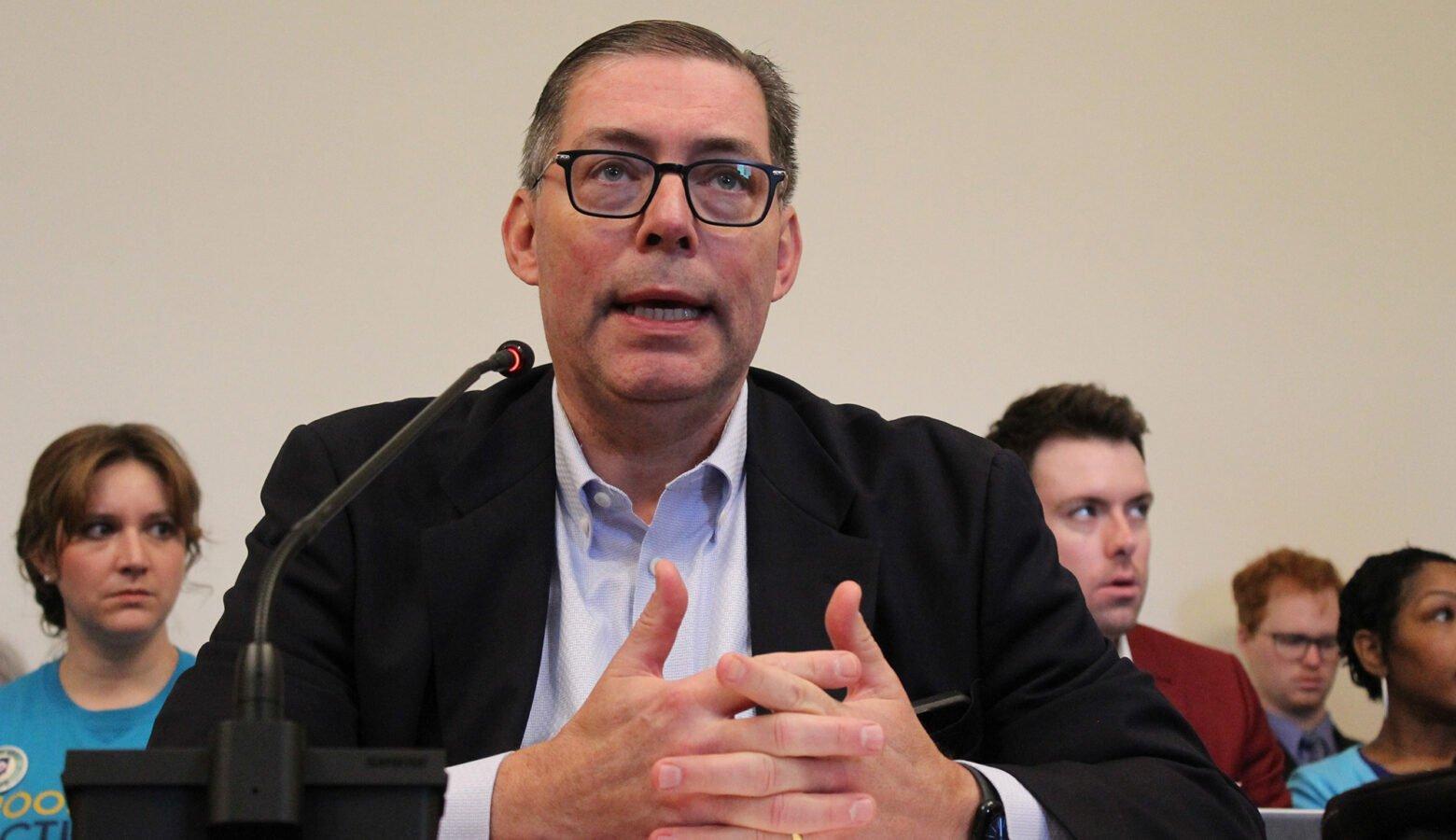
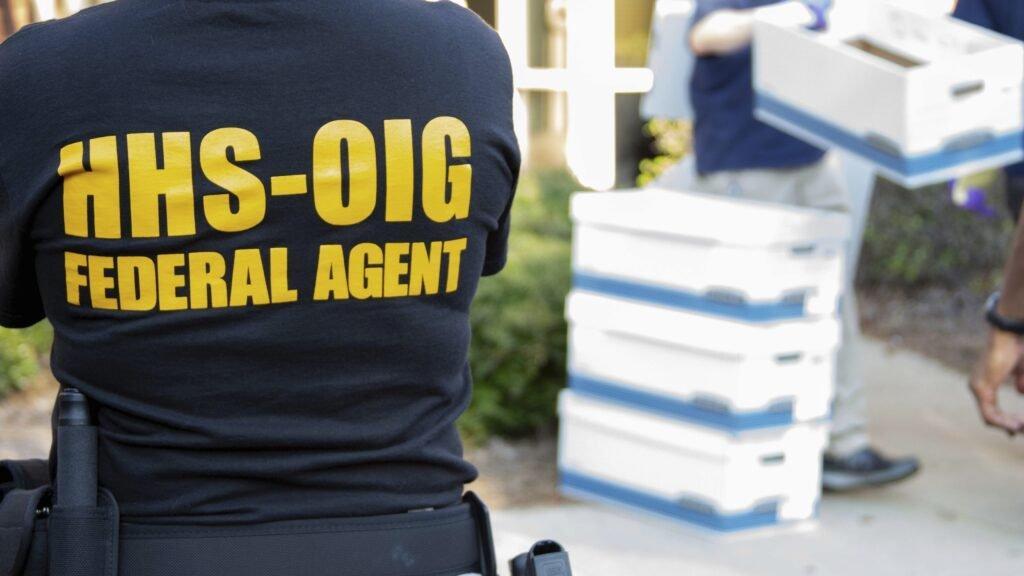
Before the Journal investigation, federal oversight agencies had already flagged Indiana’s ABA program as a serious program-integrity problem. In December 2024, the HHS Office of Inspector General published an audit of Indiana’s Medicaid ABA payments for 2019 and 2020. Its central finding was stark: all 100 of the sampled enrollee-months contained payments that were improper or potentially improper. The OIG estimated Indiana made at least $56.6 million in improper payments during that two-year period, plus an additional $76.7 million in potentially improper payments — a combined exposure of more than $133 million. The OIG recommended Indiana refund $39.4 million in federal share to the federal government.
The Indiana audit was the first in a planned series of nine state-level ABA reviews. Subsequent audits have reached the same conclusion in every state examined so far. The Wisconsin audit, published in July 2025, identified at least $18.5 million in improper payments. The Maine audit, published in January 2026, found $45.6 million. The Colorado audit, published in March 2026, found $77.8 million in confirmed improper and potentially improper payments. In each state, every sampled claim carried at least one billing deficiency.
The documented errors across the four audits follow a consistent pattern: session notes that did not satisfy state documentation requirements, therapy billed under CPT codes for individual treatment when group sessions were actually delivered, services rendered by staff lacking required credentials, and treatment provided to enrollees who had not completed required diagnostic evaluations or referrals. These are not edge cases attributable to a single bad actor — they are systemic documentation and oversight failures spanning dozens of facilities and multiple states.
Every sampled enrollee-month in the HHS-OIG ABA audits of Indiana, Wisconsin, Maine, and Colorado contained at least one improper or potentially improper claim — a pattern that points to structural failures in state oversight, not isolated provider misconduct.
The Morgan Lewis health law practice noted in a November 2025 client advisory that state Medicaid Fraud Control Units have publicly identified ABA therapy as a criminal enforcement priority. Kevin Lownds, division chief at the Massachusetts Attorney General’s Medicaid Fraud Control Unit, stated at a national compliance forum that fraud in ABA was “rampant,” with his office frequently seeing cases warranting criminal charges — most often billing for services never delivered. In June 2025, the Massachusetts AG’s office indicted a Medicaid-enrolled autism provider that allegedly fabricated documentation to support over $1 million in false claims. In March 2026, a Minnesota woman pleaded guilty to a $14 million autism Medicaid fraud scheme that included hiring unqualified staff and paying kickbacks to parents.
Access at Risk as Enforcement Scales
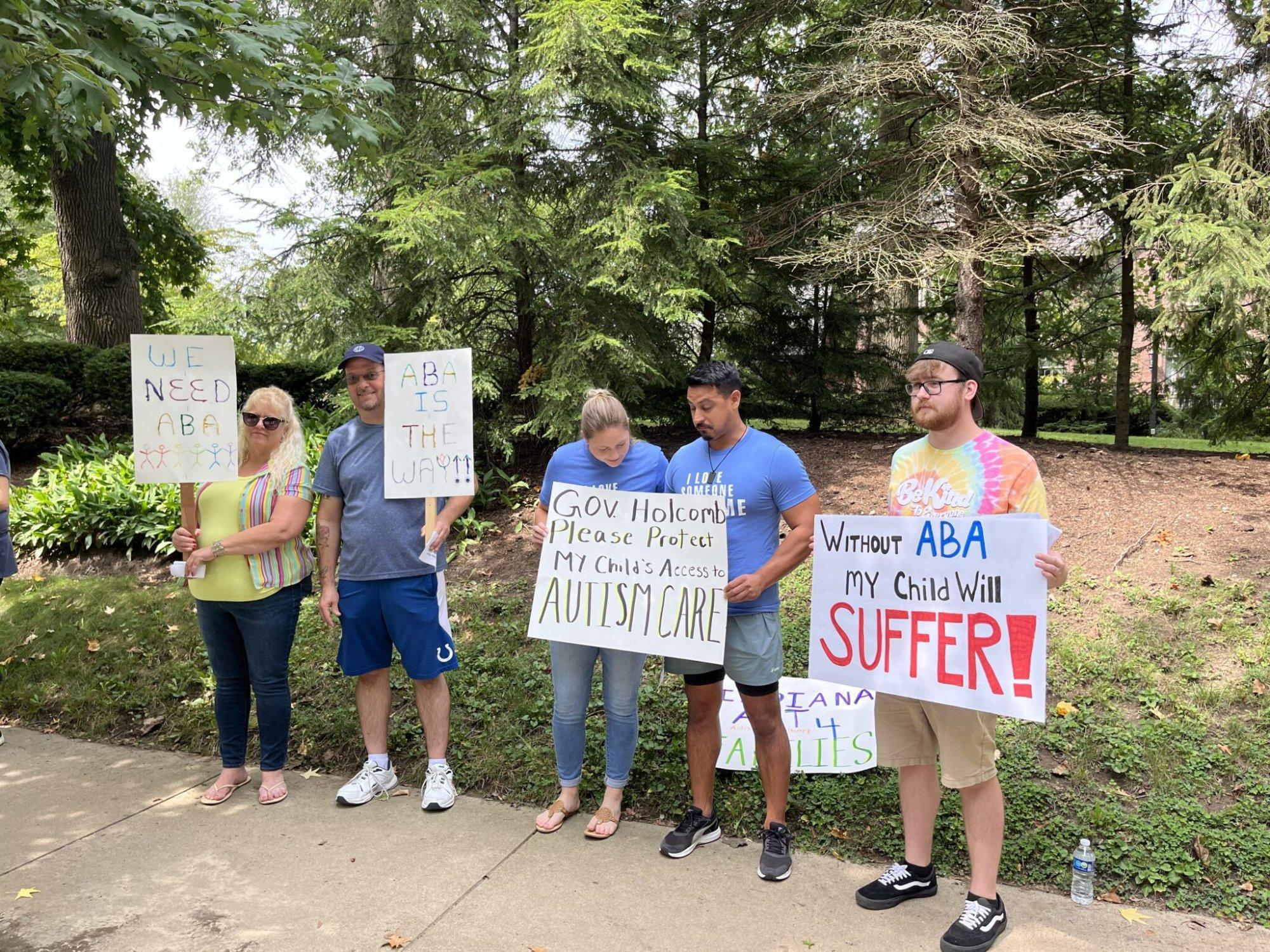
The Piece by Piece termination — which, per FSSA’s letters, covers all seven of the company’s Indiana centers — directly affects the 84 children the company was treating in 2023, the majority of whom former employees told the Journal were Medicaid-covered. The company has indicated it will appeal, but the immediate effect of a termination would be to require those families to find alternative providers within 60 days.
The broader enforcement wave raises a structural tension the ABA industry has grappled with for years. Nationally, autism diagnoses have reached 1 in 31 children as of 2022, according to the CDC — up from 1 in 36 in 2020 — and demand for ABA services continues to grow faster than the clinician workforce can scale. Aggressive billing enforcement concentrated on high-volume providers could disrupt access precisely where patient density is highest.
The Council of Autism Service Providers, the industry’s principal trade association, responded to the WSJ reporting with a formal statement that acknowledged the problem without deflecting responsibility: “Fraud, waste, and abuse occur in ABA — and it has to stop.” CASP called on states to develop explicit clinical coverage policies, credential standards, documentation requirements, and post-payment audit processes, and offered to assist states in building those frameworks. The organization also pushed back against characterizations of ABA as “glorified daycare,” citing decades of published outcome data.
What CASP is recommending to CMS: Required qualifying diagnoses and medical-necessity documentation; mandatory prior authorization for intensive services; supervision ratios aligned with BACB minimum standards; adoption of Medicaid Medically Unlikely Edits to flag anomalous billing patterns; and mandatory provider accreditation.
Mariel Fernandez, CASP’s vice president of government affairs, noted that the OIG itself acknowledged a shared responsibility: “The report also fairly acknowledged that Indiana Medicaid failed to provide adequate policy requirements, training, or oversight for the ABA benefit.” That framing matters for operators preparing compliance programs: the risk is not only fraudulent intent, but also documentation gaps in programs where state guidance was never clearly defined.
For ABA practice owners, the enforcement landscape entering the second quarter of 2026 is materially different from the one that existed even 18 months ago. The OIG has committed to auditing nine states. The House Energy and Commerce Committee has sent probes to at least ten states. Indiana has set a self-reporting deadline with explicit DOJ and FBI referral threats for non-responders. And the sector’s own trade association has publicly acknowledged the problem. Operators who built billing practices on the assumption that Medicaid’s tolerance for high per-patient costs was indefinite are being required to reassess that assumption rapidly.
AT A GLANCE
Provider terminated: Piece by Piece Autism Centers (7 Indiana locations) — provider agreements revoked March 2026 (WSJ, March 25, 2026)
Per-patient billing, 2023: ~$340,000 average per child; $29 million total for 84 patients (WSJ analysis of Medicaid billing records, 2026)
Total FSSA payments, 2019–2023: $58 million to Piece by Piece (WSJ, 2026)
Peak Piece by Piece hourly rate: $640/hour for routine ABA sessions delivered by RBTs (WSJ, 2026)
Indiana ABA spending trajectory: $21M (2017) → $611M (2023) → $445M (2024) (Indiana Capital Chronicle, 2026)
Indiana flat rate, post-reform: $68/hour for routine ABA services, set in 2024 (WSJ, 2026)
OIG audit finding — Indiana: At least $56.6M improper + $76.7M potentially improper payments (2019–2020); 100/100 sampled claims deficient (HHS-OIG, December 2024)
OIG audit finding — Colorado: $77.8M improper/potentially improper ABA payments; 100/100 sampled claims deficient (HHS-OIG, March 2026)
OIG audit finding — Maine: $45.6M improper payments; all sampled claims deficient (HHS-OIG, January 2026)
OIG audit finding — Wisconsin: $18.5M improper payments (HHS-OIG, July 2025)
Self-reporting deadline: April 3, 2026 — Indiana FSSA ultimatum to ABA providers (Indiana Capital Chronicle, 2026)
National ABA Medicaid growth: $660M (2019) → $2.2B (2023) (WSJ analysis, 2026)
SOURCES & REFERENCES
- – Weaver C. “Autism Therapy Firm Paid Average of $340,000 per Patient Is Getting Barred From Medicaid.” The Wall Street Journal. March 25, 2026.
- – Essex C. “State coming down on autism therapy providers that potentially abused system.” Indiana Capital Chronicle. March 24, 2026. Indiana Capital Chronicle — State coming down on autism therapy providers (Mar 24, 2026)
- – HHS Office of Inspector General. “Indiana Made at Least $56 Million in Improper Fee-for-Service Medicaid Payments for Applied Behavior Analysis Provided to Children Diagnosed With Autism.” Report A-09-22-02002. December 19, 2024. HHS-OIG — Indiana Made At Least $56M in Improper ABA Payments (Dec 19, 2024)
- – HHS Office of Inspector General. “Audits of Medicaid Applied Behavior Analysis for Children Diagnosed With Autism.” Series SRS-A-25-029. Last modified February 25, 2026. HHS-OIG Work Plan — Audits of Medicaid ABA for Children Diagnosed With Autism (SRS-A-25-029)
- – HHS Office of Inspector General. “HHS-OIG Audit Finds Maine Made At Least $45.6 Million in Improper Medicaid Payments for Autism Services.” News Release. January 22, 2026. HHS-OIG — Maine Made At Least $45.6M in Improper Medicaid Payments for Autism Services (Jan 22, 2026)
- – Council of Autism Service Providers. “CASP Responds to Wall Street Journal Articles.” Statement. March 2026. Council of Autism Service Providers — CASP Responds to Wall Street Journal Articles
- – Bannow T. “Indiana Medicaid audit finds questionable payments for ABA autism therapy.” STAT News. December 19, 2024. STAT News — Indiana Medicaid audit finds questionable payments for ABA autism therapy (Dec 19, 2024)
- – Gonzales M. “ABA Providers Improperly Billed Medicaid for $56M, Audit Reveals.” Behavioral Health Business. December 19, 2024. Behavioral Health Business — ABA Providers Improperly Billed Medicaid for $56M (Dec 19, 2024)
- – Morgan Lewis Health Law Scan. “Applied Behavioral Analysis: Key Service for Children with Autism Is Under Payment Scrutiny.” November 14, 2025. Morgan Lewis Health Law Scan — ABA Under Payment Scrutiny (Nov 14, 2025)
- – Bierman Autism Centers. “Proposed Medicaid Cuts Threaten Access to Critical Autism Care in Indiana.” Press Release. 2025. Bierman Autism Centers — Proposed Medicaid Cuts Threaten Access to Critical Autism Care in Indiana
- – Centers for Disease Control and Prevention. “Autism Spectrum Disorder Surveillance Report.” Published April 15, 2025. (1 in 31 children, 2022 data.)
12. – Colorado Politics. “U.S. House probes reports of fraud, waste in Colorado’s Medicaid program.” March 5, 2026. Colorado Politics — U.S. House Probes Reports of Fraud, Waste in Colorado Medicaid (Mar 5, 2026)