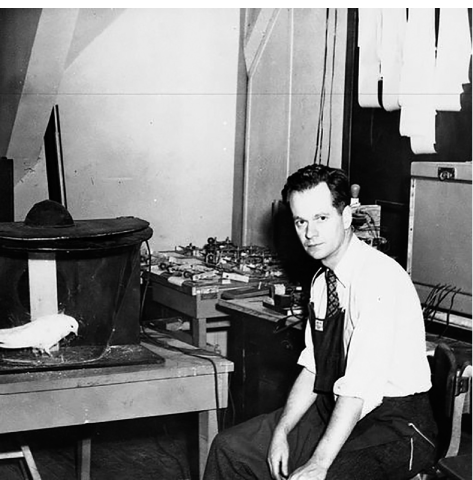
B.F. Skinner built the science that runs a modern ABA clinic, and he did it without ever treating a patient. A Harvard experimental psychologist, he spent the 1930s and 1940s proving in the laboratory that behavior is shaped by its consequences, then spent the rest of his career turning that finding into a working system. He died in 1990, years before the profession certified its first behavior analysts.
That system is now the job. More than 73,000 people hold the BCBA credential, by the Behavior Analyst Certification Board’s January 2026 count, and nearly every tool they use, from reinforcement to the data graph to the language program, came from him.
The Science He Built
The claim was radical in its day. A response that produces a reinforcing consequence grows more likely to recur; a response that produces nothing, or punishment, fades. Skinner called this operant conditioning, and he spent decades mapping how it works.
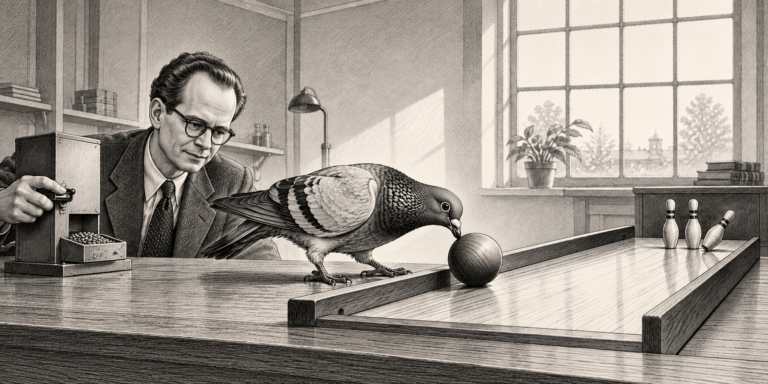
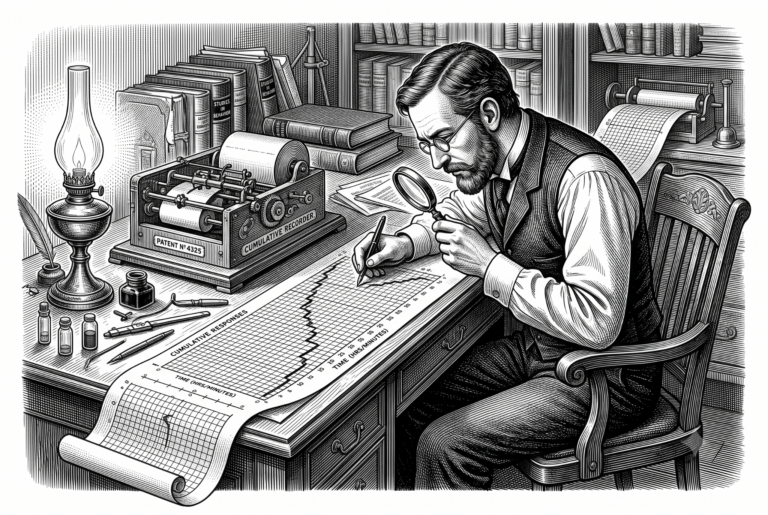
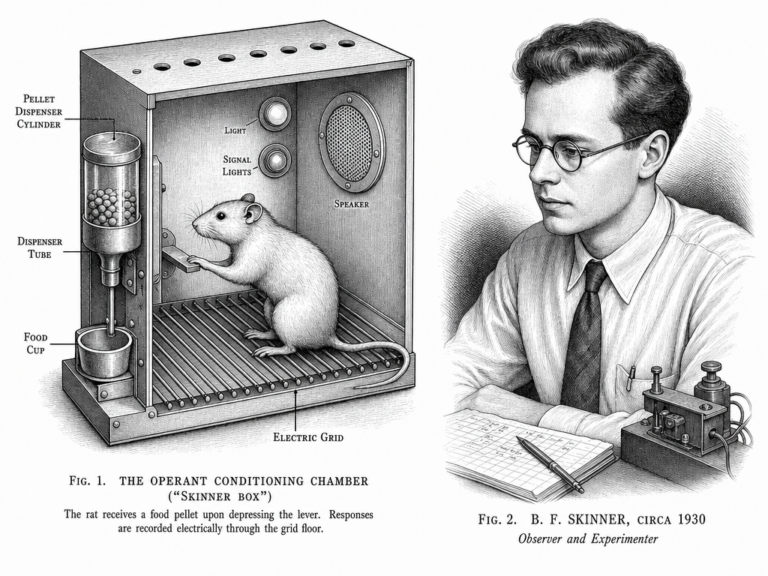
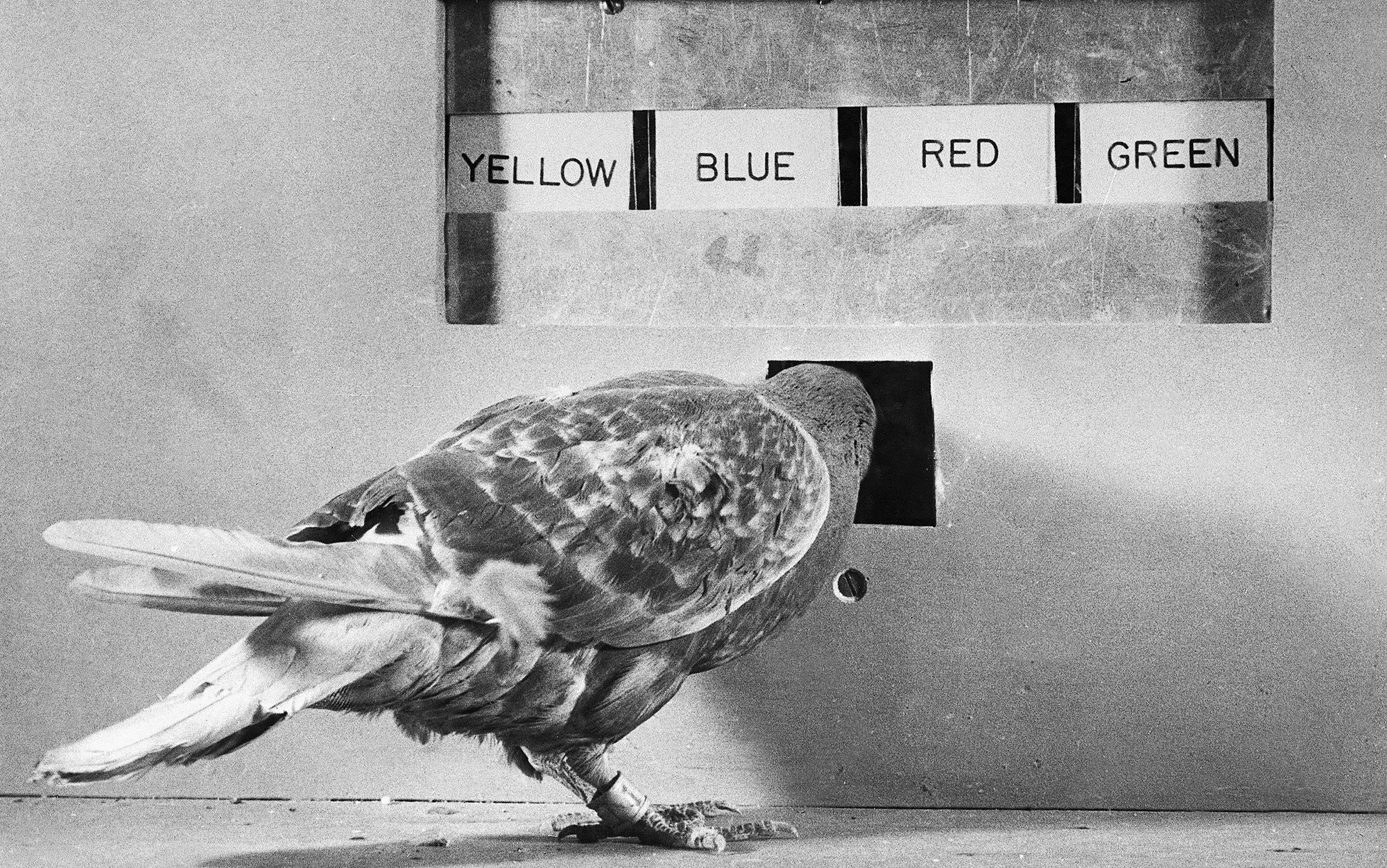
He had to measure it first. In the 1930s he built the operant conditioning chamber, later nicknamed the Skinner box, an enclosure in which an animal’s every lever press was recorded automatically. He paired it with the cumulative recorder, a device that drew behavior as a rising line on paper, steep when responses came fast and flat when they stopped. For the first time a researcher could watch the rate of a behavior change as it happened. Rate, not the inner life of the mind, was the data.
The 1938 book The Behavior of Organisms set out the experimental system. Science and Human Behavior, in 1953, extended it to people, arguing that reinforcement, extinction, punishment, and shaping by successive approximation could account for human action without appeal to unobservable mental causes. The vocabulary that came out of that work, positive and negative reinforcement, schedules, stimulus control, is the vocabulary a BCBA writes in today.
From the Lab to the Clinic
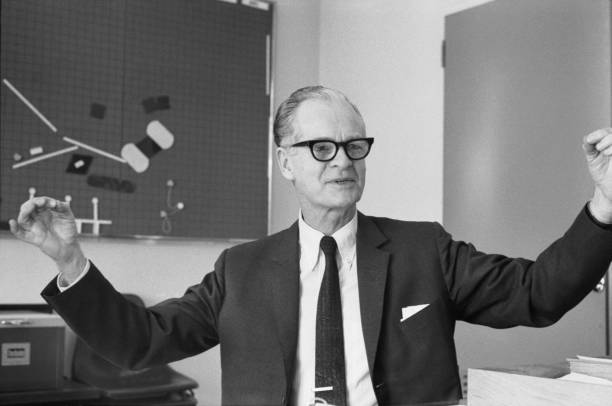
Skinner supplied the principles. He did not build the clinic. For most of his career the experimental analysis of behavior stayed in university laboratories with rats and pigeons. The move to human problems came mostly from others who read him.
That move gathered speed in the 1960s. Researchers began applying reinforcement to socially important behavior: classroom conduct, care in psychiatric institutions, language in children with developmental disabilities. The work needed a journal of its own, and in 1968 it got one when the Journal of Applied Behavior Analysis began publishing. The field’s experimental parent journal had launched a decade before that.
The inaugural volume carried the paper that named the discipline. Donald Baer, Montrose Wolf, and Todd Risley, in “Some Current Dimensions of Applied Behavior Analysis,” set out seven features any genuine ABA program had to show. It had to be applied, behavioral, analytic, technological, conceptually systematic, effective, and general in its results. The seven dimensions were a charter, telling a young profession what counted as its work.
Every one of those dimensions rests on Skinner’s experimental analysis. “Conceptually systematic” meant tied to the principles he had isolated. “Behavioral” and “analytic” meant measured and demonstrated the way he had measured and demonstrated in the box. The applied field defined itself, in writing, as his science put to work on problems that mattered.
What a BCBA Inherited
The inheritance is not abstract. It is the daily mechanics of practice.
Reinforcement drives nearly every behavior plan written. Schedules of reinforcement, the patterns Skinner and Charles Ferster catalogued in their 1957 book, are why a clinician moves a learner from continuous to intermittent reinforcement and expects the new skill to hold. The graphs Skinner made standard, behavior plotted as rate over time, are still how supervisors judge whether a program is working, through visual analysis rather than group averages.
His least-read major book may have the largest footprint in autism care. Verbal Behavior, published in 1957, treated language as behavior under the same contingencies as any other and sorted it into functional units: the mand, or request, such as a child asking for juice; the tact, or label; the echoic, or imitation; the intraverbal, or conversational response. For years it sat mostly unused in clinics. Then practitioners turned it into curriculum. Mark Sundberg’s VB-MAPP, a verbal behavior assessment used widely with children with autism, is Skinner’s 1957 taxonomy rebuilt as a working clinical tool.
The credential itself carries his fingerprints. The seven dimensions remain a defined item on the BCBA task list, Section A-5, so every candidate who sits the exam still studies the 1968 statement of Skinner’s applied science before being allowed to practice.
Skinner isolated the principles and never treated a patient. Turning his laboratory science into therapy became the work of a profession he never joined.
The Fights He Started
Skinner’s science arrived with a worldview, and the worldview drew fire that has never fully died down. In 1971 he published Beyond Freedom and Dignity, a bestseller arguing that human freedom and autonomy are largely illusions and that societies would do better to design environments that shape behavior on purpose. The linguist Noam Chomsky, who had already attacked Verbal Behavior in a 1959 review, called the book pseudoscience hostile to human dignity.
Those arguments are not museum pieces for the people running ABA today. The same questions about control, autonomy, and who decides which behavior should change sit at the center of current debates over client assent, trauma-informed practice, and the criticism from autistic self-advocates that ABA can put compliance ahead of the person. A field built on the power to change behavior keeps having to answer for that power. The argument starts with Skinner.
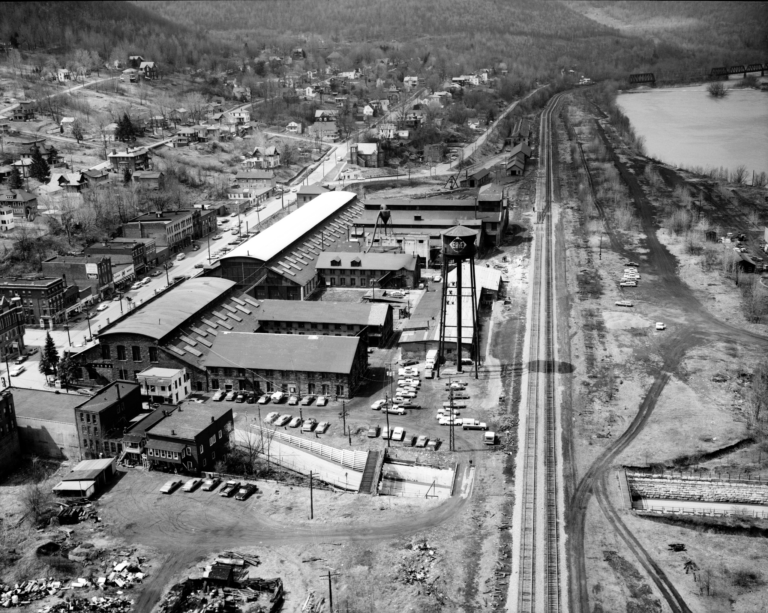
This is the first in a series on the man and the science behind the field. The next installment returns to the beginning, to a railroad town in Pennsylvania and the restless boy inventor whose habits of building and measuring would later define a profession.
AT A GLANCE
| Full name: | Burrhus Frederic Skinner |
| Born and died: | March 20, 1904, Susquehanna, Pennsylvania; died August 18, 1990 (Britannica) |
| Core idea: | Operant conditioning, the principle that behavior is shaped by its consequences |
| Key works: | The Behavior of Organisms (1938); Science and Human Behavior (1953); Verbal Behavior (1957); Beyond Freedom and Dignity (1971) |
| Published output: | About 21 books and 180 articles (biography.com) |
| Field named: | “Applied behavior analysis,” Baer, Wolf and Risley, Journal of Applied Behavior Analysis, 1968 |
| Seven dimensions: | Applied, behavioral, analytic, technological, conceptually systematic, effective, generality (Baer, Wolf and Risley, 1968) |
| Still on the exam: | The seven dimensions appear in the BCBA task list, Section A-5 (BACB) |
| Certified BCBAs today: | More than 73,000 (BACB certificant data, January 2026) |
| Verbal Behavior legacy: | Basis of the VB-MAPP and many language programs in autism treatment |
| National Medal of Science: | Awarded by President Lyndon Johnson, 1968 |
| Final public address: | APA lifetime contribution award, August 1990, days before his death |
SOURCES & REFERENCES
| 1. | Encyclopaedia Britannica. “B.F. Skinner.” britannica.com. https://www.britannica.com/biography/B-F-Skinner |
| 2. | B.F. Skinner Foundation. “Biographical Information.” bfskinner.org. https://www.bfskinner.org/archives/biographical-information/ |
| 3. | Baer DM, Wolf MM, Risley TR. Some Current Dimensions of Applied Behavior Analysis. Journal of Applied Behavior Analysis. 1968;1(1):91–97. https://onlinelibrary.wiley.com/doi/10.1901/jaba.1968.1-91 |
| 4. | Behavior Analyst Certification Board. “BACB Certificant Data.” Accessed January 2026. https://www.bacb.com/bacb-certificant-data/ |
| 5. | Behavior Analyst Certification Board. BCBA Task List (5th ed.), item A-5: dimensions of applied behavior analysis. bacb.com. |
| 6. | Ferster CB, Skinner BF. Schedules of Reinforcement. Appleton-Century-Crofts; 1957. |
| 7. | Skinner BF. Verbal Behavior. Appleton-Century-Crofts; 1957. |
| 8. | Sundberg ML. VB-MAPP: Verbal Behavior Milestones Assessment and Placement Program. marksundberg.com. https://marksundberg.com/vb-mapp/ |
| 9. | Chomsky N. “The Case Against B.F. Skinner.” The New York Review of Books. December 30, 1971. https://www.nybooks.com/articles/1971/12/30/the-case-against-bf-skinner/ |
| 10. | Empirical Applications of Skinner’s Verbal Behavior to Interventions for Children with Autism: A Review. PubMed Central, PMC6381329. https://pmc.ncbi.nlm.nih.gov/articles/PMC6381329/ |
| 11. | Biography.com Editors. “B.F. Skinner.” Biography. https://www.biography.com/scientists/bf-skinner |