The Conference
LAS VEGAS — Hopebridge, one of the largest ABA providers in the United States, presented six sessions at the 2026 Council of Autism Service Providers (CASP) Annual Conference, held April 26 through 28 at Mandalay Bay Resort and Casino. The sessions spanned outcomes measurement, treatment intensity research, supervision systems, compliance risk, ethics committee frameworks, and cultural humility in clinical leadership. In-person registration for the conference sold out, drawing provider executives, clinical directors, and operational leaders from across the country for approximately 100 breakout sessions.
CASP is the only national conference focused specifically on administering and operating autism service provider organizations while maintaining clinical excellence. The audience is not frontline clinicians preparing for the BCBA exam; it is the people who run ABA companies, set clinical standards, negotiate with payers, and build workforce systems. Hopebridge’s six-session presence at a conference of this scope signals that a PE-backed platform with 112 locations is investing in clinical thought leadership, not just center count.
The conference’s sold-out status reflects the ABA industry’s rapid maturation as a professional sector. CASP has become the primary venue where provider leadership teams discuss the operational challenges that define the field in 2026: payer pushback on authorized treatment hours, the transition from fee-for-service to value-based care, workforce retention in an industry plagued by high turnover, and the regulatory scrutiny that has intensified through a wave of federal and state Medicaid audits. Sponsors included Hi Rasmus, the ABA outcomes platform, and other technology and accreditation firms that serve the provider operator market.
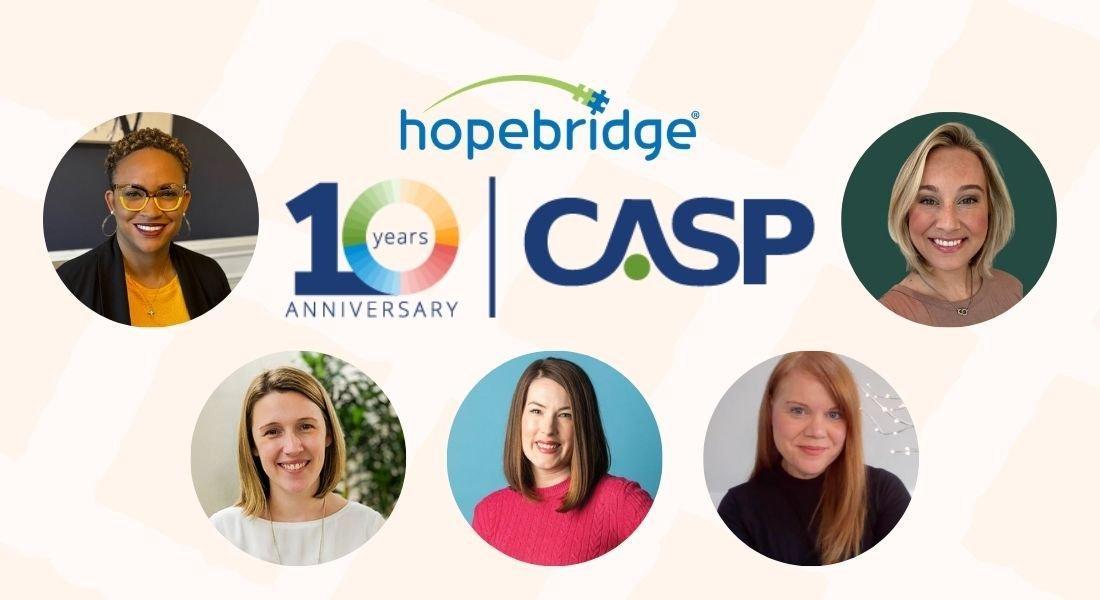
The sessions were led by five Hopebridge leaders: Jana Sarno, MA, BCBA, LBA (Chief Clinical Officer), Melissa Chevalier, MS, BCBA, COBA (Vice President of Quality), Stephanie Ratliff, MA, CCC-SLP, CHC, CHPC (Vice President of Compliance), Meg Moore, BCBA, LBA (Clinical Training Director), and Nia Flowers, MS, BCBA, LBA (Quality Improvement Manager). Flowers appeared on two separate panels. The breadth of presenters across clinical, quality, compliance, and training functions reflects an organizational structure where clinical leadership is distributed across multiple departments rather than concentrated in a single officer.
The Six Sessions
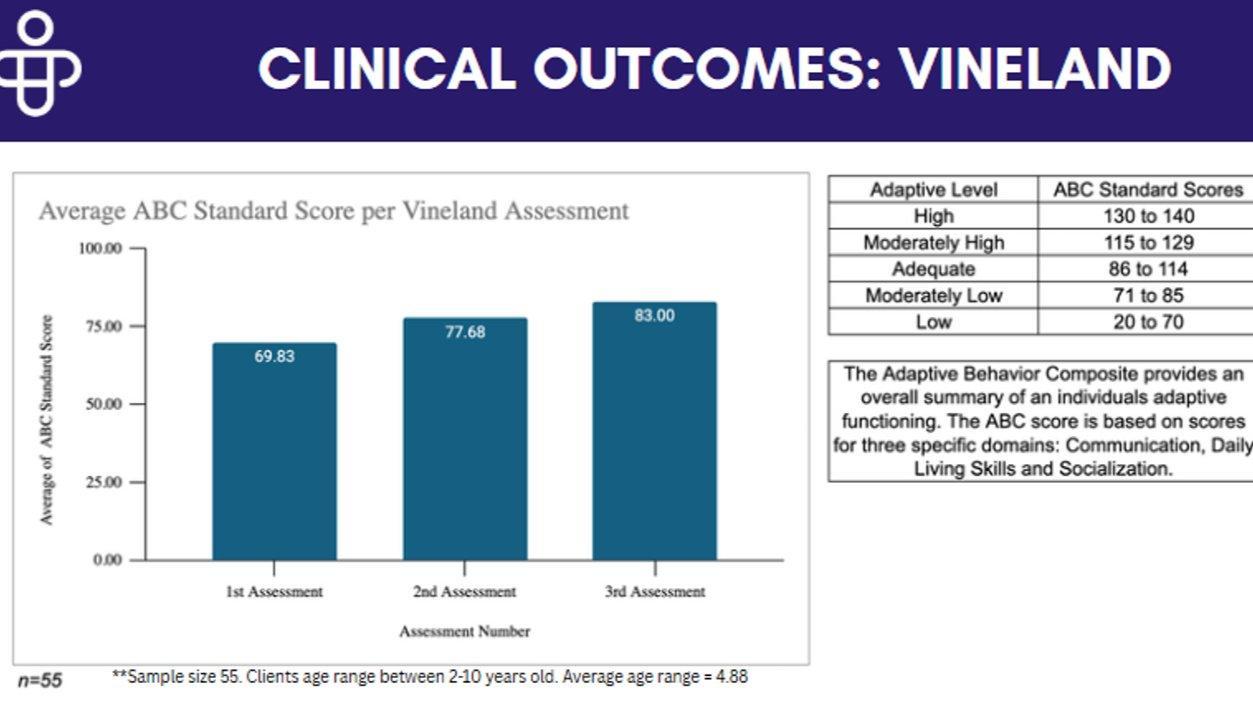
Session 1: Pre-Conference Workshop. “Measuring and Reporting Applied Behavior Analysis Treatment Outcomes,” led by Jana Sarno. This workshop addressed the mechanics of outcomes measurement, a topic that sits at the center of the ABA industry’s transition toward value-based care. Payers increasingly require providers to demonstrate measurable client progress rather than simply documenting delivered hours. The session was positioned as a practical guide for operators building or refining their outcomes reporting infrastructure.
Session 2: Treatment Intensity Panel. “Expanding Upon the Evidence: Multi-Provider Evaluation of Treatment Intensity and Outcomes in Early Comprehensive ABA,” with Jana Sarno as panelist. This session built directly on CASP’s 2025 white paper, “Evidence About ABA Treatment for Young Children with Autism: The Impact of Treatment Intensity on Outcomes.” The white paper, a companion to CASP’s 2024 Practice Guidelines (3rd edition), analyzed outcomes data from 341 children across three measures: the Vineland Adaptive Behavior Composite, IQ, and the Childhood Autism Rating Scale (CARS). It found that average improvement was consistently related to treatment intensity across three bands: 5 to 12, 13 to 25, and 26 to 40 weekly hours. Sarno’s panel extended those findings by presenting multi-provider data from ABA organizations beyond the original white paper sample.
“CASP brings together leaders who are deeply committed to strengthening both the science and the systems that support high-quality ABA care.” — Jana Sarno, Chief Clinical Officer, Hopebridge (2026)
Session 3: Supervision Systems. “Developing a Compass: Building Sustainable Systems for Ongoing Supervision and Mentorship,” led by Meg Moore, Clinical Training Director. This session addressed the operational mechanics of supervision, a function that most ABA providers identify as their primary quality lever. With BCBA-to-RBT ratios running 1:4 to 1:8 across the industry and turnover rates for RBTs exceeding 65% annually, building supervision systems that are sustainable and consistent across multiple sites is a structural challenge for any provider operating at scale. The session’s framing around “sustainable systems” rather than individual supervisor skill is significant: it reflects the reality that supervision in a 112-location organization cannot depend on the talent of any single BCBA but must be embedded in training protocols, feedback loops, and performance metrics that travel across sites.
Session 4: Compliance Risk. “Navigating the Waters: Identifying and Mitigating Risks in ABA Practice,” presented by Stephanie Ratliff. Ratliff holds credentials in both speech-language pathology (CCC-SLP) and healthcare compliance (CHC, CHPC), a combination that positions her to address the intersection of clinical documentation, billing practices, and regulatory exposure. The session’s relevance is heightened by the wave of federal and state ABA audits in 2025 and 2026, including the Colorado OIG audit that identified significant improper Medicaid payments.
Session 5: Ethics Committees. “When to Refer: Decision-Making Frameworks for Ethics, Quality, and Risk Committees in ABA Organizations,” co-presented by Melissa Chevalier (VP of Quality) and Nia Flowers (Quality Improvement Manager). The session addressed how ABA organizations can build internal committee structures that handle clinical edge cases, quality deviations, and ethical gray areas without relying solely on individual BCBA judgment. For multi-site operators where clinical decisions are distributed across dozens or hundreds of supervisors, having a formal referral pathway for complex cases is a governance mechanism that reduces variability and protects both clients and the organization. The session’s focus on “when to refer” is notable; the question is not whether to have committees but how to define the decision thresholds that route specific cases to the appropriate review body, whether that is an ethics panel, a quality review team, or a risk management function.
Session 6: Cultural Humility. “Empowering Leaders for Equitable Practice: Cultivating Cultural Humility and Ethical Leadership in Supervision,” with Nia Flowers as panelist. This session addressed equity in supervision, a topic that the ABA field has increasingly recognized as relevant to both workforce retention and client outcomes. The ABA workforce is 78% to 80% female and serves a client population that spans racial, ethnic, and socioeconomic groups. Supervision practices that account for cultural context can improve both clinician engagement and family trust.
Why CASP Matters for Operators
CASP is not a clinical conference in the traditional sense. It is a conference for the people who build and manage ABA organizations. The approximately 100 breakout sessions cover topics from payer negotiation and revenue cycle management to clinical quality, workforce strategy, and regulatory compliance. CASP’s membership includes both independent providers and PE-backed platforms, and the conference program reflects the operational reality that clinical quality and business sustainability are not separate conversations.
Hopebridge’s presence at CASP 2026 is notable in context. The company announced the retirement of CEO Dennis May in February 2026 after a decade of leadership. May stepped down effective March 1, with President LeAnne Hester assuming day-to-day operations while the board advances a CEO search. During May’s tenure, Hopebridge grew from 33 centers across four states (Georgia, Indiana, Kentucky, and Ohio) at the time of Arsenal Capital Partners’ 2019 acquisition (valued at approximately $255 million, per PEHub) to 112 locations in 10 states. The company served more than 11,700 families in 2025 and added 6,400 employees during the year.
The company operates in Alabama, Arizona, Florida, Georgia, Indiana, Kentucky, North Carolina, Oklahoma, Ohio, and Tennessee, with a “360 Care” model that integrates ABA with occupational therapy, speech therapy, and feeding therapy under one roof. The model was developed by founder Kim Strunk, an occupational therapist who launched the company in 2005 as Homefront Learning Center in Kokomo, Indiana, when ABA was not yet covered by insurance. Hopebridge reports that 85% of children maintain and expand their skills after therapy, and 92% remain in school after graduating from its services. The company has also invested in workforce technology, deploying predictive analytics for hiring and creating travel BCBA positions to fill geographic gaps in its coverage areas.
The company has also navigated market exits. Hopebridge ended ABA services in Colorado in 2023, closing six of eight locations due to low Medicaid rates and rising costs. In October 2025, regulatory classification changes forced the company to shutter all facilities in Arkansas. These exits underscore the margin pressure that even large, PE-backed providers face in states where reimbursement does not cover the cost of multidisciplinary care delivery. The CASP sessions, particularly Sarno’s outcomes measurement workshop and Ratliff’s compliance risk presentation, are directly responsive to this environment: demonstrating clinical value through measured outcomes and maintaining clean documentation are the two strongest defenses against rate cuts and audit exposure.
Hopebridge’s six-session CASP presence spans clinical, quality, compliance, and training functions, a breadth that signals distributed clinical leadership across the organization rather than a single-officer model.
The Treatment Intensity Debate
Sarno’s treatment intensity session is the most consequential for ABA policy. The CASP 2025 white paper established benchmarks showing that higher-intensity ABA (26 to 40 weekly hours) produces stronger outcomes across adaptive behavior, IQ, and autism severity measures than lower-intensity models (5 to 12 hours). This evidence base is the foundation for CASP’s generally accepted standards of care, which recommend comprehensive, intensive early ABA for young children with autism.
The treatment intensity data matters because payers are actively pushing in the opposite direction. Behavioral Health Business reported in late 2025 that industry insiders expect lower authorized dosages and tightened medical necessity criteria in 2026. Payers view reduced hours as cost containment; CASP’s white paper argues that reducing intensity below evidence-based thresholds produces worse outcomes and may increase long-term costs by extending treatment duration or reducing the likelihood of meaningful skill gains. Sarno’s multi-provider panel at CASP 2026 extended this argument by presenting outcomes data from multiple ABA organizations, broadening the evidence base beyond what any single provider could claim.
For ABA operators, the treatment intensity debate is both a clinical question and a business-model question. Providers whose revenue models depend on high-hours authorization face margin compression if payers reduce approved hours. Providers that can demonstrate, through measured outcomes, that intensive treatment produces better results and earlier discharge have a stronger negotiating position. The CASP white paper and Sarno’s session arm operators with the data to make that case.
The multi-provider dimension of Sarno’s panel is particularly important. A single provider presenting its own outcomes data faces the criticism that the results may reflect site-specific factors, selective reporting, or favorable patient selection. A multi-provider evaluation that includes data from organizations beyond Hopebridge strengthens the external validity of the findings and makes the case harder for payers to dismiss. CASP’s role in convening this multi-provider analysis positions the organization as the industry’s standard-setting body for outcomes evidence.
The Ratliff compliance session and the Chevalier/Flowers ethics committee session address the other side of the same coin. As payers increase prior authorization requirements and audit recoupment activity accelerates, providers need internal governance structures that catch documentation problems, billing anomalies, and clinical edge cases before they become regulatory exposures. The sessions collectively describe an organizational architecture where outcomes data, compliance monitoring, quality committees, and supervision systems work as integrated functions rather than siloed departments. That architecture is what distinguishes a platform-scale ABA provider from a collection of independent clinics sharing a brand name.
AT A GLANCE
| Conference: | CASP 2026, April 26 to 28, Mandalay Bay, Las Vegas |
| Sessions: | 6 Hopebridge sessions across clinical, quality, compliance, and training |
| Key presenter: | Jana Sarno, MA, BCBA, LBA, Chief Clinical Officer |
| Pre-conference workshop: | Measuring and Reporting ABA Treatment Outcomes |
| Treatment intensity: | Multi-provider panel extending CASP 2025 white paper findings |
| White paper benchmark: | Outcomes improve with intensity: 5-12, 13-25, or 26-40 weekly hours (341 children, Vineland/IQ/CARS) |
| Hopebridge scale: | 112 locations, 10 states, 11,700 families served in 2025 |
| PE sponsor: | Arsenal Capital Partners (acquired 2019) |
| CEO transition: | Dennis May retired March 1, 2026; LeAnne Hester interim; search underway |
| Market exits: | Colorado (2023, low Medicaid rates); Arkansas (October 2025, regulatory changes) |
| Next conference: | ABAI 2026 Annual Convention, May 21 to 25, San Francisco |