COLUMBIA, S.C. — The night Lorri Unumb sat across from a team of specialists at Johns Hopkins and heard what her son Ryan would need to have any shot at a functioning life, she made the same calculation most parents make: Thank God we have insurance.
She was wrong. The year was 2002, Ryan had just turned 22 months old, and the diagnosis was severe autism. The prescription was 40 hours a week of applied behavior analysis therapy — a regimen that would run roughly $70,000 a year, for years. Not a penny of it would be covered. Health insurance, the specialists explained, simply did not pay for that.
Lorri and Dan Unumb were both DOJ attorneys at the time, living in Washington, D.C. Two lawyers with two salaries, and it still required selling their home and reorganizing their entire financial lives to afford their son’s care. Lorri lay awake at night thinking about the families who had none of those options.
Three years later, she sat down at her kitchen table in Columbia and wrote a bill. Dan sat beside her.
“I got to the point where I couldn’t sleep at night thinking about those families. Yes, we had to sell our house. We’re lucky we had one to sell.”
ORIGIN STORY

Lorri Shealy grew up in Lexington, South Carolina, the daughter of a mother who chose to teach high school math over a college professorship and a father whose name — Ryan Shealy — she would one day give to a law that would reshape American healthcare. She graduated magna cum laude and Phi Beta Kappa from the University of South Carolina in 1990 with degrees in journalism and political science, then stayed for law school, earning her J.D. in 1993.
Dan Unumb arrived at their partnership from a different trajectory. A graduate of Carleton College in Minnesota, he earned his J.D. from Northwestern University School of Law and built a career as a trial attorney and class action litigator — first in private practice in Boston and Washington, D.C., then with the Civil Division of the U.S. Department of Justice, and later as Director of Litigation Services at South Carolina Legal Services, where he oversaw complex litigation strategy and supervised a statewide practice. Both were trained to read the gap between what the law said and what actually happened.
That gap, in 2002, was large. Health insurance categorically excluded autism therapy. When Ryan’s specialists told the Unumbs that early intervention was their son’s best chance, they also told them, effectively, that the American healthcare system had decided that chance was not worth funding. The couple sold their Washington-area house, moved to South Carolina to be closer to Lorri’s family, and made a stark arrangement: Dan’s salary would cover living expenses. Lorri’s income from a new professorship at the Charleston School of Law would cover Ryan’s therapy. It was not a sustainable model for most families. It was barely sustainable for them.
THE LAW
In 2005, Lorri drafted legislation requiring health insurers to cover evidence-based autism treatment, including ABA, as prescribed by a physician. Dan worked alongside her — reviewing the legal architecture, anticipating the insurance industry’s counterarguments, preparing for the legislative fights ahead. State Rep. Nathan Ballentine (R-Richland) filed the bill; Sen. Ray Cleary carried it in the Senate. A public hearing in January 2006 drew hundreds of supporters. The insurance industry pushed back hard. The bill was amended, narrowed, and fought over for two legislative sessions.
On June 6, 2007, Governor Mark Sanford vetoed it. The Unumbs mobilized every autism family they knew. Parents and grandparents converged on the State House in Columbia. The General Assembly overrode the veto the following day — unanimously — in a vote that CNN covered live. Ryan’s Law, named for Lorri’s father and her son, took effect in 2008. It required insurers to cover up to $50,000 annually in behavioral therapy for children diagnosed with autism by age eight, through age sixteen, and prohibited insurers from denying other medical care on the basis of an autism diagnosis.
Indiana had passed a similar law in 2001. South Carolina’s was not technically first, but it was the law that traveled. Within weeks, families from Kansas, Oregon, and across the country were calling the Unumbs asking how it had been done. Autism Speaks, the national nonprofit, had a more pointed question: could Lorri do it in every state?
“I spent the next decade traveling the states and helping in every state. I would meet with families, meet with providers, find some legislators who were sympathetic — and I would help them draft the legislation.”
ALL 50 STATES — AND THE ENFORCEMENT BEHIND THEM
Lorri joined Autism Speaks in 2008 as Vice President for State Government Affairs. Her job was to replicate Ryan’s Law nationwide — state by state, session by session, governor by governor. She testified more than 100 times in legislatures across the United States and beyond, coaching parent advocates, drafting bills, and navigating the particular politics of each statehouse. By 2019, every state in the country had a meaningful autism insurance law on the books.
What Lorri was doing in the capitols, Dan was doing in the courts and regulatory agencies. He joined Autism Speaks in a complementary role, becoming the founding Executive Director of the Autism Speaks Legal Resource Center — a function specifically designed to ensure that the laws his wife was passing were actually being honored. Insurance mandates are only as good as their enforcement, and insurers, he found, were creative in finding ways to limit, delay, and deny coverage even when the law was clear. Dan filed amicus briefs on autism legal issues in state and federal appellate courts, including the United States Supreme Court. He worked with federal and state regulators to improve guidance and enforcement. He secured Medicaid coverage improvements for families in state after state. The division of labor was explicit and deliberate: she built the architecture, he defended it.
In 2010, while both were still at Autism Speaks, they co-founded the Autism Academy of South Carolina — a nonprofit ABA center in Columbia that would eventually serve more than 200 children and adolescents per year, offering diagnostic testing, social skills groups, behavioral feeding therapy, and job training. In 2019, its board renamed it the Unumb Center for Neurodevelopment in recognition of the founders’ national contributions. Ryan, now in his mid-twenties and largely non-verbal, has been its longest-running client since fourth grade.
A PARTNERSHIP IN PRACTICE
The Autism Law Summit, which Dan and Lorri initiated and have led together since its founding, offers the clearest window into how the partnership actually functions. It began with roughly a dozen self-selected advocates sitting in a small conference room in South Carolina — lawyers, parents, clinicians, lobbyists, and legislators who wanted to talk seriously about improving autism law. It is now billed as the premier gathering of practitioners in the autism legal and policy world, drawing advocates from across the country for two days of sessions on insurance, Medicaid, adult services, and the legal rights of individuals with autism. The 18th annual summit was held in Boise, Idaho in October 2024.
Dan and Lorri co-author the sessions, co-lead the proceedings, and often present together — a format that reflects the reality of their collaboration. Lorri tends to command the policy-level argument, the legislative narrative, the national picture. Dan brings the litigation backstory, the regulatory enforcement detail, the case law. They co-wrote the first law school textbook on the subject — “Autism and the Law” — a casebook now used in legal education covering insurance, Medicaid, special education, employment, and housing issues across the lifespan of an individual with autism. Lorri continues to teach the course at George Washington University Law School.
Dan, after the Autism Speaks Legal Resource Center was discontinued, founded the Autism Legal Resource Center — a national law and consulting firm serving ABA providers, families, and advocacy groups navigating insurance and Medicaid reimbursement. He serves as Board Chair of the National Autism Law Center and on the board of Ascendigo, an organization in Aspen, Colorado, that provides recreation programming and community living support to adults with autism. In 2011, he received the South Carolina Lawyers Weekly Leadership in Law Award.
BUILDING THE FIELD
When Lorri left Autism Speaks in May 2019 to become CEO of the Council of Autism Service Providers, CASP represented 78 member organizations serving more than 30,000 individuals with ASD and generating over $1 billion in annual service dollars. The organization had been founded in 2015 as the official trade association of ABA providers — a field that, as Lorri had spent a decade helping to build through insurance reform, and Dan had spent a decade compelling insurers to actually fund, was now large, fast-growing, and in need of its own standards infrastructure.
CASP’s core function is credentialing and best practices: membership requires an ongoing commitment to evidence-based practice, and the organization’s Autism Commission on Quality sets the standard. Since Lorri’s arrival, membership has expanded, the annual conference has grown, and CASP has become an increasingly active voice in the policy debates that now define the field — including the Medicaid rate controversies that have erupted in Nebraska, Indiana, and Arizona in recent years. When state agencies or managed care organizations slash ABA reimbursement rates, it is CASP that convenes and coordinates the field’s response.
“I have always thought of CASP membership as a marker of high-quality autism services. I am excited to help build a strong, unified voice for the rapidly growing community of providers who serve individuals with autism across the lifespan.”
THE NEXT FRONTIER

The insurance reform campaign that consumed the first two decades of the Unumbs’ advocacy careers was fundamentally about children — ensuring that children who received an autism diagnosis early enough could access the intensive therapy that gives them the best chance of developing language, communication, and life skills. Ryan’s Law was written to cover children up to age 16. But Ryan is now in his mid-twenties, and the question of what happens to adults with autism — where they live, how they are supported, what independence looks like — is the one both Unumbs are now building toward.
They are constructing Unumb Place, an adult residential campus in Lexington, S.C., consisting of six group homes where individuals like Ryan can live with support and community. The project is personal by design. The family deliberately stayed in South Carolina rather than relocating to a state with more developed adult services infrastructure. Their reasoning is the same as it was in 2004 when they chose not to move to New Jersey for better resources: moving would solve the problem for exactly one person.
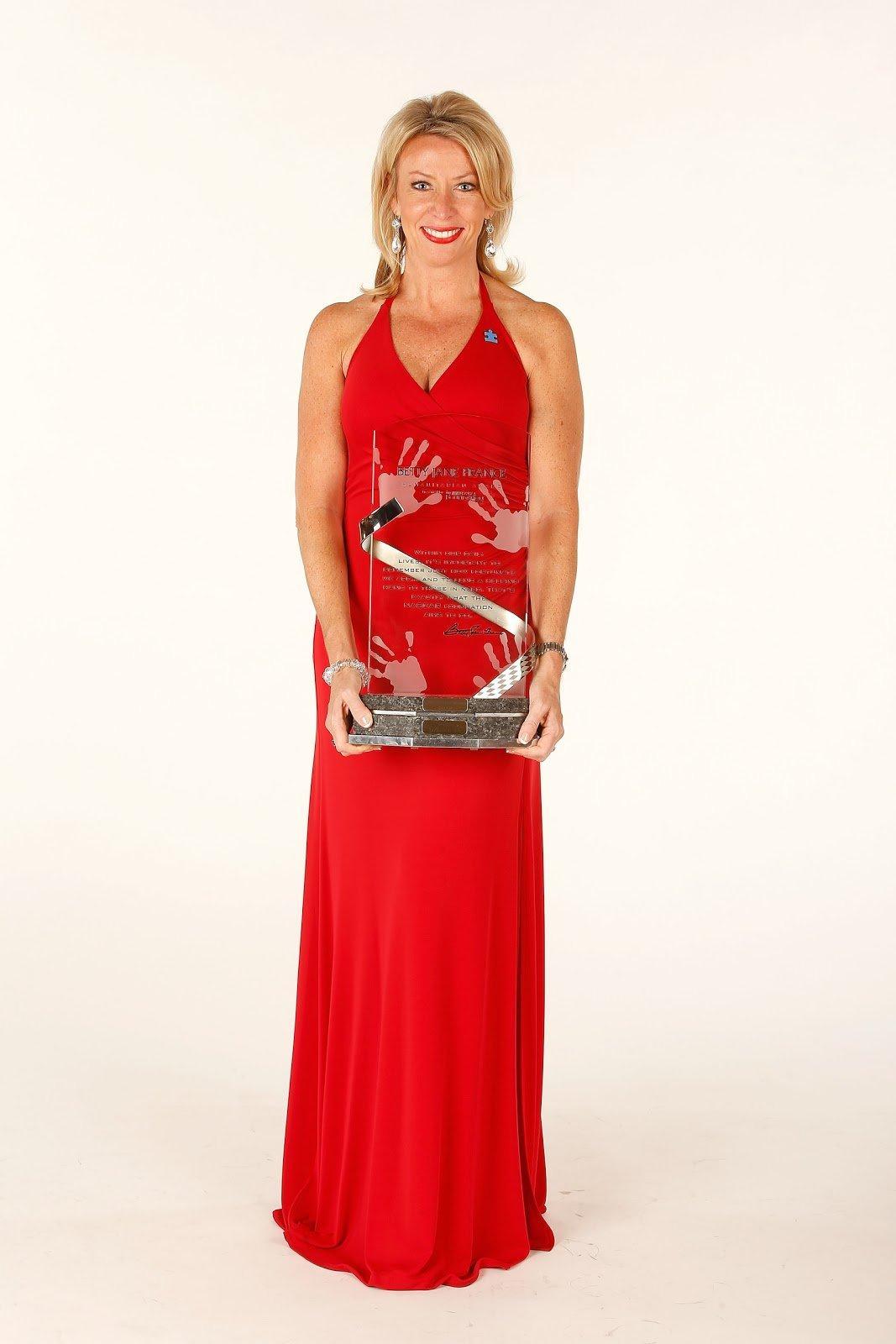
The recognition has accumulated over the years — the NASCAR Foundation’s Betty Jane France Humanitarian Award, the Civitan International World Citizenship Award, the Jefferson Award for Public Service, the Miss South Carolina Pageant Woman of Achievement Award, Town & Country’s 2009 “Women Who Make a Difference.” A mother once sent Lorri a photograph of a four-year-old with autism riding a tricycle — a skill that, without ABA therapy, he would not have been able to develop, and that without Ryan’s Law, his family could not have afforded to provide.
She finds it hard to talk about without losing composure. Neither Unumb has lost the habit of not sleeping when the work is not done.[divider line_type=”Full Width Line” line_thickness=”1″ divider_color=”default”]At a Glance
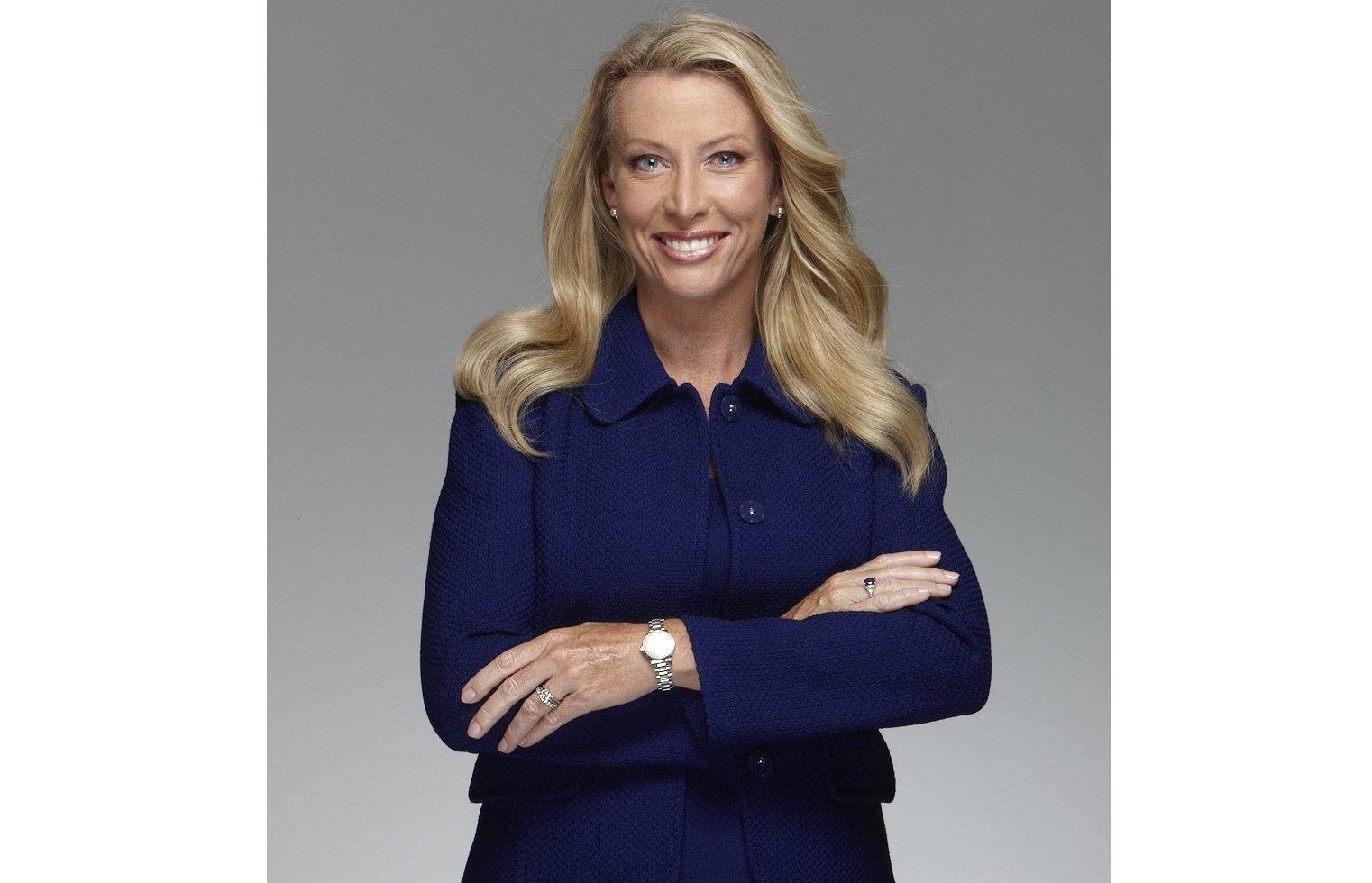
Full Name: Lorri Shealy Unumb, Esq.
Current Title: CEO, Council of Autism Service Providers (CASP); Founder & Board Chair, The Unumb Center for Neurodevelopment
Location: Columbia, South Carolina
Education: B.A. Journalism & Political Science, University of South Carolina (Class of 1990); J.D., University of South Carolina School of Law (1993)
Landmark Legislation: Ryan’s Law (S.C., 2007) — catalyst for autism insurance reform in all 50 states
Legislative Testimony: 100+ appearances in state and international legislatures
Autism Speaks Role: Vice President, State Government Affairs (2008–2019)
CASP Membership: ~440 provider organizations; 80,000+ professionals (2026)
Founded Unumb Center: 2010 (as Autism Academy of S.C.; renamed The Unumb Center for Neurodevelopment, 2019); 200+ children/adolescents served per year
Autism Law Summit: Co-founded with Dan Unumb; 19th year (2025); held annually across the U.S.
Textbook: Autism and the Law (co-authored with Dan Unumb; taught at George Washington University Law School)
Awards: NASCAR Foundation Betty Jane France Humanitarian Award; Civitan International World Citizenship Award (2021); Jefferson Award for Public Service; Autism Society of America Parents of the Year (2008, with Dan); Town & Country “Women Who Make a Difference” (2009)
Board Seats: The Unumb Center for Neurodevelopment (Founder & Board Chair); Carolina Crown; S.C. Department of Disabilities and Special Needs (Commissioner, gubernatorial appointment)
Upcoming Project: Unumb Place — six-home adult residential campus for individuals with autism, Lexington, S.C.
Family: Married to Dan Unumb, Esq. (Founder, Autism Legal Resource Center); three sons, including Ryan
Comtact & Links
Organization: Council of Autism Service Providers (CASP)
Headquarters: Wakefield, Massachusetts (offices also in Columbia, S.C.)
Website: casproviders.org
LinkedIn: linkedin.com/in/lorrishealyunumb
Unumb Center: unumbcenter.org
Dan’s Firm: autismlegalresourcecenter.com
UofSC Profile: sc.edu/uofsc/posts/2022/04/04_lorri_unumb.php