The Graduation Cliff: The Industry’s Structural Gap
AUSTIN, TEXAS – The ABA therapy industry in the United States is overwhelmingly organized around one demographic: children under six. The clinical evidence is clear — early intensive behavioral intervention, ideally initiated between 18 months and five years of age, produces the strongest outcomes. The foundational research, from the Early Start Denver Model trials to meta-analyses of naturalistic developmental behavioral interventions, consistently shows that earlier is better. The industry’s reimbursement architecture, clinical training pipelines, and center-based infrastructure have all been built accordingly.
But this creates a structural problem. Approximately 50,000 autistic young people exit the U.S. education system each year. Long before that, at age five or six, children who have been receiving 25 to 40 hours per week of intensive ABA therapy face a binary choice: transition to school full-time and stop ABA, or attempt to continue ABA alongside school in a schedule that often proves logistically unsustainable for families. The industry term for this transition point is the graduation cliff — the moment when a child’s ABA service hours drop sharply or end entirely, often before the therapeutic goals have been fully met.
The downstream consequences are documented. A national report from the Drexel Autism Institute found that speech-language therapy utilization dropped from 66 percent at age 17 to just 10 percent after high school graduation. Researchers have described a broader pattern of service decline that begins much earlier — at the point where children enter school and ABA hours are reduced or discontinued. Less than 30 percent of autistic adults are employed. Fewer than 20 percent maintain long-term personal relationships. The services cliff, as caregivers and researchers have come to call it, is not a problem that begins at age 21. It begins at age five, when the ABA industry’s most intensive infrastructure runs out of runway.
The graduation cliff is not a problem that begins at age 21. It begins at age five, when the ABA industry’s most intensive infrastructure runs out of runway and families face a binary choice: stop ABA or attempt a schedule that most cannot sustain.
What ABC Academy Actually Is
Action Behavior Centers, founded in 2016 in Austin, Texas, and now operating more than 400 locations across Arizona, Colorado, Illinois, Indiana, Minnesota, North Carolina, Pennsylvania, South Carolina, and Texas, launched ABC Academy as a distinct service line designed to address the graduation cliff directly. The program targets children ages 5 to 12 diagnosed with autism spectrum disorder who are attending school part-time or full-time but continue to need targeted ABA support.
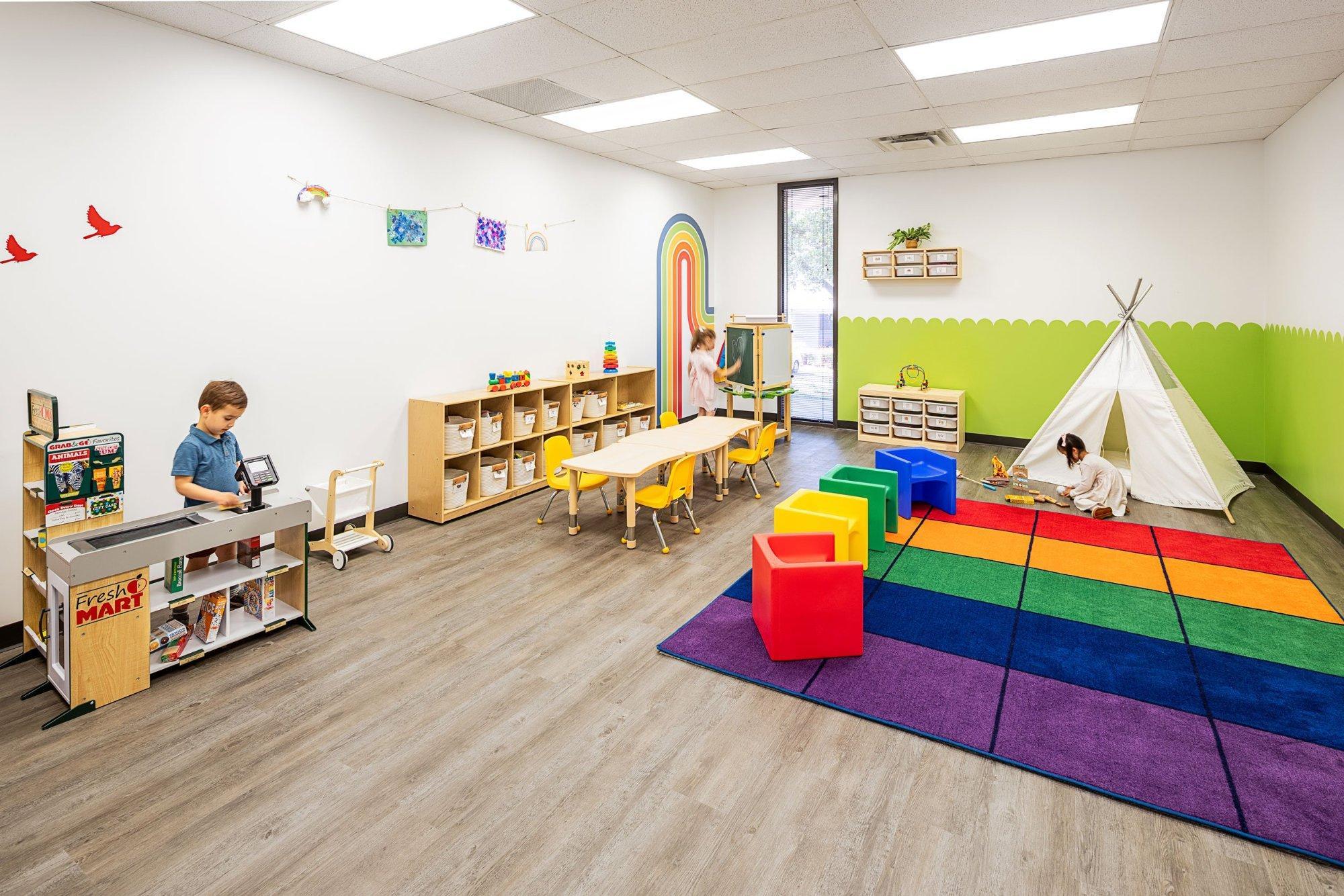
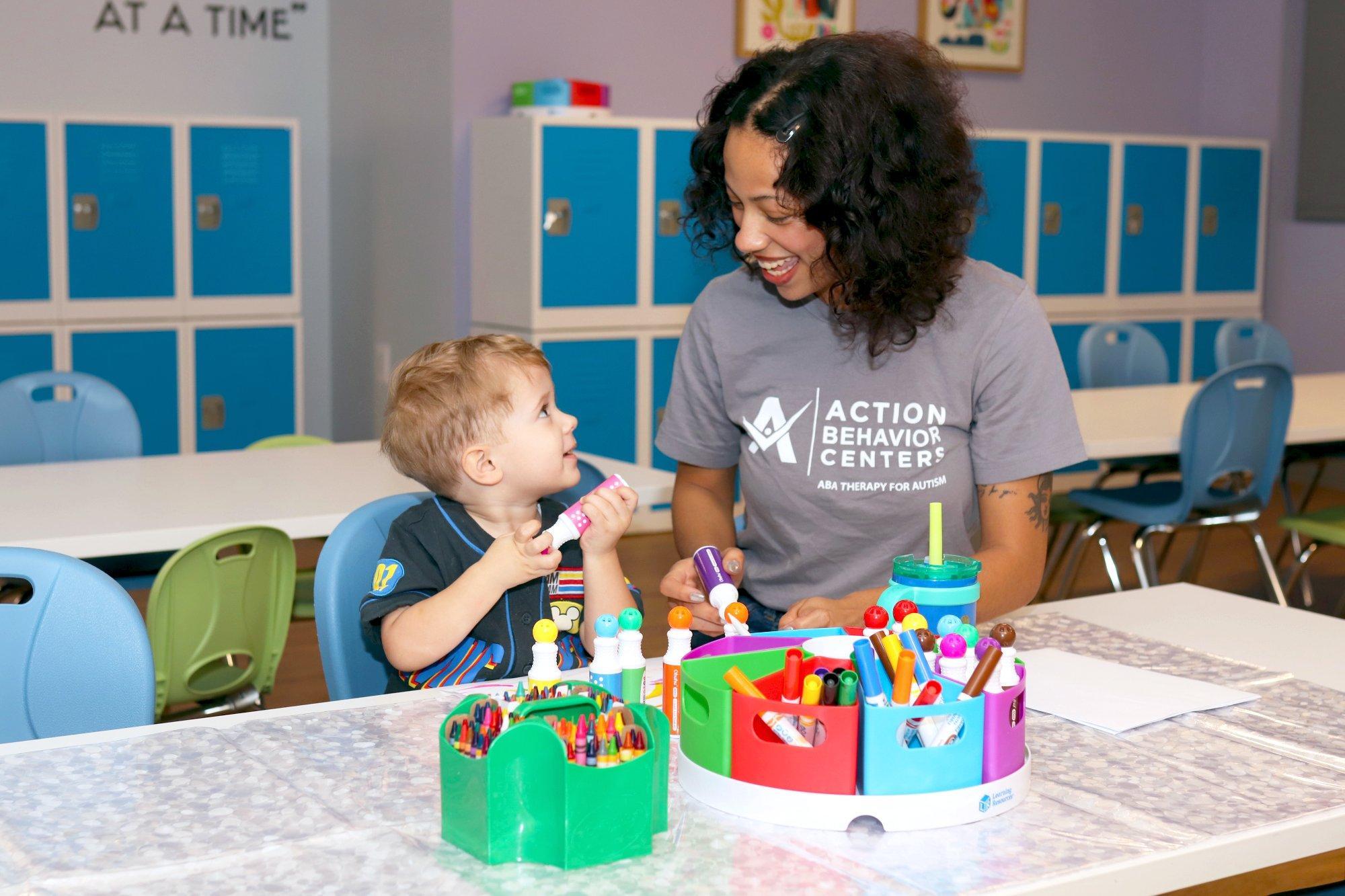
The model is built around several structural departures from traditional center-based ABA. ABC Academy centers operate on after-school and flexible schedules — Monday through Friday from 12:00 p.m. to 6:30 p.m. and Saturdays from 9:00 a.m. to 12:00 p.m. — designed to accommodate children who attend school during the day. The daily curriculum blends one-on-one ABA therapy with group instruction, social-emotional learning, and activities that simulate classroom participation. The program’s explicit focus areas include problem-solving, self-control, social flexibility, organization, and time management — skills that are prerequisites for classroom success but are not typically the primary targets of early intensive behavioral intervention.
Clinical structure: Each Academy center is overseen by licensed BCBAs, with therapy delivered by RBTs at a one-to-one ratio. The program uses individualized goal-setting based on each child’s assessment data, with progress tracked through multiple measures including individualized ABA goals, standardized assessments, and school readiness evaluations. ABC defines school readiness as a child’s ability to participate in a general education classroom with some independence — joining activities and following routines with reduced support.
Enrollment pathway: Children must be ages 5–12 with an autism diagnosis. For families already receiving ABA therapy at an Action Behavior Centers location, the transition to ABC Academy requires a clinical recommendation from the child’s existing care team and collaboration with the Academy’s clinical staff. New families can enroll directly. ABC typically requires a one-year commitment. Existing insurance authorizations transfer to the Academy program without additional paperwork.
The first ABC Academy opened in Allen, Texas. By August 2025, seven Academy centers were operational in Dallas, Houston, San Antonio, Austin, and Phoenix. The company announced plans to more than double that footprint by the end of 2025, with eight additional centers across Texas, Arizona, and Colorado — including the first two Denver locations.
Why This Model Matters for the Industry
ABC Academy is not the first attempt to serve school-age children with ABA. After-school ABA programs, part-time therapy schedules, and school-based ABA consultation models have existed in various forms. Other providers, such as Westside Children’s Therapy in Illinois, have developed tiered programs (IGNITE for preschool prep, RISE for ages 5–7, FOCUS for after-school) that address similar transitions. The Place for Children with Autism has operated a school-like setting with 1:1 therapy since before ABC Academy launched.
What distinguishes ABC Academy is scale. Action Behavior Centers is one of the largest ABA providers in the country, backed by Charlesbank Capital Partners (which acquired the company at an $840 million valuation in 2022 after NexPhase Capital’s initial 2018 investment), with more than 3,000 employees, approximately 1,100 graduate-level clinicians, and an infrastructure that spans more than 400 centers across at least nine states. When a company of that scale commits to a dedicated school-age service line with purpose-built centers, it signals something beyond a program expansion. It signals a structural bet that the ABA industry’s growth frontier lies not only in early intervention but in the 5–12 age band that the industry has historically underserved.
When a company operating at the scale of Action Behavior Centers commits to a dedicated school-age service line with purpose-built centers, it signals a structural bet that the ABA industry’s growth frontier lies not only in early intervention but in the 5–12 age band the industry has historically underserved.
The business logic is straightforward. The early intervention market — children ages 2 to 5 — is both the clinical sweet spot and the most competitively saturated segment of the ABA provider landscape. Every PE-backed platform and independent practice competes for the same referral pipeline of newly diagnosed toddlers. The 5–12 population represents an adjacent market with documented unmet need, existing insurance coverage, and families who are already enrolled in the ABA system and motivated to continue services. For a company like ABC, the Academy model extends the customer lifetime, creates a differentiated service offering, and addresses a real clinical gap simultaneously.
The Open Questions
The ABC Academy model, for all its structural ambition, raises questions that the industry has not yet answered.
Outcomes data: ABC’s broader clinical research reports that 86 percent of families see major reductions in challenging behaviors within the first year of therapy. The company has established the Action Institute for Outcomes Research to study its clinical outcomes. But ABC Academy-specific outcome data — measuring whether the bridge program produces measurably better school readiness, classroom participation, or long-term educational outcomes compared to children who transition directly from early intervention to school without a bridge — has not yet been published. The program is new enough that such data would not yet be available, but as the Academy scales, the clinical evidence base will become the central question.
Insurance sustainability: ABC Academy is billed through existing ABA insurance authorizations, which transfer from a child’s center-based therapy program. This means the program depends on continued insurance approval of ABA therapy for school-age children — a population segment where payers have historically been more skeptical of medical necessity, particularly as children demonstrate school participation. If payers begin to question whether a child who is attending school full-time still requires ABA therapy, the reimbursement foundation of the Academy model could face pressure.
The 12-and-over gap: ABC Academy serves children through age 12. Action Behavior Centers’ broader at-home program extends through age 13. But the services cliff does not end at 12. Adolescents, teenagers, and young adults with autism face their own set of transition challenges — from middle school social complexity to high school graduation to the post-21 services void. The Academy model addresses the first major drop-off point in the service continuum, but the longer arc of the graduation cliff extends well beyond the program’s current age range.
Replicability outside the ABC footprint: ABC Academy is a proprietary program within a single, PE-backed provider organization. The model’s value to the broader ABA industry depends on whether independent providers, smaller multi-site practices, or providers in states where ABC does not operate can build equivalent bridge programs — or whether the capital, infrastructure, and insurance relationships required make this a large-platform-only play.
What the Model Tells Us About Where the Industry Is Heading
The launch and rapid expansion of ABC Academy is a market signal. The ABA industry, after a decade of growth fueled almost entirely by early intervention, is beginning to confront the question of what comes next in a child’s developmental arc. The graduation cliff is not a niche concern — it affects every family whose child reaches school age, every provider whose patients age out of the intensive intervention window, and every payer whose authorization decisions determine whether therapy continues or stops.
Action Behavior Centers is not the only organization moving in this direction. The broader trend toward value-based care models, outcomes measurement, and longer-term service planning is pushing the industry to think beyond the 2-to-5 age band. But ABC Academy is the most visible, most capitalized, and most rapidly scaling attempt to build dedicated infrastructure for the school-age population. Whether it succeeds — clinically, operationally, and financially — will shape how the rest of the industry approaches the problem.
The graduation cliff will not be solved by a single program or a single company. It is a systems problem that touches insurance design, school district capacity, workforce supply, and the fundamental question of how long ABA therapy should continue for a given child. But the fact that the industry’s largest players are now investing dedicated capital in school-age bridge programs suggests that the problem has moved from the margins to the center of the strategic conversation. The next question is whether the clinical evidence and the payer economics will follow.
AT A GLANCE
ABC Academy target population: Children ages 5–12 with ASD, attending school part-time or full-time
Program launch: First center opened in Allen, Texas. Seven centers operational by August 2025.
Expansion plan: Eight additional centers announced August 2025 across TX, AZ, and CO (total 15 by end of 2025)
Curriculum focus: Problem-solving, self-control, social flexibility, organization, time management
Schedule: Mon–Fri 12:00 PM–6:30 PM; Saturday 9:00 AM–12:00 PM (after-school model)
Clinical model: 1:1 RBT therapy + group instruction, overseen by licensed BCBAs
Action Behavior Centers: Founded 2016, Austin, TX. 400+ centers across 9 states. ~3,000 employees, ~1,100 BCBAs.
PE backing: Charlesbank Capital Partners acquired ABC at $840M valuation (2022). Previously NexPhase Capital (2018).
Graduation cliff: The point at which ABA hours drop sharply as children enter school, often before therapeutic goals are met.
Services cliff research: Speech therapy use drops from 66% at age 17 to 10% after HS graduation (Drexel Autism Institute, 2017)
Enrollment: ASD diagnosis required. Clinical recommendation from current ABC team (for existing families). 1-year commitment.
Insurance: Existing ABA authorizations transfer to Academy. No additional paperwork for current ABC families.
SOURCES & REFERENCES
1. – Action Behavior Centers. ABC Academy program page. 2026. https://www.actionbehavior.com/services/academy
2. – Action Behavior Centers / ACCESS Newswire. “Action Behavior Centers Expands ABC Academy With Eight New Locations.” August 26, 2025. https://www.accessnewswire.com/newsroom/en/healthcare-and-pharmaceutical/action-behavior-centers-expands-abc-academy-with-eight-new-locations-1065542
3. – Action Behavior Centers. About page (company history and timeline). 2026. https://www.actionbehavior.com/about
4. – Action Behavior Centers. Find a Center / Locations. 2026. https://www.actionbehavior.com/location
5. – Behavioral Health Business. “Charlesbank Capital Partners to Acquire Action Behavior Centers at $840M Valuation.” August 2022. https://bhbusiness.com/2022/08/17/charlesbank-capital-partners-wins-auction-to-acquire-action-behavior-centers/
6. – NexPhase Capital. “NexPhase Announces Recapitalization of Action Behavior Centers.” 2018. https://www.nexphase.com/nexphase-announces-recapitalization-of-action-behavior-centers/
7. – PitchBook. Action Behavior Centers 2026 Company Profile. https://pitchbook.com/profiles/company/234011-53
8. – Roux AM, Shattuck PT, Rast JE, Anderson KA, Kuo A. National Autism Indicators Report: Developmental Disability Services and Outcomes in Adulthood. Drexel Autism Institute. 2017.
9. – Laxman DJ, et al. Navigating the Transition to Adulthood: Insights from Caregivers of Autistic Individuals. J Autism Dev Disord. 2024. doi:10.1007/s10803-023-06196-z
10. – Action Behavior Centers. Frequently Asked Questions (ABA therapy and ABC Academy). 2026. https://www.actionbehavior.com/resource/faq
11. – Action Behavior Centers. “Introducing ABC Academy: Currently Enrolling!” November 2025. https://www.actionbehavior.com/resource/blog/introducing-abc-academy-currently-enrolling
12. – Action Behavior Centers. “3 Benefits of ABC’s After School ABA Treatment Program.” December 2025. https://www.actionbehavior.com/resource/blog/3-benefits-of-abcs-after-school-aba-treatment-program
13. – Total Care ABA. “Graduation from ABA Therapy Services.” March 2025. https://www.totalcareaba.com/autism/graduation-aba-therapy-services
14. – Lighthouse Autism Center. “What’s Next After ABA Therapy?” June 2025. https://lighthouseautismcenter.com/blog/next-steps-after-aba-graduation/