
The Practice/Tool
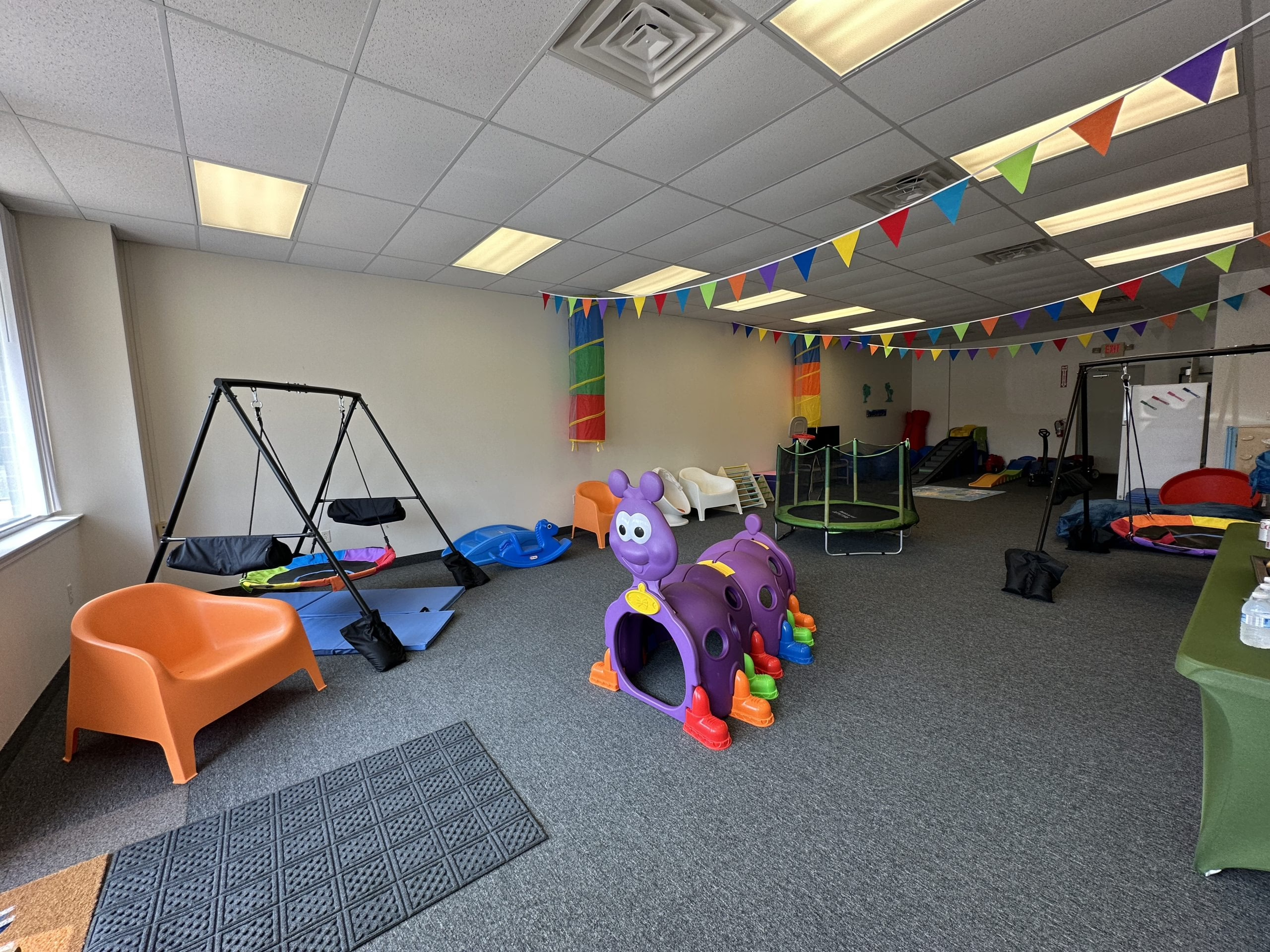
The Autism Center, located at 68 Briggs Drive in Ontario, Ohio, has significantly broadened its scope of services since its establishment in 2023. This facility operates as a specialized ‘therapy school,’ distinguishing itself from traditional educational models by focusing intensely on remediation and developmental growth for children with autism spectrum disorder. Beyond foundational occupational, speech and language, and physical therapy, the center integrates educational programming within a supportive environment, maintaining a dedicated ratio of one aide for every two children. Owner Robert Neumann emphasizes a philosophy centered on identifying and addressing the ‘root causes’ of developmental challenges, with a strong belief in consistent, daily intervention and active parent involvement.
The center’s expanded programming is built upon multiple evidence-based interventions, carefully selected to target developmental growth, sensory regulation, and communication. Neumann highlights the critical role of consistency, stating that daily interventions are essential for sustained progress. The goal is to equip children with the necessary skills to successfully transition back into traditional school environments, a key objective for many families in Richland County and surrounding communities where specialized services can be scarce.
Key Benefits
The Autism Center employs a diverse range of research-based programs, each offering unique benefits:
- DIR/Floortime: This developmental approach focuses on a child’s individual differences and relationship-based interactions. It acknowledges that each child processes the world uniquely, leveraging emotional connection for growth. During ‘Floortime’ sessions, adults engage with children at their level, following their interests to encourage back-and-forth communication and foster more complex problem-solving abilities. Neumann notes this method aims to strengthen a child’s capacity to connect, think, and communicate, rather than merely correcting behaviors.
- The PLAY Project: Also rooted in the DIR model, The PLAY Project empowers parents by training them to become effective play partners. This program supports a child’s social and academic development, with a ‘teaching play’ classroom application specifically designed to enhance functional development and interaction in school settings.
- JASPER: Standing for Joint Attention, Symbolic Play, Engagement, and Regulation, JASPER is described as an ABA program. It is a play-based intervention focused on improving social communication skills. The center uses assessments to determine a child’s developmental play level and then systematically introduces new elements, such as integrating a doll into car play, to expand their routines and engagement.
- Qigong Sensory Treatment (QST): This intervention blends traditional qigong principles with modern clinical research on sensory regulation. QST utilizes structured touch, performed entirely by a parent or caregiver under therapist guidance, to improve sensory processing, reduce sensory overload, enhance tactile comfort, and support physiological regulation.
- Collaborative & Proactive Solutions (CPS): CPS is a framework designed to help children and caregivers collaboratively address behavioral challenges. It focuses on strengthening relationships and teaching problem-solving skills to navigate difficult situations together.
- Transcranial Photobiomodulation (tPBM): A noninvasive brain stimulation technique, tPBM applies red or near-infrared light to the scalp. This light penetrates the skull to interact with brain cells, particularly mitochondria, which are crucial for cellular energy production. Researchers are exploring tPBM’s potential to stimulate mitochondrial activity, reduce neuroinflammation, improve cerebral blood flow, and influence neural connectivity in individuals with autism spectrum disorder.
- Interactive Metronome: This computer-based program uses movement and real-time feedback to enhance timing and rhythm. Participants perform actions like clapping or tapping in sync with a metronome beat, aiming to improve attention, processing speed, coordination, self-regulation, and academic performance for individuals with autism, ADHD, learning challenges, and brain injuries.
- Melillo Method: This approach focuses on identifying retained primitive reflexes and addressing hemispheric brain imbalances. Through targeted sensory stimulation and movement exercises, the Melillo Method seeks to promote neuroplasticity and improve outcomes for children with diverse learning and behavioral profiles.
Practical Applications
For BCBAs, RBTs, and clinic owners, The Autism Center’s model underscores the value of a comprehensive, individualized, and developmentally informed approach to intervention. The integration of diverse, evidence-based therapies, including both traditional ABA (like JASPER) and other developmental models (like DIR/Floortime), suggests a holistic strategy that may address a broader spectrum of needs. The center’s emphasis on consistent, daily intervention reinforces a core principle of effective behavior analytic practice.
Crucially, the center prioritizes parent involvement, recognizing it as a ‘three legs back to the stool’ component for successful outcomes. Neumann’s commitment to teaching parents techniques for free during operational hours highlights the importance of generalization and maintenance of skills in the home environment. This collaborative model, extending support to preschools and families, ensures that interventions are not isolated but integrated into the child’s natural settings, facilitating their readiness to return to traditional schooling.
Fast Facts
| Key Point | Why It Matters for ABA |
|---|---|
| Opened in 2023 | Newer center demonstrating rapid expansion of services. |
| 1:2 aide-to-child ratio | Indicates a commitment to individualized attention and support. |
| Integrates 8+ diverse therapies | Highlights a multi-modal, holistic approach beyond traditional ABA. |
| Strong parent involvement focus | Emphasizes generalization of skills and family-centered practice. |
| JASPER is an ABA program | Confirms the center’s use of direct ABA methodologies within a broader framework. |
Expert Perspective
The Autism Center’s expansive, multi-modal approach, coupled with its strong emphasis on parent training, exemplifies a growing trend towards comprehensive, individualized care in the ABA field.
Source: richlandsource.com







Join the discussion ▾