
The Practice/Tool
Applied Behavior Analysis (ABA) therapy systematically addresses the development of play skills, recognizing their fundamental importance in a child’s overall growth, particularly for individuals with autism spectrum disorder. Play is not merely recreational; it is a critical vehicle for learning, social interaction, communication, and cognitive development. For many children on the autism spectrum, acquiring spontaneous and varied play skills can be challenging, often requiring explicit instruction and structured opportunities.
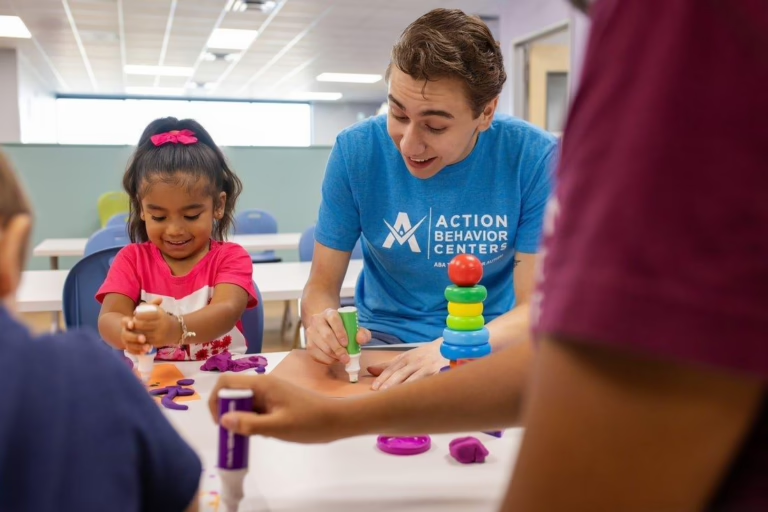
ABA approaches to teaching play skills are highly individualized, beginning with a comprehensive assessment to identify a child’s current play repertoire and areas for development. This assessment often considers various types of play, including solitary, parallel, associative, and cooperative play, as well as functional play with toys, constructive play, and imaginative or symbolic play. Interventions are then designed to teach specific play behaviors, such as manipulating toys appropriately, engaging in reciprocal play, initiating play sequences, and developing imaginative scenarios.
Common ABA strategies employed include discrete trial training (DTT) for foundational skills, naturalistic environment teaching (NET) to promote generalization in real-world settings, and pivotal response treatment (PRT) to target core areas like motivation and responsiveness to multiple cues. Therapists might use prompting, modeling, shaping, and reinforcement to teach skills ranging from simple toy manipulation to complex social play scenarios. The goal is to move beyond rote imitation, fostering genuine enjoyment and spontaneous engagement in play activities.
Key Benefits
Developing robust play skills through ABA therapy yields a multitude of benefits that extend far beyond the play setting. Enhanced play abilities directly contribute to improved social interaction, as play often serves as the primary context for peer engagement. Children learn to share, take turns, negotiate, and understand social cues, which are vital for forming friendships and participating in group activities. This can significantly reduce social isolation and improve overall quality of life.
Furthermore, play is intrinsically linked to communication development. During play, children naturally practice verbal and non-verbal communication, such as requesting items, commenting on actions, expressing preferences, and understanding others’ perspectives. Symbolic play, in particular, fosters abstract thinking and language comprehension, as children assign roles and meanings to objects and actions. ABA interventions can target these communicative aspects within play, making learning more engaging and functional.
Cognitive development also receives a significant boost. Play encourages problem-solving, creativity, and flexible thinking. Children learn cause-and-effect relationships, develop sequencing skills, and practice planning. For instance, constructive play involves planning and executing a building project, while imaginative play requires creating narratives and roles. By systematically teaching these skills, ABA helps children build a foundation for academic learning and adaptive functioning in various environments. The generalization of skills learned in therapy to natural play environments is a key focus, ensuring that these benefits are sustained and applied broadly.
Practical Applications
For BCBAs and RBTs, integrating play skill development into therapy programs requires a thoughtful and systematic approach. Initial assessments should utilize standardized tools and direct observation to pinpoint specific play deficits. This informs the creation of individualized behavior intervention plans that prioritize developmentally appropriate play goals. For example, a young child might focus on functional play with toys, while an older child might work on cooperative board games or imaginative role-playing scenarios.
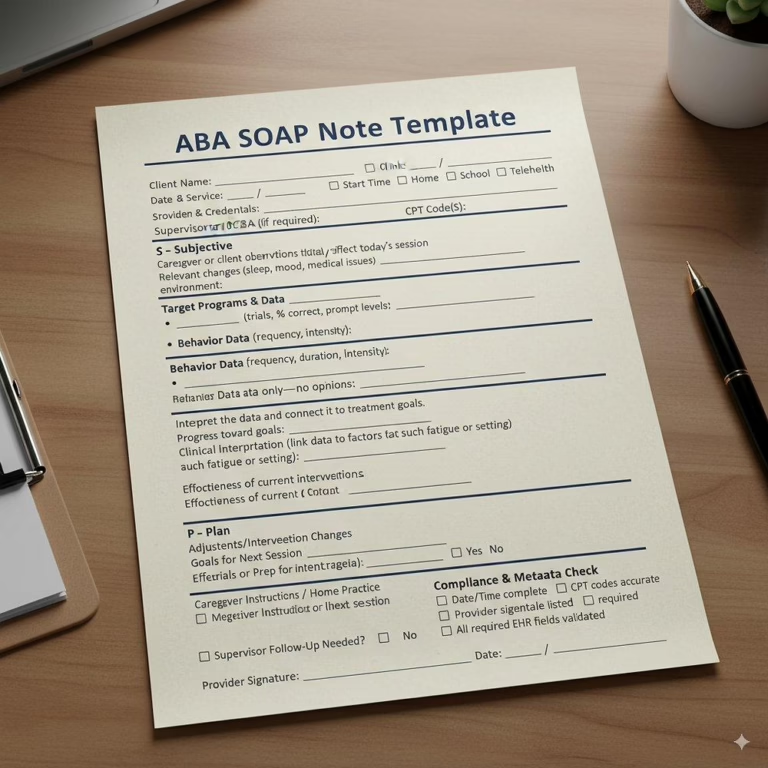
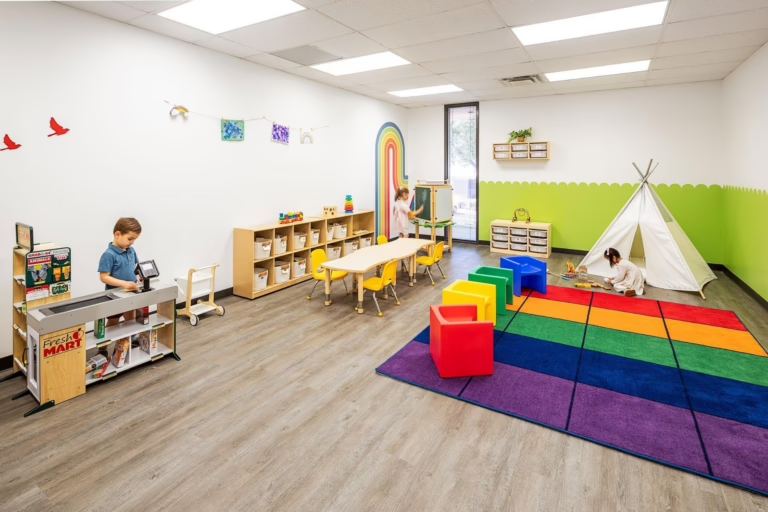
Therapists should create engaging and motivating play environments, ensuring access to a variety of age-appropriate toys and materials. Reinforcement strategies should be carefully selected to be highly motivating for the individual child, often involving access to preferred toys or activities. Data collection is crucial to track progress, allowing for ongoing adjustments to intervention strategies. This includes measuring the frequency, duration, and complexity of play behaviors, as well as the child’s initiation of play and engagement with peers.
Collaboration with families is paramount. Parents and caregivers can be trained to implement play-based strategies at home, fostering consistency and promoting generalization of skills across settings. This parent training empowers families to create rich play opportunities and reinforce learned behaviors in natural contexts. Additionally, facilitating opportunities for peer interaction, such as structured playdates or social skills groups, can provide invaluable practice for applying newly acquired play skills in real-world social situations, ultimately enhancing a child’s ability to navigate their social world with greater confidence and competence.
Fast Facts
| Key Point | Why It Matters for ABA |
|---|---|
| Play is a primary learning vehicle | Essential for social, communication, cognitive development in ASD. |
| Individualized assessment is crucial | Ensures interventions target specific, developmentally appropriate play deficits. |
| Naturalistic teaching promotes generalization | Helps children apply play skills in real-world, spontaneous settings. |
| Parent training enhances consistency | Empowers families to support play skill development at home. |
| Variety of play types targeted | From functional toy use to complex imaginative and cooperative play. |
Expert Perspective
Systematic instruction in play skills within ABA therapy unlocks critical developmental pathways, fostering joy, connection, and independence for children with autism.
Source: goldenstepsaba.com