The Practice/Tool
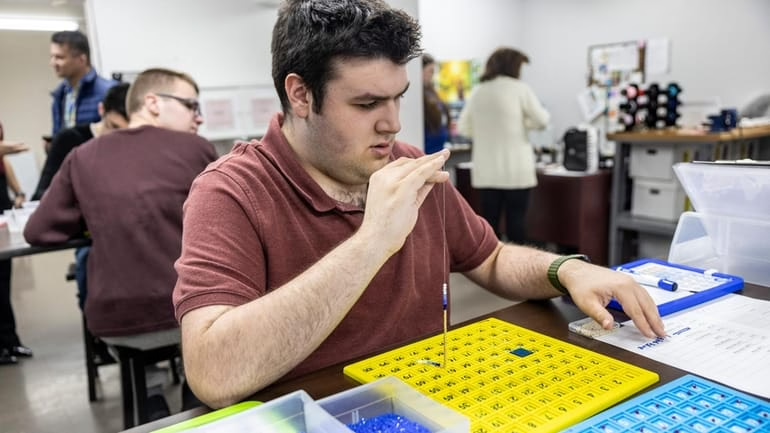
Nassau Suffolk Services for Autism (NSSA), based in Hauppauge and Commack, New York, operates a unique vocational program through its NSSA shop, providing meaningful skill development and employment opportunities for individuals with autism. This initiative, which began in 2018, is integrated into the adult services school, The Martin C. Barell School for Autism in Commack. The program focuses on creating handcrafted items, including intricately painted seashells and a popular line of crystal and clay bracelets known as “Embracelets.” Beyond craftwork, participants like Michelle Raguso, 31, also engage in other vocational tasks such as baking and farming, showcasing a diverse range of skill-building activities.
The NSSA shop functions as an in-house social enterprise, where students and adult participants not only produce items but also contribute to a real-world business model. Sales generated from these handcrafted goods directly support the nonprofit’s broader mission of providing functional and vocational training for individuals with autism. This approach ensures that the creative endeavors have a tangible impact, reinforcing the value of their work and contributing to the sustainability of essential services.
Key Benefits
The craft-making program at NSSA offers a multifaceted approach to skill development, addressing critical areas for individuals with autism. Vocational coordinator Katie Reres highlights that the activities are designed to enhance fine motor skills, attention to detail, and communication abilities. Participants engage in tasks such as counting, sorting, and stringing beads for bracelets, and meticulously painting shells, all of which require precision and focus. Michelle Raguso, who joined NSSA at age 5 with significant behavioral and verbal challenges, has flourished through these programs, gaining verbal skills and holding multiple jobs within the nonprofit. Her mother, Joann, emphasizes how the program cultivates independent skills and reveals the profound potential of individuals with the right intervention.
Beyond the technical skills, the program fosters a sense of purpose and belonging. Bobby Dempsey, 18, expressed his enjoyment in making bracelets, utilizing tools like a yellow counting table to aid his work. His mother, Marianne Dempsey, noted the program’s success in teaching a wide array of skills, including communication, money management, time management, and organization. She reflected on Bobby’s remarkable progress, stating that she would not have believed his current capabilities when he was younger, attributing his success to the school and its programs. The program also gained significant public attention when a Halloween-themed bracelet went viral, leading to the sale of hundreds more, demonstrating both the quality of the products and the community’s support for the participants’ work.
Practical Applications
The NSSA model provides a compelling blueprint for other Applied Behavior Analysis (ABA) providers and organizations aiming to integrate vocational training into their service offerings. By creating structured, engaging, and skill-focused activities, clinics can help individuals with autism generalize learned behaviors into practical, employment-oriented contexts. The emphasis on fine motor skills, attention to detail, and communication within a supportive, real-world setting directly aligns with ABA principles of skill acquisition and maintenance.
For BCBAs and clinic owners, this program underscores the importance of developing comprehensive behavior intervention plans that extend beyond foundational skills to include vocational readiness. Implementing similar social enterprises or partnerships can offer invaluable opportunities for individuals to practice organizational skills, time management, and social interaction in a naturalistic environment. Furthermore, the NSSA’s success in generating revenue to support its training programs highlights a sustainable model for funding and expanding adult services, ultimately enhancing the independence and quality of life for individuals with autism.
Fast Facts
| Key Point | Why It Matters for ABA |
|---|---|
| NSSA shop program launched in 2018 | Demonstrates a successful, long-standing vocational model for adults with autism. |
| Participants gain fine motor, communication, and vocational skills | Highlights the practical application of ABA principles in developing marketable job skills. |
| Sales support functional and vocational training | Illustrates a sustainable funding model for adult services and skill generalization. |
Expert Perspective
Vocational programs like NSSA’s are crucial for fostering independence and demonstrating the immense capabilities of individuals with autism in meaningful, real-world settings.
Source: newsday.com