
The Practice/Tool
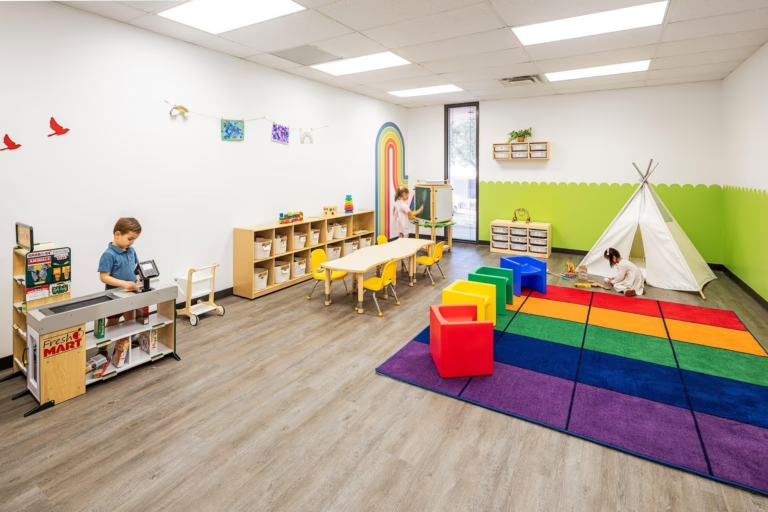
Bierman Autism Centers has unveiled its new Evening Explorers program, an after-school Applied Behavior Analysis (ABA) therapy service specifically designed for elementary-aged children diagnosed with autism spectrum disorder or Down syndrome. Operating from 4 pm to 8 pm, the program offers individualized, play-based ABA therapy in a structured and supportive environment. Currently, Evening Explorers is enrolling children at Bierman’s Massachusetts locations in Needham, Bedford, Danvers, and Quincy, marking a significant expansion of accessible services for families in the state.
This program was developed in direct response to extensive feedback from families, clinicians, and community partners who highlighted a pressing need for high-quality ABA services that could accommodate the demands of school schedules, family commitments, and the unique challenges often faced during after-school hours. By offering therapeutic support during these critical times, Bierman aims to bridge a significant access gap for families who frequently encounter long waitlists and struggle to align therapy appointments with their daily routines.
Key Benefits
Evening Explorers is meticulously designed to help children build essential communication, social, and functional skills under the guidance of trained clinicians. Tahra Cessna, M.S., BCBA, EVP of Organizational Growth and Development, emphasized that the period after 3 pm can be particularly challenging for many children due to transitions and fatigue. The program provides structured therapeutic support precisely when it is most needed, offering families greater flexibility without compromising the clinical quality of the intervention.
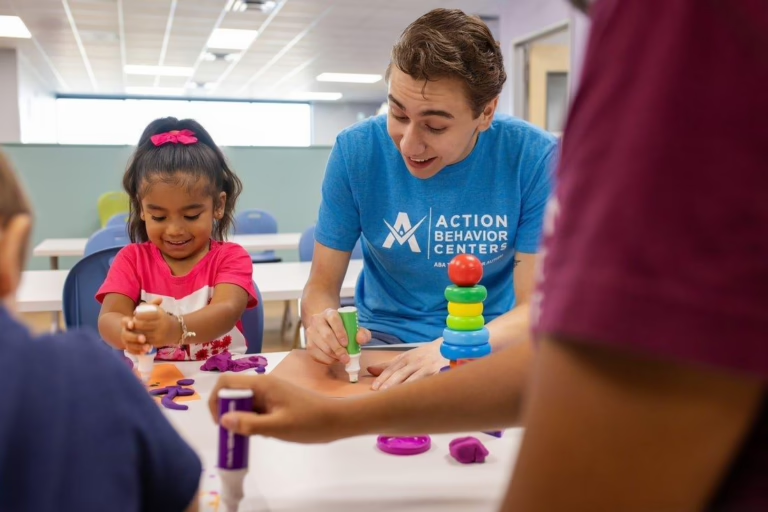
Unlike many after-school programs that merely extend daytime services, Evening Explorers is rooted in Bierman’s distinctive “Teaching Hospital” model. This approach ensures rigorous clinical standards, continuous outcome measurement, advanced clinician training, and ongoing program refinement. Dr. Chrissy Barosky, Chief Clinical Officer, noted that this model allows for purposeful innovation, ensuring that Evening Explorers delivers the same data-driven decision-making and strong family partnerships characteristic of Bierman’s full-time ABA programs. The therapy integrates playful activities with skill-building opportunities, focusing on goals such as communication and language skills, social and play skills, learning readiness, problem-solving, and reducing mild to moderate challenging behaviors.
The program is tailored for children up to age 12 who benefit from structured, individualized after-school support and have targeted ABA goals related to autism or Down syndrome that can be effectively addressed within an evening schedule. It is important to note that Evening Explorers is not intended for children requiring full-time intensive ABA as their primary treatment or those needing continuous 1:1 support for significant safety risks. A comprehensive screening process is in place to ensure a strong clinical match for each child.
Practical Applications
For BCBAs, RBTs, and clinic owners, the Evening Explorers model presents a valuable case study in adapting service delivery to meet evolving family needs and address systemic access barriers. This program demonstrates how providers can innovate beyond traditional daytime models to offer high-quality, evidence-based ABA therapy during non-traditional hours, thereby increasing the overall availability of services. Clinics might consider similar models to cater to families struggling with scheduling conflicts due to school or parental work commitments.
The emphasis on Bierman’s “Teaching Hospital” model also highlights the importance of maintaining clinical rigor and continuous staff development, even when expanding service offerings. This approach ensures that new programs uphold the same standards of care as established services, fostering trust among families and referring providers. Implementing a thorough screening process, as Bierman does, is crucial for ensuring that children are placed in the most clinically appropriate program, maximizing therapeutic benefit and resource efficiency.
Source: floridatoday.com