A Risk That Goes Uncounted
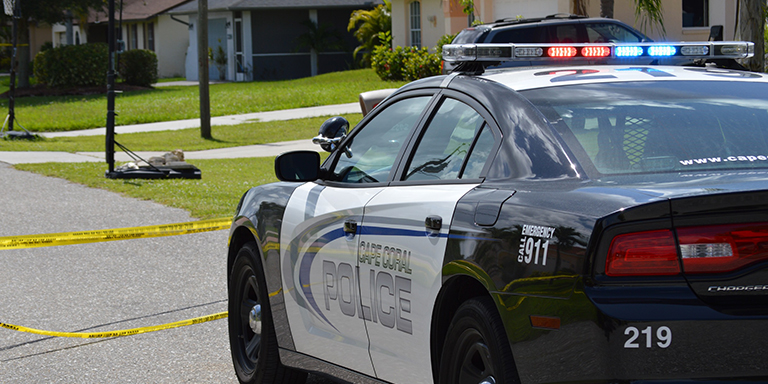
No federal agency counts how many autistic people are injured or killed in encounters with police. The figures that do exist point one way: people with disabilities make up a third to a half of those killed by law enforcement. Autistic people sit squarely inside that group. By age 21, roughly 20% of autistic youth have been stopped and questioned by police, and nearly 5% have been arrested. People with developmental disabilities are, by a frequently cited estimate in U.S. Office of Justice Programs training material, about seven times more likely than others to come into contact with police. (Debbaudt & Ph.D., 2001, pp. 20-24)
The danger begins with a mismatch. Behaviors common in autism are the same cues officers are trained to read as signs of evasion, intoxication, or threat: avoiding eye contact, repeating words, pacing, going still, and not answering a command. When an officer issues an order that a person cannot comply with, the silence can be read as defiance. (Wallace et al., 2022, pp. 403-420) Misreads like that can turn an encounter dangerous. (Wallace & Castillo, 2026)
The pattern turns up in officers’ own accounts. In a 2022 study of 130 officers who had already received autism training, just over half of the officers’ responses to autism-related calls were supportive, as reported in Research in Developmental Disabilities. The incidents were sorted into four types: disruptive behavior, suspected abuse or neglect, elopement, and noncriminal behavior. Most described a person in distress rather than a crime.
Ryan Gainer’s family knew the risk and called anyway. On March 9, 2024, the autistic 15-year-old grew upset at his Apple Valley, California, home after being told to finish chores before using his laptop. He struck a relative and broke a glass door, and his family dialed 911. A San Bernardino County sheriff’s deputy shot and killed him in the doorway after Gainer came at the deputy with a long-handled garden tool, according to body-camera footage released by the department. The family told CNN that Gainer had calmed down and apologized before deputies arrived.
When the Clinician Is in the Frame
Sometimes the clinician is the one who gets shot. In July 2016, behavior therapist Charles Kinsey lay on his back in a North Miami street, hands raised, trying to coax a client with autism back toward a group home. The client, 27-year-old Arnaldo Rios Soto, sat in the road holding a silver toy truck. A police officer about 150 feet away, who later said he believed the toy was a gun and Kinsey a hostage, opened fire. A round struck Kinsey in the leg as he shouted that the object was a toy.
The officer, Jonathan Aledda, was acquitted of attempted manslaughter and convicted of a misdemeanor count of culpable negligence at a second trial, but a Florida appeals court overturned that conviction in 2022, and prosecutors then dropped the case. The shooting put a working clinician at the center of a use-of-force case, and it made a point providers increasingly recognize: an autistic client’s safety during a police encounter is partly a clinical problem, and the people who understand the client’s behavior best are almost never in the room when it turns dangerous.
A Patchwork Training Push
The response has been a growing, uneven training apparatus. The Autism Society runs a national First Responder program, developed with the International Association of Chiefs of Police and The Arc’s National Center on Criminal Justice and Disability, to standardize how officers recognize and respond to autism. The International Board of Credentialing and Continuing Education Standards (IBCCES) sells a first-responder autism certification covering sensory sensitivities, communication, and safety risks such as elopement and drowning. Some states offer a free online course for police, fire, and emergency medical personnel.
Some of these solutions are now being proposed to the law. Under House Bill 2929, Texas would require peace officers who begin training on or after January 1, 2026, to complete at least 2 hours of evidence-based autism training. It would cover how to distinguish autistic behavior from criminal conduct. While the bill is not into law, passing something like this would be a major step toward a solution. Eleven states had police-training requirements on autism as of 2024, according to the National Conference of State Legislatures. A growing number of states also run Blue Envelope programs, started in Connecticut in 2020 and since adopted in Massachusetts and Rhode Island, that let autistic drivers keep their documents and a behavior guide in a marked envelope to hand to an officer at a traffic stop.
What the push lacks is evidence that it works. There is little evidence that autism training changes how encounters end, and departments rarely track outcomes. (Doe & Smith, 2020, pp. 1234-1245) No standardized national outcome data exists. (Wallace et al., 2022, pp. 403-420)
Why the Plans Land on the BCBA
Increasingly, the safety planning falls to behavior analysts. Elopement, bolting from a safe setting, is already core clinical territory. About 49% of children with autism try to bolt at least once after age 4, far more often than their unaffected siblings, a 2012 study in Pediatrics found, and many who go missing have close calls with traffic or water. A board-certified behavior analyst treats elopement by conducting a functional behavior assessment (FBA), a structured analysis of the triggers and maintaining factors that sustain the behavior, and then building an intervention around it.
That same assessment now anchors a wider set of services. Behavior analysts and the providers they work for are writing family crisis and safety plans. They assemble go-bags and emergency profiles, such as the National Autism Association’s pre-filled safety booklet and Autism Speaks’ first-responder toolkit, and, in some cases, provide training to local police and paramedics directly. The skill set fits: behavior analysts built Safety-Care, a crisis-prevention and de-escalation curriculum used across schools and human-services agencies. That clinical work now extends to safety planning and first-responder training, work no insurer reimburses for. (Coleman, 2024)
The reimbursement does not follow. Payers cover ABA through a defined set of adaptive-behavior CPT codes, 97151 through 97158, which cover assessment and direct treatment of the client. Community education, first-responder training, and family safety planning sit outside those codes. Providers that take the work on absorb the cost, treating it as goodwill, risk management, or both. (Autism Awareness & De-escalation Training Programs, n.d.) The clinical case for it is strongest exactly where the billing case is weakest.
Texas’s potential mandate takes effect for officers entering training in 2026, the most concrete test yet of whether classroom hours change street outcomes. It is a test no state has yet figured out how to score.
Note: On July 23rd, 2026, this document was updated to fix incorrect information published about Texas House Bill 2929. The Bill was not, in fact, law, like the article previously stated. We apologize for the mistake and strive to continuously improve research methods.
AT A GLANCE
| Disabled share of police-killing victims: | One-third to one-half of people killed by law enforcement (Ruderman Family Foundation, 2016) |
| Autistic youth and police by age 21: | ~20% stopped and questioned, nearly 5% arrested (Rava et al., A.J. Drexel Autism Institute, 2017) |
| Contact likelihood: | Developmental disabilities ~7x more likely than others to encounter police (U.S. Office of Justice Programs, frequently cited estimate) |
| Officer responses to autism calls: | 55.4% supportive, 27.7% extreme controlling behaviors, among 130 trained officers (Gardner et al., Research in Developmental Disabilities, 2022) |
| Elopement among children with autism: | ~49% try to elope at least once after age 4, far above unaffected siblings (Anderson et al., Pediatrics, 2012) |
| National training partners: | Autism Society First Responder program, with the IACP and The Arc’s NCCJD |
| State autism police-training mandates: | 11 states as of 2024 (National Conference of State Legislatures) |
| Texas potential requirement (HB 2929): | ≥ 2 hours, evidence-based; officers beginning training on or after January 1, 2026 |
| Blue Envelope programs: | Connecticut (2020), Massachusetts, Rhode Island (2025), with more pending |
| Reimbursement gap: | First-responder training and family safety planning fall outside ABA CPT codes 97151–97158 |
| Notable cases: | Charles Kinsey, North Miami (2016); Ryan Gainer, Apple Valley, Calif. (2024) |
| National death count: | No federal agency tracks autism-specific police killings |
SOURCES & REFERENCES
| 1. | Ruderman Family Foundation. “Media Coverage of Law Enforcement Use of Force and Disability.” White paper, March 2016. rudermanfoundation.org |
| 2. | Rava J, Shattuck P, Rast J, Roux A. “The Prevalence and Correlates of Involvement in the Criminal Justice System Among Youth on the Autism Spectrum.” Journal of Autism and Developmental Disorders. 2017;47(2):340–346. PMID 27844248. |
| 3. | U.S. Office of Justice Programs / National Criminal Justice Reference Service. “Contact with Individuals with Autism: Effective Resolutions.” ojp.gov (frequently cited estimate). |
| 4. | Gardner L, Cederberg C, Hangauer J, Campbell JM. “Law enforcement officers’ interactions with autistic individuals: Commonly reported incidents and use of force.” Research in Developmental Disabilities. 2022;131:104371. PMID 36356456. |
| 5. | NPR. “How One Mother’s Battle Is Changing Police Training On Disabilities” (Seth Stoughton, University of South Carolina). April 13, 2019. npr.org |
| 6. | Lartey J. “When Police Encounters With Autistic People Turn Fatal.” The Marshall Project. March 16, 2024. themarshallproject.org |
| 7. | CNN. “Ryan Gainer: California deputies fatally shoot teen with autism who was holding gardening tool, attorney says.” March 14, 2024. cnn.com |
| 8. | Center for Autism Research, Children’s Hospital of Philadelphia. “Policing Black Autistic Children: A Qualitative Approach to Understanding Black Caregivers’ Concerns.” Autism. December 16, 2024. |
| 9. | NPR. “North Miami Officer Is Arrested Over Shooting Of Therapist During Standoff.” April 12, 2017. npr.org |
| 10. | CNN, “Florida appeals court overturns conviction of Miami police officer who shot autistic man’s caretaker,” February 17, 2022; CBS Miami; and “Shooting of Charles Kinsey,” Wikipedia (second-trial conviction overturned 2022; prosecutors dismissed the case). Incident July 18, 2016; client Arnaldo Rios Soto, 27. |
| 11. | Autism Society of America. “First Responder.” autismsociety.org (program with the IACP and The Arc’s NCCJD). |
| 12. | International Board of Credentialing and Continuing Education Standards (IBCCES). “First Responder Autism Certification.” ibcces.org |
| 13. | Texas Health and Human Services, “Autism Spectrum Disorders Training Program for First Responders”; Texas House Bill 2929 (2025). |
| 14. | National Conference of State Legislatures. State autism police-training requirements (11 states as of 2024), cited in The Marshall Project, March 16, 2024. |
| 15. | Commonwealth of Massachusetts, “Blue Envelope Program”; WBUR, “How a blue envelope is helping autistic drivers feel safer on Mass. roads.” September 4, 2025. |
| 16. | Anderson C, Law JK, Daniels A, et al. “Occurrence and Family Impact of Elopement in Children With Autism Spectrum Disorders.” Pediatrics. 2012;130(5):870–877. |
| 17. | National Autism Association, “Big Red Safety Box / Be REDy” caregiver safety materials; Autism Speaks, “First Responder Toolkit.” |
| 18. | QBS, Inc. “Safety-Care Behavioral Safety and De-Escalation Training” (developed by board-certified behavior analysts). qbs.com |
| 19. | American Medical Association. Category I CPT codes 97151–97158, adaptive behavior services. |