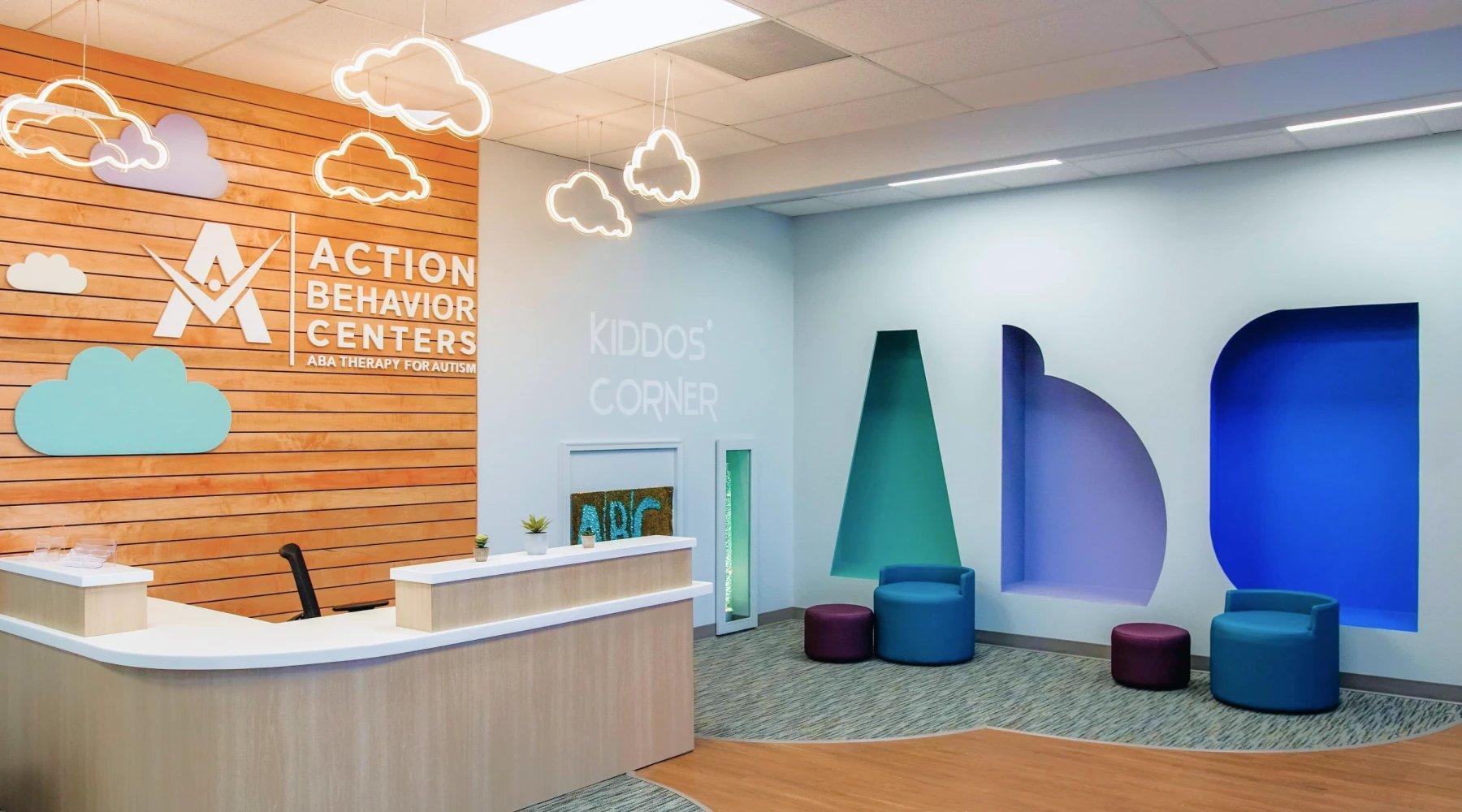
AUSTIN, TX — In the spring of 2016, Ryan and Holly Lambert learned that a close family friend could not find timely autism therapy for their child. The waitlists were long. The geography was limiting. The system, by most accounts, was broken. Neither Ryan nor Holly had a clinical background — he came from business, she from education — but they saw the gap clearly enough to try to fill it. In April 2016, they founded Action Behavior Centers. The first location opened in Austin. It filled immediately. Families began driving from Round Rock, Cedar Park, Leander, and far beyond to reach it.
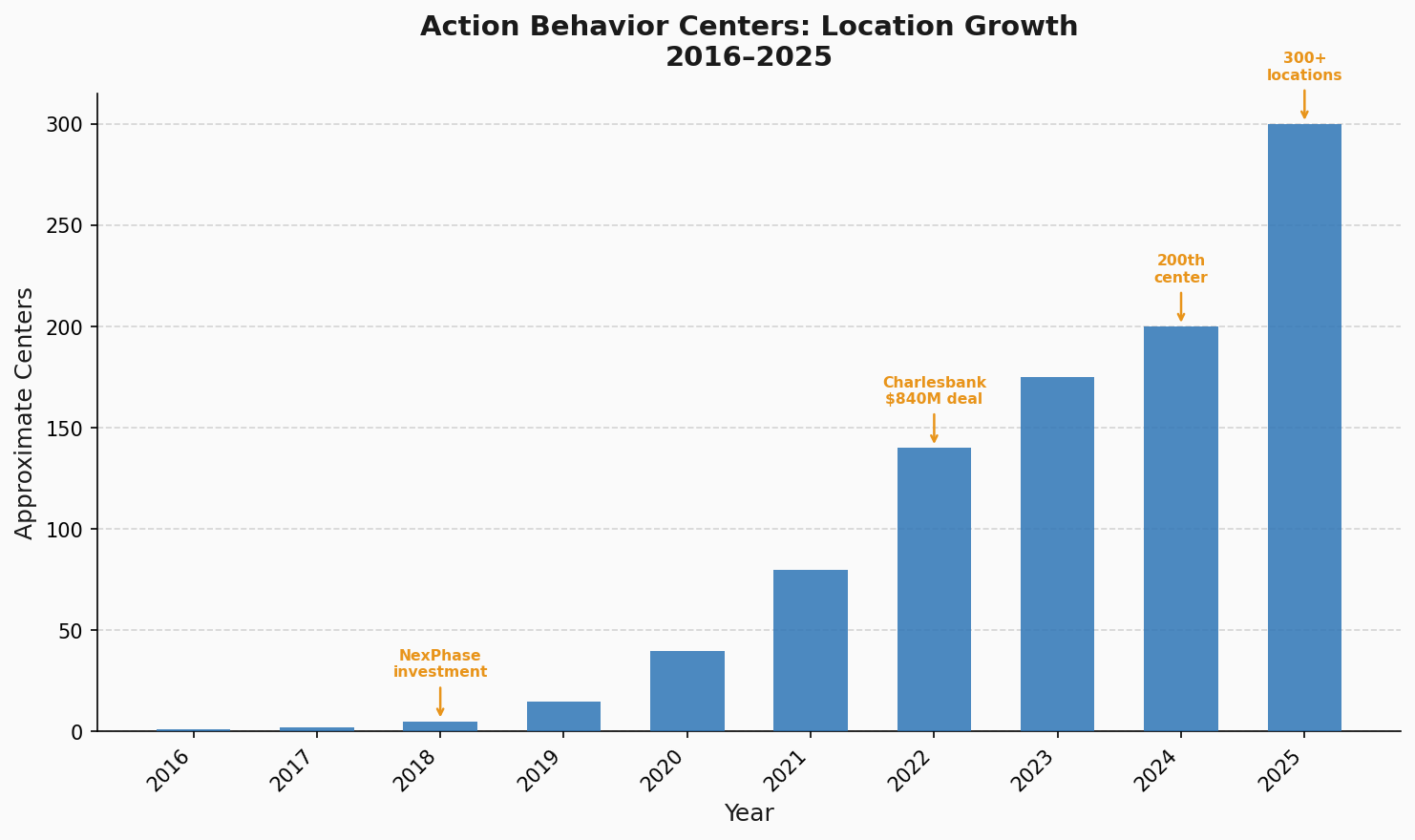
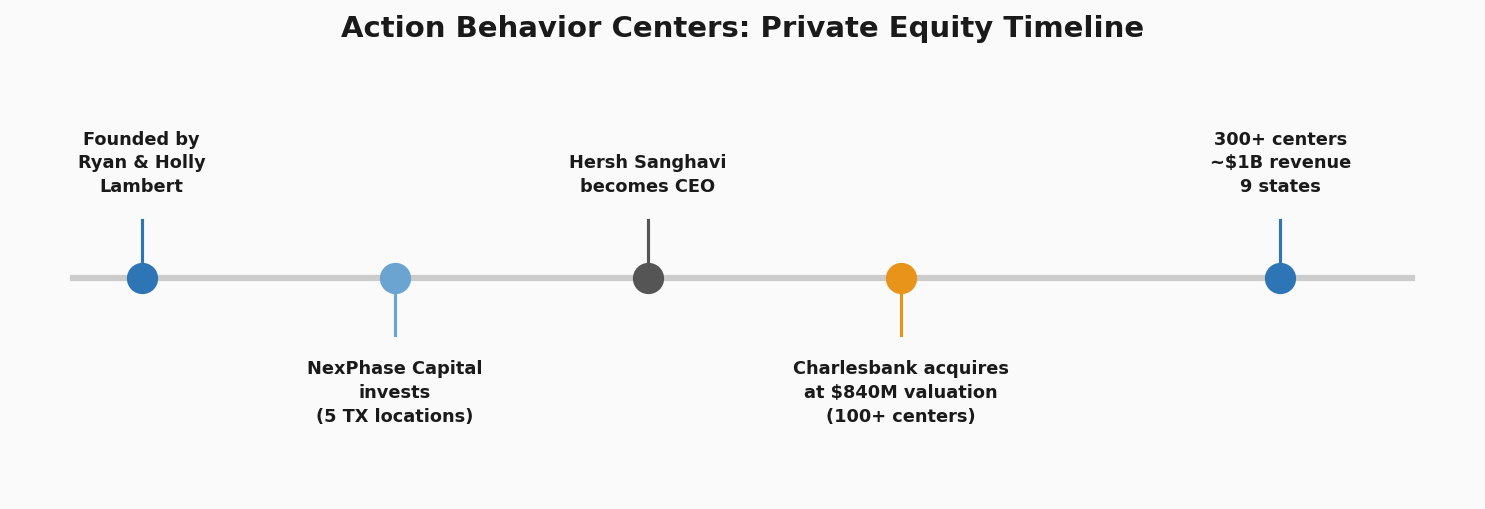
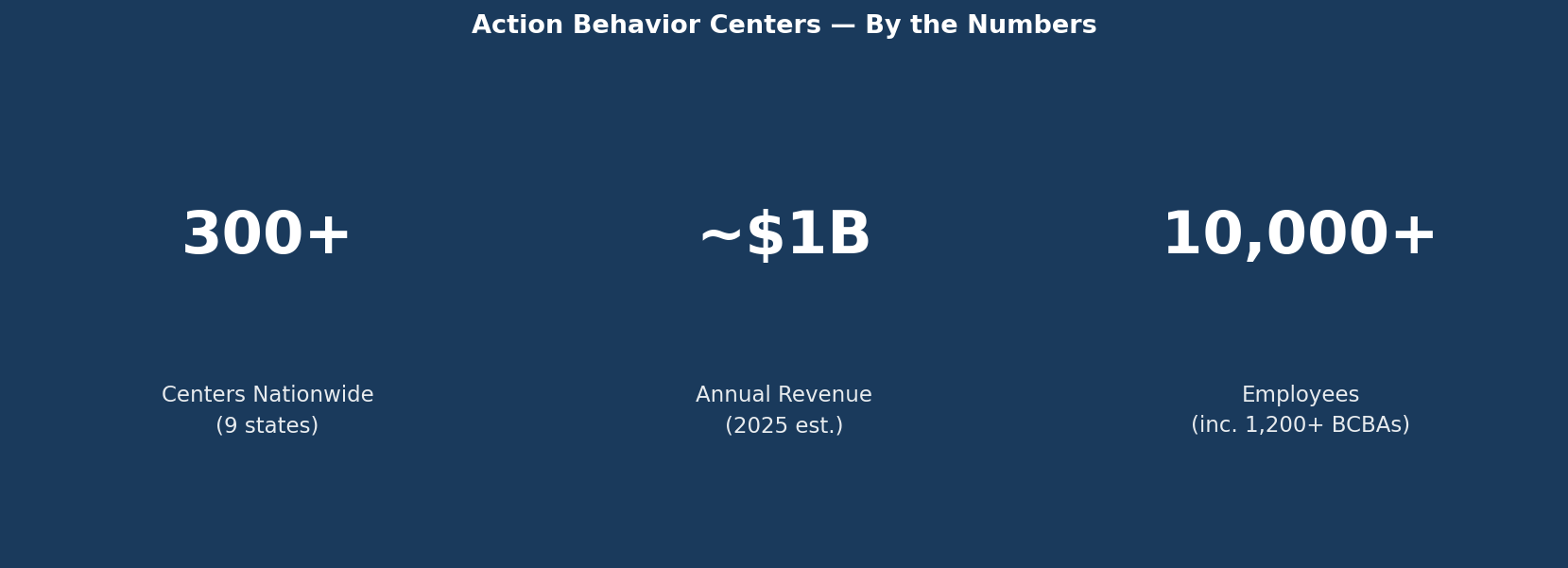
That one center is now more than 300. The company operates across Arizona, Colorado, Illinois, Indiana, Minnesota, North Carolina, Pennsylvania, South Carolina, and Texas, with plans to enter New York and New Jersey. It employs more than 10,000 people, including over 1,200 Board Certified Behavior Analysts, and is approaching $1 billion in annual revenue. It has been through two private equity ownership cycles — a recapitalization led by NexPhase Capital in 2018 and a landmark acquisition by Charlesbank Capital Partners at an $840 million valuation in 2022 — and shows no indication of slowing down. By nearly any measure, Action Behavior Centers, known throughout the industry as ABC, is the largest Applied Behavior Analysis organization in the United States.
THE FOUNDING: A FAMILY FRIEND, A WAIT LIST, AND A BLANK SHEET OF PAPER
Holly Lambert holds a background in education and special needs; Ryan Lambert brought the business sensibility. Together they built something that neither a pure clinician nor a pure operator might have designed on their own: a company that from its earliest days measured its clinical outcomes in writing, published its data in white papers, and treated the question of whether ABA therapy was actually working — for each child, in each center — as a competitive and ethical imperative rather than a nice-to-have.
The first center, on a quiet stretch of Austin real estate, opened with a single Board Certified Behavior Analyst and a care model built around Early Intensive Behavioral Intervention, the form of ABA therapy widely regarded as the gold standard for young children on the moderate-to-severe end of the autism spectrum. EIBI demands high staffing ratios, long hours of therapy per week, and consistent application of behavioral principles by trained technicians working under close BCBA supervision. It is expensive to deliver well and difficult to scale without degrading clinical quality. ABC’s founders committed to doing both.
The second location opened in Round Rock. It filled faster than the first. What the Lamberts were learning in real time was that the demand problem — the gap between the number of children diagnosed with autism spectrum disorder and the number of providers equipped to serve them — was not local. It was structural, national, and growing. By 2018, with five locations in Texas and a reputation for clinical rigor in the Austin market, ABC attracted its first institutional backer.
THE PRIVATE EQUITY CHAPTER, PART ONE: NEXPHASE CAPITAL AND THE TEXAS BUILD-OUT
NexPhase Capital, a New York-based lower-middle-market private equity firm, recapitalized Action Behavior Centers in October 2018. The investment was the third healthcare platform NexPhase had made that year, and its thesis aligned precisely with what had driven the Lamberts to found ABC two years earlier: the CDC’s April 2018 report documenting that autism diagnoses among children had reached their highest recorded levels, combined with a persistent shortage of qualified ABA providers to meet the resulting demand. Ryan and Holly Lambert invested alongside NexPhase in the transaction.
Barbara Hill, a NexPhase operating partner, joined as board chairperson. Harold Levine, former Chief Medical Officer of Beacon Health Options, joined the board as well. The signal was clear: this was not a financial-engineering bet. It was a clinical-quality-plus-rapid-expansion thesis, and it required the kind of operating infrastructure — centralized credentialing, standardized clinical protocols, scalable workforce training — that five-location regional providers rarely have.
NexPhase’s stated intention was to help ABC expand rapidly across Texas and into other states. Over the following four years, the company did exactly that. By mid-2022, ABC operated 140 locations across Texas, Colorado, Arizona, Illinois, and North Carolina. Trailing adjusted EBITDA had reached approximately $40 million and was projected to hit $60 million by year-end 2022. NexPhase began exploring a sale.
“Their diligence validated ABC’s position as a leading ABA provider with strong clinical outcomes, a unique culture that supports clinician retention, and a data-driven management team.”
— Charlesbank Capital Partners, on its 2022 acquisition of ABC
THE CEO TRANSITION: HERSH SANGHAVI AND THE OPERATOR’S LENS
One of the most consequential decisions in ABC’s trajectory came in June 2020, when Ryan Lambert stepped down as CEO following a bout with cancer. Lambert, who is cancer-free and retains a non-operational board role at the company, handed leadership to Hersh Sanghavi — a healthcare operator with over two decades of multi-site services experience and no prior background in ABA.
Sanghavi had served as a business unit president for DaVita Kidney Care, one of the most operationally rigorous multi-site healthcare companies in the country, and as a consultant and operations leader at Strategy& (formerly Booz & Company) and GE Healthcare. He holds an MBA from the University of Chicago Booth School of Business and a B.S. in industrial engineering from Purdue University. His hiring was a deliberate signal: ABC was no longer a startup. It was a platform, and it needed to be managed like one.
Under Sanghavi’s leadership, ABC accelerated the build-out of its clinical infrastructure, workforce pipeline, and data systems. The Clinical Council was established, bringing together senior researchers and thought leaders to set clinical standards and review outcomes across all centers. Dr. Greg Hanley, a nationally recognized behavior analyst, leads the Compassionate Care initiative. Dr. Linda LeBlanc, a prolific researcher and former editor of the Journal of Applied Behavior Analysis, leads the Action Institute for Outcomes Research. Chief Clinical Officer Charna Mintz oversees clinical quality and integrity across the organization. The message being sent to clinicians in the field — and to the payers and investors watching from the outside — was that ABC’s growth would not come at the cost of its clinical standards.
THE CHARLESBANK DEAL AND THE RACE TO 200 CENTERS
The sale of ABC from NexPhase to Charlesbank Capital Partners was the defining transaction in the company’s history. Announced in August 2022 and closed in September, the deal valued ABC at $840 million — at the time, the largest valuation ever placed on a standalone ABA provider. Charlesbank, a Boston-based middle-market private equity firm, had spent multiple years evaluating ABA providers before deciding on ABC. At closing, the company operated more than 100 centers and employed approximately 400 graduate-level clinicians. Penfund and Antares Capital provided debt financing alongside the equity investment.
The three years since the Charlesbank close have been the most aggressive expansion period in ABC’s history. The company entered North Carolina with locations in Raleigh-Durham, Apex, and Charlotte. It expanded into Minneapolis and Minnesota more broadly. It opened its 200th ABA center — a milestone it marked publicly in 2023-2024 — and continued building into Indiana, South Carolina, and Pennsylvania. Centers in New York and Lakewood, New Jersey are in planning. As of early 2026, ABC operates more than 300 locations across nine states, a tripling of its footprint in roughly four years.
Revenue has tracked the footprint. The company posted approximately $779 million in revenue in 2024, according to third-party estimates, and industry sources place 2025 revenue at or near $1 billion. The workforce has grown from 400 clinicians at the time of the Charlesbank deal to more than 10,000 employees, including over 1,200 BCBAs and approximately 8,000 paraprofessionals and Registered Behavior Technicians. By the standard metrics of growth-stage healthcare services companies, ABC’s trajectory is exceptional.
HOW ABC SCALES: THE CLINICAL AND WORKFORCE ARCHITECTURE
The operational question that haunts every attempt to scale ABA at this level is whether clinical quality can survive the growth. The field has watched other large providers balloon in center count only to see outcomes deteriorate, staff turn over at unsustainable rates, and regulatory scrutiny increase. ABC has made a series of structural bets that it argues address each of those failure modes — though the bets come with real costs and real tensions.
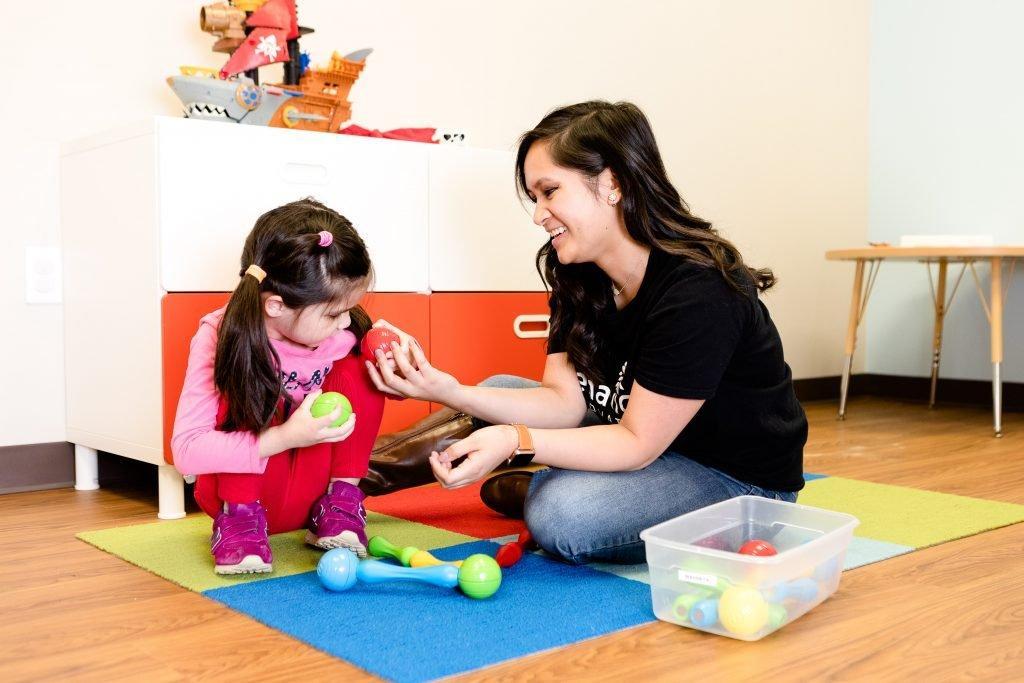
The staffing model centers on a 1:8 ratio — one BCBA supervising approximately eight children, each of whom works directly with a Registered Behavior Technician in 1:1 sessions. ABC’s internal goal is average BCBA caseloads of eight clients or fewer, which the company cites as a marker of clinical attentiveness in a field where overloaded BCBAs are a common complaint. The company also targets RBT certification within 40 days of hire and 90-percent fulfillment of authorized therapy hours — metrics it tracks across all centers and publishes in outcomes documentation.
The data infrastructure behind those numbers is consequential. ABC uses the Vineland Adaptive Behavior Scale and the VB-MAPP as standardized assessment tools at intake and every six months throughout treatment. It uses the Autism Impact Measure (AIM), a parent-reported outcome instrument, to track the real-world impact of treatment on everyday life. The Action Institute for Outcomes Research, led by Dr. LeBlanc, conducts ongoing large-scale analysis of those measures. The intent is to produce the kind of outcomes data — peer-reviewed, externally validated, patient-level — that large payers and state Medicaid programs increasingly demand as conditions of adequate reimbursement.
“We aim to enable children to achieve their fullest potential by being the leading Applied Behavior Analysis provider in the nation. Offering our teammates access to over 200 degree options helps us retain those committed to this mission and attract new employees who share our vision.”
— Sharon Alpizar, Chief People Officer, Action Behavior Centers
The workforce pipeline is arguably ABC’s most sophisticated structural investment. ABC Foundations, launched in 2021 in partnership with InStride, provides employees with access to more than 200 degree programs beginning on their first day of employment. As of its three-year anniversary in late 2024, the program had seen 84-percent year-over-year enrollment growth, with 87 percent of participants pursuing a master’s degree in Special Education — Applied Behavior Analysis, the academic pathway to BCBA certification. ABC publicly reports that the program has materially increased the first-pass BCBA exam pass rate among participants, addressing one of the most persistent constraints on ABA workforce development at scale.
In parallel, ABC established a formal partnership with Texas State University to offer a customized graduate ABA curriculum. Senior ABC clinical staff contribute to the curriculum through guest lectures and hands-on instruction; graduates of the program are guaranteed employment at ABC. The partnership is a vertical integration play on the BCBA pipeline — if you can shape who enters the field and where they train, you reduce your dependence on a national labor market where demand for qualified behavior analysts reliably outpaces supply.
ABC ACADEMY: THE SCHOOL-AGE BRIDGE
One of the more significant product innovations in ABC’s recent history is ABC Academy, a service line designed specifically for children ages 5 to 12 who are enrolled in school part-time or full-time but still require behavioral support. The program was first launched in Allen, Texas, and was built to address a gap that ABA providers have long struggled with: what happens to children who have completed early intensive intervention but are not yet ready for an unmodified general education classroom?
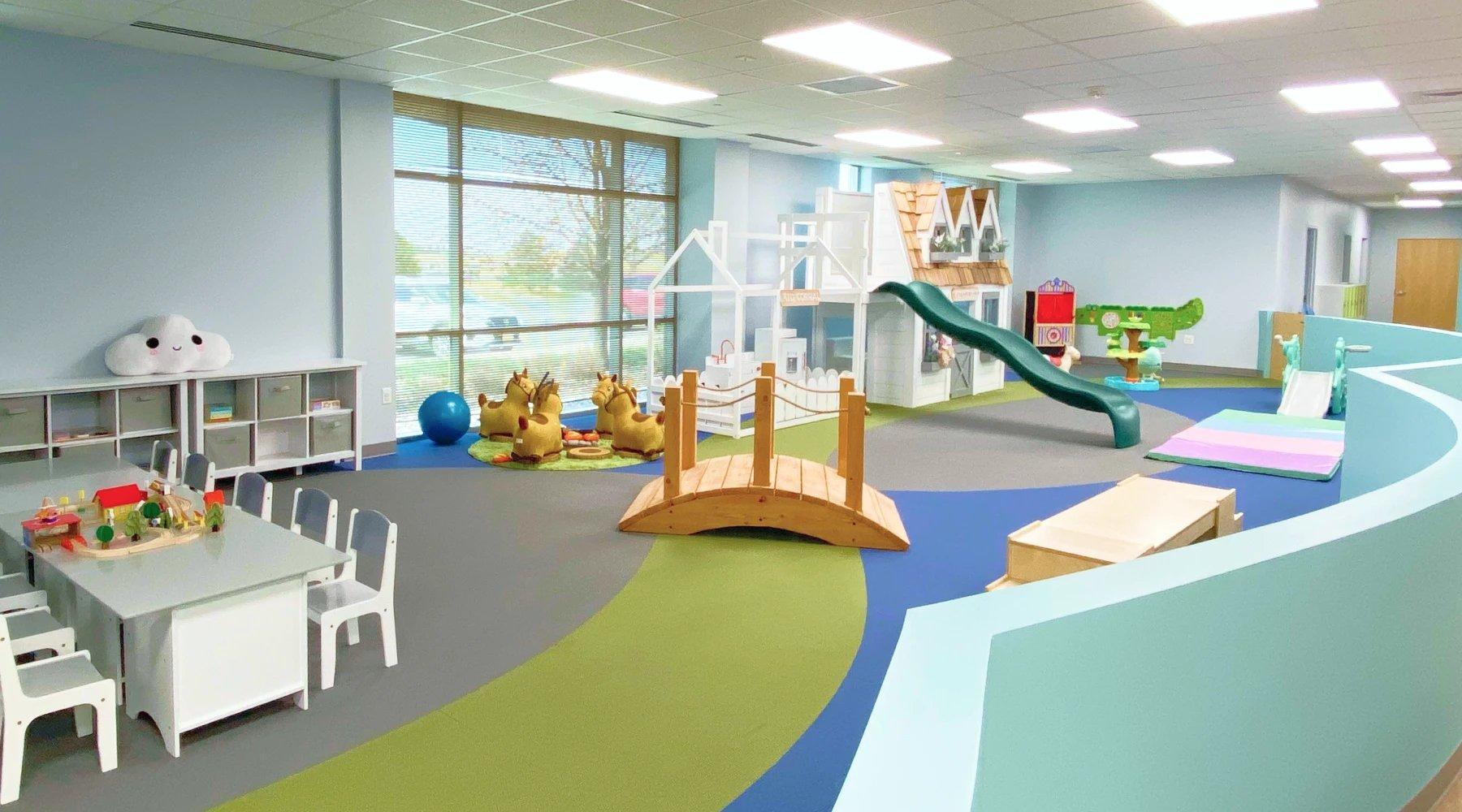
ABC Academy operates in a school-like setting, blending 1:1 ABA therapy with group instruction, social skills development, physical activity, and social-emotional learning. BCBAs set individualized goals, track progress using the same data systems as the broader ABC platform, and coordinate directly with families and school teams to facilitate transitions. As of August 2025, seven Academy centers operated in Dallas, Houston, San Antonio, Austin, and Phoenix. ABC announced in that same month a planned expansion to 15 centers by the end of 2025, including the first two Denver locations and new sites in Georgetown, Sugar Land, Live Oak, Chandler, Lewisville, Aurora, and Thornton. The Academy model is a bet that school-age children with autism represent a large, underserved population that the existing ABA market has not adequately addressed — and that a purpose-built service line, embedded within an existing clinical infrastructure, can serve them efficiently.
ARIZONA: THE STRESS TEST
No chapter of ABC’s recent history has been more closely watched by the field than its experience in Arizona — a state where the company operates 54 clinic locations and has been among the largest providers of Medicaid-funded ABA therapy since 2020. Beginning in mid-2025, Mercy Care, an Arizona Medicaid managed care organization, moved to cut reimbursement rates for ABA providers by 15 percent in July, followed by a proposed additional 25 percent cut in September — a cumulative 40 percent reduction in under a year. Mercy Care simultaneously terminated contracts with ABC, Centria Autism, and other large providers who declined to accept the cuts.
ABC’s Chief Marketing Officer, Matt Stringer, was direct in his public response. He characterized Mercy Care’s action as a unilateral decision to impose reimbursement rates that were clinically and operationally unsustainable, and pointed to Arizona’s existing ABA provider shortage — an estimated 22,000 children in the state unable to receive services — as the predictable consequence. “Arizona already has one of the largest ABA therapy provider shortages in the country, leaving many families on long waitlists,” Stringer said in November 2025. “We remain hopeful that Mercy Care will recognize its responsibility to maintain an adequate network for its members so families are not put at further risk of losing access to medically necessary care for their children.”
The Arizona situation crystallized a policy tension that is playing out in multiple states simultaneously. ABC’s scale — 54 Arizona locations, thousands of Medicaid-enrolled children — makes it both indispensable to families and a large target for managed care organizations looking to contain costs. Centria Autism filed suit against Mercy Care and AHCCCS in December 2025. A class action representing 11 families was filed in February 2026. ABC, as of this writing, has not filed its own legal action, though its public advocacy on behalf of affected families has been consistent and specific. The outcome of the Arizona dispute will almost certainly influence how ABC and other large providers approach Medicaid contracting in markets where they are dominant.
“We are disappointed that Mercy Care unilaterally chose to terminate agreements with ABA therapy providers after proposing crippling cuts that would make it untenable to continue delivering services.”
— Matt Stringer, Chief Marketing Officer, Action Behavior Centers, November 2025
WHAT’S NEXT: EASTWARD EXPANSION AND THE NEXT TRANSACTION
The operational signals are unambiguous: ABC is not finished expanding. Its location finder now lists centers across Arizona, Colorado, Illinois, Indiana, Minnesota, North Carolina, Pennsylvania, South Carolina, and Texas, and lists New York and Lakewood, New Jersey as coming soon. That eastward push represents a deliberate move into the densely populated Northeast corridor, where autism prevalence is high, provider capacity is constrained, and commercial insurance penetration is relatively strong. Each new state entry requires credentialing, licensure, payer contracting, and BCBA recruitment — a complex operational lift that ABC’s centralized infrastructure is designed to absorb.
The question the field asks most frequently about ABC is not whether it will keep growing but what the next ownership event will look like. Charlesbank, a middle-market firm, has now held the asset for nearly four years. The company’s revenue trajectory, center count, and brand recognition suggest it will command a valuation substantially higher than the $840 million Charlesbank paid in 2022. Observers have cited the possibility of a large-cap private equity buyer, a strategic acquirer from the broader healthcare services sector, or a public offering, though the company has made no public statement about its ownership plans. What is clear is that whoever holds ABC next will inherit the industry’s most scaled ABA platform — along with the clinical, regulatory, and reimbursement challenges that come with operating at that scale in an increasingly scrutinized corner of the healthcare system.
The ABA industry ABC is operating in today looks almost nothing like the industry that existed when Ryan and Holly Lambert opened their first Austin center in 2016. Medicaid spending on ABA therapy has doubled and in some states tripled in the years since. State-level rate pressures are rising. The federal policy environment is shifting. The workforce shortage, while modestly improving in some markets, remains acute in others. ABC’s bet — that scale, paired with genuine clinical infrastructure, can navigate those pressures better than smaller providers can — is a bet the entire industry is watching in real time.[divider line_type=”Full Width Line” line_thickness=”1″ divider_color=”default”]At a Glance: Action Behavior Centers
Founded: 2016, Austin, Texas
Founders: Ryan Lambert (Chairman) and Holly Lambert (Co-Founder)
CEO: Hersh Sanghavi (since June 2020)
Headquarters: 2100 Kramer Lane, Austin, Texas 78758
Current ownership: Charlesbank Capital Partners (acquired September 2022)
2022 acquisition valuation: $840 million
Prior investor: NexPhase Capital (2018–2022)
Centers: 300+ across 9 states (AZ, CO, IL, IN, MN, NC, PA, SC, TX); New York and New Jersey announced
Revenue (est.): ~$779M (2024); ~$1B (2025 estimate)
Employees: 10,000+, including 1,200+ BCBAs and 8,000+ RBTs/paraprofessionals
Patients served: Children ages 18 months–13 years with autism spectrum disorder
Clinical model: Center-based EIBI; 1:8 BCBA-to-patient ratio; ABC at Home; ABC Academy (ages 5–12)
Workforce pipeline: ABC Foundations (InStride, 200+ degree programs, day-1 eligible); Texas State University graduate partnership
Clinical leadership: Chief Clinical Officer Charna Mintz; Dr. Linda LeBlanc (Action Institute for Outcomes Research); Dr. Greg Hanley (Compassionate Care)
Website: actionbehavior.com