The Largest Nonprofit Behavioral Health Merger in U.S. History
SPRINGFIELD, MISSOURI — on November 3, 2025, Springfield-based Brightli completed its merger with Nashville-based Centerstone, creating the largest nonprofit behavioral health provider in the United States. The combined organization operates under the Centerstone name, employs more than 10,300 team members, serves approximately 250,000 people annually, and maintains more than 360 outpatient, inpatient, and residential locations across nine states. Combined annual revenue is anticipated to exceed $1 billion.
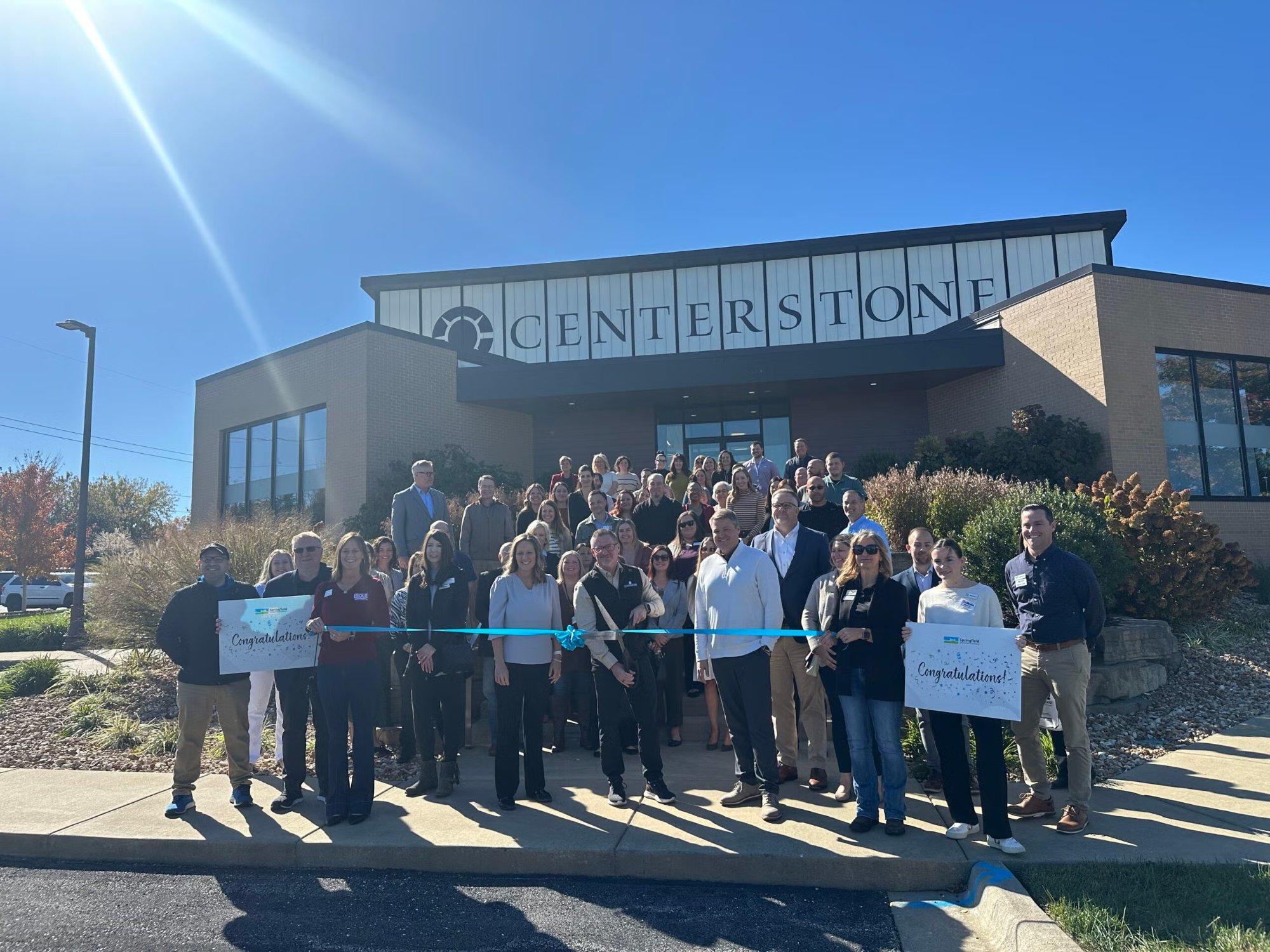
The merger was first announced in July 2025 as a non-binding agreement with intent to merge. Executives from both organizations signed a master transaction agreement on September 9, 2025, at a ceremonial event in Springfield. The deal closed on schedule in early November 2025, with Brightli adopting the Centerstone name and brand. Centerstone CEO David Guth, Jr., leads the combined organization, with Brightli CEO C.J. Davis serving as CEO-elect, scheduled to assume the top role one year after the merger close.
The merger brought together two organizations with complementary geographic footprints. Centerstone had operated in Florida, Georgia, Illinois, Indiana, North Carolina, and Tennessee. Brightli’s subsidiaries and affiliates — including Burrell Behavioral Health, Preferred Family Healthcare, Clarity Healthcare, Adult and Child Health, Firefly Supported Living and Employment Services, Places for People, and Southeast Missouri Behavioral Health — had operated across five states, primarily in the Midwest. The combined nine-state footprint eliminates geographic overlap while creating a scale platform that rivals the largest PE-backed behavioral health operators.
The Centerstone-Brightli merger creates a nonprofit behavioral health entity with the scale, payer leverage, and geographic reach that have previously been available only to PE-backed platforms — raising the question of whether the nonprofit model can compete effectively with private equity on access, innovation, and clinical quality simultaneously.
Why This Matters for the ABA Industry
Centerstone operates ABA services through its CASTLE program — Centerstone Autism Services: Think! Learn! Explore! — which provides intensive, evidence-based ABA therapy for children diagnosed with autism spectrum disorder. The program operates in Southern Illinois and accepts both commercial insurance and private pay clients. CASTLE employs Board Certified Behavior Analysts who conduct comprehensive assessments and develop individualized treatment plans for children.
The ABA component of Centerstone’s service portfolio is relatively small compared to its mental health and substance use disorder services, which constitute the bulk of the organization’s revenue and operations. But the merger creates a platform with the financial resources, payer relationships, and operational infrastructure to expand ABA services significantly — if the organization chooses to do so.
The strategic significance for the ABA industry is less about Centerstone’s current ABA volume and more about what the merger represents as a structural development. The ABA market has been dominated by private equity-backed consolidators since 2018. The Centerstone merger introduces a nonprofit entity with $1 billion in revenue and 360 locations into the behavioral health competitive landscape. That scale gives the merged Centerstone payer negotiating leverage, recruitment capacity, and geographic reach that most standalone ABA providers — whether nonprofit or for-profit — cannot match.
The payer leverage question: Brightli CEO C.J. Davis stated during the merger announcement that the expanded scale would put the organization in a strong position to negotiate with payers and approach them proactively about what health plan recipients need. Davis described this as a departure from the traditional behavioral health approach, in which providers wait for payers to dictate terms. That shift from reactive to proactive payer engagement is the same dynamic that PE-backed ABA platforms have pursued through multi-state scale — the difference is that Centerstone is pursuing it as a nonprofit.
Davis also noted that each time Brightli had been part of a merger, the company had observed a 10 to 15 percent increase in new job applicants. If that pattern holds for the Centerstone merger, the combined organization could have a meaningful recruitment advantage in a behavioral health labor market where competition for qualified clinicians remains intense. For the ABA segment specifically, where BCBA and RBT shortages are among the most acute workforce challenges, any recruitment advantage is strategically significant.
The Nonprofit Model vs. the PE-Backed Model: A Structural Comparison
The Centerstone-Brightli merger forces a comparison that the behavioral health industry has been approaching but has not yet fully confronted: can nonprofit providers compete at scale with PE-backed platforms? The question is relevant not only for the organizations themselves but for payers, regulators, and families who are trying to understand the implications of ownership structure for care quality and access.
PE-backed ABA platforms have advantages in speed of capital deployment, financial engineering, and the ability to compensate executives with equity incentives that attract experienced operators. The average PE-backed ABA platform can acquire a new clinic and integrate it within 60 to 90 days. That execution speed has driven the rapid consolidation of the ABA market over the past seven years.
Nonprofit platforms have different structural advantages. They are exempt from federal income tax, which creates a margin advantage that can be reinvested in clinical programs, staff compensation, or geographic expansion. They do not face the exit pressure that PE-backed platforms face — the need to generate a return for investors within a three-to-seven-year hold period. And they carry a reputational advantage with some payers, regulators, and families who view nonprofit status as an indicator of mission alignment.
The Centerstone merger also introduced a unique structural element: the involvement of subsidiaries that bring different capabilities and specializations. Brightli’s affiliates included organizations focused on substance use disorder treatment, intellectual and developmental disabilities, community mental health, and supported living and employment services. This breadth of behavioral health services creates an integrated care model that most single-specialty ABA providers, whether PE-backed or independent, cannot replicate.
The National Council for Mental Wellbeing endorsed the merger, with President and CEO Chuck Ingoglia describing it as setting a new standard for how community-based mental health and substance use treatment can be delivered at scale. That endorsement from the sector’s primary national advocacy organization signals that the merger is viewed as a positive structural development by the broader behavioral health community.
If Centerstone demonstrates that a billion-dollar nonprofit can deliver behavioral health services — including ABA — at the scale and efficiency of PE-backed platforms while maintaining mission alignment and clinical quality, the implications for the entire ABA ownership debate are significant.
What Comes Next: The ABA Expansion Question
The most consequential decision the merged Centerstone will face regarding the ABA industry is whether to expand its autism services significantly. The organization currently operates ABA services through the CASTLE program in a limited geographic area. But it now has the financial resources, clinical workforce infrastructure, and multi-state licensing to launch or acquire ABA services in any of its nine states of operation.
An aggressive ABA expansion by Centerstone would change the competitive dynamics in every market where it operates. PE-backed ABA platforms would face a well-funded nonprofit competitor with an established brand, existing payer relationships, and the ability to cross-refer patients from its mental health and substance use disorder services. Independent ABA practices would face a new consolidation force — one that can offer mission-aligned partnership rather than PE-style acquisition.
Whether Centerstone pursues this path will depend on strategic priorities, available capital, and the leadership team’s assessment of where ABA fits within the organization’s broader behavioral health mission. The merger itself does not guarantee ABA expansion. But it creates the conditions under which such expansion is possible at a scale that was not available to either Centerstone or Brightli independently.
For the ABA industry, the Centerstone-Brightli merger is a signal that the nonprofit sector is not content to remain on the sidelines while PE-backed platforms consolidate the market. Whether this represents the beginning of a broader nonprofit consolidation trend in behavioral health — or a one-off transaction driven by the specific circumstances of these two organizations — is a question that the market will answer over the next several years.
AT A GLANCE
| Combined entity: | Centerstone (name adopted from Centerstone’s 28-year legacy) |
| Merger closed: | November 3, 2025 |
| Combined annual revenue: | Approximately $1 billion |
| Total employees: | More than 10,300 |
| Total locations: | More than 360 outpatient, inpatient, and residential sites |
| States of operation: | Nine U.S. states |
| Clients served annually: | Approximately 250,000 people |
| CEO: | David Guth, Jr. (Centerstone); C.J. Davis (CEO-elect, from Brightli) |
| Brightli subsidiaries: | Burrell Behavioral Health, Preferred Family Healthcare, Clarity Healthcare, Adult & Child Health, Firefly, Places for People, Southeast Missouri Behavioral Health |
| ABA program: | CASTLE (Centerstone Autism Services: Think! Learn! Explore!) — Southern Illinois |
| K–12 school presence: | Clinical staff serving students in 1,500+ K–12 schools nationally |
| Structural model: | Nonprofit — tax-exempt, no PE exit pressure, mission-aligned |
SOURCES & REFERENCES
| 1. | Centerstone. “Centerstone and Brightli Complete Merger to Form the Largest Nonprofit Behavioral Health Provider in the U.S.” Press release. December 3, 2025. |
| 2. | Behavioral Health Business. “Centerstone and Brightli to Merge, Form $1B Behavioral Health Nonprofit Giant.” July 17, 2025. |
| 3. | Behavioral Health Business. “Centerstone’s CEO-Elect Details How New $1B Nonprofit Will Lead Change in the Field.” November 11, 2025. |
| 4. | Brightli / Burrell Behavioral Health. “Brightli and Centerstone Finalize Merger, Set to Close in November.” September 9, 2025. |
| 5. | Places for People (Brightli affiliate). “Brightli and Centerstone Announce Plans to Merge and Create Nation’s Largest Nonprofit Provider of Behavioral Health Services.” July 2025. |
| 6. | KSMU (NPR affiliate). “Brightli and Centerstone Finalize a Merger Creating the Largest Nonprofit Behavioral Health Care Provider in the U.S.” September 9, 2025. |
| 7. | Centerstone. “Centerstone Launches New Autism Service (CASTLE).” June 2019. |