
SAN JOSE, CA— On a typical weekday, Solome Tibebu might be negotiating a media partnership with a health plan executive in the morning, briefing the team at Melinda French Gates’ Pivotal Ventures by afternoon, and moderating a packed ballroom of behavioral health professionals by evening. The conference badge she wears reads “Founder & CEO.” What it can’t fit is the rest of the story: the anxious teenager who started it all in 2006 with nothing but a blog and a Barnes & Noble membership.
“I felt like I was the only one going through what I was dealing with. Which is so not the case.”
— Solome Tibebu
That gap — between the terror of struggling alone and the resources that should exist — became the throughline of a career spanning teen nonprofits, venture-backed startups, Medicaid-funded statewide EHR rollouts, and eventually the nation’s leading community for behavioral health technology innovation. Tibebu’s arc is not a pivot story. It is a promise kept across twenty years.
Friday Nights, Barnes & Noble, and a Blog Nobody Asked For
It was 2006. Tibebu was 16 years old, a student at Eden Prairie High School in Minnesota, and spending her free time reading psychology books about OCD and panic disorders on the floor of a Barnes & Noble — not because anyone assigned them, but because knowledge was the only tool she had. The panic attacks and obsessive-compulsive disorder that defined her middle school and high school years had no good resource, no peer community, no place online where a young person of color could read about someone like her going through something like this.
So she built one. The blog she launched that year, Anxiety in Teens, wasn’t a business plan or a nonprofit application. It was a place to not be alone. “This was before social media,” she has said. “It was really one of the first resources for youth, by youth, with lived experience of mental illness.” Over the following decade, Anxiety in Teens grew into a 501(c)(3) organization with nationwide expressive writing programs and events for families.
By the time Tibebu enrolled at the University of St. Thomas in Minneapolis — class of 2012 — she had already been running her first organization for two years. St. Thomas’s Schulze School of Entrepreneurship sharpened what the anxiety years had already built: an instinct for gaps, a tolerance for uncertainty, and an ability to command a room.
Cognific, the Minnesota Cup, and an Early Lesson in Timing
In 2010, during her junior year, Tibebu launched Cognific — a behavioral health tech startup offering evidence-based mobile applications for clinical settings. The core concept: mental health homework for patients, analytics for providers. She entered it into the Minnesota Cup and won the student division. She raised angel funding, hired developers and clinicians, and spent two years trying to find a sustainable business model in a fee-for-service landscape that wasn’t ready for it.
“By the time we figured out a business model that could have worked,” she has recalled, “it was more like a day too late, dollar too short.” The company wound down. The experience did not. She went on to join the enterprise sales team at Netsmart — one of the country’s largest behavioral health software companies — and led statewide EHR strategy across the New England region. In Massachusetts, she worked alongside state agencies, large health systems, behavioral health providers, and substance use facilities to expand adoption of cloud-based care coordination, population management, and revenue cycle management solutions. The view from that perch — of how Medicaid reimbursement, EHR adoption, and value-based care actually intersect on the ground — would prove central to everything that came next.
Building the Room When COVID Canceled Them All
The origin of Behavioral Health Tech is, in some ways, a story about a calendar problem. It was spring 2020. Healthcare conferences were being canceled in rapid succession. Telehealth policy was changing by the week. Behavioral health providers were scrambling to pivot to virtual care. Nobody had built a convening space for what was happening.
“I thought, there should be a digital behavioral health conference,” Tibebu says. She launched the first Going Digital: Behavioral Health Tech summit in June 2020 — virtually, out of necessity. The event drew thousands. It never stopped growing.
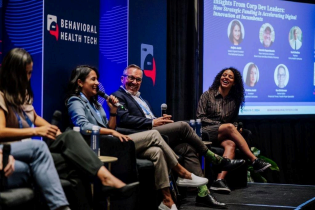
By 2023, the annual Behavioral Health Tech conference had sold out its hotel room blocks and was approaching venue capacity at the Biltmore. That year’s event drew 5,600 attendees from across the behavioral health ecosystem — health plans, health systems, provider groups, startups, investors, and policymakers. Today, Behavioral
Health Tech is the largest community dedicated to advancing access to mental health and substance use services through technology and innovation. It functions as the primary convening point for the stakeholders shaping what behavioral health looks like in a digital-first world: payers debating network adequacy, startups seeking clinical validation, PE investors watching for consolidation windows, and clinicians trying to figure out what all of it means for their patients.
Tibebu co-authored ReThink Behavioral Health Innovation alongside the publication’s growth as the sector’s primary intelligence resource. The platform covers everything from Medicaid managed care to AI-assisted measurement to the ongoing debate over telehealth parity — the policy and capital questions that determine whether digital behavioral health actually reaches the people who need it most.
The Upswing Fund: Betting on Who Gets Left Out
Before Behavioral Health Tech reached its current scale, Tibebu was doing a different kind of work — philanthropic, and deliberately focused on populations least likely to be discussed in conference keynotes. As Founding Director of The Upswing Fund for Adolescent Mental Health, she led a fund seeded by Pivotal Ventures, Melinda French Gates’ personal investment company. Through Upswing, Tibebu and her team funded more than 100 community-based organizations and nonprofits nationwide focused on the mental health of LGBTQ+ teens and adolescents of color — the populations most chronically underserved by a behavioral health system built for the majority.
She now co-chairs Pivotal Ventures’ council designing the next youth mental health fund — a signal that the equity work is not a past chapter. It is a current one.

On the Conference Floor and Behind the Mic
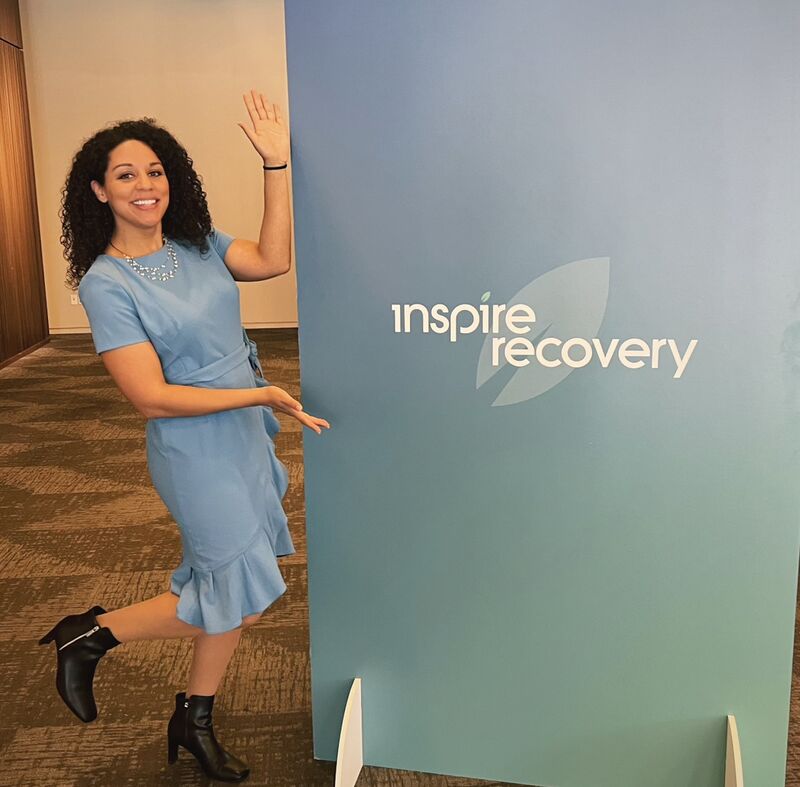
Tibebu is a venture capital scout for Andreessen Horowitz and serves as a board director or advisor to CaringBridge, BeMe Health, Columbia University Mind Ventures, Equip, Headstream, Hopelab, Made of Millions, and Vibrant Emotional Health. She is an
Aspen Health Fellow and a Senior Fellow at the Meadows Mental Health Policy Institute, where her work centers on digital transformation strategy for behavioral health systems. Her work has been the subject of a Harvard Business Review case study. She has spoken on the TEDx stage and addressed the 2014 Child & Adolescent Mental Health Conference before an audience of more than 1,200 clinicians, educators, parents, and industry executives. Forbes, Inc., Psychology Today, and Upworthy have all covered her work. She appeared live on HuffPost, discussing how families can help children manage mental health challenges.

On stage, Tibebu does something most conference keynotes don’t: she talks about what’s missing. More clinicians of color. More representation within the behavioral health workforce. More routes into the field for people who look like the patients being served. Often the only person of color in the room, she continues to speak her truth — not as a complaint, but as a data point and a directive. “You never know whose lives you’re going to change by sharing your story,” she has said.
The Industry Context: Why This Moment Needs Her Work
The behavioral health industry is in the middle of a reckoning. With Medicaid rates under pressure, telehealth parity still unsettled in most states, and the private equity
consolidation wave reshaping provider landscapes across the country, the question of who actually builds the infrastructure for behavioral health’s digital future matters enormously. The risk is that the field optimizes for what’s profitable and leaves behind what’s necessary — the LGBTQ+ teen in a rural zip code, the adolescent of color without a clinician who looks like her, the provider group without a revenue cycle expert or a compliance team.
Behavioral Health Tech, as Tibebu has built it, functions as a counterweight to that tendency. Not by avoiding business realities — the conference is as comfortable with PE strategy and health plan contracting as it is with equity — but by insisting that both conversations happen in the same room. That the investors and the advocates share a ballroom, a panel, and a lunch table.
“What we’re doing here together as a collective whole can actually help change systems.”
— Solome Tibebu
When your career begins with a panic attack in a Minnesota high school and ends up shaping how the nation’s health plans, startups, and providers talk about behavioral health innovation, the throughline isn’t a pivot. It’s a promise made to yourself at age 16 — applied, with compounding interest, across twenty years. [divider line_type=”Full Width Line” line_thickness=”1″ divider_color=”default”]Behavioral Health Tech
Website: behavioralhealthtech.com
Email: solome@behavioralhealthtech.com
LinkedIn: linkedin.com/in/solome
Conference: Annual Behavioral Health Tech Summit (BHT)
Anxiety In Teens (501c3)
Website: anxietyinteens.org
Founded: 2006 — one of the first online peer mental health resources for youth
Affiliations & Recognition
Fellowship: Aspen Health Fellow
Fellowship: Senior Fellow, Meadows Mental Health Policy Institute
Investor: Venture Capital Scout, Andreessen Horowitz
Philanthropy: Co-Chair, Pivotal Ventures Youth Mental Health Design Council
Board: CaringBridge, BeMe Health, Columbia University Mind Ventures, Vibrant Emotional Health
Media: Harvard Business Review case study; TEDx speaker; HuffPost Live, Forbes, Inc., Psychology Today