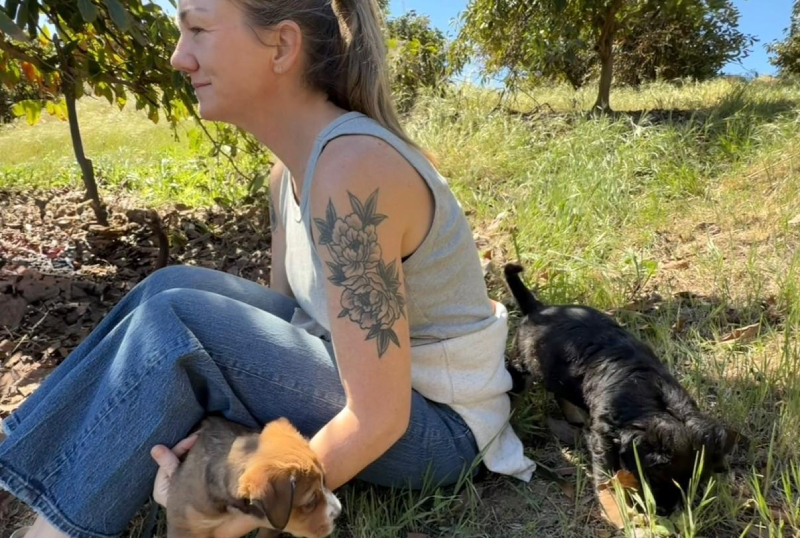
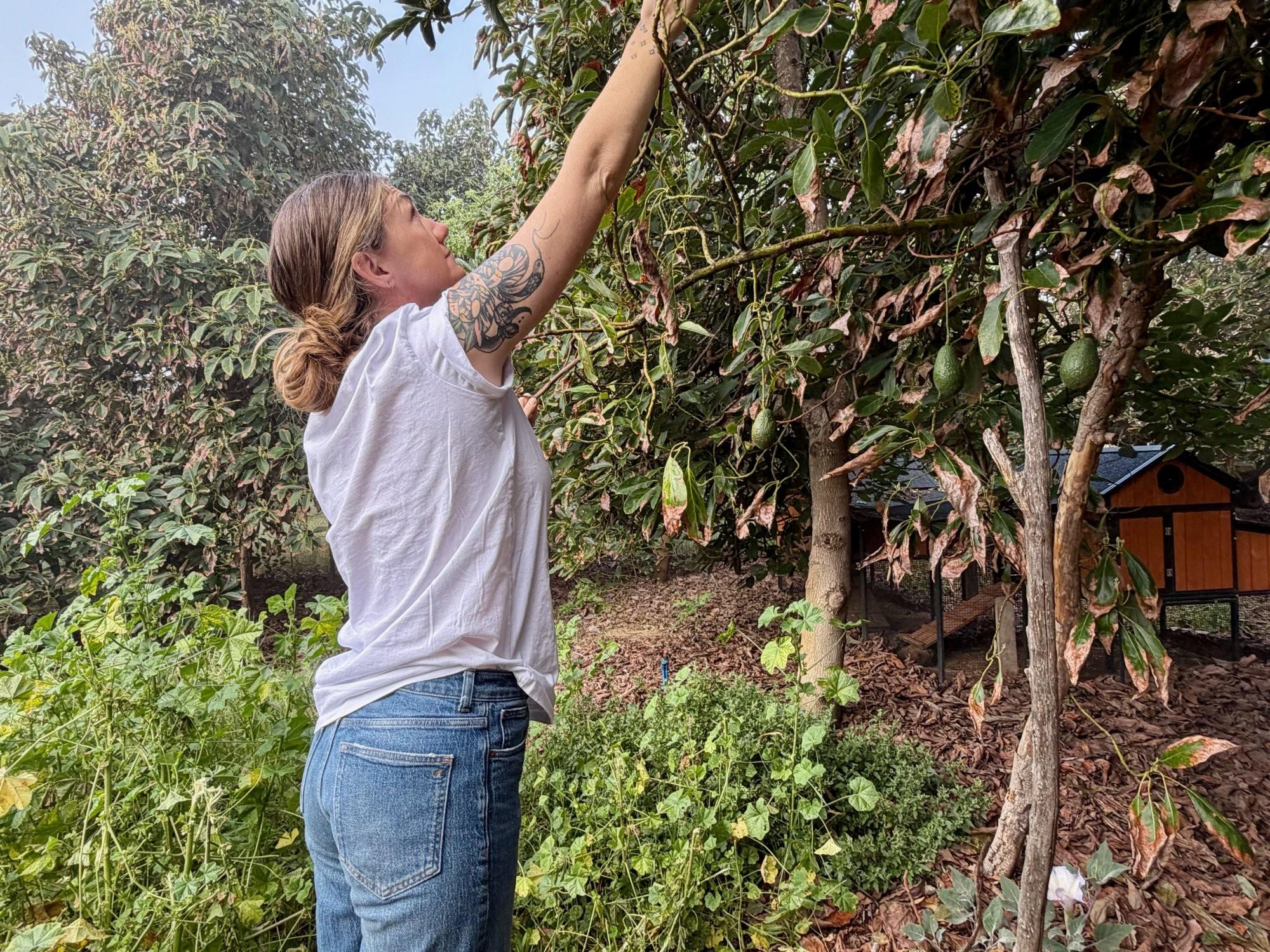
WILDOMAR, Calif.—Nicole Sands doesn’t fit the mold of a typical bookkeeper. On any given morning, she might be reconciling CentralReach revenue for a multi-location ABA practice, reviewing adoption paperwork for a rescued duck, or walking the hillside rows of her certified organic avocado grove. That kind of range isn’t a contradiction in her world—it’s the whole point.
As the founder of The ABA Bookkeeper, Sands has carved out an unusually specific niche: financial operations built exclusively for Applied Behavior Analysis practices. Her firm handles everything from departmental payroll and accounts receivable to insurance reconciliation and cash flow forecasting—all tailored to the workflows and software that ABA providers actually use.
Her ideal client? A growing ABA practice with 10 to 30 active clients generating $80,000 to $250,000 in monthly collected revenue. “They’re generating revenue but have no real financial visibility,” Sands says. “They don’t know if their biller is doing a good job, their books aren’t structured to show what’s actually happening, and they’re making decisions based on their bank balance instead of their numbers.”
That kind of specificity is deliberate. This isn’t a service for a solo BCBA just starting out, and it’s not aimed at large PE-backed groups with in-house finance teams. It’s for the messy middle—the practices that have grown past gut instinct but haven’t yet built the financial infrastructure to match.
13 Years of Seatbelts, SBA Loans, and Startup Chaos
Sands’s entrepreneurial education began far from behavioral health. In 1999, she was handpicked as the first office employee at Harveys, the Southern California design house famous for turning recycled automotive seatbelts into handbags and accessories. Founded by husband-and-wife duo Dana and Melanie Harvey, the company grew from a garage operation into a nationally recognized brand with roughly 150 employees—and Sands was at the center of that growth until she left in 2014.
At Harveys, she wore every hat the founders couldn’t: operations, inventory, vendor management, financial tracking. She learned real accounting not in a classroom but through SBA loan compliance reviews with Moss Adams, one of the largest accounting firms on the West Coast. It was a trial-by-fire education in what happens when your numbers have to be right—not just for your own decision-making, but for the people writing the checks.
She left Harveys in 2014 after her second daughter was born premature. After about six months at home, she launched Keepbooking Inc. in January 2015 as a generalist bookkeeping and advisory firm, built a small team of bookkeepers, earned her QuickBooks Online Certified ProAdvisor credential, and served small and mid-sized businesses across Southern California for nearly a decade. In early 2025, she launched The ABA Bookkeeper as a vertically focused offering and spent that year preparing for a full transition into the ABA niche. Keepbooking ultimately merged with FFO in February 2026.
The Accidental ABA Niche
The pivot to ABA wasn’t planned. “I looked up one day and had three ABA clients without even realizing it,” Sands recalls. The pattern was impossible to ignore. ABA practices operate under financial pressures that most bookkeepers simply don’t understand: complex insurance reimbursement cycles, revenue that looks healthy on paper but doesn’t hit the bank for months, and payroll structures split across multiple departments and service locations.
She didn’t just add ABA to her client roster. She sold the generalist firm entirely and went all-in, launching The ABA Bookkeeper as a vertically specialized offering with transparent, tiered pricing—no hourly billing, no surprise invoices. Service packages range from core bookkeeping (reconciliations, CentralReach revenue posting, monthly financial statements) to deeper advisory work including accounts receivable cleanup, biller audit support, and cash flow forecasting. Clients invest $2,500 to $3,000 per month for that kind of clarity.
The gap she’s addressing is real. Many ABA home therapy companies, particularly those scaling from a handful of RBTs to multi-state operations, find themselves flying blind financially. Sessions are delivered in June, payments arrive in August, and the difference between accrual and cash-basis reporting can mask serious problems—or obscure genuine growth.
“The difference between cash and accrual reporting in an ABA practice can be tens of thousands of dollars in any given month,” Sands wrote in a recent industry analysis. “If you’re making decisions based on the wrong method, you’re not just off—you’re operating on fiction.”
From Bookkeeper to Software Builder
Sands isn’t stopping at services. She’s currently beta-testing GetQlarity, an application that syncs CentralReach with QuickBooks—giving ABA owners what she describes as a clean, single source of truth for their financials. It’s a tool born directly from the pain points she sees every day: practice management data living in one system, accounting data living in another, and no reliable bridge between them.
If GetQlarity works as designed, it could solve one of the most persistent operational headaches in ABA finance—the manual reconciliation process that eats hours of bookkeeper time each month and introduces errors at every step. For an industry where CentralReach is the dominant platform and QuickBooks is the default accounting tool, an automated sync is the kind of infrastructure that’s been conspicuously missing.
22 Acres, 700 Trees, and a Different Kind of Balance Sheet
If Sands’s professional life is defined by precision and structure, her personal life runs on something closer to instinct. She and her partner Shane co-founded Zephyr Mountain Farm Sanctuary, a 501(c)(3) nonprofit on 22 acres in the hills above Wildomar, California—right in the heart of the Temecula Valley, near what locals call the avocado capital of the U.S. The sanctuary takes in small farm animals—goats, chickens, ducks, geese, pigs—rehabilitates them, and prepares them for adoption into permanent homes.
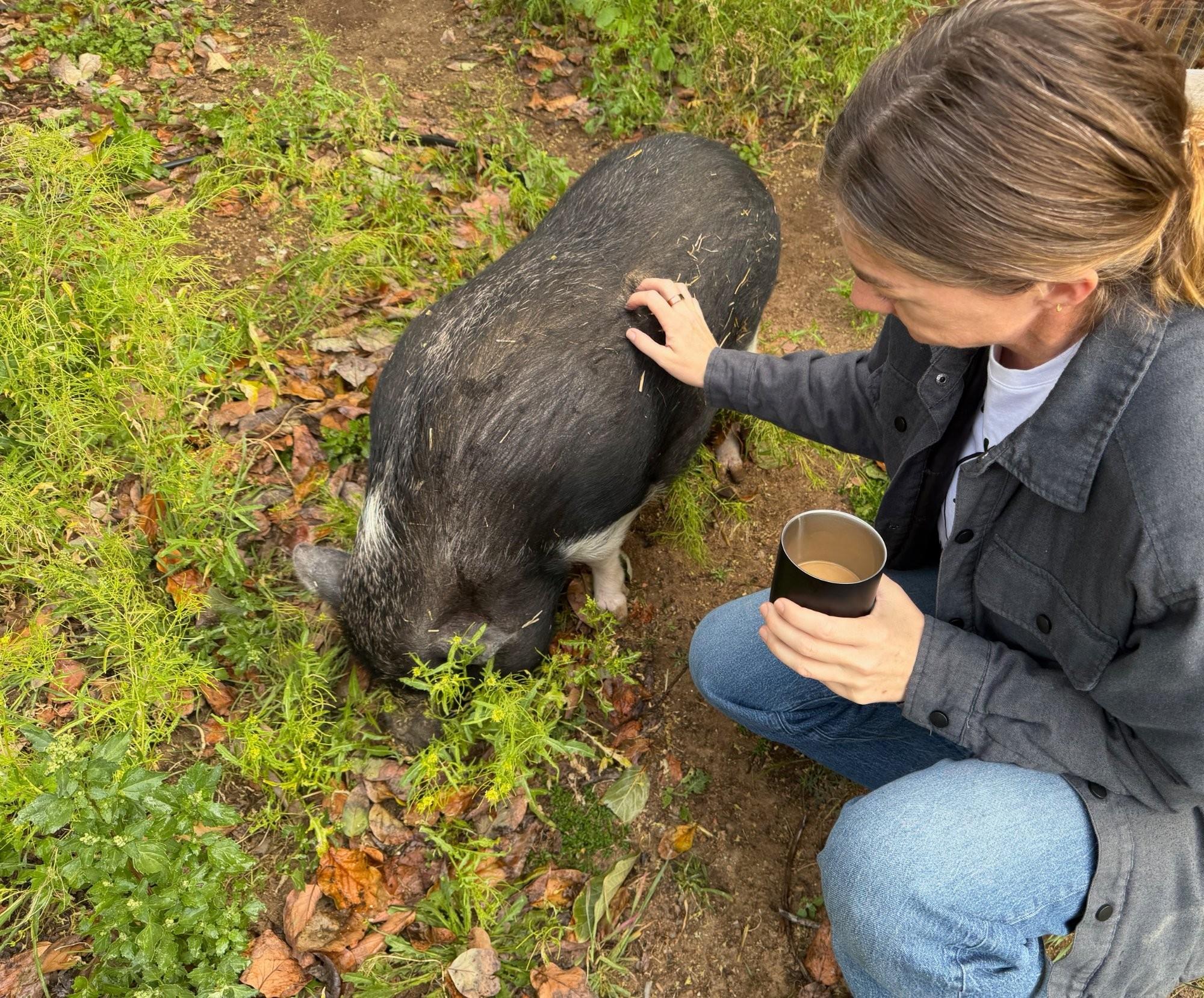
The property sits roughly 2,000 feet above sea level with views stretching to the city lights below. It also operates as Zephyr Mountain Grove: a certified organic avocado and citrus farm with over 700 trees producing Hass, Bacon, Fuerte, Pinkerton, and Mexicola avocado varieties alongside an array of citrus, macadamia nuts, pomegranates, and dragon fruit. The grove offers U-pick events, farm tours, and eco-friendly glamping experiences.
The sanctuary holds a Candid Platinum Seal of Transparency and is currently working toward verification from the Global Federation of Animal Sanctuaries (GFAS)—the only globally recognized accrediting body for animal sanctuaries. Sands also leads the sanctuary’s Goat Herding Ethics initiative, which outlines minimum care standards for goat herds used in California’s fire and weed abatement programs—a practice the sanctuary doesn’t endorse but recognizes as widespread enough to warrant humane guidelines.
She applies the same financial rigor to the nonprofit that she brings to her ABA clients—writing grant proposals, managing volunteers, and collaborating with local organizations on educational programs and community initiatives.
“I spend my days helping ABA owners figure out where their money is going. I come home to goats who couldn’t care less about accounts receivable. Both require more patience than people expect.”
— Nicole Sands
A Blended Family and a Daughter on the USS Nimitz
Away from spreadsheets and sanctuary rounds, Sands is raising a blended family with four daughters—two still at home, and one currently serving aboard the USS Nimitz. It’s a detail she mentions matter-of-factly, the way she talks about most things: without fanfare, but with obvious pride.
Based in the Temecula Valley—surrounded by wineries and avocado groves—she’s built a life that looks nothing like the typical finance professional’s and everything like the kind of person who understands what it means to build something from scratch, again and again.
Building for an Industry in Transition
The ABA industry is in the middle of a significant financial reckoning. Medicaid reimbursement rates are under pressure in multiple states, private equity consolidation has reshaped the competitive landscape, and practices of all sizes are being forced to professionalize their financial operations—or risk getting left behind.
Sands sees that as both a challenge and an opening. Her firm’s white-label communication option, which allows her team to work directly with a practice’s vendors, billers, and staff under the practice’s own brand, is designed for companies that need deep integration without the overhead of a full-time CFO. It’s a model that acknowledges a basic truth of the ABA market: most practices are clinician-led, and the founders would rather spend their time on client outcomes than accounts payable.
“Every dollar should be clear and accounted for,” Sands says. “Owners and investors can’t make good decisions without that. Our job is to make the financial side of the practice invisible—not because it doesn’t matter, but because it just works.”
For a bookkeeper who started her career making handbags out of seatbelts, survived an SBA audit, sold a firm, and now splits her mornings between CentralReach dashboards and rescued goats—that kind of quiet, behind-the-scenes infrastructure work seems to come naturally.[divider line_type=”Full Width Line” line_thickness=”1″ divider_color=”default”]
The ABA Bookkeeper
Website: ababookkeeper.com
Email: nicole@ababookkeeping.com
Phone: (323) 889-9947
GetQlarity (Beta): GetQlarity.app
Keepbooking Inc.: keepbooking.org
Zephyr Mountain Farm Sanctuary: zephyrmountain.org
Zephyr Mountain Grove: zephyrmountaingrove.com
LinkedIn: linkedin.com/in/nicolersands