The Hunt Valley Center
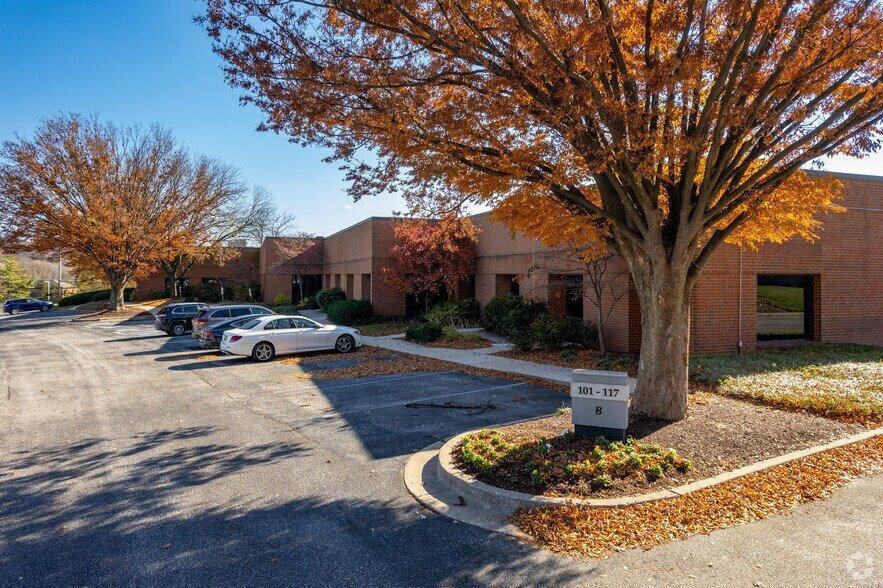
HUNT VALLEY, MARYLAND — The Learning Tree ABA is scheduled to hold a ribbon-cutting ceremony and community open house on May 31, 2026, at its 10,000-square-foot therapy center at 119 Lakefront Drive. The event will mark a formal public milestone for a facility that has been serving families across Baltimore County since opening, and is expected to draw families, clinical staff, and community members to tour the center.
The center provides in-center ABA for children with autism spectrum disorder across Hunt Valley, Towson, Timonium, Cockeysville, and surrounding communities. Each child’s program is developed by a BCBA and delivered through one-on-one sessions with trained Behavior Technicians in both structured and naturalistic settings. The company also provides in-home therapy throughout Maryland and school and daycare-based services, giving families three delivery models under a single clinical team.
Hunt Valley sits along the Interstate 83 corridor in northern Baltimore County, a suburban market with relatively high household incomes and strong commercial insurance penetration. The 119 Lakefront Drive address places the center within reach of families in Towson, Timonium, and Cockeysville without requiring a drive into downtown Baltimore. Site selection in ABA is a clinical decision as much as a real estate one: families with young children on the spectrum weigh drive time against session length when choosing between center-based and in-home models, making geographic accessibility a retention factor.
At 10,000 square feet, the footprint is substantial for a provider founded in 2022, and signals payer-market depth in a Baltimore County corridor that receives less attention than the Texas, Florida, and Midwest markets dominating ABA industry coverage. L.E.K. Consulting noted in its 2025 ABA market analysis that hybrid models combining center, home, and school delivery have gained traction as parents value both the structured socialization of a clinic and the skill generalization that comes from practicing in the home environment.
Founder and Clinical Model
Evelyn Fromowitz, BCBA, LBA, MSEd, founded The Learning Tree ABA and serves as its director. She has worked in ABA since 2001, earned her BCBA in 2013, and holds a Master’s in Education from Florida Institute of Technology. Toni Toole, BCBA, LBA, MSEd, serves as clinical director, with experience across home, school, and community settings with individuals ages 2 through 26.
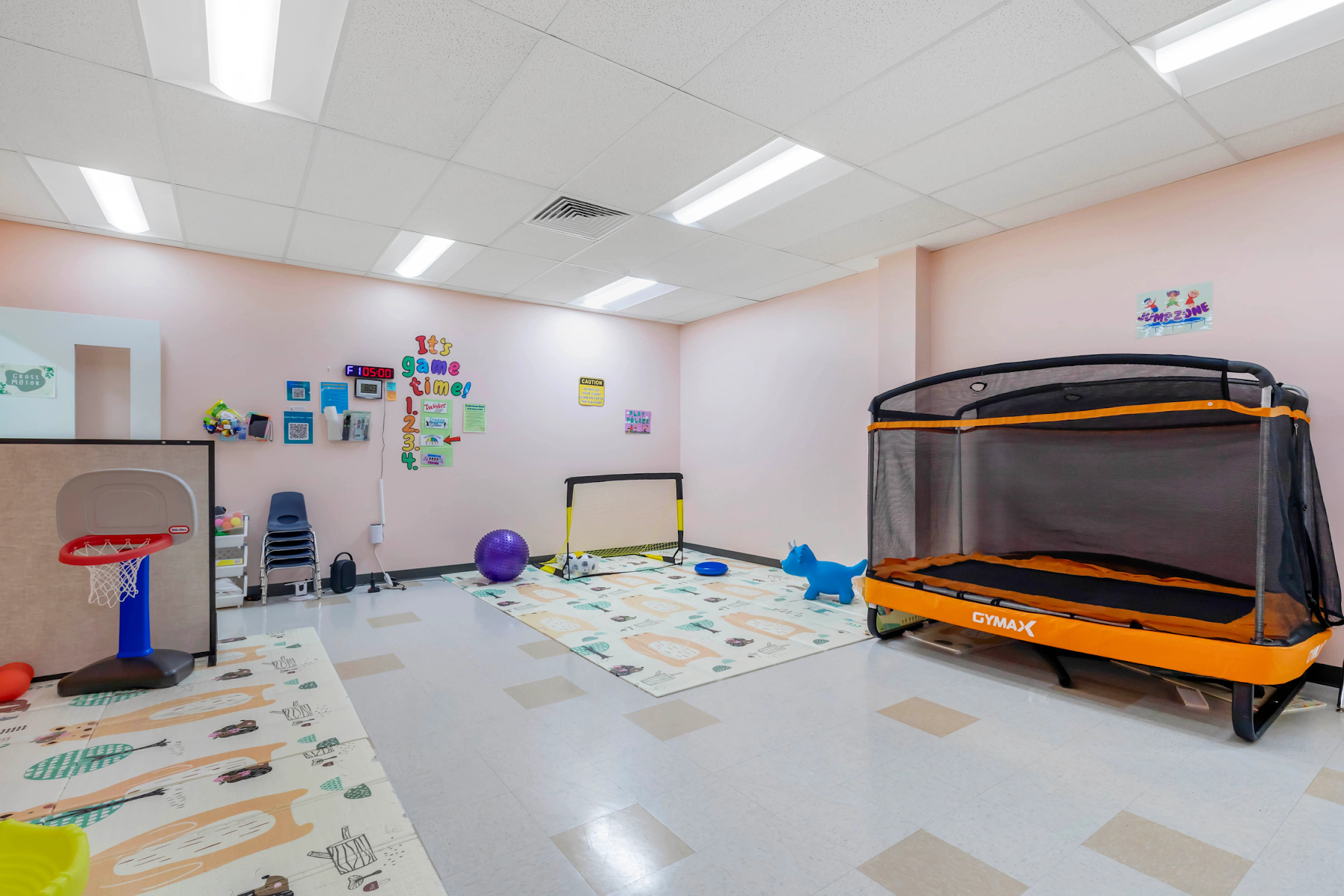
The clinical model centers on Natural Environment Teaching (NET), a play-based approach that integrates learning into real-life situations rather than relying exclusively on discrete trial formats at a table. NET uses a child’s existing interests and routines as teaching opportunities, embedding skill development into play, mealtime, and social interaction. The approach is grounded in behavior analytic literature showing that skills taught in naturalistic contexts generalize more effectively to settings outside the therapy room.
“This center has become a place where children are learning, growing and making meaningful progress every day.” — Evelyn Fromowitz, Director, The Learning Tree ABA (2026)
The Learning Tree ABA is a member of the Council of Autism Service Providers (CASP) and uses Brellium, a third-party AI clinical compliance platform that audits provider documentation and billing against payer and BACB requirements. Both are voluntary commitments that carry weight with payers and families seeking quality signals in a market with uneven oversight. The family-facing model includes a dedicated care coordinator, ongoing parent training led by a BCBA, regular progress updates, and insurance verification and authorization support. The company is in-network with all Maryland Medicaid plans and accepts most commercial insurers.
Healthcare Business Outlook profiled the company in February 2026, describing its trajectory from a 2022 founding to a regional provider with center and home operations across the state. Fromowitz told the publication that expansion plans include increasing access to center-based services, strengthening parent training, and investing in staff development. She added that growth is not pursued at the expense of quality, a statement that reads as both clinical conviction and market positioning in a sector where rapid scaling has drawn payer and regulatory pushback.
Maryland’s ABA Coverage Landscape
Maryland Medicaid covers ABA therapy for children under 21 through the Early and Periodic Screening, Diagnostic, and Treatment (EPSDT) benefit. Coverage is based on medical necessity rather than fixed hour caps, and treatment plans are authorized by Carelon Behavioral Health (formerly Beacon Health), which administers the state’s ABA program.
On the commercial side, Maryland’s 2021 Autism Insurance Reform updated the existing Habilitative Services Mandate to expand coverage obligations. All individual, fully insured large group, and fully insured small group plans must cover autism treatments including ABA. No plan is exempt, and no behavioral health treatment can be denied on the basis that it is considered investigational or experimental. The reform covers ABA, psychotherapy, psychological care, direct services, speech, occupational, and physical therapy.
Maryland’s autism prevalence runs below the national figure. The CDC’s Autism and Developmental Disabilities Monitoring Network reported a state prevalence of 1 in 38 children (2.6%) among 8-year-olds, compared to a national average of 1 in 31 (3.2%), based on 2022 surveillance data published in April 2025. The lower figure does not necessarily mean lower demand; it may reflect underdiagnosis in communities with limited access to developmental pediatricians and diagnostic evaluations.
The national ABA market was estimated at $7.97 billion in 2025 by Mordor Intelligence, growing at roughly 4.5% annually through 2031, with the children’s segment accounting for 86% of revenue. Every state Medicaid program now covers autism services, a coverage floor that did not exist a decade ago and has drawn both independent operators and PE-backed platforms into markets historically underserved.
A Competitive Baltimore County Market
The expansion comes as the Baltimore metro market absorbs new entrants from national platforms alongside established local providers. STEPS Behavioral Health, headquartered in nearby Towson, operates three Maryland clinics and recently expanded to Colorado. Verbal Beginnings, a center-based early intervention specialist, operates in the region. Autism Learning Partners, backed by FFL Partners, serves the county. Proud Moments ABA, backed by Nautic Partners, runs a Baltimore location at 7103 Milford Industrial Boulevard. Behavioral Innovations, a Texas-based provider backed by Tenex Capital, expanded into Maryland in April 2025 with a Waldorf center.
Kennedy Krieger Institute, affiliated with Johns Hopkins, remains a primary referral source for autism diagnosis and services in the Baltimore area. Families often receive their first ABA recommendation from Kennedy Krieger, developmental pediatricians, or school IEP teams. The Learning Tree ABA’s blog content explicitly addresses how families navigate that referral pipeline, positioning the company as both clinical provider and educational resource for parents entering the system.
A BCBA-led provider founded in 2022 building a 10,000-square-foot center in Baltimore County is competing directly with PE-backed national platforms that have entered the Mid-Atlantic in the past 18 months.
Provider density creates a recruiting challenge for every operator. BCBAs and RBTs (registered behavior technicians) in the region choose between independent practices, PE-backed platforms, hospital-affiliated programs, and school systems, all competing for the same credential pool. The BACB reported roughly 74,400 BCBAs and more than 258,000 RBTs nationally as of mid-2025, but the geographic distribution is uneven. Providers near strong university programs in behavior analysis, including the University of Maryland Baltimore County’s ABA master’s program, benefit from proximity to the training pipeline. The Learning Tree ABA’s LinkedIn activity indicates the company offers fieldwork opportunities for BCBA candidates, a staff development strategy that doubles as a recruiting pipeline.
Behavioral Health Business reported in late 2025 that insiders across the autism therapy market expected consolidation to accelerate in 2026 as providers adapt to intensified scrutiny and workforce pressure. For an independent like The Learning Tree ABA, the question is whether it becomes an acquirer, a target, or a standalone survivor. Its credentialed leadership, compliance posture, and Medicaid breadth give it the profile acquirers value; its founder-led culture and local roots may resist a sale.
What to Watch
Maryland’s 2021 Autism Insurance Reform creates a favorable coverage floor. Whether that translates into sustainable reimbursement as more providers compete for the same insured population depends on how aggressively commercial payers manage utilization. Behavioral Health Business has reported that ABA consolidation activity is expected to accelerate through the second half of 2026; The Learning Tree ABA’s first full operating year at the Hunt Valley flagship will measure whether an independent BCBA-led model can scale alongside the national platforms now planting flags in the corridor.
AT A GLANCE
| Company: | The Learning Tree ABA, Baltimore, Maryland |
| Founded: | 2022; BCBA-led, independently owned |
| Director/Founder: | Evelyn Fromowitz, BCBA, LBA, MSEd (in ABA since 2001) |
| Clinical Director: | Toni Toole, BCBA, LBA, MSEd |
| Hunt Valley center: | 119 Lakefront Drive; 10,000 sq ft |
| Ribbon cutting: | April 26, 2026; ceremony at 10 a.m., open house 10:30 a.m. to 12:30 p.m. |
| Clinical model: | Natural Environment Teaching (NET), play-based ABA |
| Service delivery: | Center-based, in-home, and school/daycare-based across Maryland |
| Quality credentials: | CASP member; Brellium clinical compliance auditing |
| Insurance: | In-network with all Maryland Medicaid plans; accepts most commercial plans |
| MD autism prevalence: | 1 in 38 (2.6%) among 8-year-olds (2022 ADDM data) |
SOURCES & REFERENCES
| 1. | The Learning Tree ABA. “The Learning Tree ABA to Host Ribbon Cutting for Hunt Valley ABA Therapy Center.” PRWeb. February 23, 2026. https://www.prweb.com/releases/the-learning-tree-aba-to-host-ribbon-cutting-for-hunt-valley-aba-therapy-center-for-children-with-autism-in-maryland-302694211.html |
| 2. | Healthcare Business Outlook. “The Learning Tree ABA.” February 2026. https://healthcarebusinessoutlook.com/the-learning-tree-aba/ |
| 3. | The Learning Tree ABA. “About the Team.” Accessed May 2026. https://thelearningtreeaba.com/about/ |
| 4. | The Learning Tree ABA. “How to Find an ABA Therapist in Maryland: What Parents Need to Know.” March 31, 2026. https://thelearningtreeaba.com/blog/how-to-find-aba-therapist-maryland/ |
| 5. | JADE ABA. “ABA Therapy and Medicaid Coverage in Maryland Explained.” November 2024. https://jadeaba.org/aba-therapy-and-medicaid-coverage-in-maryland-explained/ |
| 6. | BlueGems ABA. “MD ABA Therapy Information.” July 2024. https://bluegemsaba.com/aba-therapy-in-maryland/md-aba-therapy-information/ |
| 7. | BlueGems ABA. “Does Insurance Pay for ABA Therapy in Maryland?” July 2024. https://bluegemsaba.com/insurance-aba-therapy-maryland/ |
| 8. | L.E.K. Consulting. “Investing in Autism Therapy: Key Trends Shaping the U.S. ABA Therapy Sector.” 2025. https://www.lek.com/insights/hea/us/so/investing-autism-therapy-key-trends-shaping-us-aba-therapy-sector |
| 9. | All Star ABA. “Top ABA Agencies in Maryland: 2025 Guide.” October 2025. https://www.allstaraba.org/blog/top-aba-agencies-in-maryland |
| 10. | Behavioral Innovations. “ABA Therapy Insurance in Maryland.” December 2025. https://behavioral-innovations.com/autism-101/insurance/maryland/ |