The Texas-First Strategy
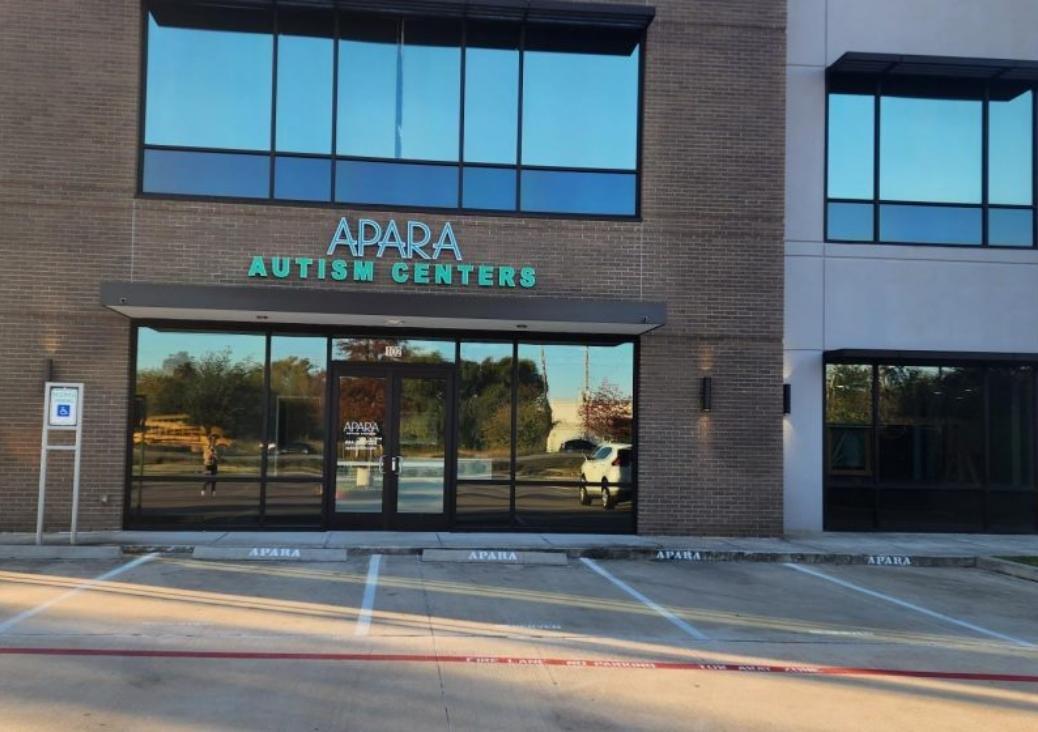
DALLAS — Apara Autism Centers was established in 2018 as a Texas-based ABA service provider offering clinic- and home-based therapy to children with autism spectrum disorder. The company was founded with a focus on the greater Houston metropolitan area, one of the largest and most diverse urban markets in the United States. Havencrest Capital Management acquired Apara in 2021 and immediately began executing a tuck-in acquisition strategy designed to build density in Texas while expanding selectively into adjacent states.
Havencrest Capital Management is a committed-capital lower middle-market PE fund based in Dallas, Texas, focused exclusively on the healthcare industry. The firm has approximately $600 million in assets under management and partners with founder-owned healthcare companies with EBITDA between $3 million and $15 million. This sweet spot captures the majority of acquisition-ready ABA practices: companies large enough to have established clinical operations and payer contracts but small enough to benefit from the operational infrastructure that PE backing provides.
The firm’s portfolio extends beyond autism services to include Deep Centered Mental Health (a behavioral health platform in Texas), Avid Health at Home (post-acute care), Focus Staff Services (healthcare staffing), Paradigm Health (hospice and palliative care in Indianapolis), and ThermoTek (medical device manufacturing). The healthcare-only investment focus gives Havencrest sector expertise that generalist PE firms cannot match, and the behavioral health portfolio creates potential synergies between Apara and Deep Centered.
CEO Tyler Moore has led Apara through each acquisition and the organic growth between them. Moore described the Behavior Pioneers acquisition as expanding Apara’s ability to reach underserved families with world-class therapy and making a distinct and meaningful difference in their lives. The language reflects a consistent messaging strategy that emphasizes access and clinical quality — themes that resonate with both families seeking services and regulators evaluating provider conduct.
The Acquisition Timeline
The first acquisition under Havencrest’s ownership came in January 2021: Behavior Pioneers, a Dallas-based clinic- and home-based ABA provider. The deal strengthened Apara’s position in the Dallas-Fort Worth metroplex, one of the fastest-growing urban areas in the country with a population exceeding 7.5 million. Brian Potts, founder of Behavior Pioneers, described the alignment: after speaking with various acquisition partners, I immediately knew Tyler and his team were best aligned with the Behavior Pioneers vision of expanding high-quality care. Foley & Lardner’s Chris Converse and Arthur Vorbrodt represented Apara in the transaction.
In January 2023, Apara announced two simultaneous acquisitions: Autism Learning Collaborative (ALC), based in Nebraska, New Mexico, and Oklahoma, and the Missouri operations of Early Autism Services (EAS). These deals extended Apara’s footprint beyond Texas into four new states while maintaining a Southern and Central U.S. geographic focus. Moore described the combined vision as one of clinical excellence and focus on family support that would increase access to quality services in Missouri, Nebraska, New Mexico, Oklahoma, and Texas.
The ALC and EAS acquisitions represented a strategic pivot from pure Texas density-building to multi-state platform expansion. The move into Nebraska, New Mexico, and Oklahoma positioned Apara in states with lower competitive density than the major coastal and Southern markets, creating opportunities for market leadership in underserved areas. The Missouri operations added another Midwestern market to the footprint.
BHB reported that Havencrest Capital’s Apara had also acquired Autism Learning Collaborative and the Missouri operations of Early Autism Services, describing the transactions as consistent with Havencrest’s strategy of growing healthcare-focused platforms through add-on acquisitions. The Braff Group’s data showed 39 autism-focused deals in the first three quarters of 2022, and Apara’s January 2023 deals were among the first of a year that would see continued consolidation activity.
The alignment of these companies, driven by a common vision of clinical excellence and focus on family support, will increase access to high-quality services throughout Missouri, Nebraska, New Mexico, Oklahoma, and Texas. — Tyler Moore, CEO, Apara Autism Centers
Why Texas
Texas is the second-largest ABA market in the United States by PE-owned center count, according to the Brown University study published in JAMA that documented 574 PE-acquired autism therapy centers nationally. The state’s attractiveness as an ABA operating environment rests on several structural advantages. First, Texas has the second-largest population in the country (approximately 30 million), providing a massive addressable market. Second, autism diagnosis rates in Texas are consistent with or above national averages, creating sustained demand for services.
Third, Texas has mandatory private insurance coverage for ABA therapy through its state autism mandate, ensuring that commercially insured children have access to ABA without lifetime dollar caps or arbitrary session limits. Fourth, the Texas Medicaid program covers ABA services, providing access for the state’s large low-income population. The combination of commercial insurance mandates and Medicaid coverage creates a dual-payer market that supports higher revenue per clinic than states with only Medicaid coverage.
Fifth, Texas’s business-friendly regulatory environment and relatively low operating costs (compared to California, New York, or the Northeast corridor) create favorable unit economics for center-based ABA operations. The state’s lack of a state income tax and moderate commercial real estate costs contribute to operating margins that are difficult to replicate in higher-cost markets.
The competitive landscape in Texas is intense. Action Behavior Centers, the largest single-brand ABA provider in the country with 400+ locations, was born in Texas and maintains its densest concentration of centers in the state. Behavioral Innovations, acquired by Tenex Capital Management from Shore Capital Partners in June 2024, operates 77 centers across Texas, Oklahoma, and Colorado. Numerous smaller operators, independent BCBAs, and university-affiliated programs add further competitive density in the major metro areas.
Apara’s strategy of building presence in Houston, Dallas, and San Antonio positions it in the three largest Texas metros, while its home-based service model allows it to serve suburban and exurban communities that center-only operators cannot easily reach. The clinic-and-home hybrid model provides flexibility in market penetration and allows Apara to serve a broader demographic range than competitors committed exclusively to one delivery model.
The PE-Backed Platform Model in Practice
The Havencrest/Apara partnership illustrates the lower middle-market PE approach to healthcare services at its most textbook: acquire a founder-led platform with clinical credibility and market position, add tuck-in acquisitions to build geographic density and scale, invest in operational infrastructure, and position the platform for eventual exit to a larger sponsor or strategic acquirer. The success of this model depends on several execution variables that are unique to ABA.
Clinical integration is the most critical. Each acquisition brings a different clinical culture, documentation system, payer mix, and workforce composition. Integrating these operations without disrupting ongoing therapy for children with autism — a population for whom consistency of care is clinically essential — requires both operational discipline and clinical sensitivity. The ABA industry has seen multiple examples of acquisitions where integration disruption led to therapist turnover, client attrition, and clinical regression.
Compliance infrastructure is the second critical variable. In the current enforcement environment, where the OIG has found 100 percent error rates in every state it has audited, the compliance standards applied to PE-backed platforms are effectively higher than those applied to independent practices. PE sponsors have deeper pockets, making them more attractive targets for qui tam lawsuits and government recovery actions. The compliance investment that Havencrest makes in Apara — or fails to make — will determine whether the platform navigates the regulatory environment or becomes a case study in enforcement.
Workforce management is the third variable. ABA’s chronic BCBA and RBT shortage affects every operator, but platform companies face unique challenges: maintaining competitive compensation across multiple markets with different cost-of-living levels, offering career development pathways that incentivize retention, and ensuring that supervision ratios remain compliant even as the platform grows and adds new technicians faster than it can hire supervisors.
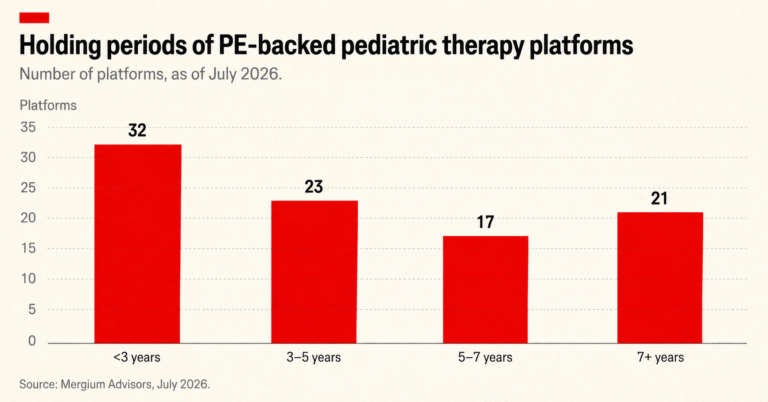
For the ABA M&A market, the Havencrest/Apara model represents one of dozens of similar plays underway across the country. The template is identical; the execution varies. The platforms that succeed will be those that treat clinical quality, compliance, and workforce development as core competencies rather than costs to be minimized. The platforms that fail will be those that prioritize geographic expansion and revenue growth over the operational fundamentals that make the business sustainable. The OIG audit trail will eventually distinguish between the two.
AT A GLANCE
| Company: | Apara Autism Centers |
| Founded: | 2018; Houston, TX |
| CEO: | Tyler Moore |
| PE sponsor: | Havencrest Capital Management (~$600M AUM; Dallas, TX; healthcare-only) |
| Acquisition 1: | Behavior Pioneers (Jan 2021; Dallas; clinic + home-based) |
| Acquisitions 2–3: | Autism Learning Collaborative + Early Autism Services MO (Jan 2023; NE, NM, OK, MO) |
| States: | Texas (Houston, Dallas, San Antonio), Nebraska, New Mexico, Oklahoma, Missouri |
| Model: | Clinic- and home-based hybrid |
| Havencrest sweet spot: | Founder-owned healthcare; EBITDA $3M–$15M |
| TX market position: | 2nd-largest ABA market by PE center count (Brown/JAMA) |
| Key TX competitors: | ABC (400+), Behavioral Innovations (77 centers/Tenex), numerous independents |
| Havencrest portfolio: | Also: Deep Centered Mental Health, Avid Health at Home, Focus Staff, Paradigm Health |
SOURCES & REFERENCES
| 1. | PRNewswire. “Apara Autism Centers Announces Acquisition of Behavior Pioneers.” January 6, 2021. |
| 2. | PRNewswire. “Havencrest-backed Apara Announces Acquisitions of ALC & EAS.” January 25, 2023. |
| 3. | BHB. “Havencrest Capital-Backed Apara Acquires 2 ABA Providers.” January 2023. |
| 4. | Havencrest Capital Management. Portfolio and team pages. havencrest.com. |
| 5. | Brown University / JAMA. Study of 574 PE-acquired autism therapy centers. 2024. |
| 6. | Foley & Lardner. “Foley Team Helps Apara Acquire Behavior Pioneers.” 2021. |
| 7. | PrivSource. Apara Autism Centers deal history. privsource.com. |