
The Late Start
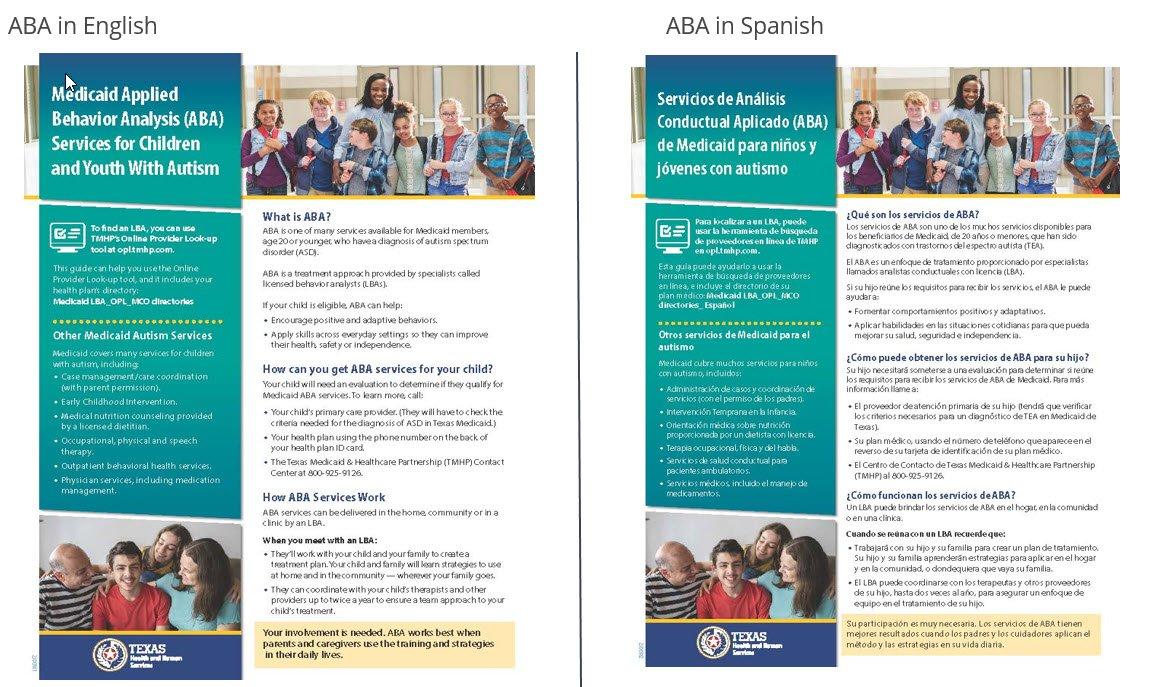
Texas was among the last states to comply with the 2014 CMS directive requiring Medicaid coverage of ABA therapy for children with autism. While states like Indiana, Colorado, Maine, and Wisconsin built their ABA Medicaid programs in the mid-2010s, Texas resisted. In 2016, Disability Rights Texas sued state health officials for failing to provide medically necessary autism treatment, noting that ABA was not a defined benefit in the Texas Medicaid program. PBS News documented families being denied coverage despite the federal mandate. The state finally added ABA under the Texas Health Steps Comprehensive Care Program effective February 1, 2022.
The late start means Texas’s ABA Medicaid infrastructure is barely four years old. The program was built rapidly, under political pressure, without the years of regulatory development that older state programs had (however imperfectly) accumulated. Texas adopted a managed care delivery model, routing ABA authorizations and claims through MCOs including Superior HealthPlan, which transitioned authorization reviews from Magellan Healthcare to Centene in November 2025. The MCO layer adds complexity but also creates a delegation of oversight responsibility that can result in inconsistent enforcement across plans.
The regulatory framework reflects the program’s youth. Texas HHSC adopted a tiered service delivery model with Licensed Behavior Analysts, Licensed assistant Behavior Analysts, and behavior technicians who must hold RBT, ABAT, or BCAT credentials. Prior authorization is required, with a prescribing provider signature for the initial 180-day treatment plan and a simplified 90-day extension process updated in April 2025. But the fundamental oversight mechanisms — post-payment review, billing pattern analysis, statewide auditing — have not been publicly documented.
The absence of ABA-specific oversight in a rapidly growing market is precisely the condition that produced the OIG’s findings in every state it has examined. Colorado built a $287 million ABA benefit without ABA-specific regulations and had a 100 percent error rate. Indiana built a $611 million program and had a 100 percent error rate. Wisconsin never conducted a post-payment review and had a 100 percent error rate. Maine had not reviewed its ABA program since 2010 and had a 100 percent error rate. Texas is replicating these conditions at larger scale and faster speed.
The Provider Landscape
Texas is the second-largest ABA market in the United States by PE-owned center count, according to the Brown University/JAMA study that documented 574 PE-acquired autism therapy centers nationally. The state’s provider landscape is dominated by the largest names in the industry. Action Behavior Centers, the single largest ABA brand in the country with 400+ locations across nine states, was born in Texas and maintains its densest concentration of centers there. The company is backed by Charlesbank Capital Partners and led by CEO Hersh Sanghavi.
Behavioral Innovations operates 77 centers across Texas, Oklahoma, and Colorado, backed by Tenex Capital Management, which acquired the company from Shore Capital Partners in June 2024. BlueSprig Pediatrics has 33 Texas locations, making it the company’s second-largest state market after Florida. Apara Autism Centers, backed by Havencrest Capital, operates out of Houston, Dallas, and San Antonio. ACES operates IOQ-designated locations in Texas as part of its Aetna value-based care agreement. Hopebridge, one of the largest national ABA providers, has Texas operations. Centria Healthcare serves Texas families. Numerous independent BCBAs and smaller provider groups fill the remaining market.
The concentration of PE-backed providers is significant for two reasons. First, PE-backed platforms have the scale and financial resources to navigate regulatory changes — but they also have the revenue pressure and growth targets that can incentivize the billing practices the OIG has flagged as problematic. Second, the density of large providers creates a competitive environment where smaller, clinician-led practices face pressure to match the billing intensity of their PE-backed competitors or risk losing market share.
Autism Learning Partners, a major national provider, exited Texas entirely, citing low Medicaid rates and administrative burdens. The exit signals that Texas’s reimbursement environment, while attracting large platforms, may be unsustainable for providers without the operational infrastructure to manage the state’s MCO-driven authorization and billing complexity. When providers exit, the children they serve face disruption — exactly the access crisis that occurred in Colorado when providers left in 2022 and 2023.
Texas built an ABA Medicaid market in four years without ABA-specific regulations, without a published post-payment review, and with some of the largest PE-backed provider concentrations in the country. These are the same conditions that produced 100% error rates in every state the OIG has examined.

The Enforcement Signals
Federal enforcement is already touching Texas. The DOJ’s Southern District of Texas has produced at least one ABA-related settlement, signaling that federal prosecutors in the state are examining ABA billing practices. The OIG’s seven-state audit plan, announced in January 2022, has completed audits of four states (Indiana, Colorado, Maine, Wisconsin) with three states still unidentified. Given Texas’s market size, spending trajectory, and the concentration of the same large providers that have been flagged in other states, the probability that Texas is among the remaining three states is significant.
The Wall Street Journal’s March 2026 investigation identified Indiana as the nation’s hotbed for ABA billing abuse, but the structural conditions that enabled that abuse are not unique to Indiana. Indiana’s 40-percent-of-billed-charges reimbursement system was the mechanism; Texas’s MCO-mediated system is different in structure but faces similar challenges in oversight, credential verification, and post-payment review. The question is not whether Texas has billing problems but whether anyone is looking for them.
The Tilly case provides additional context. Tilly (formerly Elemy), a Miami-based ABA provider that operated in Texas and other states, attracted scrutiny for its telehealth-delivered ABA model and aggressive growth. The company’s trajectory — rapid expansion, venture capital funding, regulatory questions — illustrates the vulnerability of markets where provider growth outpaces oversight capacity. Texas’s combination of rapid market growth, MCO-mediated oversight, and limited ABA-specific regulatory infrastructure creates the conditions for similar vulnerabilities.
Starting in 2026, Texas MCOs are enforcing stricter weekly unit caps: if a child is approved for 20 hours per week, billing must stay within that limit each week. The tightening reflects awareness that utilization controls have been insufficient. But weekly caps address authorization compliance, not the deeper documentation, credential, and supervision issues that the OIG has found in every state it has audited.
What Would an OIG Audit Find in Texas?
If the OIG were to audit Texas’s ABA Medicaid program using the same methodology it has applied in other states — sampling 100 enrollee-months and reviewing claims against documentation, credentials, and state requirements — the prediction based on the pattern across four completed audits is sobering. Every state has produced a 100 percent error rate. The error categories are consistent: documentation deficiencies, credential gaps, supervision failures, billing for non-therapeutic activities, and claims without confirmed diagnoses. There is no reason to believe that Texas providers, operating under less oversight than the states that have already been audited, would produce better results.
The specific risk factors in Texas include the youth of the Medicaid ABA program (four years, versus a decade or more in other states), the MCO delegation model (which can create gaps between state-level requirements and plan-level enforcement), the concentration of large providers whose billing patterns have been flagged elsewhere, and the absence of a published statewide post-payment review mechanism.
For Texas providers, the implication is clear: the compliance infrastructure that should have been built alongside the market’s growth was not built. The providers that invest in internal auditing, credential verification, session note quality, and supervision documentation now will be the ones that survive the enforcement wave that is coming. The providers that continue to operate without these safeguards are building the case files that auditors and whistleblowers will eventually open.
Texas is growing fastest and watching least. The question is not whether enforcement will arrive but when — and whether the state’s providers and regulators will have built the infrastructure to meet it. The precedent from every other state suggests the answer is no.
AT A GLANCE
| TX Medicaid ABA start: | February 1, 2022 (one of last states to comply with 2014 CMS directive) |
|---|---|
| Market position: | 2nd-largest ABA market by PE-owned center count (Brown/JAMA) |
| Major providers: | ABC (400+), Behavioral Innovations (77), BlueSprig (33), Apara, ACES, Hopebridge, Centria |
| ALP exit: | Autism Learning Partners exited TX, citing low rates and admin burdens |
| MCO model: | Superior HealthPlan transitioned auth reviews from Magellan to Centene (Nov 2025) |
| Weekly caps: | 2026: stricter weekly unit caps enforced by MCOs |
| DOJ activity: | Southern District of TX produced ABA settlement ($2.7M) |
| OIG audit plan: | 7 states total; 4 completed (IN, CO, ME, WI); 3 unidentified — TX likely candidate |
| Post-payment review: | No published statewide post-payment review of ABA claims |
| Prior auth update: | April 2025: simplified 90-day extension; prescribing provider signature no longer required |
| Risk factors: | Young program (4 yrs), MCO delegation gaps, PE concentration, no ABA-specific audit history |
SOURCES & REFERENCES
| 1. | TMHP. “Update to Prior Authorization Requirement for Autism Services.” February 14, 2025. |
|---|---|
| 2. | PBS News. “Texas denies Medicaid coverage for an autism therapy despite federal directive.” July 2016. |
| 3. | Disability Rights Texas. “State Health Officials Sued for Failing to Provide ABA.” August 2018. |
| 4. | Behavioral Innovations. “Texas Medicaid Coverage for ABA Therapy.” March 2026. |
| 5. | CubeTherapyBilling. “Does Texas Medicaid Cover ABA Therapy?” April 2026. (MCO transitions, weekly caps.) |
| 6. | TxABA Public Policy Group. Medicaid funding page. (THSteps-CCP timeline, rate hearings.) |
| 7. | Brown University/JAMA. Study of 574 PE-acquired autism therapy centers. 2024. |
| 8. | ABA Matrix. “ABA Trends 2026.” December 2025. (ALP exit; TX market dynamics.) |
| 9. | Benesch. “Heightened Scrutiny of Medicaid-Funded ABA Services.” March 2026. |
| 10. | HHS-OIG. Indiana, Colorado, Maine, Wisconsin audit reports. 2024–2026. |