The Acquisition
On March 24, 2025, Roper Technologies (Nasdaq: ROP) announced a definitive agreement to acquire CentralReach from global software investor Insight Partners for a net purchase price of approximately $1.65 billion, including a $200 million tax benefit. The deal was expected to close in April or May 2025 and would be funded using Roper’s revolving credit facility. CentralReach would continue to operate independently, maintaining its existing leadership, team, products, brands, and mission under Roper’s autonomous operating model.
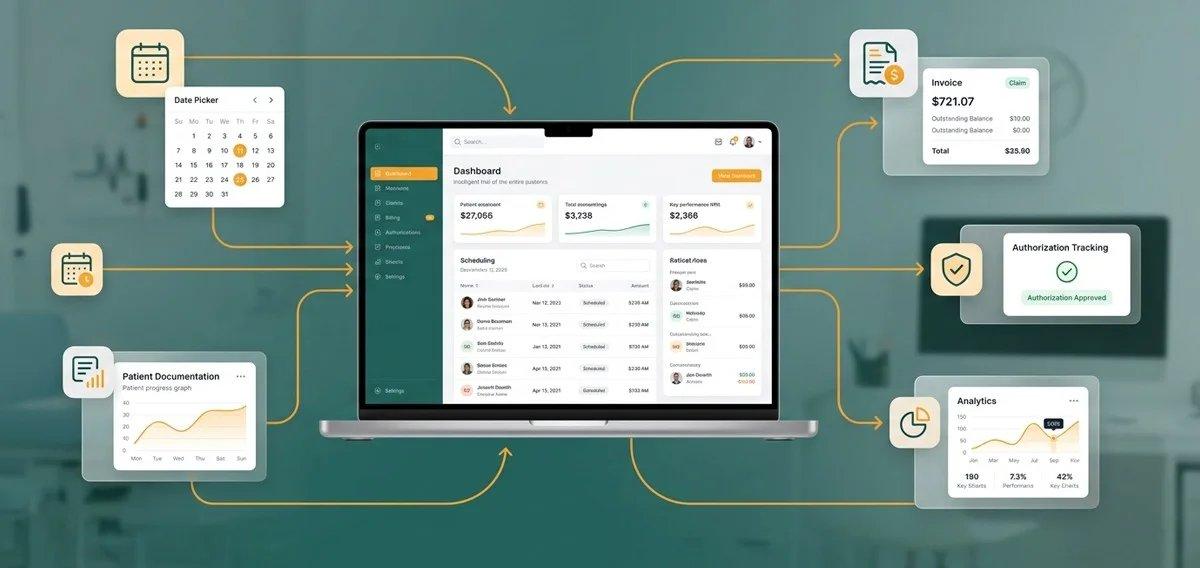
The $1.65 billion price tag reflects the strategic value of CentralReach’s position. The company is not merely a software vendor; it is the operating system that ABA practices depend on for every critical business function: client setup, practice management, claims processing, care scheduling, clinical data collection, and service delivery. BHB reported the acquisition as the largest transaction in ABA technology history. William Blair served as financial advisor.
Insight Partners had invested in CentralReach in 2018 when the platform had approximately 20,000 users. Under Insight’s ownership, CentralReach grew tenfold to over 200,000 professionals and completed 14 strategic acquisitions that expanded the platform’s capabilities. Richard Wells, Managing Director at Insight, said the firm recognized the company’s immense potential not only to become a market leader but also to empower providers and educators in unlocking potential for millions of individuals on the spectrum.
Chris Sullens, CEO, described the trajectory: through a combination of relentless execution and Insight’s support, we achieved exceptional organic growth over the past six years, which we supplemented through 14 strategic, roadmap-accelerating acquisitions. Sullens said Roper was the right partner because of its long-term investment horizon and commitment, giving CentralReach a permanent home where it can continue to scale and innovate.
Roper Technologies is a diversified industrial company headquartered in Sarasota, Florida, with a market capitalization of approximately $60 billion. The company acquires and operates application-specific software businesses across multiple verticals, employing an autonomous operating model that allows acquired companies to run independently while benefiting from Roper’s financial strength. CentralReach joins a portfolio that includes software businesses serving freight, legal, government, and healthcare verticals.
CentralReach is a fantastic business with clear niche market leadership, mission critical and high ROI software, and a talented team. We expect CentralReach to deliver sustainable 20%+ organic revenue and EBITDA growth. — Roper Technologies, acquisition announcement
The Data Question
CentralReach’s platform holds clinical data on what is likely the largest population of autistic individuals consolidated in any single system. With 200,000 professionals using the platform across 4,000 practices, the number of clients whose data resides in CentralReach’s systems is conservatively in the hundreds of thousands and may exceed one million when historical records are included. This data includes diagnostic evaluations, treatment plans, session-by-session behavioral data, progress notes, supervision records, billing histories, and AI-generated clinical analytics.
The concentration of clinical data creates both opportunity and risk. The opportunity is the one CentralReach is pursuing through its AI suite: cari, trained on over a billion data points in partnership with more than 40 BCBAs, powers ScheduleAI, NoteDraftAI, and NoteGuardAI. The AI capabilities are possible only because of the data scale — a billion data points from real ABA sessions across thousands of practices. No competitor has comparable training data.
The risk is that this data represents the most sensitive information about one of the most vulnerable populations in healthcare. Behavioral data on autistic children — including session notes documenting challenging behaviors, self-injury, aggression, and intimate details of family functioning — is extraordinarily sensitive. A data breach at CentralReach would not be a generic healthcare data incident; it would expose the most personal clinical details of hundreds of thousands of children with developmental disabilities.
CentralReach maintains HITRUST certification, the healthcare industry’s gold standard for information security. The platform is cloud-native, hosted on enterprise infrastructure with encryption, access controls, and audit logging. But HITRUST certification is a point-in-time assessment, not a continuous guarantee. The healthcare sector experienced record data breaches in 2024 and 2025, and no certification eliminates the risk entirely.
The ethical dimension extends beyond security to governance. Who decides how CentralReach’s data is used for AI training? The platform’s terms of service presumably grant the company rights to use de-identified data for product development, but the specifics of those terms — and whether families whose children’s data feeds the AI were meaningfully informed — are not publicly documented. As AI-powered features become central to CentralReach’s value proposition (and to Roper’s 20+ percent growth expectation), the governance of the underlying data becomes a question that regulators, families, and the autism community should be asking.
The 14 Acquisitions
CentralReach’s growth under Insight Partners was driven by 14 strategic acquisitions that Sullens described as roadmap-accelerating. The acquisitions included SpectrumAI (AI-powered clinical tools), AI.Measures (standardized assessments for value-based care), and numerous smaller platform and technology acquisitions. Each deal expanded CentralReach’s capabilities and its data moat: every acquisition brought new practices, new clients, and new data into the CentralReach ecosystem.
The AI.Measures partnership is particularly significant for the data governance question. The exclusive partnership was announced with the explicit goal of transforming the way assessments and autism care are delivered, paving the way for provider-driven value-based care. If AI.Measures’ standardized assessment tools become the industry standard for outcomes measurement, CentralReach would hold not just the operational data of ABA practices but the outcomes data that payers and regulators use to evaluate the industry’s clinical effectiveness.
The platform’s market position creates switching costs that border on lock-in. ABA practices that have built their clinical workflows, billing processes, and staff training around CentralReach face significant disruption if they attempt to migrate to a competitor. The Essentials tier sunsetting in 2024 — which forced small practices to either upgrade or leave — demonstrated both the power and the risk of this dependency. Practices that left migrated to AlohaABA and other alternatives, but the transition required rebuilding operational workflows from scratch.
The Scrutiny Gap
The ABA industry is under unprecedented scrutiny. The OIG has audited four states. The Wall Street Journal has published a national investigation. CMS Administrator Oz has called ABA fraud a massive problem. The DOJ has launched a dedicated fraud enforcement division. But virtually all of this scrutiny is directed at providers — the companies delivering therapy and billing Medicaid. Almost none is directed at the infrastructure layer: the software platforms that process the claims, store the data, and increasingly make AI-powered clinical recommendations.
CentralReach’s role in the ABA ecosystem is analogous to Epic’s role in hospital healthcare: it is the platform on which the industry runs. And just as Epic’s data practices, interoperability policies, and market power have attracted regulatory attention, CentralReach’s position warrants similar scrutiny. The 21st Century Cures Act imposed interoperability requirements on healthcare IT systems; it is unclear how those requirements apply to ABA-specific platforms. HIPAA governs the security of protected health information; it is unclear whether CentralReach’s AI training practices comply with the de-identification standards that HIPAA requires.
For the autism community, the data governance question is not abstract. The clinical data that CentralReach holds describes the behavioral patterns, treatment responses, and developmental trajectories of a generation of autistic children. That data has immense value for research, AI development, and clinical innovation. It also has immense potential for misuse if governance is inadequate. The autistic self-advocacy community has long argued that autistic individuals should have a voice in how data about them is collected, stored, and used. CentralReach’s governance structure does not appear to include autistic representation.
Roper Technologies’ acquisition adds a new dimension. CentralReach is now a subsidiary of a $60 billion public company whose primary obligation is to shareholders. The 20+ percent growth expectation creates pressure to monetize the platform’s data and AI capabilities. Whether that monetization occurs in ways that serve the interests of autistic children and their families — or primarily in ways that serve Roper’s financial targets — depends on governance decisions that are being made without public input from the community most affected.
The scrutiny gap must close. CentralReach holds more clinical data on autistic individuals than any organization in the world. That data is being used to train AI systems that will shape how ABA therapy is delivered to the next generation of children. The families whose children’s data powers these systems, the regulators responsible for protecting vulnerable populations, and the autism community itself deserve transparency about how that data is governed, who makes decisions about its use, and what safeguards exist to prevent its misuse. The $1.65 billion question is not just what CentralReach is worth. It is what the data inside CentralReach is worth — and to whom.
AT A GLANCE
| Company: | CentralReach; Fort Lauderdale, FL |
|---|---|
| CEO: | Chris Sullens |
| Acquisition: | Roper Technologies (Nasdaq: ROP) for ~$1.65B net (March 2025; closed ~May 2025) |
| Prior owner: | Insight Partners (invested 2018; $90B+ AUM) |
| Growth: | 20,000 users (2018) → 200,000+ users (2025); 14 strategic acquisitions |
| Platform: | EMR, practice management, claims processing, scheduling, clinical data, AI modules |
| AI suite: | cari (billion+ data points; 40+ BCBAs); ScheduleAI, NoteDraftAI, NoteGuardAI |
| Key partnership: | AI.Measures (exclusive; standardized assessments for VBC) |
| Data scale: | Clinical data on hundreds of thousands to potentially 1M+ autistic individuals |
| Security: | HITRUST certified; cloud-native; encryption and access controls |
| Roper expectation: | Sustainable 20%+ organic revenue and EBITDA growth |
| Scrutiny gap: | No public data governance framework; no autistic representation in governance; AI training practices undisclosed |
SOURCES & REFERENCES
| 1. | GlobeNewswire/Roper Technologies. “Roper Technologies to Acquire CentralReach.” March 24, 2025. |
|---|---|
| 2. | BHB. “Roper Technologies to Buy ABA Software Company CentralReach for $1.65 Billion.” March 24, 2025. |
| 3. | CentralReach. “CentralReach Joins Forces with Roper Technologies.” March 24, 2025. centralreach.com. |
| 4. | William Blair. “CentralReach Has Agreed to Be Acquired by Roper Technologies.” March 2025. |
| 5. | NJBIZ. “NJBIZ Best Places to Work Winner Will Be Acquired for $1.65B.” March 2025. |
| 6. | HIT Consultant. “Roper Technologies to Acquire CentralReach.” March 25, 2025. |
| 7. | CentralReach. Homepage: cari AI suite, ScheduleAI, NoteDraftAI, NoteGuardAI. centralreach.com. |
| 8. | CentralReach / AI.Measures. Partnership announcement. GlobeNewswire. |