How ABA Got Its Codes: A Brief History
Before 2014, ABA therapy had no standardized billing codes of its own. Providers used a patchwork of HCPCS codes — generic procedure codes maintained by CMS — that were never designed for behavior analysis. Different payers accepted different codes. A BCBA in Texas might bill under one set of codes while the same service in California was billed under another. The result was administrative chaos, inconsistent reimbursement, and a chronic inability to track ABA utilization nationally.
The first attempt at standardization came in 2014, when the AMA CPT Editorial Panel approved a set of temporary Category III codes for adaptive behavior services. Category III codes are provisional — the AMA uses them to collect data on emerging services before deciding whether to grant permanent status. The 2014 codes gave the field its first common language, but they were explicitly temporary and carried the limitations that come with that designation: lower reimbursement rates from some payers, inconsistent adoption, and no guarantee of permanence.
The real breakthrough came in 2017, when the CPT Editorial Panel approved eight permanent Category I codes for adaptive behavior services, effective January 1, 2019. The application was submitted by the ABA Services Workgroup — a collaboration between ABAI, the Association of Professional Behavior Analysts, Autism Speaks, and the Behavior Analyst Certification Board — after three years of data collection and stakeholder research. The resulting code set — 97151 through 97158 — covered the full spectrum of ABA service delivery: assessment (97151, 97152), direct treatment by technician (97153, 97154), protocol modification by a qualified healthcare professional (97155, 97158), and caregiver training (97156, 97157). Two Category III codes survived the transition in revised form: 0362T (behavior identification supporting assessment for destructive behavior) and 0373T (treatment with protocol modification for destructive behavior), both requiring multi-technician teams and an on-site QHP.
The 2019 code set became the foundation of the modern ABA industry. Every authorization request, every claim submission, every utilization report, every payer contract, and every practice-management platform in the field was built around these ten codes. They are the financial DNA of ABA.
“These changes represent a significant step forward in refining the accuracy, clarity, and consistency of CPT coding for applied behavior analysis services.” — ABA Coding Coalition announcement, October 7, 2025
What the AMA Approved in September 2025

On October 7, 2025, the ABA Coding Coalition — composed of the Association of Professional Behavior Analysts, Autism Speaks, the Behavior Analyst Certification Board, and the Council of Autism Service Providers — announced that a code change application submitted in collaboration with ABAI’s Billing Codes Commission had been approved by the AMA CPT Editorial Panel during its September 2025 meeting. The changes fall into three categories.
Six new CPT codes added. The exact code numbers, descriptors, and billing rules have not been released. Under AMA confidentiality rules, specific code language is not finalized or disclosed until just prior to publication. What has been disclosed is that the new codes address services and workflows that the current code set does not adequately capture.
Existing codes revised. The eight Category I codes (97151–97158) will be updated with revised descriptors and guidelines. The scope and nature of the revisions remain confidential.
T-codes deleted. The two Category III temporary codes — 0362T and 0373T — will be removed from the code set entirely. These codes, which covered multi-technician assessment and treatment of destructive behavior requiring an on-site QHP, had been part of the ABA billing landscape since 2014 in their original form and 2019 in their revised form.
All changes take effect January 1, 2027 and will appear in the 2027 CPT Professional Code Book, expected to be published in the fall of 2026.
The Current Code Set: What’s Changing
To understand the significance of the 2027 overhaul, here is the full current code set and each code’s projected 2027 status based on what has been publicly disclosed.
97151 — Behavior identification assessment (QHP, face-to-face + non-face-to-face). Provider: QHP (BCBA). Status: Revised
97152 — Behavior identification supporting assessment (technician, directed by QHP). Provider: Technician. Status: Revised
97153 — Adaptive behavior treatment by protocol (technician, 1:1). Provider: Technician. Status: Revised
97154 — Group adaptive behavior treatment by protocol (technician, 2+ patients). Provider: Technician. Status: Revised
97155 — Adaptive behavior treatment with protocol modification (QHP, may direct tech). Provider: QHP (BCBA). Status: Revised
97156 — Family adaptive behavior treatment guidance (QHP, with caregiver). Provider: QHP (BCBA). Status: Revised
97157 — Multiple-family group treatment guidance (QHP, 2–8 caregiver sets). Provider: QHP (BCBA). Status: Revised
97158 — Group adaptive behavior treatment with protocol modification (QHP, 2+ patients). Provider: QHP (BCBA). Status: Revised
0362T — Behavior ID supporting assessment — destructive behavior (2+ techs, QHP on-site). Provider: Tech team + QHP. Status: DELETED
0373T — Treatment with protocol modification — destructive behavior (2+ techs, QHP on-site). Provider: Tech team + QHP. Status: DELETED
Source: ABA Coding Coalition (abacodes.org); AMA CPT Editorial Panel Summary of Actions, September 2025. Six new codes not yet assigned or disclosed.
What the Six New Codes Likely Cover
The AMA’s confidentiality rules prevent the ABA Coding Coalition or anyone else from disclosing specific code numbers, descriptors, or billing parameters before publication. But the coalition’s public statements, industry analysis, and the known gaps in the current code set provide a strong basis for inference about the general categories the new codes are expected to address.
Structured re-evaluation and progress reporting. Under the current system, reassessments are billed under the same code as initial assessments (97151). A dedicated re-evaluation code would allow payers to differentiate initial evaluations from periodic reassessments — improving utilization tracking, supporting reauthorization workflows, and reducing the documentation ambiguity that currently surrounds 97151.
Technology-assisted and digital assessment. The current code set was designed before telehealth became routine and before digital phenotyping tools like EarliPoint’s eye-tracking assessment received FDA clearance. A code covering technology-assisted assessment would create a billing pathway for evaluations that incorporate video analysis, sensor data, scoring engines, or AI-supported tools — services that do not fit neatly into the existing 97151/97152 framework.
Interdisciplinary care coordination. There is currently no standalone billable code for care coordination in the ABA code set. A dedicated care coordination code would make collaboration across providers — BCBAs, SLPs, OTs, developmental pediatricians — a discrete, auditable, billable event rather than an activity that must be shoehorned into existing codes.
Enhanced caregiver training. The current caregiver codes (97156, 97157) were written before parent-mediated intervention models gained the prominence they hold today. A new or restructured caregiver code could better capture the range of parent coaching, training, and consultation services that modern ABA programs deliver — potentially opening billing pathways for developmental and hybrid approaches that emphasize caregiver-implemented strategies.
Complex or multidisciplinary evaluation. Some evaluations require branching assessment workflows, multiple participants, or expanded data capture that goes beyond the scope of a standard 97151 assessment. A code covering complex evaluations would give providers a way to bill for the additional clinical resources required in cases involving severe behavioral presentations, multiple co-occurring diagnoses, or interdisciplinary team evaluations.
Replacement for T-code functionality. The deletion of 0362T and 0373T does not mean the services those codes covered are disappearing. Patients with severe destructive behavior who require multi-technician assessment and treatment teams will still need those services. The 2027 code set almost certainly includes a mechanism — whether through a new code, a revised existing code, or a modifier-based system — to capture those clinical scenarios without the limitations of Category III temporary status.
“These six CPT codes don’t change autism care delivery. They change how autism care must be modeled in software. This is a schema update for the entire ecosystem.” — ABA Mission Viewpoint, November 2025
The Death of T-Codes: What It Means
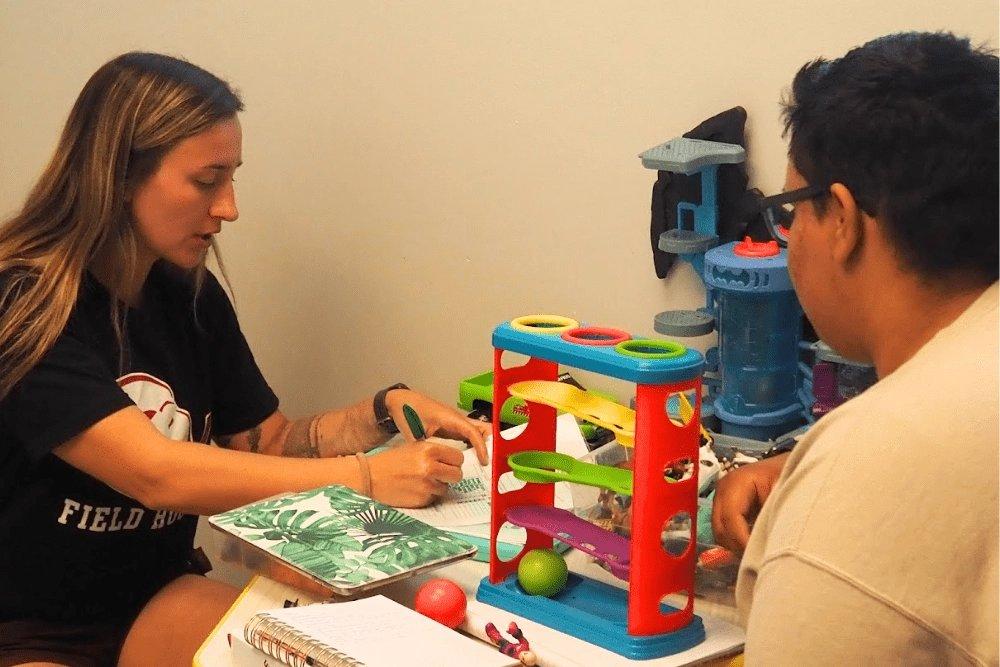
The deletion of 0362T and 0373T is, symbolically and practically, one of the most significant changes in the 2027 overhaul. These two codes have been part of the ABA billing landscape for over a decade. They were first established as Category III codes in 2014, revised in the 2019 code set overhaul, and have been used since then to bill for the highest-acuity ABA services: functional analysis and treatment of destructive behavior requiring two or more technicians, an on-site qualified healthcare professional, and a customized environment.
Category III codes carry a specific limitation that Category I codes do not: they are temporary. The AMA reviews them periodically and can extend, revise, or delete them. Some payers reimburse Category III codes at lower rates than Category I codes or decline to cover them altogether. Medicaid programs in particular have varied widely in their adoption of 0362T and 0373T, with some states covering them fully, others requiring additional justification, and others not recognizing them at all.
The deletion of these codes means that whatever replaces them in the 2027 code set — whether new permanent codes, revised existing codes, or a different billing mechanism — will carry Category I status. That is a significant upgrade for providers who treat severe behavioral cases. Permanent codes are more broadly recognized by payers, more consistently reimbursed, and less vulnerable to the periodic sunsetting that Category III codes face. For providers operating severe behavior programs — organizations like the Kennedy Krieger Institute, the Marcus Autism Center, Rutgers’ Center for Autism Research, and others — the transition from temporary to permanent coding status is a milestone.
The operational challenge is the transition itself. Providers who currently bill 0362T and 0373T will need to map those services to whatever codes replace them. Practice-management systems that have 0362T and 0373T hardcoded into their authorization and billing workflows will need to update before January 1, 2027. Payers who have built utilization management protocols around these specific codes will need to reconfigure their systems. The ABA Coding Coalition has indicated that it will provide educational webinars and resources once the confidentiality period ends, but the timeline is tight: the 2027 CPT book is expected in the fall of 2026, giving the industry roughly three months to implement changes before the January 1 effective date.
Who Wins and Who Loses
Every change to a billing code set creates winners and losers. The 2027 overhaul is no exception.
Winners: Large, tech-forward providers. Organizations with sophisticated practice-management systems, dedicated billing teams, and the engineering capacity to adapt their platforms quickly will absorb the transition more easily. Companies like Action Behavior Centers, BlueSprig, and Cortica — which already employ teams of billers, coders, and technologists — are better positioned to retrain staff, update software, and negotiate new payer contracts around the revised code set.
Winners: Severe behavior programs. The conversion of T-code services to permanent Category I status should improve reimbursement consistency and payer recognition for the most complex cases. Academic and hospital-based programs that specialize in destructive behavior treatment stand to benefit from more stable billing infrastructure.
Winners: Multidisciplinary and hybrid models. If the new codes include pathways for care coordination and technology-assisted assessment, providers who operate across disciplines — combining ABA with speech-language pathology, occupational therapy, or developmental approaches — gain new billable service categories that the current code set does not support.
Winners: Technology and assessment companies. A dedicated code for technology-assisted assessment would validate the billing pathway for companies building digital diagnostic tools, AI-supported evaluation platforms, and telehealth-native assessment workflows. EarliPoint Health, which received FDA clearance for its eye-tracking autism assessment device, is a particularly obvious beneficiary.
Losers: Small and solo-practice providers. Independent BCBAs and small clinics without dedicated billing staff face the steepest learning curve. The 2019 code transition took months for many small practices to implement fully, and the 2027 changes are more complex. Small providers who rely on manual billing processes or outdated practice-management software may see increased claim denials during the transition period.
Losers: Practice-management platforms caught flat-footed. The ABA industry’s major practice-management systems — CentralReach, Ensora (formerly CR Group), Catalyst by DataFinch, Hi Rasmus, and others — were built around the 2019 code set. Systems that treat billing codes as hardcoded values rather than configurable parameters will need significant engineering work to accommodate six new codes, revised descriptors, and deleted T-codes. Platforms that cannot adapt quickly risk losing clients to competitors.
Losers: Payers who delay implementation. Insurance companies and Medicaid managed care organizations that are slow to update their claims adjudication systems will create billing chaos for providers. The 2019 transition was marked by months of claim denials as payers failed to recognize the new codes. A repeat in 2027 would be costly for everyone involved.
The Confidentiality Problem

One of the most frustrating aspects of the 2027 overhaul is the information gap created by the AMA’s confidentiality rules. The CPT Editorial Panel approved the changes in September 2025. The ABA Coding Coalition announced the approval on October 7, 2025. But the specific code numbers, descriptors, billing parameters, and guidelines will not be released until the 2027 CPT Professional Code Book is published — expected in the fall of 2026.
This means the ABA industry knows that a major billing overhaul is coming, knows the general categories of change, but does not know the specific details it needs to prepare. Providers cannot update their documentation templates until they know what the new codes require. Practice-management companies cannot build new billing workflows until they know the code numbers and descriptors. Payers cannot update their claims adjudication systems until they know the billing parameters. Training programs cannot educate billers until they know the rules.
The result is a planning vacuum that is particularly acute for ABA, where the code set is small enough that any change affects a significant portion of billing activity. In specialties with hundreds of codes, a handful of additions or deletions can be absorbed incrementally. In ABA, where the entire field operates on ten codes, adding six new ones and deleting two represents a structural transformation — one that the industry cannot begin implementing until the AMA releases the details.
The ABA Coding Coalition has committed to providing educational resources and webinars as soon as the confidentiality period ends. The coalition’s member organizations — APBA, Autism Speaks, the BACB, and CASP — have the relationships with providers and payers to disseminate information quickly. But the compressed timeline between publication and implementation remains a systemic risk.
What Providers Should Do Now
Despite the confidentiality constraints, there is meaningful preparation work that providers can and should begin immediately.
First, audit your current billing. Know exactly how many units of each code your organization billed in the last twelve months. Identify which codes generate the most revenue, which are most frequently denied, and which require the most documentation effort. This baseline will be essential for mapping your current workflows to the new code set once it is published.
Second, evaluate your practice-management platform. Ask your vendor directly: what is your plan for the 2027 CPT code changes? Is your system schema-based (meaning new codes can be configured without engineering work) or hardcoded (meaning code changes require software updates)? How quickly did the platform adapt to the 2019 code transition? Providers who are dissatisfied with their vendor’s answer should begin evaluating alternatives now, not in December 2026.
Third, prepare your billing staff. The 2019 transition required extensive retraining for billers and coders. The 2027 transition will require more. Identify your key billing personnel, budget for training time, and plan to send staff to the educational webinars that the ABA Coding Coalition will offer once the code details are released.
Fourth, engage your payers. Notify your contracted insurance companies and MCOs that you are aware of the coming changes and expect to discuss updated billing and authorization protocols. Payers who begin internal preparation early will be less likely to create the kind of claims-processing chaos that marked the 2019 transition.
Fifth, watch for the publication. The 2027 CPT Professional Code Book is expected in the fall of 2026. The ABA Coding Coalition (abacodes.org), APBA (apbahome.net), CASP (casproviders.org), and the BACB (bacb.com) will all publish guidance as soon as the confidentiality period ends. Subscribe to their communications now.
AT A GLANCE
Action: AMA CPT Editorial Panel approved revisions to the Adaptive Behavior Services code set
Approval Date: September 2025 (announced October 7, 2025 by ABA Coding Coalition)
Effective Date: January 1, 2027
Publication: 2027 CPT Professional Code Book (expected fall 2026)
New Codes: 6 new CPT codes added (specific numbers/descriptors remain confidential under AMA rules until publication)
Revised Codes: 97151, 97152, 97153, 97154, 97155, 97156, 97157, 97158 (all eight Category I codes revised)
Deleted Codes: 0362T (behavior ID supporting assessment, destructive behavior) and 0373T (treatment with protocol modification, destructive behavior) — both Category III temporary codes
Applicants: ABA Coding Coalition (APBA, Autism Speaks, BACB, CASP) + ABAI Billing Codes Commission
Code History: Category III codes issued 2014; Category I codes (97151–97158) + revised Cat III (0362T, 0373T) effective January 1, 2019; 2027 overhaul is the third major revision
Expected New Areas: Re-evaluation/progress reporting; technology-assisted assessment; interdisciplinary care coordination; enhanced caregiver training; complex/multidisciplinary evaluation; replacement for T-code services
Billing Unit: All current ABA codes billed in 15-minute increments (expected to continue)
Confidentiality: AMA CPT rules prohibit disclosure of specific code numbers, descriptors, or parameters until official publication
Key Risk: Compressed implementation timeline: ~3 months between fall 2026 publication and January 1, 2027 effective date
Practice Management: Major ABA platforms (CentralReach, Ensora, Catalyst, Hi Rasmus) will need updates; schema-based systems will adapt faster than hardcoded systems
Payer Impact: Commercial insurers, Medicaid MCOs, and TRICARE will need to update claims adjudication, prior authorization, and fee schedules
Provider Action Items: Audit current billing volumes; evaluate PM platform readiness; budget for staff training; engage payers; subscribe to ABA Coding Coalition updates
Federal Context: CMS extended telehealth coverage for ABA codes through December 2026; 2027 telehealth status for new codes TBD
AMA CPT Criticism: Growing political and stakeholder discontent with AMA’s sole discretion over CPT codes — a physician association determining how physicians get paid
SOURCES & REFERENCES
Primary Source: ABA Coding Coalition (abacodes.org) — October 7, 2025 announcement
Coalition Members: APBA (apbahome.net); Autism Speaks; BACB (bacb.com); CASP (casproviders.org)
Code Authority: American Medical Association CPT Editorial Panel; CPT Professional Code Book
Code History: ABAI Billing Codes Commission; CPT Assistant (November 2018); Supplemental Guidance (January 2019)
Industry Analysis: ABA Mission Viewpoint (November 2025); Sunderlin Behavioral (October 2025); ABA Resource Center (October 2025)
Current Code Guidance: ABA Coding Coalition FAQ; CASP Model Coverage Policy; CASP ASD Practice Guidelines (3rd ed., 2024)
Regulatory: CMS Medicare Physician Fee Schedule; CMS telehealth FAQ (October 2026)
Published: BreakingNewsABA.com — March 2026