A clinic that ages children out at seven
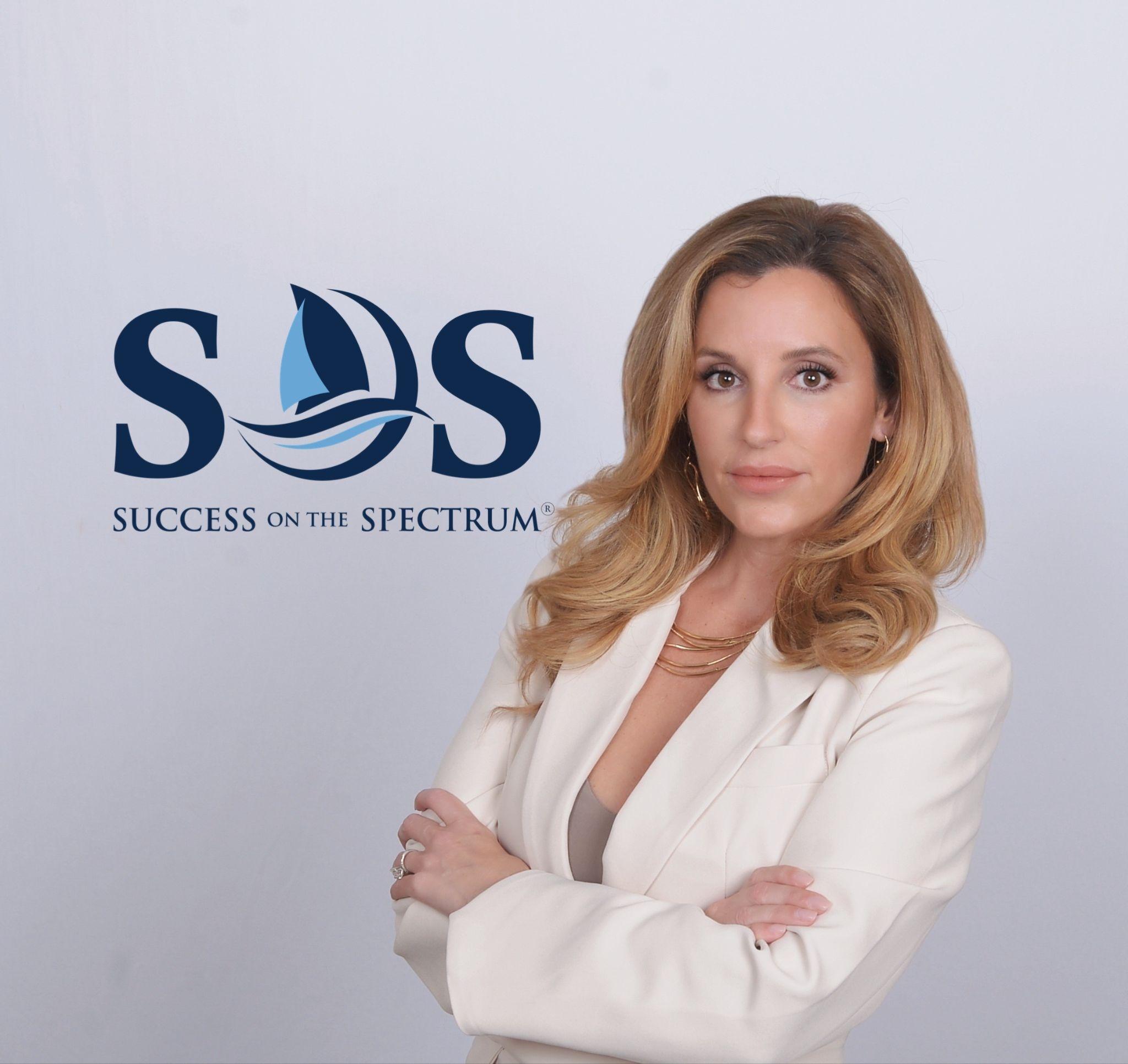
HOUSTON, TEXAS — in 2014, Nichole Daher became stepmother to a girl on the autism spectrum. Three years later, when the child turned seven, the family’s ABA clinic terminated services. Daher, whose academic background was in nuclear medicine, started calling other clinics. Most had the same age cap. The waitlists at the ones that did not stretched past a year, and almost none of the centers offered the speech and occupational therapy her stepdaughter also needed.
That practical problem, a child needing therapy and a system structurally designed to release her, became the founding premise of Success On The Spectrum. Daher opened her first center in Houston in 2015 with a deliberately broader brief: ABA, speech therapy, occupational therapy, and social skills classes, delivered to children from 18 months through age 18. A second Houston location followed. Both filled within months.
The waitlist that grew on top of them is what eventually pushed her out of operating clinics and into building a system. By 2018, SOS Franchising was registered as the first applied behavior analysis franchise in the United States. As of early 2026, the company reports more than 100 territories awarded and roughly 80 open centers across about 20 states, making SOS the largest franchise of its kind in the category and, by Daher’s account, the only one operating at national scale.
I find joy in helping my daughter and other kids like her. For me, it’s about the mission and creating access to care, not profit. That’s why I launched the autism franchise with a quality-first approach. — Nichole Daher, Founder and CEO, Success On The Spectrum (2025)
Why a franchise, in a category built for rollups
The ABA platforms that scaled between 2018 and 2024 did so through private equity. Behavioral Innovations, founded in Texas in 2000, sold to a strategic buyer in 2024 at a reported valuation around $300 million on a portfolio of roughly 80 centers, a multiple in the range of 15 times EBITDA. Caravel Autism Health, headquartered in Wisconsin, passed from Frazier Healthcare Partners to GTCR in July 2024. ABS Kids, BlueSprig, Hopebridge, and the rest of the largest operators each ran some version of the same playbook: acquire small clinics, fold them into a centralized platform, optimize billing and clinical supervision at scale, and exit through a sale or recapitalization.
Daher chose a different vehicle. Each SOS center is independently owned and capitalized. The franchisor sets clinical standards, supplies a two-week training program at the Houston headquarters, awards a six-mile protected territory, and runs quarterly operational and clinical audits. Operating risk sits with the local CEO. So does the upside. According to the franchisor, around half of SOS owners are autism parents or siblings, a profile Daher actively recruits for and one the company markets as a structural advantage over corporate competitors.
The franchise economics, as the company describes them publicly, sit toward the more accessible end of multi-unit healthcare. Total investment to open a single center runs from roughly $320,500 to $848,200 depending on geography and lease build-out, a band that mostly clears with an SBA loan. The royalty structure is 5% of gross sales capped at $5,000 per month, a feature designed to compress at higher volumes and let mature centers retain more margin as they scale. Insurance reimbursement averages between $9,000 and $10,000 per child per month, billed weekly, with most claims paid inside thirty days. Those are the numbers SOS uses in its franchise development materials.
The structural argument is straightforward. A franchise can scale faster than a single corporate operator because the capital, the recruiting, and the local relationships are distributed. A franchise can also enforce standards that private clinics rarely impose on themselves, because the franchisor has both contractual and economic leverage over the operator. The bet Daher is making is that this combination, distributed capital plus enforced standards, produces more consistent care than either a single PE-owned chain or a fragmented field of independent practices.
The supply problem the whole industry is fighting
The market context cuts in SOS’s favor and against it at the same time. The CDC now reports one in 31 children diagnosed with autism, up from one in 36 a year earlier. The U.S. ABA market was valued at roughly $7.97 billion in 2025 and is projected to reach $9.96 billion by 2030, a 4.56% compound annual growth rate, according to industry data referenced in trade and research summaries. Demand is not the issue.
Supply is. Active BCBAs in the U.S. numbered around 75,600 as of mid-2025, against more than 103,000 open BCBA-level postings at the end of 2024. Annual turnover at smaller centers runs near 80%. At larger agencies, it can exceed 100%. Burnout among behavioral health workers sits above 90%. These are the conditions under which every ABA operator, franchise or PE-backed, is now trying to scale.
Daher’s response has been to build a recruitment and supervision pipeline above the franchisee level. SOS has university partnerships that feed BCBAs and RBTs into franchise locations, internship and practicum programs, and an in-house training infrastructure that includes RBT certification and BCBA continuing education. Clinical supervision is required to be in-person, not virtual, a stance that runs against the cost logic of remote oversight that several PE-backed platforms have leaned on. The franchisor also offers what it describes as on-demand peer mentorship and clinical support for local BCBAs, drawing on the network of sister centers as a relief valve when individual locations lose key staff.
Autism M&A is booming because patient populations are growing. Five years ago, we had massive consolidation, and now mature platforms are bolting on acquisitions. — Daniel Ulloa, M&A Healthcare Advisors (2025)
What sets the model apart, by Daher’s telling
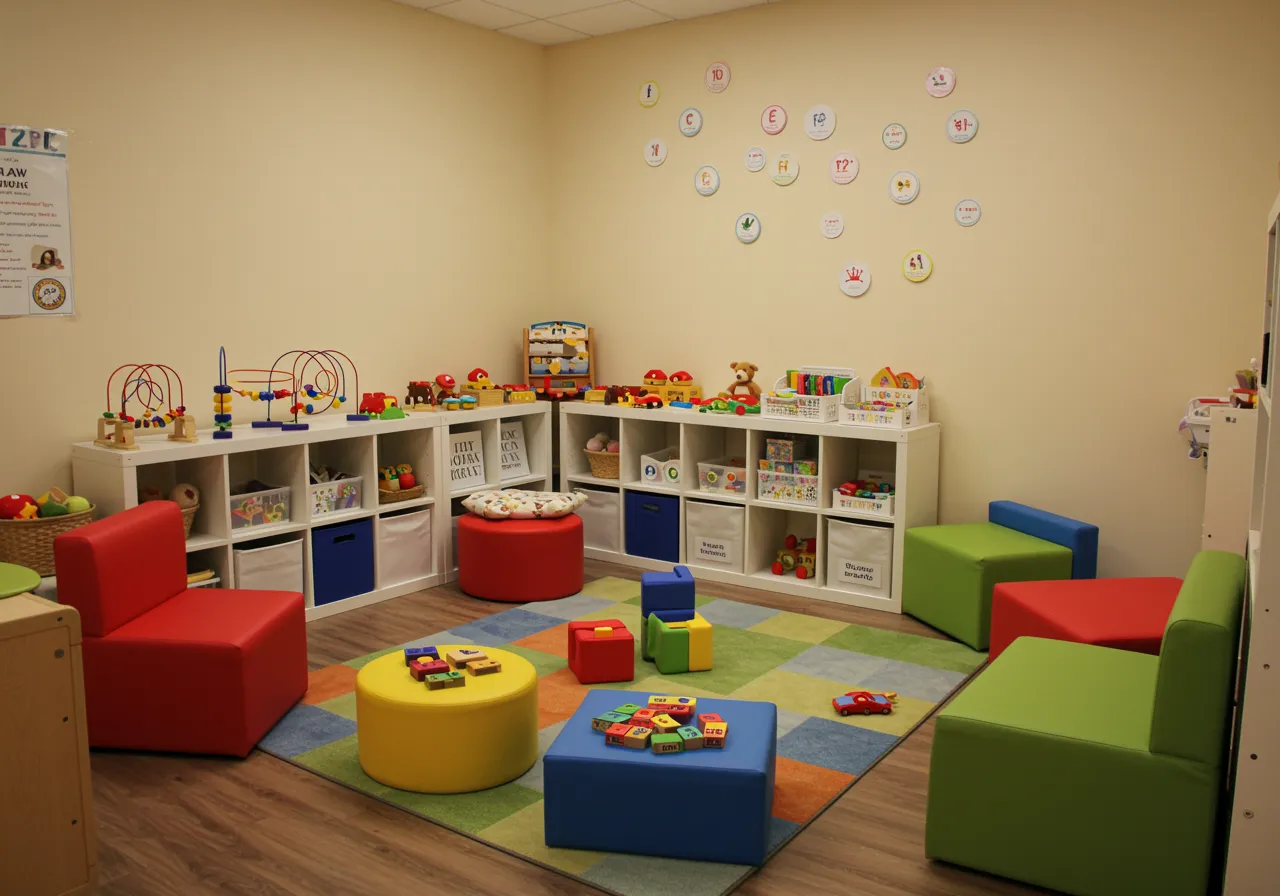
Three operational details show up repeatedly when SOS pitches the model. The first is the parent viewing room. Each center streams therapy sessions on closed-circuit video to a room where parents can watch their child working with a therapist in real time. The feature was a direct response to Daher’s own experience as a parent navigating the system without visibility into what was happening inside the room. SOS markets it as a transparency feature. In practice, it is also a quality-control mechanism, because therapists know they are observed.
The second is the age band. Most ABA clinics serve children up to age six or seven, the window where early intensive intervention has the strongest evidence base. SOS accepts children through age 18. Daher argues, and her own experience suggests, that the developmental needs of older autistic children do not stop at the age cap of an early-intervention program. The clinical literature on adolescent ABA is thinner than the early-intervention literature, but the demand is real and the supply is short, particularly outside academic medical centers.
The third is the standardized audit program. SOS Franchising conducts recurring audits across every location, observing technicians with clients, monitoring training levels, tracking turnover, and reviewing compensation data. The franchisor also enforces a written manual of practice guidelines that operators must follow. In an industry where clinical inconsistency between sites of the same brand has been a recurring complaint, particularly within PE-backed chains that grew through acquisition rather than from a single clinical playbook, the audit infrastructure is the part of the SOS pitch that lands hardest with payers and parents.
What Daher does not claim. SOS does not market itself as the highest-paying employer in the field, the most clinically pedigreed, or the most academically aligned. The marketing voice is plain. The argument she presses, in interviews and in industry conversations, is that the franchise model produces a higher floor on quality than the alternatives, because the operator is the owner and the owner is on the floor.
The next decade
Daher’s plan, as she describes it publicly, is to open between 25 and 30 new clinics per year, with a focus on what she calls underserved and high-need communities. The company says it has roughly 25 to 45 territories left to award before it approaches market saturation in the regions where it currently operates, particularly along the Midwest and West Coast where the open territory remains widest.
The harder commitments are operational. SOS plans to deepen its university pipeline, expand its LMS content for clinicians and parents, and shift its quality assurance program toward outcome-based performance benchmarks rather than process audits alone. Whether the company can hold its current quality standards through another doubling of locations is the open question every multi-site ABA operator faces. The franchise model gives SOS some structural advantages in answering it. It also concentrates the reputational risk in one brand, in a way that a holding company with multiple sub-brands does not have to absorb.
Ten years in, Daher is not the only person in the industry arguing that growth and quality have to be enforced together. She is, for now, the only one who has built a franchise to do it. Whether the model holds up at 150 centers, or 200, or whatever the cap turns out to be, will determine whether the franchise structure becomes a permanent feature of the ABA landscape or a one-decade experiment that the next round of consolidation eventually absorbs.
SOS is establishing a standard of excellence that is unmatched in the ABA industry. — Success On The Spectrum, corporate statement (2025)
| Founder and CEO: | Nichole Daher (BS, NMT, NCT, PET); founded SOS in Houston in 2015 |
| First ABA franchise registered: | 2018, the first applied behavior analysis franchise in the United States |
| Open centers (early 2026): | Approximately 80 centers across roughly 20 states |
| Territories awarded: | More than 100, per company materials |
| Services offered: | ABA therapy, speech therapy, occupational therapy, social skills classes |
| Age range served: | 18 months through 18 years |
| Initial investment: | $320,500 to $848,200 per single center, varying by geography |
| Royalty structure: | 5% of gross sales, capped at $5,000 per month |
| Avg. insurance reimbursement: | $9,000 to $10,000 per child per month, billed weekly (company materials) |
| Owner-operator profile: | ~50% of franchisees identified as autism parents or siblings (company) |
| U.S. ABA market size 2025: | ~$7.97 billion, projected to reach $9.96 billion by 2030 (industry data) |
| BCBA supply gap (mid-2025): | ~75,600 active BCBAs against 103,000+ open BCBA-level postings |
SOURCES & REFERENCES
| 1. | Success On The Spectrum. About SOS / Founder bio. successonthespectrum.com/about-sos/. Retrieved April 2026. |
| 2. | SOS Franchising. About Us / FAQs. sosfranchising.com/about-us/, sosfranchising.com/faqs/. Retrieved April 2026. |
| 3. | America’s Best Franchises. “Success On The Spectrum Franchise | ABA Autism Therapy.” Profile updated February 2026. americasbestfranchises.com/franchises/success-on-the-spectrum/ |
| 4. | SOS Franchising. “How America’s First Autism Therapy Franchise Scaled to 80+ Locations.” Company blog, March 2026. sosfranchising.com/how-americas-first-autism-therapy-franchise/ |
| 5. | Healthcare Business Review. “Success on the Spectrum | Top ABA Therapy Services Provider – 2025.” 2025. healthcarebusinessreview.com/success-on-the-spectrum |
| 6. | Acuity News. “The 10 Largest ABA Therapy Companies in 2026: Revenue, Locations & Market Share.” April 2026. acuity.news/m-and-a/abas-power-players-the-10-largest-providers-reshaping-autism-care/ |
| 7. | M&A Healthcare Advisors. “Behavioral M&A Trends: Insights on 2025 Market Shifts.” March 2025. mahealthcareadvisors.com/behavioral-ma-trends-insights-on-2025-market-shifts/ |
| 8. | FOCUS Investment Banking. “Behavioral Health EBITDA Multiples: 2025 Update.” February 2026. focusbankers.com/behavioral-health-ebitda-multiples/ |
| 9. | VG Soft Co. “ABA News and Trends for May 2025.” June 2025. BCBA supply, market size, and turnover data referenced from BACB and BLS sources cited within. vgsoft.co/blog/aba-news-and-trends-may-2025 |
| 10. | The Transmitter (Spectrum). “Private equity harms autism service market.” Commentary, October 2024. thetransmitter.org/spectrum/private-equity-harms-autism-service-market/ |
| 11. | Capstone Partners. “Behavioral Healthcare Services Market Update.” October 2025. capstonepartners.com/insights/article-behavioral-healthcare-services-market-update/ |
| 12. | CDC. Autism and Developmental Disabilities Monitoring (ADDM) Network prevalence estimates, as cited in industry summaries (1 in 31 children, 2025). |