
A pandemic side project that grew up
LEARNING BEHAVIOR ANALYSIS. In the spring of 2020, during the early months of pandemic closures, Clélia Sigaud bought a domain name, uploaded her graduate notes on applied behavior analysis, and put the material online for free. Fresh off her doctorate and on a gap year before her final postdoctoral fellowship, she was teaching part-time in a master’s program and had no intention of building a company. The premise, she now says, was simply that other learners might benefit from straightforward breakdowns of the concepts she had just spent years unpacking in class.
As the summer of 2020 unfolded and broader conversations about racial equity reached professional fields that had rarely examined their own access barriers, the site took on a wider purpose. Sigaud began viewing the platform as one small way to chip at the financial obstacles keeping capable candidates out of the ABA field, particularly the cost of quality tutoring and exam prep. Term-by-term breakdowns of the BCBA Task List went up for anyone to read. By the time Sigaud formally co-founded Learning Behavior Analysis LLC with Patrick Jecmen in 2022, those free breakdowns were drawing traffic at scale and have since logged more than one million cumulative views, according to the founders. They remain free today.
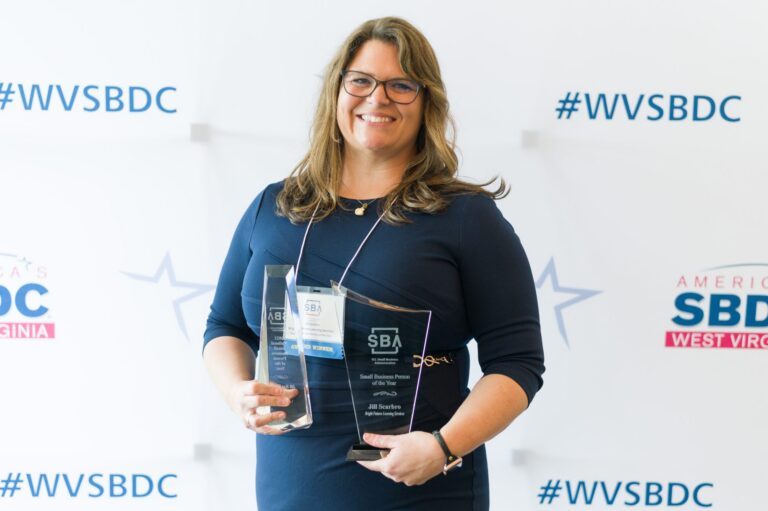
Sigaud and Jecmen first met as professor and student at the University of Southern Maine. Clélia Sigaud, PsyD, BCBA-D, is a licensed psychologist, certified school psychologist, and board certified behavior analyst whose clinical background spans one-to-one direct care with children and adolescents, classroom-level behavior support, and psychological assessment. She holds graduate faculty appointments in the Educational and School Psychology Department at the University of Southern Maine and in the Education Department at Iona University. Patrick Jecmen, MS, BCBA, spent the first decade of his career in special education, beginning in therapeutic settings and later moving into public school environments and special education coaching roles focused on strengthening educator practice. He entered behavior analysis, in his own telling, for practical reasons rather than theoretical ones.
“I’m not especially talented at many things in life, but I’ve always had a knack for hitching my wagon to people that are going places,” says Patrick Jecmen, MS, BCBA, co-founder of Learning Behavior Analysis.
The case for a new approach
The business rationale for LBA rests on a measurable and worsening problem. In 2025, the first-time pass rate on the BCBA exam fell to 51 percent, the lowest figure the Behavior Analyst Certification Board has ever recorded. That number sits fifteen points below the 2020 peak of 66 percent. Retake candidates fare considerably worse, with only 23 percent passing in 2025, meaning roughly three of every four retakers fail again. Over the same five-year window, the first-time candidate pool grew from 6,583 to 9,955, a 51 percent increase, according to BACB data reported by Behavioral Health Business. More candidates are sitting for the exam each year, and a smaller share are leaving with a passing score.
Interpreting that decline remains contested. The sixth edition of the BCBA exam launched in January 2025 with a new content outline and a new cut score, and BACB CEO Dr. Jim Carr has cautioned against direct year-over-year comparisons, telling Behavioral Health Business that each new exam era effectively resets the baseline for interpretation. Industry leaders interviewed in the same publication have pointed instead to the quality and consistency of candidate preparation as the more likely driver of the trend.
Sigaud and Jecmen share that diagnosis, and it is the gap their business is designed to address. In the press materials provided for this article, the founders describe a field in which mentorship is inconsistent, supervision is uneven, and high-quality tutoring sits behind a price tag that filters out many capable candidates before they have a fair opportunity to succeed. They frame the resulting inequity as a long-term risk to the profession itself, rather than simply a matter of individual access to opportunity.
“When access is uneven, our profession is less informed by marginalized perspectives, and that has real implications for the social validity, relevance, and acceptability of our work.”
Inside the product
Tutor is LBA’s flagship consumer product, an AI-informed BCBA exam prep platform available on both desktop and mobile. It was developed in partnership with Intraverbal AI, the Miami-based company founded by Adam Ventura, a BCBA and longtime adjunct professor at Florida International University. Intraverbal’s broader platform has been adopted by graduate programs including Felician University in New Jersey, which launched a program-wide integration for the spring 2026 semester. On its own website, Intraverbal describes its partnership with LBA as a test prep curriculum aimed beyond exam performance and toward clinical readiness after certification.
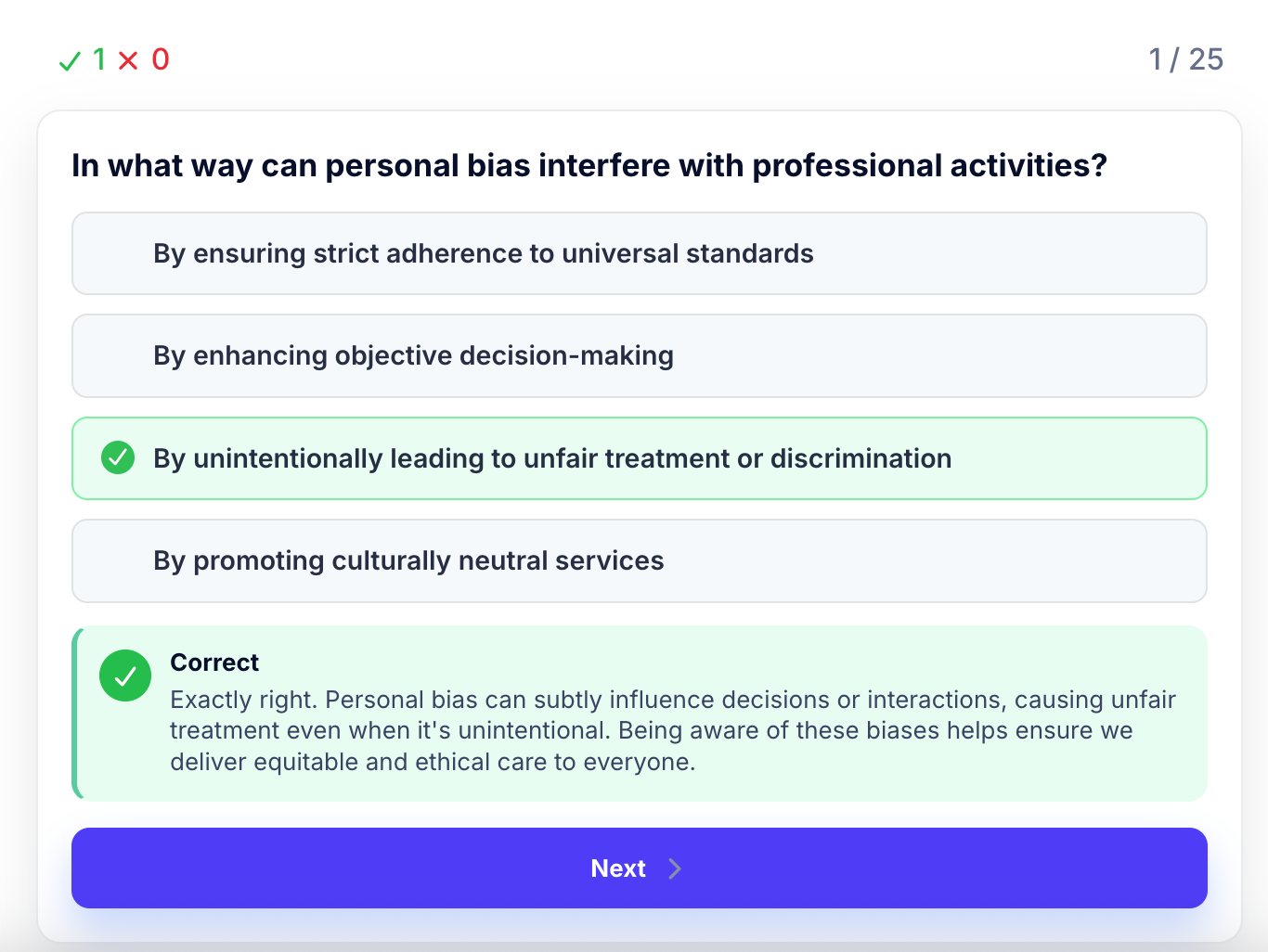
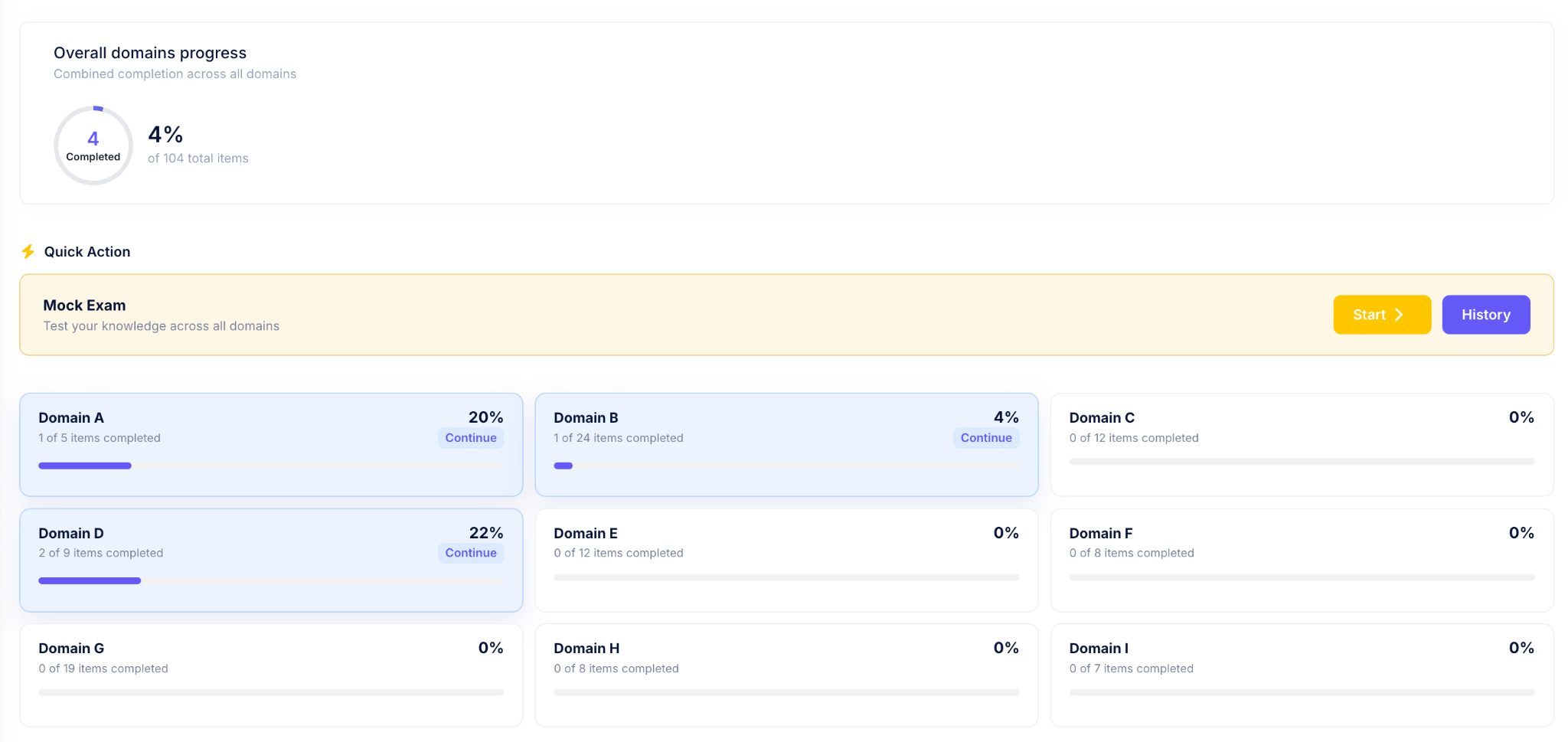
On the surface, the feature set reads as familiar territory for the category: adaptive tutoring, fluency drills, multiple-choice quizzes, and full-length mock exams. The differentiation lies in how each feature is configured. Before starting a study session, users select the population and setting most relevant to their clinical work, whether early intervention for autism, adult day habilitation, or organizational behavior management, and the system pulls its vignettes from that context rather than generating generic examples. Questions regenerate across sessions, which reduces the tendency for candidates to memorize specific items instead of mastering the underlying concepts. The chat-based tutoring is designed as an actual conversation, closer to working through a textbook with an interlocutor present than to completing a multiple-choice quiz.
According to the founders, Tutor is trained on scholarly behavior-analytic sources rather than on open-web content. In a field where misinformation circulates quickly through social media and generic chatbots are known to confidently misstate technical concepts, that sourcing distinction sits at the center of their product claim. The founders describe Tutor as deliberately narrow by design, shaped around the specific conceptual errors candidates tend to make on the BCBA exam rather than engineered for broad utility across ABA topics.
Their written framing is pointed. Tutor, they write, was shaped by behavior analysts rather than by engineers or entrepreneurs looking to enter the ABA market. The framing does double duty in their positioning, functioning as both marketing distinction and underlying thesis for how the product was built.
Keeping humans in the loop
The founders are explicit that Tutor is not intended to replace human instruction. What they describe as the product’s defining feature is the continuous behind-the-scenes correction performed by two practicing behavior analysts. Both cite specific examples from the beta phase earlier this year. In one case, the chat feature implied in conversation that fine motor behavior, such as pencil gripping, was not under operant control. In another, it treated all private events as equivalent, effectively blurring the distinction between thoughts and emotions, and between respondent and operant mechanisms. Both errors would read as authoritative text to a candidate still learning where the technical lines in the field are drawn. Fixing them, the founders say, required extensive reworking of background parameters to achieve fully accurate output from the tutor.
That kind of oversight is resource-intensive, and the founders acknowledge the tradeoff. In their framing, the oversight is the value proposition. AI in ABA, as they describe it, should function as a capacity builder and an extension of clinician judgment rather than a substitute for it. The model depends on two behavior analysts staying actively engaged with the product on an ongoing basis, reviewing outputs, correcting drift, and publicly documenting the fixes. The approach scales less easily than a pure software play, which appears to be an intentional feature of the business rather than an oversight.
“We’re using it as a capacity builder and an extension of our human intelligence, not as a replacement,” the founders write.
The founders’ larger thesis
The language the founders use to describe their work is notable for its conviction. Jecmen describes behaviorism as, in his words, a worldview that is compassionate and just: one that does not assume something is wrong with a person, but rather asks how an environment might be better designed to suit that person’s hopes and aspirations. Sigaud puts it in even stronger terms. In her account of the company’s origins, she writes that ABA is best understood not as a job or even a career, but as a worldview in its own right. A credential pipeline that optimizes for exam performance alone, she argues, risks producing clinicians capable of demonstrating procedural fidelity on the wrong clinical target entirely.
She reaches for a medical analogy to make the point. A clinician who demonstrates flawless functional control without first understanding the contextual variables of the case is, in her framing, the behavioral equivalent of a surgeon performing a technically perfect mastectomy on a patient with liver cancer. The procedure is executed without error; the clinical judgment, somewhere upstream of the operating room, has already failed.
Whether an AI tutor can meaningfully carry that conceptual weight into clinical practice, rather than simply lifting scaled scores on the sixth-edition exam, remains the open question for LBA’s product. The founders are betting that it can, provided two behavior analysts keep their hands on the wheel in a visible and ongoing way. In a credential pipeline where the first-time pass rate now sits at a coin flip and the retake rate has fallen to one in four, any approach that widens the funnel of candidates who can study well, and study equitably, is worth watching closely.
AT A GLANCE
| Company: | Learning Behavior Analysis LLC, formally co-founded 2022 |
| Founders: | Clélia Sigaud, PsyD, BCBA-D; Patrick Jecmen, MS, BCBA |
| Main product: | Tutor, AI-informed BCBA exam prep (desktop and mobile) |
| Technology partner: | Intraverbal AI, founded by Adam Ventura, BCBA |
| Free resource: | Full BCBA Task List term breakdowns, >2.2M cumulative views (founder-reported) |
| 2025 first-time BCBA pass rate: | 51%, lowest on record (BACB 2025 Annual Data Report) |
| 2020 first-time pass rate (peak): | 66% (BACB Annual Data Report) |
| 2025 retake pass rate: | 23% (BACB 2025 Annual Data Report) |
| First-time candidate volume: | 6,583 (2020) to 9,955 (2025), +51% (BACB, via BHB, March 2026) |
| Exam era change: | Sixth edition exam launched January 2025 (BACB) |
| Tutor product features: | Adaptive chat tutoring, fluency drills, practice questions, mock exams, context-specific vignettes |
| Key differentiator claim: | Trained on scholarly ABA sources; actively supervised by two BCBAs |
SOURCES & REFERENCES
| 1. | Learning Behavior Analysis LLC. Founder press materials submitted to BreakingNewsABA. April 2026. |
| 2. | Learning Behavior Analysis LLC. Company website. https://learningbehavioranalysis.com |
| 3. | Behavior Analyst Certification Board. BACB Annual Data Reports (2024, 2025). Updated January 2026. https://www.bacb.com/about/bacb-certificant-annual-report-data/ |
| 4. | Behavior Analyst Certification Board. BCBA Examination Pass Rates for University Training Programs (2024), updated December 2025. https://www.bacb.com/wp-content/uploads/2025/05/BCBA-2024-Pass-Rates-Combined-251222-a.pdf |
| 5. | Behavioral Health Business. “What’s Driving BCBA Exam Pass Rates to Historic Lows.” March 30, 2026. https://bhbusiness.com/2026/03/30/whats-driving-bcba-exam-pass-rates-to-historic-lows/ |
| 6. | Intraverbal AI. About Us. https://www.intraverbal.ai/about-us |
| 7. | Felician University. “Where Education Meets Artificial Intelligence: Enhancing Applied Behavior Analysis with Intraverbal AI.” News release, November 21, 2025. |