A Father’s Experience Becomes a Business
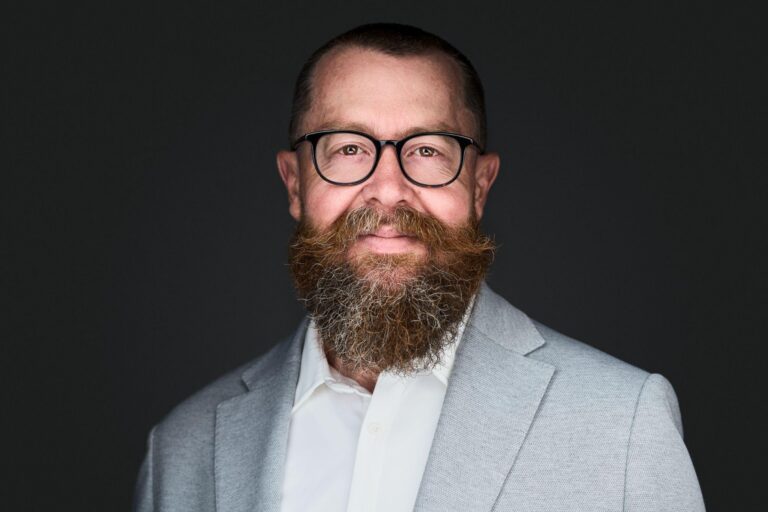
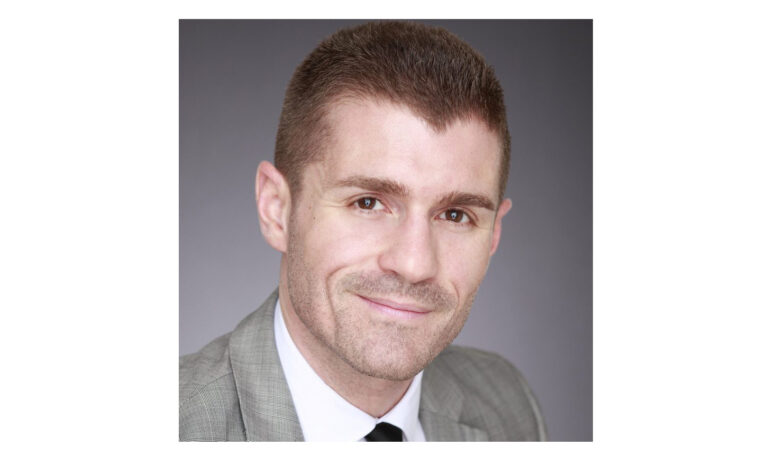
ALPHARETTA, GEORGIA – In 2019, Idris Demirci’s son was diagnosed with autism. The family then waited seven months before treatment could begin, a delay that is common across the United States and just as costly for a family watching developmental windows close. When his son finally entered ABA therapy, the Demircis watched their child develop communication and social skills they had been told might never emerge. The experience convinced Demirci he could build a better version of the system his family had been forced to use.
With guidance from the University of Georgia Small Business Development Center, Demirci launched Able Autism Therapy Services in late 2021, opening the first clinic in Alpharetta, a northern suburb of Atlanta in Fulton County. The company offered ABA, speech therapy, and occupational therapy, the integrated multidisciplinary model that has become the standard clinical architecture among newer ABA franchise entrants. UGA SBDC consultants helped Demirci structure the company’s operations, financial planning, and growth strategy from the earliest stages.
Demand was immediate. Within two years, Able Autism had expanded to a second clinic in Duluth, Georgia, launched in-home services in Knoxville, Tennessee, and grown to roughly $2 million in annual revenue with about 30 employees. Robbie Parks, the UGA SBDC consultant who worked with Demirci, described him as the kind of operator who consistently thinks five steps ahead, surfacing potential issues before they become problems. That discipline is what separates founders who build scalable businesses from those whose practices stall at the founder’s personal capacity.
The growth trajectory was notable for its context as much as its speed. The ABA market in metropolitan Atlanta is competitive, with multiple PE-backed platforms holding strong market positions. Breaking through as an independent startup required a combination of clinical quality, operational efficiency, and community trust-building. By 2024, Demirci began exploring franchising as a way to extend the model beyond what corporate-owned expansion alone could deliver.
The Franchise Model
Able Autism Therapy Services was not conceived as a franchise. Like Success On The Spectrum, which operated for three years before registering its franchise system in 2018, Able Autism spent its first two years proving the clinical and business model through corporate-owned operations before developing a franchise offering in 2023. The franchise entity, Able Autism Therapy Services Franchise, LLC, is headquartered at 6445 Shiloh Road in Alpharetta. The prove-then-franchise sequence gives prospective franchisees a track record to evaluate, even if that record is still relatively short compared to more established ABA franchise systems.
“I didn’t really want to get too big or have 10 clinics under my name. But what if I could help other people open their own clinics? They could be part of this community, and they could also make money.” — Idris Demirci, Founder, Able Autism Therapy (UGA SBDC, 2025)
The franchise economics place Able Autism in the mid-range of the ABA franchise category. The initial franchise fee is $40,000, and the minimum estimated total investment to open a location is $128,700 (the upper end of the published range reaches $235,167). That entry point sits well below the $400,000 to $500,000 total cost Success On The Spectrum founder Nichole Daher described in a 2024 Behavioral Health Business interview, and below Autism Care Therapy’s $338,000 to $734,000 FDD range, but above the sub-$100,000 threshold offered by in-home models like Hi-5 ABA. Each franchise territory is exclusive, defined as a 100,000-population base or a five-mile radius, providing stronger geographic protections than the designated-but-not-exclusive territories some competitors offer.
The exclusive territory model has meaningful implications for franchise value. In systems with designated but non-exclusive territories, franchisees can face competition from other operators within the same brand, which dilutes the franchise’s local market position and creates confusion among referral sources and families. Able Autism’s exclusive territory structure means that within the defined geographic area, the franchisee is the sole representative of the brand, a cleaner competitive position that simplifies marketing, referral development, and community relationship-building.
Franchisees receive training that begins at the corporate facility in Georgia and continues with practical training at the franchisee’s own location. Ongoing support covers unit operations, service techniques, pricing guidelines, administrative procedures, and marketing. The marketing playbook emphasizes referral strategies and networking with local pediatricians, developmental specialists, and school districts, a referral-driven acquisition model that reduces dependence on paid digital advertising.
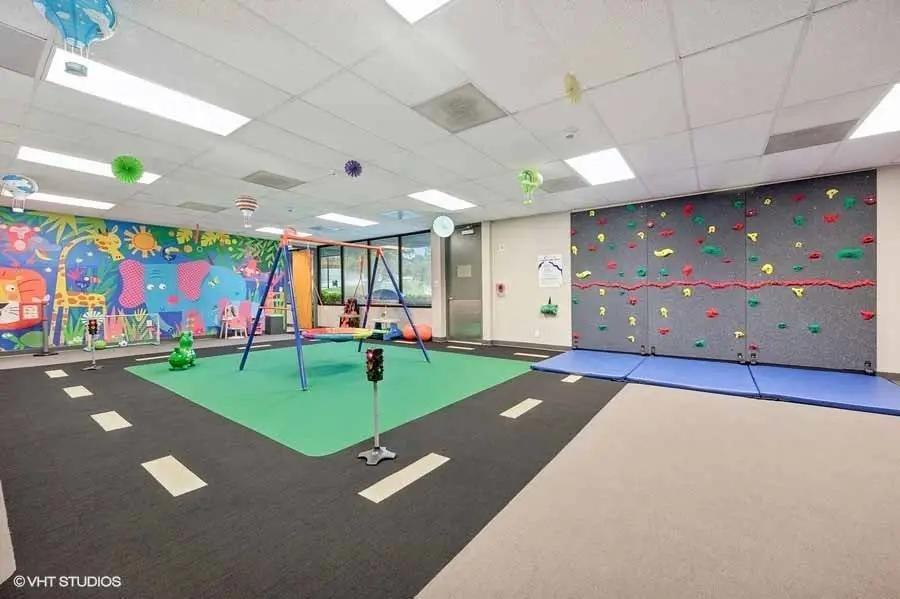
The company serves children aged 18 and younger with programs that include ABA, speech therapy, occupational therapy, social skills classes, pretend play, sensory room activities, and art room sessions. Revenue streams include private pay, Medicaid, and commercial insurance reimbursement. The breadth of programming reflects a clinical philosophy that treats autism intervention as more than isolated behavioral therapy.
Early Franchise Partners and Expansion
Able Autism signed its first franchise partner in October 2024: Barbara Rodriguez and Mario Martinez, two engineers with a personal connection to the autism community, who committed to opening a location in Grayson, Georgia, northeast of Atlanta. Demirci described their engineering background as a strength in evaluating the franchise. The vetting was deliberately careful. In a May 2024 Behavioral Health Business interview, Demirci said the company had a strong pipeline of potential franchisees but was being extremely selective in choosing partners.
By mid-2025, the expansion had moved beyond Georgia. A July 2025 press release announced new locations in Snellville, Georgia, and Phoenix, Arizona, the brand’s first unit outside the Southeast, along with a development agreement for the Philippines, the first international expansion for the brand. The company’s website lists active or planned locations in Georgia, Minnesota, and Arizona, with additional markets identified as coming soon.
The Philippines move is the most consequential. While both Success On The Spectrum founder Nichole Daher and Demirci have publicly discussed the possibility of international ABA franchise operations, Able Autism appears to be the first among the active ABA franchise brands to formalize an international development agreement. The Philippines has growing awareness of autism services and an increasing number of families seeking developmental intervention, but significantly less developed infrastructure for ABA delivery than the United States. The market need is real. The regulatory framework, insurance reimbursement landscape, and workforce availability for ABA services in the Philippines are substantially different from the U.S. environment in which the franchise model was designed.
Demirci’s stated goal is to have 50 franchises sold within five years of the franchise launch. As of mid-2025, Able Autism operates two corporate-owned clinics in Georgia plus franchise locations in Georgia, Arizona, and the Philippines development agreement. The pace runs behind that five-year target, but the brand is still in its earliest franchise expansion phase, and the selectivity of the franchisee vetting process suggests a deliberate quality-over-speed approach.
A Proprietary Technology Platform
One of Able Autism’s most distinctive competitive assets is a proprietary practice management platform the company built from the ground up after finding that every commercially available solution fell short. The platform was developed in-house based on direct experience managing ABA clinics, and it covers the full operational workflow: automated appointment reminders the company says reduce no-shows by 60 percent, insurance eligibility verification, real-time session data collection with interactive clinical charts and mobile-to-web synchronization, clinical and operational analytics dashboards, claims processing, and insurance denial management.
For a franchise system, a proprietary technology platform can be a defensible competitive advantage. It standardizes operations across every location, ensures every franchisee uses the same tools, reduces reliance on third-party software vendors whose pricing and roadmaps the franchisor cannot control, and gives the company direct ownership of the data layer that drives clinical and operational decisions. If the platform performs as described, it addresses one of the most persistent and costly operational pain points in ABA practices: the administrative burden of insurance verification, claims submission, authorization tracking, and denial management that consumes staff time, delays revenue collection, and contributes to clinician burnout.
A proprietary tech stack is a hard moat for a franchise. It standardizes operations, locks in data ownership, and removes the franchisor’s dependence on outside vendors who set the rules elsewhere.
The company markets the technology not only to its own franchise network but also to outside practices, describing it as an enterprise-grade platform with what it claims is 100 percent user satisfaction. If Able Autism scales the platform as a standalone software product alongside its franchise operations, it could create a second revenue stream and a deeper competitive moat around the brand. That playbook echoes how CentralReach became the dominant practice management platform in ABA by initially serving individual practices and then becoming the infrastructure layer for the entire sector.
Position in the ABA Franchise Landscape
Able Autism Therapy Services is the youngest of the major ABA franchise brands by founding date, having launched the practice in 2021 and the franchise program in 2023. It lacks the ten-year operating history of Success On The Spectrum, the rapid 15-unit early growth of Essential Speech and ABA Therapy, or the BCBA-specific niche that Hi-5 ABA has carved out. What it has is a founder with a compelling personal narrative backed by measurable business results, a proprietary technology platform that no other ABA franchise offers, an early international expansion move, and an exclusive territory model that provides the strongest geographic protections in the franchise category.
In a May 2024 Behavioral Health Business article that profiled the emerging ABA franchise space, reporter Chris Larson noted that the franchise model remains nascent in behavioral health but is generating lively activity as an alternative to independent startups and PE-backed platforms. Demirci’s comments captured his philosophy concisely: he was not trying to build a chain of corporate-owned clinics but to equip other operators with the systems, processes, and support they need to run sustainable practices.
The challenge for Able Autism is the same challenge facing every early-stage franchise: proving the model works beyond the founder’s direct oversight. Corporate-owned locations operate under the founder’s daily management, institutional knowledge, and personal referral network. Franchise locations must replicate that quality through training, documented systems, technology tools, and ongoing support alone. With only a handful of franchise units open and an ambitious international expansion underway at the same time, the next two to three years will determine whether Able Autism can scale the operational discipline that built a $2 million practice in Alpharetta into a national and potentially international franchise system.
For prospective franchisees, Able Autism offers several distinctive features: a lower financial entry point than clinic-based competitors like SOS and Autism Care Therapy, genuine exclusive territory protections, a proprietary technology stack no other franchise provides, and a founder whose personal experience with the autism care system gives the brand an authentic connection to the families it serves. The trade-offs are limited franchise operating history, a small system still establishing its track record beyond the Georgia home market, and the execution risk of building a domestic franchise network and pursuing international expansion at the same time.
Demirci’s five-year goal of 50 franchises sold by 2028 is the public benchmark. The Phoenix clinic is operating, the Philippines development agreement is signed, and the proprietary tech platform is live. The open question for the next two years is whether the operational discipline that produced a $2 million practice in Alpharetta can be transferred, in code and in process, to operators in Manila where the brand has no clinical footprint and Medicaid-style reimbursement does not apply.
AT A GLANCE
| Founded: | 2021, Alpharetta, Georgia, by Idris Demirci |
| Franchising since: | 2023 (first franchise signed October 2024) |
| Corporate locations: | 2 (Alpharetta and Duluth, Georgia); in-home services in Knoxville, TN |
| Franchise locations: | Grayson, GA; Snellville, GA; Phoenix, AZ; Philippines (development agreement) |
| Franchise fee: | $40,000 |
| Minimum investment: | $128,700 (range up to $235,167; FDD Item 7 range $143,200 to $613,500) |
| Royalty: | 5% of gross sales |
| Territory: | Exclusive; 100,000 population or 5-mile radius |
| Services: | ABA, speech therapy, occupational therapy (ages 18 and under) |
| Revenue (corporate): | ~$2 million annually by 2023 (UGA SBDC) |
| Stated goal: | 50 franchises sold within five years of launch |
| Technology: | Proprietary practice management platform built in-house |
| First international market: | Philippines (development rights, 2025) |
SOURCES & REFERENCES
| 1. | UGA Small Business Development Center. “Building a Lifeline for Families: UGA SBDC Helps Autism Therapy Service Grow.” georgiasbdc.org. March 2025. https://georgiasbdc.org/able-autism-therapy-services/ |
| 2. | Able Autism Therapy Services. “Who We Are.” ableaba.com. Accessed April 2026. https://www.ableaba.com/occupational-therapy-services-in-johns-creek-georgia/who-we-are |
| 3. | Able Autism Therapy. “Franchise Opportunity.” ableautismfranchise.com. Accessed April 2026. https://ableautismfranchise.com/ |
| 4. | Able Autism Therapy. “ABA Therapy Franchise.” ableaba.com. Accessed April 2026. https://www.ableaba.com/aba-therapy-franchise |
| 5. | Larson, Chris. “Autism Therapy Franchises Offer New Option for Entrepreneurs Skeptical of Private Equity Paradigm.” Behavioral Health Business. May 22, 2024. https://bhbusiness.com/2024/05/22/autism-therapy-franchises-offer-new-option-for-entrepreneurs-skeptical-of-private-equity-paradigm/ |
| 6. | EIN Presswire / CBS42. “Able Autism Announces First Arizona Franchise and International Expansion into the Philippines.” July 25, 2025. https://www.cbs42.com/business/press-releases/ein-presswire/833982616/ |
| 7. | Franchise Funding Solutions. “Able Autism Therapy Services.” Accessed April 2026. https://franchisefundingsolutions.com/franchise/able-autism-therapy-services/ |
| 8. | FDD Exchange. “Able Autism Therapy Services 2024 FDD.” Accessed April 2026. https://fddexchange.com/view-fdd-docs/able-autism-therapy-services-2024-fdd-franchise-information-costs-and-fees/ |
| 9. | Success On The Spectrum / SOS Franchising. sosfranchising.com. Accessed April 2026. |
| 10. | Hi-5 ABA. “Franchise Opportunity.” hi5aba.com. Accessed April 2026. |
| 11. | Essential Speech and ABA Therapy. speechandabafranchise.com. Accessed April 2026. |
| 12. | CentralReach. centralreach.com. Accessed April 2026. |
| 13. | FranchisePayback. “Autism Care Therapy Franchise FDD.” Accessed April 2026. https://www.franchisepayback.com/franchise/autism-care-therapy |