The Firm
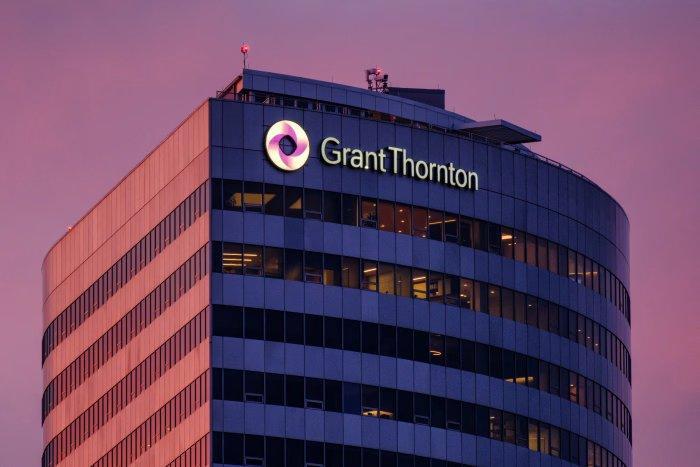
CHICAGO, ILLINOIS, Grant Thornton LLP is the U.S. member firm of Grant Thornton International, the seventh-largest global accounting network by revenue. The U.S. firm generated approximately $2.4 billion in revenue for FY2023, with more than 8,500 employees and 550 partners across 59 offices in 28 states. Grant Thornton International reached record global revenue of $8.5 billion in 2025, with approximately 80,000 professionals across 147 markets, growing 6.1 percent year-over-year.
In May 2024, New Mountain Capital acquired a majority stake in Grant Thornton, making it one of the first major accounting firms to be majority-owned by private equity. The deal transformed Grant Thornton’s capital structure and accelerated its strategic investment capacity. As part of the transaction, the firm adopted an alternative practice structure, with Grant Thornton LLP handling attest services and Grant Thornton Advisors LLC managing business advisory and non-attest services. Founded in Chicago in 1924 by Alexander Richardson Grant, the firm has operated for more than a century with a consistent focus on middle-market clients.
Grant Thornton’s three primary service lines are audit, tax, and advisory. The advisory practice encompasses the firm’s Strategy & Transactions team, which provides financial due diligence, commercial due diligence, integration and separation advisory, value creation consulting, and exit planning. The firm’s healthcare practice serves providers, payers, health systems, and life sciences companies with transaction advisory, consulting, tax, and assurance services.
The Stax Acquisition: Adding Commercial Due Diligence
In August 2025, Grant Thornton Advisors announced the acquisition of Stax, a global strategy consulting firm specializing in commercial due diligence, value creation, and exit planning for private equity firms. Stax brought approximately 300 team members and a three-decade track record of partnering with PE firms, PE-backed companies, hedge funds, and investment banks across industries including healthcare, technology, business services, and consumer sectors.
The Stax acquisition is strategically significant for Grant Thornton’s ABA transaction advisory positioning. Commercial due diligence, evaluating market dynamics, competitive positioning, customer segmentation, growth trajectory, and commercial viability, is increasingly important in ABA platform acquisitions where the investment thesis depends on assumptions about market density, geographic expansion potential, and competitive differentiation. By integrating Stax’s commercial diligence capabilities with Grant Thornton’s established financial QofE practice, the firm can now offer PE sponsors an integrated financial and commercial assessment from a single advisory platform.
Stax’s data-driven approach leverages AI and advanced intelligence tools to deliver actionable insights and proven results. For ABA transactions where market analysis requires understanding of local provider density, autism prevalence rates, Medicaid enrollment trends, and competitive dynamics across metropolitan and rural markets, Stax’s analytical methodology adds a dimension that traditional accounting-focused diligence firms do not typically provide.
Grant Thornton’s 2025 acquisition of Stax adds dedicated commercial due diligence capabilities, market dynamics, competitive positioning, and growth trajectory analysis, that complement the firm’s established financial QofE practice and create an integrated platform for ABA platform evaluation.
Healthcare Transaction Advisory Leadership
Grant Thornton’s healthcare transaction advisory practice is led by named sector specialists. Glenn Barenbaum serves as Principal and Healthcare & Life Sciences Diligence Co-Leader within the firm’s Strategy & Transactions practice. Lance Beder serves as Principal in Healthcare Transaction Advisory, focusing on financial due diligence for healthcare services transactions. David Tyler serves as Principal and National Healthcare Delivery Leader, overseeing the firm’s broader healthcare consulting practice.

Barenbaum and Beder have published joint commentary on healthcare M&A trends, discussing the impact of regulatory shifts, technology diligence requirements, and revenue cycle management assessment on deal preparedness. Their published guidance specifically identifies revenue cycle management as a pain point in healthcare M&A processes, an observation that is directly relevant to ABA transactions where billing authorization management, claims denial rates, and Medicaid payment processing cycles are central to earnings sustainability.
Grant Thornton’s 2025 healthcare M&A trends analysis noted that the new administration’s stated priorities could lead to a more lenient regulatory environment for healthcare M&A. However, the firm’s leaders also cautioned that persistent uncertainties such as virtual health legislation, tariff effects, and inflation are affecting deal markets. For ABA M&A specifically, the regulatory environment is becoming more rather than less complex, with accreditation mandates, rate cuts, and federal audit scrutiny creating layers of diligence that did not exist five years ago.
The One Firm Approach
Grant Thornton describes its service delivery model as a “one firm” approach that connects pre-closing diligence insights to post-close consulting and integration support. This means that the professionals who identify risks and value drivers during due diligence can remain engaged through integration planning and execution, providing continuity that reduces information loss and ensures that diligence findings translate into actionable post-close workstreams.
The firm’s holistic approach to transaction advisory addresses financial, operational, tax, IT, commercial, strategic, human capital, and cultural dimensions of a deal. For ABA platform transactions, this breadth is particularly relevant because the factors that drive deal success extend well beyond the financial statements. Clinician retention, supervision ratio compliance, EHR system integration, billing platform consolidation, and organizational culture alignment between acquirer and target all affect post-close performance. Grant Thornton’s ability to staff diligence teams that span these dimensions under a single engagement provides PE buyers with a more cohesive and actionable assessment.
The firm’s integration advisory capabilities include transitional services agreement design, Day 1 readiness planning, and post-close management. For PE-backed ABA roll-ups executing multiple acquisitions per year, Grant Thornton’s ability to move seamlessly from diligence into integration reduces the gap between identifying risks and addressing them, a gap that can erode deal value if not managed effectively.
Where Grant Thornton Fits in ABA M&A
Grant Thornton competes in the middle-market healthcare transaction advisory space alongside RSM, BDO, Baker Tilly, and CohnReznick. The firm’s PE-backed structure, Stax commercial diligence capabilities, and named healthcare deal leaders give it a differentiated position. The New Mountain Capital investment signals a firm investing aggressively in growth, talent acquisition, and service capability expansion, a trajectory that should continue strengthening Grant Thornton’s healthcare transaction advisory practice.
For ABA transactions specifically, Grant Thornton’s integration of financial and commercial diligence under one roof mirrors the approach that EY-Parthenon offers at the Big Four level. The difference is pricing: Grant Thornton’s middle-market fee structure makes this integrated approach accessible for the $10 million to $150 million EBITDA transactions that constitute the majority of ABA deal activity. PE sponsors who want both financial QofE and commercial market assessment without engaging two separate firms, and without paying Big Four rates, will find Grant Thornton’s combined platform compelling.
Grant Thornton’s integration of financial QofE and commercial due diligence under one roof, at middle-market pricing, mirrors the approach that EY-Parthenon offers at the Big Four level, making it accessible for the transactions that constitute the majority of ABA deal activity.
Grant Thornton’s global network of approximately 80,000 professionals across 147 markets provides cross-border capabilities for PE sponsors evaluating international behavioral health expansion opportunities. While ABA remains predominantly a U.S. service delivery model, the methodology is gaining clinical adoption in international markets. Grant Thornton’s global presence positions it to support diligence on multi-jurisdictional behavioral health transactions as the international ABA market develops.
The firm’s human capital diligence practice assesses organizational culture, compensation structures, talent retention risk, and workforce dynamics, all critical dimensions in ABA transactions where BCBA and RBT workforce availability constrains growth capacity and where clinician retention directly affects the sustainability of earnings. Grant Thornton’s ability to evaluate these workforce factors alongside financial performance metrics provides a more complete picture of the target’s value proposition than financial-only diligence.
Grant Thornton’s technology and IT due diligence capabilities address the electronic health record systems, practice management platforms, and revenue cycle technology infrastructure that underpin ABA provider operations. As ABA platforms grow through acquisition, they often inherit fragmented technology environments, multiple EHR systems, inconsistent billing platforms, and varying data formats across acquired practices. Grant Thornton’s technology diligence team evaluates the cost, complexity, and timeline of technology consolidation, providing buyers with a realistic assessment of post-acquisition integration requirements.
The firm’s value creation practice partners with management teams and sponsors to design and execute practical value creation plans that maximize returns and position companies for long-term success. From deal close through the hold period and beyond, Grant Thornton’s collaborative approach drives measurable impact, sustainable growth, and lasting enterprise value. For ABA platforms, value creation levers often include geographic expansion, de novo clinic development, payer diversification, clinical outcome improvement, and operational standardization across acquired practices.
Grant Thornton’s transaction advisory practice also provides exit planning and sell-side diligence services that help management teams, sponsors, and advisors achieve strategic, high-value exits. For ABA platform owners and their PE sponsors preparing for a sale, Grant Thornton’s sell-side capabilities include designing the financial narrative, identifying and proactively addressing likely buyer concerns, and positioning the company to maximize transaction value. This exit planning capability is particularly relevant to the growing number of PE-backed ABA platforms approaching the end of their initial hold periods and preparing for secondary buyouts or strategic exits.
Key Considerations for ABA Stakeholders
For ABA practice owners, Grant Thornton’s healthcare transaction advisory team represents a well-credentialed mid-market diligence provider with named sector leaders. Owners should be prepared for diligence that extends beyond financial performance to include revenue cycle assessment, technology infrastructure evaluation, and integration readiness, consistent with the firm’s holistic approach to deal evaluation.
For PE sponsors, Grant Thornton’s post-New Mountain Capital positioning as a PE-backed advisory platform with integrated financial and commercial diligence capabilities makes it a natural fit for ABA platform acquisitions. The Stax acquisition adds commercial due diligence depth that most mid-market accounting firms lack, while the one firm approach ensures diligence findings flow into integration planning without information loss.
For the ABA industry, Grant Thornton’s published healthcare M&A commentary, including its emphasis on revenue cycle diligence, technology assessment, and regulatory preparedness, provides useful guidance on the dimensions of deal evaluation that matter most to buyers and their advisors in the current market environment.
The firm’s century-long history in the middle market provides institutional stability that PE sponsors value when selecting advisory partners for multi-year fund cycles. Grant Thornton’s consistent focus on privately held businesses and middle-market transactions means its professionals accumulate deal experience at the transaction sizes and complexity levels that characterize ABA M&A. This experience density, measured in completed healthcare transactions rather than total firm revenue, is often a more meaningful indicator of diligence quality than firm scale alone.
Grant Thornton’s PE-backed structure under New Mountain Capital creates alignment with the PE sponsors who drive ABA deal activity. A firm that is itself PE-owned understands the investment thesis development process, the diligence cadence that PE deal committees require, and the value creation frameworks that sponsors expect their advisory firms to support. This alignment, both cultural and structural, distinguishes Grant Thornton from competitor firms that operate under traditional partnership models and may be less attuned to PE-specific expectations around diligence speed, report format, and post-close advisory continuity.
Grant Thornton’s 2025 global revenue of $8.5 billion represents record performance for the network, with growth across all regions and service lines. Assurance led with 7.9 percent growth, advisory grew 4.7 percent, and tax grew 4.5 percent. This balanced growth across practice areas signals a firm that is investing in and growing its advisory capabilities alongside its traditional audit and tax franchise, a positive indicator for PE sponsors seeking an advisory partner with breadth and stability.
The integration of Stax’s commercial due diligence capabilities with Grant Thornton’s established financial diligence practice creates a combined offering that addresses a persistent gap in middle-market healthcare transaction advisory. Historically, PE sponsors evaluating ABA targets have needed to engage separate firms for financial QofE analysis and commercial market assessment, creating coordination overhead and increasing the risk of disconnected findings. By housing both capabilities under one roof, Grant Thornton can deliver integrated diligence reports that connect financial performance to market positioning, competitive dynamics, and growth trajectory analysis.
For ABA practice owners preparing for a potential sale, Grant Thornton’s published healthcare M&A commentary provides useful intelligence on what sophisticated diligence teams evaluate. The firm’s emphasis on revenue cycle management assessment, technology infrastructure evaluation, and regulatory preparedness reflects the dimensions that most frequently surface material findings in ABA due diligence. Owners who proactively address these areas before engaging with buyers position themselves for smoother diligence processes and stronger valuation outcomes.
Grant Thornton’s human capital diligence practice addresses a dimension of ABA transactions that financial-only QofE providers often underweight. BCBA retention, RBT turnover rates, compensation benchmarking, and organizational culture assessment all influence the sustainability of an ABA platform’s earnings. The firm’s ability to evaluate these workforce dynamics alongside financial and commercial diligence provides PE sponsors with a more complete picture of acquisition risk and post-close value creation opportunity.
The firm’s PE-backed structure under New Mountain Capital creates natural alignment with the private equity sponsors who drive the majority of ABA deal activity. A firm that is itself PE-owned understands the investment thesis development process, the hold-period value creation planning cycle, and the exit preparation requirements that define the PE ownership model. This structural alignment may translate into more relevant diligence deliverables that speak directly to the questions PE investment committees need answered before committing capital to ABA platform acquisitions.
AT A GLANCE
| U.S. revenue (FY2023): | ~$2.4 billion (Grant Thornton LLP) |
| Global revenue (2025): | $8.5 billion (Grant Thornton International; record; 6.1% growth) |
| U.S. employees: | 8,500+ professionals across 59 offices in 28 states |
| Global network: | ~80,000 professionals in 147 markets |
| PE ownership: | New Mountain Capital majority stake (March 2024) |
| Stax acquisition (2025): | ~300 commercial due diligence consultants; PE-focused strategy firm |
| Healthcare TAS leaders: | Glenn Barenbaum (HC&LS Diligence Co-Leader); Lance Beder (HC TAS); David Tyler (National HC Delivery Leader) |
| Service model: | “One firm” approach connecting pre-close diligence to post-close integration |
| Diligence scope: | Financial, operational, tax, IT, commercial, strategic, human capital, cultural |
| Founded: | 1924 in Chicago by Alexander Richardson Grant |