A Path Built on Mentors
Vista, CA – Paola Ortiz was not supposed to end up at Harvard, at least not by any map she was handed. As a Mexican immigrant, she grew up without a clear route to higher education and without role models who had walked it before her. What she had was a mother who treated college as a settled fact, and a series of teachers and professors who saw further than she did. One pushed her to apply to Harvard; she says she never would have without him. That pattern, capable people lifted by someone who believed in them, would become the through-line of her career.
She arrived at behavior analysis the same way she arrived at Harvard: pointed there by mentors who saw a fit she had not yet seen herself. Weighing paths like marriage and family therapy or a doctorate in psychology, she was drawn instead to applied behavior analysis (ABA) for its grounding in learning theory and its reach across settings. With a Master of Education in human development and psychology from the Harvard Graduate School of Education, completed in 2008, she found that ABA felt less like a pivot than an extension, a way to apply scientific principles to real-world behavior in measurable terms.
She started where many in the field start, delivering in-home ABA to children with autism, then moved into leadership. Along the way, she earned a certificate in organizational behavior management (OBM), and something clicked: the same science she used with clients could be turned on the systems around them. Used as a leader rather than only a clinician, she found, ABA could improve outcomes not just for a caseload but for an entire company. Even in stretches of burnout, high caseloads, and insurance demands, she says she never tired of the science itself. When she pivoted, she pivoted back to it.
Scaling Care, and the Standard Behind It
That instinct for systems found its fullest test at Merakey, the nonprofit provider of developmental, behavioral health, and education services, where Ortiz served as Executive Director of Clinical Services overseeing a clinical team across California. When the organization moved into the state in 2019, amid the closure of California’s developmental centers, the need was to build fast. Having already lived through mergers and acquisitions at two prior agencies, Ortiz had seen how organizations scale faster than their foundations can bear. She wanted to do it the other way.
By her account, she helped grow the California operation from three sites to sixteen, and the hardest part was not logistics but mindset. Direct support professionals arrived seeing themselves as caregivers; she needed them to see themselves as teachers and behavior-change agents. She built a program to train residential staff, including those with no prior ABA background, to become Registered Behavior Technicians within their first six months. She pressed her BCBAs to stop acting as detached consultants and to own the homes they oversaw, anchoring it all to a single test: would I want my own family member to live here? The advocacy and treatment, she says, had to make the answer yes.
I asked my clinicians one question about every residential home they oversaw: would I want my family member to live here? Then we did the work required to make the answer yes.
What she is proudest of is less a number than a culture: a clinical team held to high standards, working collaboratively rather than in isolation, with systems she could pilot at one site, refine, and scale statewide. Positive findings during regional-center audits across California, she says, validated the approach.
Where Behavior Science Meets the Whole Person
Ortiz holds the NADD-CC credential, a certification for clinicians working at the intersection of intellectual or developmental disability and mental illness, a population she pursued precisely because she kept seeing it underserved. Too often, she argues, practitioners focus on behavior without ruling out medical or psychiatric variables, or without embedding trauma-informed care for adults who have lived through institutionalization. Her answer is a biopsychosocial model: careful differential assessment, interdisciplinary collaboration, and behavior-analytic plans aligned with medical, psychiatric, and environmental realities. She has presented on exactly that theme, the behavior analyst’s role on an interdisciplinary team, including as a presenter and panelist at a Merakey dual diagnosis conference.
Her clinical range is unusually wide, spanning ages one to seventy. Working with a seventy-year-old, she notes, demands a different kind of precision than working with a toddler: the science is the same, but the goals shift from skill acquisition and developmental milestones toward independence, dignity, and quality of life. Complex cases, she says, are the ones that force you actually to apply the science rather than reach for a template.
From Clinic to Community Systems
At Lifeline Community Services, a North County San Diego nonprofit serving more than 20,000 clients a year, Ortiz is the Director of Behavioral Health Services, a role she frames as the application of behavioral science at the level of the organization itself. The shift from a clinical provider like Merakey to a multi-program community nonprofit meant a more tangled funding and compliance landscape, braided grants, contracts, and partnerships, where leaders must weigh sustainability and outcomes alongside care.
Her favorite proof point is operational and human. Across the behavioral health programs she oversees, she says the average client waitlist fell from 68 business days to just four. Every day removed, she points out, is someone who reaches out for support sooner. The same systems lens reshaped a youth suicide-prevention program she began supervising: through process changes and ABA-informed tweaks, she says its reach grew from roughly 4,500 students a year to more than 8,600, a metric she values precisely because suicide is among the leading causes of death for young people.
If the system is not working, it is not a people problem. It is a design problem. Behavior science gives us the tools to fix it.
The Leadership Gap She Wants to Close
Ask Ortiz what the field gets wrong, and she returns to leadership. Clinical skill, she argues, is too often mistaken for leadership readiness: BCBAs are promoted into director roles without training in operations, systems design, budgeting, or OBM, and sometimes given a title as a recruitment tool without the scope to match it. The result is talented clinicians burning out in jobs they were never equipped for. Because behavior analysts are, by definition, experts in behavior, she believes they should be uniquely suited to operational leadership, if the field would actually teach it rather than assume it.
Her view of sustainability is just as concrete. There is no universal billable-hour target, she contends; productivity should be tied to the funding source and population. Medicaid-funded work, heavy with non-billable documentation, might sustainably sit near 50 percent direct service, while a residential setting with more billable time can run higher. Organizations should earn enough to stay viable, she says, not squeeze staff and clients to maximize profit, and those hiring less-experienced clinicians owe them heavier investment in training.
A Podcast, and a New Venture
On Sunday afternoons, while her daughters nap, Ortiz records EveryDay ABA, a podcast she co-hosts with two former Registered Behavior Technicians, Brittanny and Leslie. What began as informal conversations with former colleagues- she was always the one people came to with a problem- has become a platform for translating behavioral science into everyday tools for parenting, relationships, work, and habits. She expected an audience of BCBAs and RBTs; instead, most listeners have no ABA background at all. That, she says, is the point: to move ABA out of its autism-only box and show it as a science that can inform health, business, and daily life.
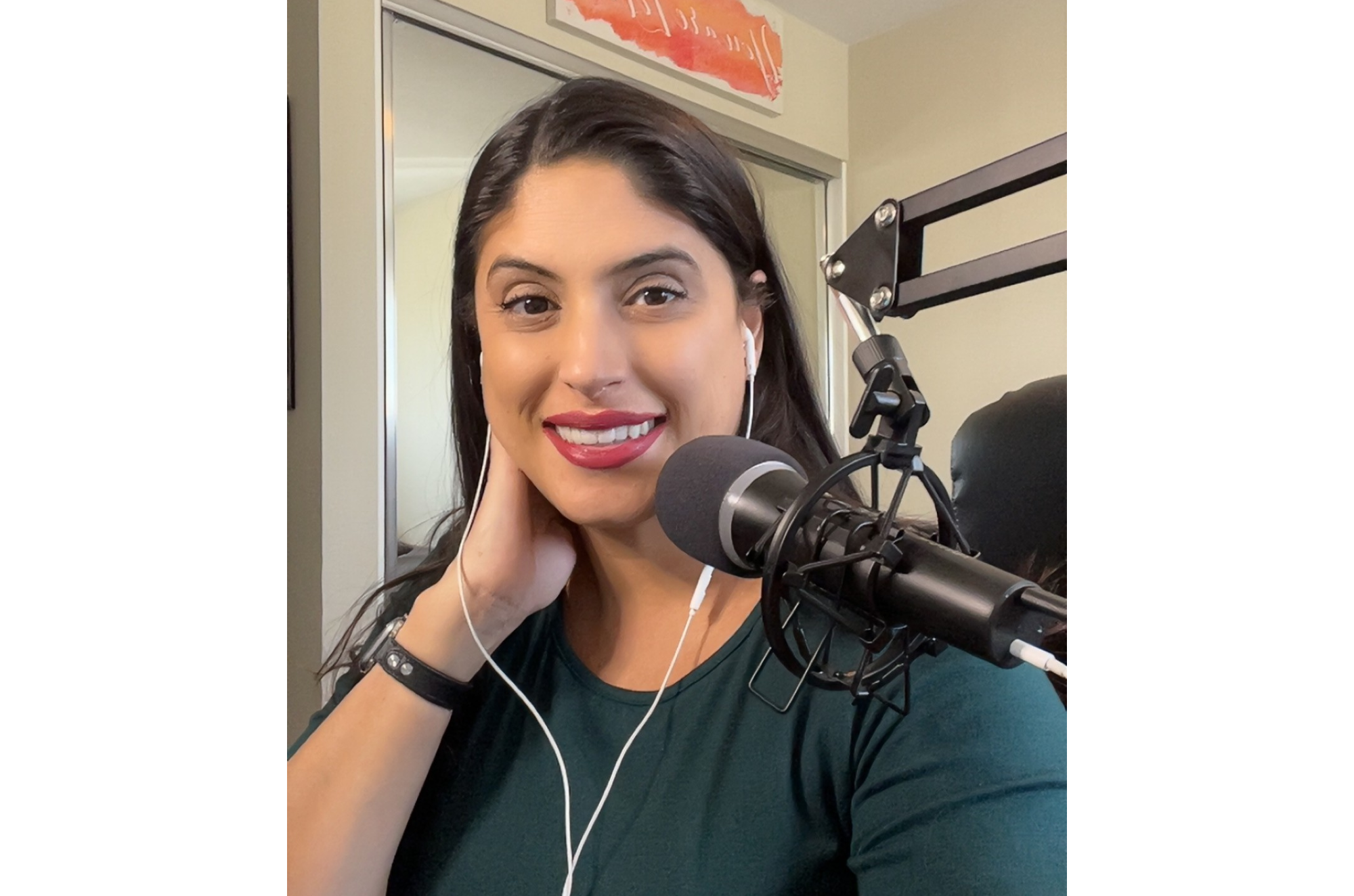
That conviction is now becoming a business. With her co-host Brittany, Ortiz has earned a Lean Six Sigma White Belt and expects to complete Yellow Belt certification over the summer, pairing behavior analysis and OBM with formal process-improvement methods. Their consulting practice focuses on helping mission-driven nonprofits build systems that improve performance, strengthen accountability, develop leaders, and reduce turnover. Many business problems, she has come to believe, are fundamentally behavior problems, and organizations that pour money into policies and technology often overlook the behavioral systems that actually drive performance.
The First-Generation Throughline
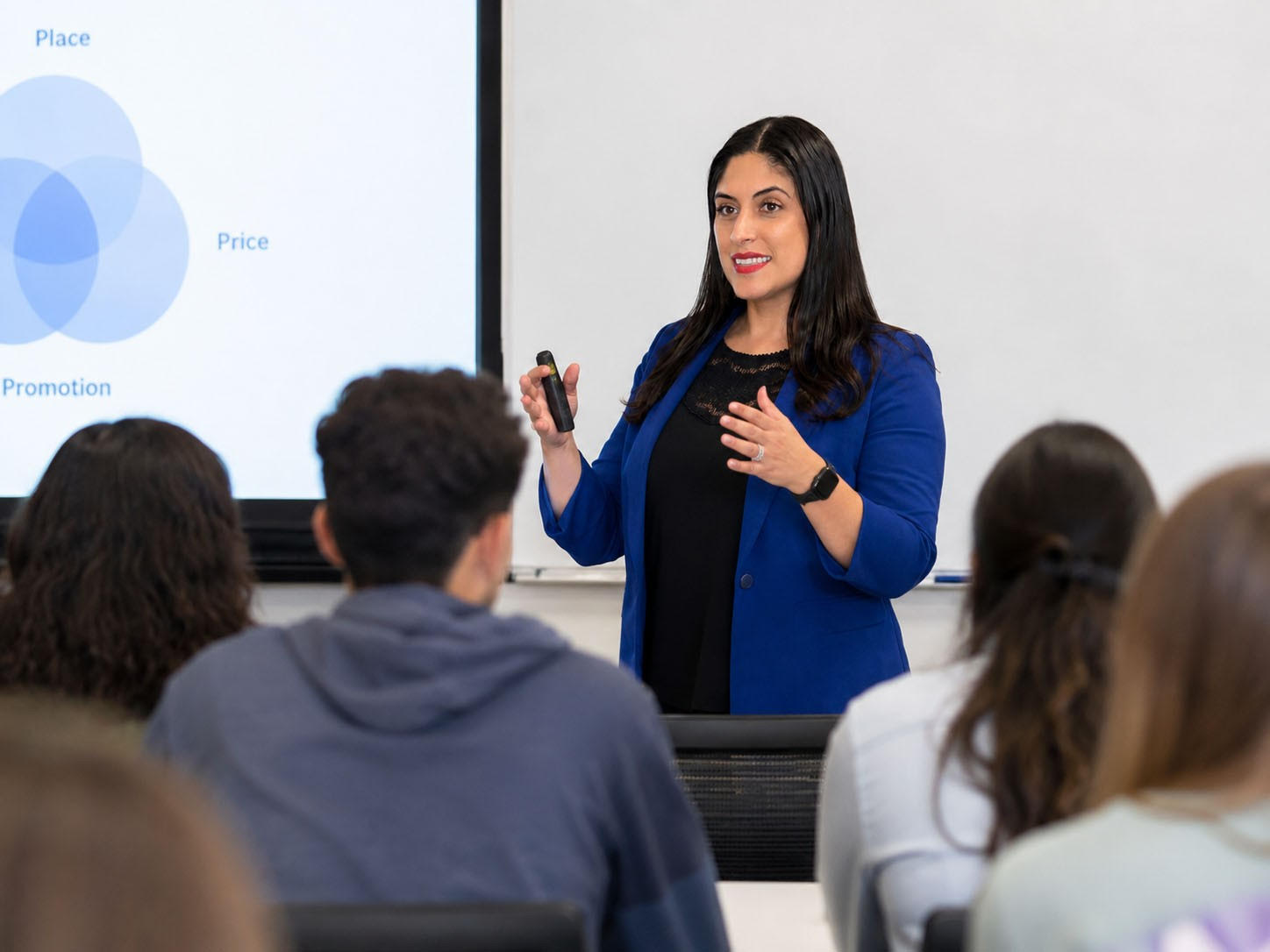
The thread that ties it together runs back to where she started. A Harvard admissions interviewer since 2013 and Secretary of the First Generation Harvard Alumni board, Ortiz spends part of her time with students who remind her of herself, applicants with the same potential as their better-resourced peers but without the prep coaches, the AP slates, or the insider map. They are not short on ability, she says; they are navigating a system without a guide. Having been guided herself, she treats the work as a debt she intends to keep paying. Every leadership role she has held, by her telling, has pointed at the same target: better outcomes for people the system was not built to serve.
You can find Paola’s Everyday ABA Podcast here: https://everydayabapodcast.riverside.com/
AT A GLANCE
| Name: | Paola Ortiz, Ed.M., BCBA, NADD-CC |
| Education: | Ed.M., Human Development & Psychology, Harvard Graduate School of Education (2008) |
| Current roles: | Director of Behavioral Health Services, Lifeline Community Services; Lifeline Community Services, MiraCosta, Palomar, and EveryDay ABA. |
| Teaching: | Adjunct professor of psychology, Palomar College (since 2015); MiraCosta Community College (since 2018) |
| Credential focus: | NADD-CC (dual diagnosis: IDD + mental illness); OBM certificate; Lean Six Sigma White Belt |
| Clinical range: | Lifespan, ages 1 to 70; developmental, residential, dual diagnosis, community behavioral health, outpatient mental health |
| Podcast: | EveryDay ABA, co-hosted with RBTs Brittanny and Leslie |
| New venture: | Consulting practice for behavior healthcare organizations and nonprofits; Lean Six Sigma White Belt, Yellow Belt in progress |
| Service: | Harvard admissions interviewer (since 2013); Secretary, First Generation Harvard Alumni board (since 2023) |
| Guiding principle: | “If the system is not working, it is not a people problem. It is a design problem.” |
SOURCES & REFERENCES
| 1. | Ortiz, Paola. BreakingNewsABA profile questionnaire (completed responses). June 2026. |
| 2. | First Generation Harvard Alumni. “Our Board” (Paola Ortiz biography: Ed.M. HGSE 2008; Executive Director of Clinical Services, Merakey; Harvard admissions interviewer since 2013). https://firstgeneration.sigs.harvard.edu/board.html |
| 3. | Paola Ortiz, Ed.M., BCBA, NADD-CC. LinkedIn profile (roles, recommendations, and credentials). https://www.linkedin.com/in/paola-ortiz-bcba-/ |
| 4. | Palomar College, Behavioral Sciences Department. Faculty and Staff Directory. https://www.palomar.edu/behavioralsciences/faculty-and-staff-directory/ |
| 5. | The EveryDay ABA Podcast (everydayaba.net; hosted by a BCBA and two RBTs). https://everydayaba.net/about/ |
| 6. | “My BCBA Life – Leadership in ABA With Paola Ortiz” (guest appearance with Circle Care Services), shared via The EveryDay ABA Podcast. September 2025. https://everydayaba.podbean.com/e/you-might-also-like-my-bcba-life-%E2%80%93-leadership-in-aba-with-paola-ortiz/ |
| 7. | Lifeline Community Services. “How to Lead ABA Teams with Paola Ortiz” (LinkedIn). https://www.linkedin.com/posts/lifelinecs_aba-bcba-leadership-activity-7333884898656563201-K47W |