A Diagnosis, and a Mission
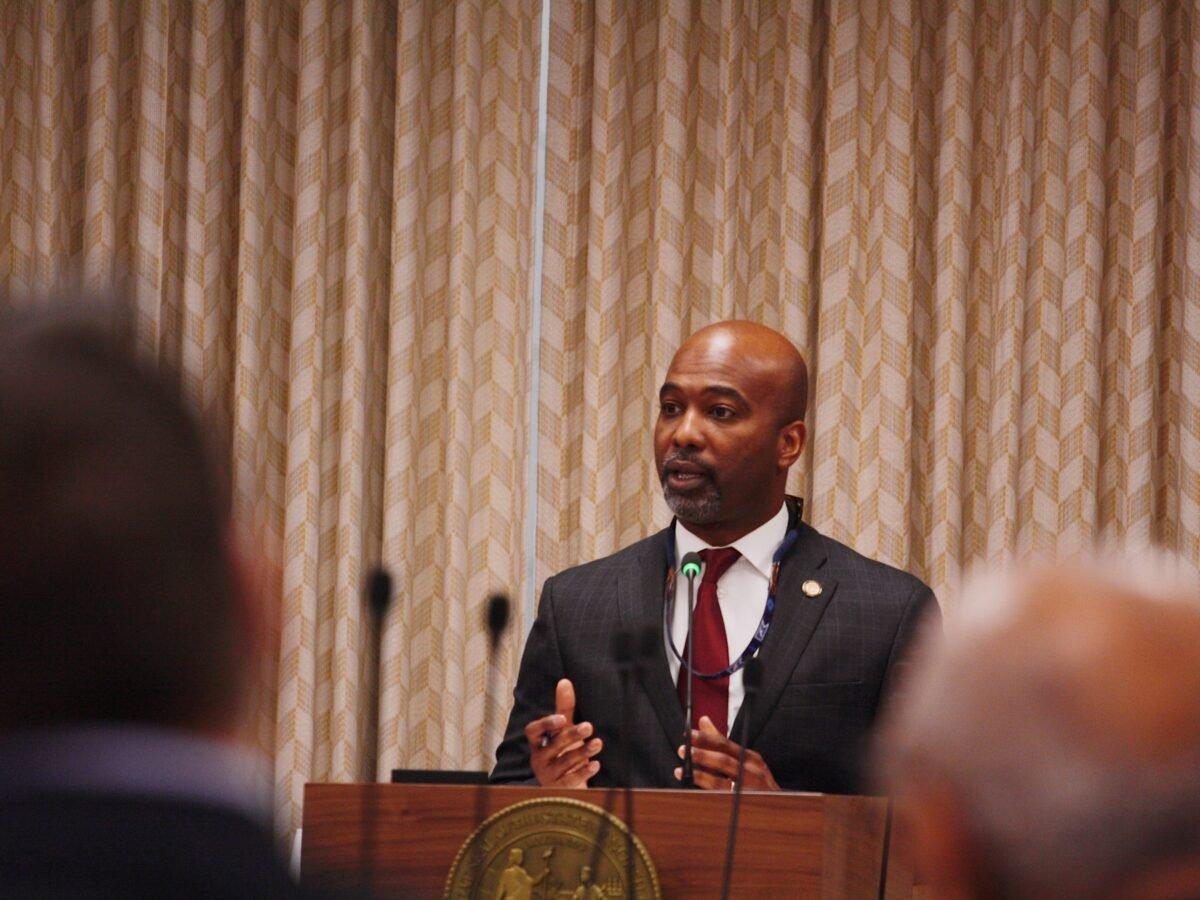
DURHAM, NORTH CAROLINA – When two of Zack Hawkins’s sons were diagnosed with autism, the family’s busy life was, in his words, suddenly interrupted. Hawkins and his wife Tracey are parents to three boys; their two youngest, James Preston and Adam, are on the spectrum. For a household with means in a metropolitan area rich in resources, the diagnoses still landed hard. “It hit us like a ton of bricks that if we are stretched, what are other families doing that have no services or are too poor to afford services,” Hawkins said. That question, less about his own family than about everyone else’s, would come to define his work in the North Carolina General Assembly.
Hawkins does not describe autism in soft terms. “The gravity of what that means for families is quite daunting,” he has said. “It’s an unforgiving disorder in many ways, both for the child and the family.” But the throughline of his advocacy has never been his own circumstances. The Hawkins family lives in Durham, where, as he readily acknowledges, services are comparatively abundant and his sons have not gone without care. The injustice that animates him is geographic and economic: the family in a rural county with no nearby providers, or the family that cannot afford to wait, or to move. For Hawkins, the personal experience was not the point. It was the doorway into a policy problem affecting tens of thousands of North Carolina families.
“It hit us like a ton of bricks that if we are stretched, what are other families doing that have no services or are too poor to afford services.” – Rep. Zack Hawkins, D-Durham (2021)
From Chocowinity to the General Assembly
Hawkins’s sense of the rural-urban divide is not abstract. He grew up in Chocowinity, a small town in eastern North Carolina, and his argument for access often returns there. “If you want to live in a small town, a place like Chocowinity, you should be able to do that and have the same quality of life as you do in Durham,” he has said. He earned a bachelor’s degree in biology from Elizabeth City State University and a master’s in biology from North Carolina Central University, then taught at Southern High School in the Durham Public Schools before moving into development and advancement roles in the nonprofit and higher-education sectors, including at United Way, East Carolina University, Duke University, and UNC.
In 2018, the same period in which his family’s autism journey began, Hawkins was elected to the North Carolina House of Representatives, succeeding the long-serving Mickey Michaux in a Durham-area district. A Democrat representing House District 31 in eastern Durham County, he took office in January 2019 and has been returned to the seat in the elections since. He was named to North Carolina Central University’s Forty Under Forty in 2018, the same year he won his first term. What he brought to Raleigh was not a background in clinical care or insurance, but the lived vocabulary of a parent who had navigated the system and found it wanting.
Ending an Outlier Law

The clearest legislative mark of Hawkins’s early advocacy came in 2021. For years, North Carolina held a singular and self-defeating distinction: it was the only state in the country where board certified behavior analysts, the clinicians who design and oversee applied behavior analysis programs, were required to practice under the supervision of a licensed psychologist. Because insurers paid the psychologist rather than the analyst directly, the arrangement discouraged qualified professionals from setting up independent practice and made it easier for well-trained analysts to simply leave for neighboring states. The result, in much of rural eastern North Carolina, was a treatment desert.
Companion bills House Bill 91 and Senate Bill 103 set out to change that by creating a state Behavior Analysis Board empowered to license behavior analysts and assistant behavior analysts directly. The legislation carried bipartisan weight, with Republican leaders among its primary sponsors, and Hawkins threw his support behind it without hesitation. “This is almost emotional for me,” he said as the bills advanced. “This will change families.” In May 2021, after more than a decade of advocacy from clinicians and families, Governor Roy Cooper signed the measure into law, establishing the North Carolina Behavior Analyst Licensure Board and ending the state’s outlier status.
The downstream effects reached directly into the systems that fund autism care. Following the licensure change, board certified behavior analysts in North Carolina could enroll as licensed qualified autism service providers under the state Medicaid program’s research-based behavioral health treatment policy, and could independently deliver specialized consultative services through the NC Innovations Waiver, the Medicaid waiver that covers home- and community-based services for people with intellectual and developmental disabilities. A regulatory knot that had constrained the ABA workforce for over a decade was, at last, untied.
Co-Chairing the Caucus, Confronting a Crisis
Hawkins has since become one of the General Assembly’s most visible voices on developmental disabilities, serving as co-chair of the Intellectual and Developmental Disabilities Caucus, a bipartisan group drawn from both chambers that focuses on the needs of people with I/DD. The work has moved from licensing clinicians to a harder, broader problem: the collapse of the direct support workforce. Direct support professionals, the aides who help people with disabilities with daily living, are in critically short supply, hampered by low pay and high turnover, and the shortage leaves families to provide care themselves, often forcing a parent or spouse out of the workforce entirely.
In 2025, Hawkins and a coalition of advocates pressed for disability support in the state budget, framing the moment in stark terms. “This is something that we now understand is critical,” he said. The caucus heard directly from direct support professionals about inadequate pay and thin staffing. Hawkins also pointed to the long queue for the Innovations Waiver, where the wait for a slot can stretch for years; one Chapel Hill man had waited fourteen years before receiving a waiver slot that now allows him to live independently. For Hawkins, the arithmetic is personal as well as systemic. “We’re willing to put all options on the table because my Adam is 8 now, and we don’t want him to be 18 before he gets on,” he said.
The candor extends to his own household. Even in Durham, even as a sitting legislator with the knowledge and resources to navigate the system, Hawkins says his family has been unable to secure the very support he is fighting to expand. “We absolutely have tried, tried and failed, with our sons with autism to find direct support professionals,” he said. It is an unusually direct admission from an elected official, and it reframes the workforce shortage not as a line item but as a wall that even the relatively advantaged cannot climb.
“We absolutely have tried, tried and failed, with our sons with autism to find direct support professionals.” – Rep. Zack Hawkins, D-Durham (2025)
Why It Matters for the Field
For the behavior-analytic and broader autism-services field, Hawkins is a useful figure to understand for reasons that go beyond a single sympathetic story. He sits at the intersection of the two forces that most shape whether ABA and related services actually reach families: the regulatory framework that determines who can practice and bill, and the public financing, through Medicaid and its waivers, that determines who can afford care. His 2021 licensure win expanded the supply side of the equation by freeing behavior analysts to practice and bill independently. His current focus on the direct support workforce targets the part of the system that the licensure fix did not touch, the ongoing, in-home, lifelong support that families need long after the early-intervention years.
Hawkins’s vantage point also reflects a shift in how autism policy is argued in statehouses. He is not a clinician or an industry lobbyist; he is a parent who happens to write laws, and his framing consistently centers families and geography over provider economics. That orientation can cut in directions the industry welcomes, such as expanding licensure and reimbursement, and in directions it must reckon with, such as scrutiny of access, outcomes, and whether services reach rural and lower-income families at all. As North Carolina continues to wrestle with waiver waitlists, workforce pay, and the affordability of care, Hawkins is likely to remain at the center of the conversation, legislating, as he has from the start, with one eye on the statute book and the other on his own kitchen table.
AT A GLANCE
| Subject: | Zack Hawkins (Zack Anthony Forde-Hawkins), member, North Carolina House of Representatives |
| District: | NC House District 31 (eastern Durham County); Democrat; in office since January 2019 |
| Family: | Wife Tracey; three sons (Zachari, James Preston, Adam); James Preston and Adam are autistic |
| Hometown: | Chocowinity, North Carolina; now resides in Durham |
| Education: | B.S. biology, Elizabeth City State University; M.S. biology, North Carolina Central University |
| Earlier career: | High school teacher (Durham Public Schools); nonprofit and higher-education development (United Way, ECU, Duke, UNC) |
| Caucus role: | Co-chair, Intellectual and Developmental Disabilities (IDD) Caucus, a bipartisan, bicameral group |
| 2021 milestone: | Backed HB 91 / SB 103, the Behavior Analyst Licensure Act; signed by Gov. Roy Cooper in May 2021 |
| What it changed: | Ended NC’s status as the only state requiring BCBAs to practice under a licensed psychologist; created the NC Behavior Analyst Licensure Board |
| Medicaid effect: | Licensed behavior analysts can now bill as qualified autism service providers and deliver services via the NC Innovations Waiver |
| Current focus: | Direct support professional (DSP) workforce shortage; Innovations Waiver waitlist; disability funding in the state budget |
| Recurring theme: | Rural-urban and income equity, access to care regardless of where a family lives or what it earns |
SOURCES & REFERENCES