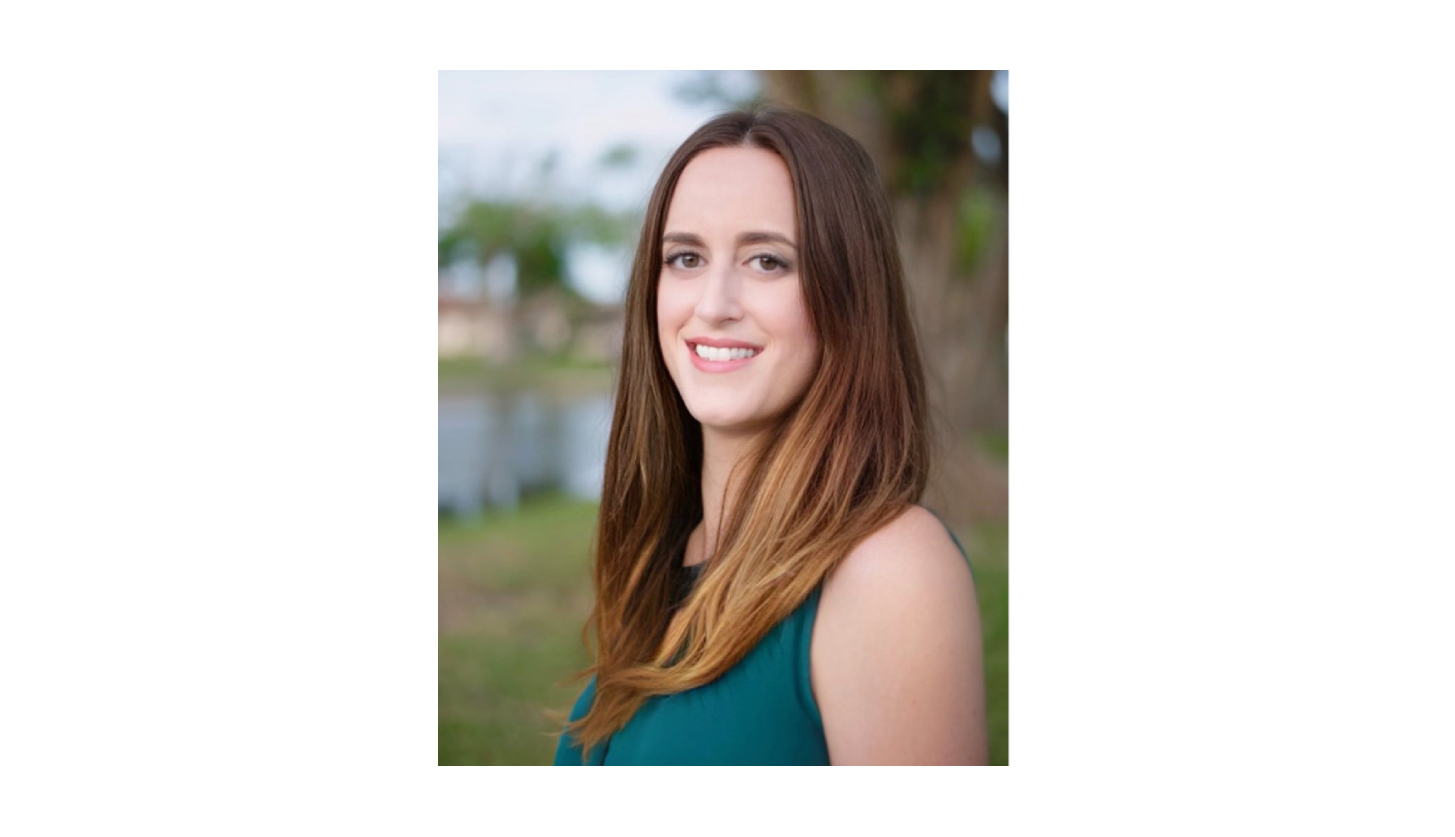
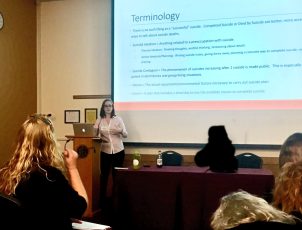
In 2014, Dr. Shannon Shea walked into a Massachusetts behavior analysis conference expecting skepticism. She had come to present a treatment she had built for a client diagnosed with borderline personality disorder, the kind of psychiatric case most behavior analysts assume is outside their scope. Dr. Shea had no doubt the work itself was ABA. What she could not predict was the reception: she had never seen a presentation quite like it, and she half expected to be accused of practicing beyond her scope. Instead the room filled past capacity, attendees sat on the floor, and people lined the hallway to listen.
The same thing happened the next spring at the field’s national convention, in a room built for 400. The crowds told Dr. Shea what she had suspected through a decade of unusual jobs: plenty of behavior analysts wanted to work well beyond autism. ABA did not begin with autism, she points out. Some of its earliest applications were in psychiatric hospitals. Its success in treating behaviors associated with autism later overshadowed its work with other populations, when in reality, she believes effective treatment for behaviours associated with autism spectrum disorders is vital. Along with effective treatments for other behaviours that interfere with other people’s lives and typically responds well to ABA based interventions.
Today she runs Dr. Shea LLC, a training and consulting firm in Boca Raton, Florida, and leads the applied behavior analysis programs at Keiser University, where she built the undergraduate concentration and a graduate degree aimed squarely at that gap. Over twenty years, Dr. Shea has specialized in the cases the field tends to see as outside its scope: foster children, adults with acquired brain injuries, the behaviors that come with psychiatric disorders, severe self-injury, suicidal behavior, and Deaf, blind, and deafblind clients with complex needs.
“I’ve spent twenty years finding the people other clinicians had given up on, or were told weren’t ours to help.” – Dr. Shannon Shea, Founder, Dr. Shea LLC (2026)
An English Major Who Loved Science
Dr. Shea earned a bachelor’s degree in English from Florida Atlantic University, then enrolled in a master’s program in mental health counseling at Nova Southeastern University. The education there was excellent, she says; what she grew disillusioned with was the paradigm. The program trained her to diagnose precisely, but she came to learn that the relationship between therapist and client, more than any specific intervention, was the strongest predictor of whether treatment worked. “It just didn’t sound like science to me,” she says, “and I love science.”
In her final year, Nova launched a specialty track in applied behavior analysis. The graphs, the data, and the emphasis on the function of behavior pulled her in, and the track seemed to fill the gap she had found between a diagnosis and a treatment to match it. By her account she was the program’s first graduate. She came in meaning to treat the population she had always aimed for, people with severe mental illness, while her classmates focused on autism and developmental disabilities.
The Cases No One Else Took
Her first behavior-analysis job, in 2007, put her inside Florida’s child-welfare system through the state’s Behavior Analysis Services Program, which embedded analysts to stabilize foster placements. At its height the program employed about 60 certified analysts and served more than 2,900 children and caregivers, according to research published on it in 2008. That year, the state cut its funding. Dr. Shea found out her program was being eliminated the night before she flew to Chicago to present at the national convention. She spent the layoff finishing her supervision hours, sat for the exam, and became a Board Certified Behavior Analyst that November.
What came next reads like a tour of the field’s least-served corners. She worked in foster care for children with developmental and intellectual disabilities in Florida, then followed a move north to central New York, where she supported clients at a dedicated autism center and at Upstate Caring Partners, a nonprofit serving people with developmental and intellectual disabilities. From there she landed in Massachusetts at Vinfen, one of the region’s largest human-services nonprofits, supporting adults frequently diagnosed with both intellectual disabilities and serious mental illness.
At Vinfen she was asked to help build an Acquired Brain Injury program, and she asked to be left off it. Dr. Shea has multiple sclerosis, and she did not want to spend her days managing the worst-case version of her own future. Told she was the most qualified clinician for the work, she took it. The expertise stuck. She later wrote the brain-injury course for her own graduate program, a specialty she says very few behavior analysts are trained for.
At Work, Community, Independence, a Waltham agency where she became vice president of support services, about a third of the staff and clients were Deaf or hard of hearing. Dr. Shea took American Sign Language classes, learned to work through interpreters, and expanded her practice to blind and deafblind clients. The Deaf community gave her a sign name, a mark of acceptance it does not extend to everyone.
Treating the behaviors that come with psychiatric disorders was never a detour for Dr. Shea; it was the constant. One case from those years shows the approach. A woman diagnosed with borderline personality disorder and a mild intellectual disability had cycled through behavior plans for years, with little effect on her self-injury, suicide attempts, and repeated hospitalizations. Dr. Shea spent months translating the research on the disorder into something a behavior analyst could actually run. She sat in on acceptance and commitment therapy training at McLean Hospital, Harvard’s psychiatric teaching hospital, the lone behavior analyst in a group studying an approach that, as she likes to point out, grew out of relational frame theory and was built by a behavior analyst. The protocol worked. When she presented it in 2014, the room overflowed.
Naming the Field’s Mistakes
Dr. Shea also takes public positions her colleagues tend to avoid. When Massachusetts proposed changes to its positive behavior support regulations that would have banned procedures such as restitution and response blocking outright, while letting people without behavior-analytic training make treatment decisions, she filed a clause-by-clause response and testified at the public hearings, directly to the state legislature. She defended the careful, documented use of such procedures by spelling out what they actually look like in practice, and the difference between what “punishment” means to a behavior analyst and what it means to the general public. Standing up for any use of punishment-based procedures, in writing and in person, is about as risky as a behavior analyst’s reputation gets. She signed her name to it.
Then she turned the same candor on her own field’s history. With Joseph Veneziano, Dr. Shea published “They have a Voice; are we Listening?” in Behavior Analysis in Practice in 2022. The paper examines “indistinguishability,” the goal of making a client appear no different from peers, as it ran through two studies: Lovaas’s 1987 work that helped launch modern autism treatment, and a 1974 study by George Rekers, then Lovaas’s doctoral student, now widely regarded as an early form of conversion therapy. Rekers built a career on that work outside behavior analysis; Lovaas did not return to it, and contemporaries criticized the study at the time. Dr. Shea is careful to call it an outlier rather than something the field embraced, but she argues behavior analysts still need to know that history, take autistic self-advocates’ criticisms seriously, and reflect on them. The paper was well received, and it opened a much-needed discussion in the field.
Putting It in the Curriculum
When the pandemic sent her back to South Florida, Dr. Shea turned two decades of niche expertise into a business. Dr. Shea LLC sells continuing education and consultation in her specialties; a companion platform, Rat Is Right, hosts the courses; and an online group she founded, BCBA Resources, has grown into one of the largest ABA communities on Facebook. She also offers expert witness services and public speaking engagements. A short video she made in 2020, using habit-reversal techniques to help people stop touching their faces during the pandemic, circulated widely enough that a Norwegian behavior-analysis forum invited her to present.

In 2022, Keiser University reached out to see whether she would be interested in writing the curriculum and helping with accreditation for an undergraduate behavior-analysis concentration. She wrote it, taught it, and it is still offered. A couple of years later she proposed and built a graduate degree, a 42-credit Master of Science in Behavioral Health designed to prepare students for a well-rounded career as a behavior analyst. It teaches the science of behavior next to the history of disability rights, the Americans with Disabilities Act, and special-education law, with elective courses Dr. Shea wrote on brain injury and psychiatric disorders.
The point is to widen who behavior analysts believe they are allowed to serve. The Behavior Analyst Certification Board does not tie the field’s scope of practice to any single diagnosis, yet insurance coverage for ABA remains overwhelmingly attached to autism, which keeps people with other conditions from getting care. Dr. Shea wants more analysts trained for those populations, and more coverage for behavior-analytic treatment based on need, regardless of whether the person also has an autism diagnosis.
“The science is much bigger than the way the field is usually represented, and somebody has to do the parts no one else will.” – Dr. Shannon Shea, Founder, Dr. Shea LLC (2026)
Her graduate program enrolled its first cohort at Keiser’s West Palm Beach campus in the fall of 2025. The undergraduate concentration she wrote, and still teaches, continues in Miami and Pembroke Pines.
AT A GLANCE
| Subject: | Shannon Shea, Ph.D., BCBA-D, LABA; founder, Dr. Shea LLC (Boca Raton, FL) |
| Academic role: | Built Keiser’s undergraduate ABA concentration and graduate degree; leads the ABA program (2022–present) |
| Education: | BA English, Florida Atlantic (2003); MS Counseling with ABA track, Nova Southeastern (2007); PhD ABA, Endicott College (2019) |
| Clinical focus: | Behaviors associated with psychiatric disorders, severe self-injury, suicidal behavior, brain injury; adult, Deaf, and deafblind services |
| First ABA job: | Florida Behavior Analysis Services Program (2007–2008), ended by statewide defunding (Research on Social Work Practice, 2008) |
| Known for: | ABA protocol for borderline personality disorder; standing-room talks at BABAT (2014) and ABAI (2015) |
| Key paper: | Veneziano & Shea, “They have a Voice; are we Listening?” Behavior Analysis in Practice (2022) |
| Scope vs. coverage: | BACB scope of practice is not diagnosis-specific; ABA insurance coverage stays largely tied to autism |
| Community: | Founder of BCBA Resources, one of the largest ABA groups on Facebook |
| Graduate program: | 42-credit MS in Behavioral Health; first cohort fall 2025, Keiser West Palm Beach campus |
| Undergraduate: | ABA concentration she wrote and teaches; offered in Miami and Pembroke Pines |
SOURCES & REFERENCES
| 1. | Veneziano, J., & Shea, S. They have a Voice; are we Listening? Behavior Analysis in Practice. 2022. doi:10.1007/s40617-022-00690-z (PMID 37006422). |
| 2. | Keiser University. Master of Science in Behavioral Health. https://www.keiseruniversity.edu/programs/health-care/masters-behavioral-health/ |
| 3. | Stoutimore, M. R., Williams, C. E., Neff, B., & Foster, M. The Florida Child Welfare Behavior Analysis Services Program. Research on Social Work Practice. 2008. doi:10.1177/1049731508318654 |
| 4. | Shea, S. Founder profile materials and curriculum vitae submitted to BreakingNewsABA, May 2026, with author corrections, May–June 2026. |
| 5. | Autism, Insurance, and Discrimination: The Effect of an Autism Diagnosis on Behavior-Analytic Services. Behavior Analysis in Practice. 2020. https://pmc.ncbi.nlm.nih.gov/articles/PMC7070133/ |
| 6. | Virginia Association for Behavior Analysis. ABA Beyond Autism with Insurance. https://virginiaaba.org/aba-beyond-autism-with-insurance/ |
| 7. | Lovaas, O. I. Behavioral treatment and normal educational and intellectual functioning in young autistic children. Journal of Consulting and Clinical Psychology. 1987;55(1):3–9. |
| 8. | Rekers, G. A., & Lovaas, O. I. Behavioral treatment of deviant sex-role behaviors in a male child. Journal of Applied Behavior Analysis. 1974;7(2):173–190. |