The Namesake
WHEELING, WEST VIRGINIA – Before there was a learning center, there was a poem. When Kathy Shapell was teaching special-needs students at The Ivymount School in Rockville, Maryland, she came to know Augusta Levy, a teacher of autistic students who had worked in Brooklyn before relocating to Maryland. Levy learned that Shapell was teaching children with autism and asked whether she might visit the classroom to recite poetry. Shapell agreed, though she did not know how her often rambunctious students would receive a stranger reading verse. Levy entered, sat at the front of the room, and began to read. The students stopped. They listened. Over several weekly visits, they began to compose poems of their own.
Levy, as Shapell later described her, “was always pushing. She was always trying to figure out how we could do better for the kids. She always wanted to reach more kids who were considered unreachable.” When Shapell founded her own center in West Virginia years later, she named it the Augusta Levy Learning Center, in honor of the mentor who had shown her that children others had given up on were reachable after all. The name has carried the mission ever since: that the children who appear most isolated are the ones most worth reaching, and that the right method, applied with rigor and patience, can bring them into the world.
“She was always pushing. She was always trying to figure out how we could do better for the kids. She always wanted to reach more kids who were considered unreachable.” – Kathy Shapell, on her mentor Augusta Levy (2015)
From Magazine to Mission
Shapell is a native West Virginian, born and raised in Wheeling. She graduated from Shadyside High School in 1983 and from Bethany College in 1987, then earned a master’s degree in special education from George Mason University in 1992. Her career in autism education began in 1987 at The Ivymount School, where she served as a lead teacher for 12 years, and she began her formal ABA training with the Lovaas Institute for Early Intervention in 1992. Over more than three decades, she has worked with and on behalf of individuals with autism and other developmental disabilities, in classrooms, in advocacy, and eventually as the founder of an institution.
But the path from teacher to founder ran through journalism. After moving home to the Upper Ohio Valley to raise her own two children, Shapell founded Ohio Valley Parent magazine in 2000. She created, published, and edited the publication from 2000 to 2006, writing frequently on issues affecting children with special needs. The articles produced an unexpected response. “When I moved back home and after I started Ohio Valley Parent, I wrote a lot of articles on issues related to special needs,” Shapell told the Wheeling publication Weelunk. “I started to get a lot of phone calls about those from parents of children with special needs, and they were telling me that their kids were not receiving the services I was writing about.” The gap between what the research promised and what West Virginia families could actually access became impossible for her to ignore.
The statistics were moving in one direction. In 2000, an estimated one in 150 children in the United States was identified with autism; by the mid-2010s, federal estimates had risen to roughly one in 68. West Virginia’s school systems, Shapell found, were far behind the evidence-based programs she had known in the Washington, D.C., area. She had the training, the contacts, and the conviction that applied behavior analysis worked. What the region lacked was anyone willing to build the infrastructure to deliver it. In 2005, she decided to do it herself.
Building the First
The Augusta Levy Learning Center opened in 2005 at the Zion Lutheran Church in Bethlehem, West Virginia. It was the first intensive autism treatment center in the state to offer one-on-one applied behavior analysis protocols, the method that more than 30 years of research had established as the most effective educational intervention for children on the spectrum. Shapell built the program around fidelity to that research. Full-time students received as many as 30 hours of one-on-one intervention from trained ABA therapists, overseen by Board Certified Behavior Analysts, with an individualized curriculum tailored to each student’s needs and abilities.
One big pillar of the model was parent involvement. “Another really important key component to our program, this is also what is shown in the research, is a strong parent component, and we train our parents just as we do our staff.” The approach reflected a conviction that ABA was not something done to a child for a few hours a week, but a coordinated intervention that had to extend into the home to work.
In 2008, the center moved to the bottom floor of the Sacred Heart Church in North Wheeling, where it would serve students from across the Ohio Valley for nearly a decade. The results accumulated. By 2017, Augusta Levy had served more than 50 children, with 83 percent of them “graduating” to typical classrooms in their communities, an outcome that reflects the central promise of early intensive intervention: that the earlier a child begins ABA, the better the long-term result. In 2012, the center was recognized as one of the “55 Good Things About West Virginia” by The State Journal. To raise the money that made the work possible, Shapell, an avid fan of the television show, created “Dancing with the Ohio Valley Stars,” a community fundraiser that paired prominent locals with professional dancers, alongside the annual “Color Me Au-some 5K,” which drew more than 1,000 participants for the center’s 10th anniversary in 2015.
The Fire and the Rebuild
In July 2018, a fire destroyed the Sacred Heart Church, taking with it the center’s space and nearly all of its equipment and records. For an organization that had spent 13 years building a program from nothing, it was a catastrophe. “When the devastating fire destroyed the entire building along with nearly everything we had, we were wiped out,” Shapell recalled. “We were in shock. It was painful and traumatic. And yet in typical Augusta Levy fashion, the leadership and staff’s first thoughts were to our children.” The day after the fire, staff began serving children in their homes across seven counties, refusing to let the loss of a building become a loss of services.
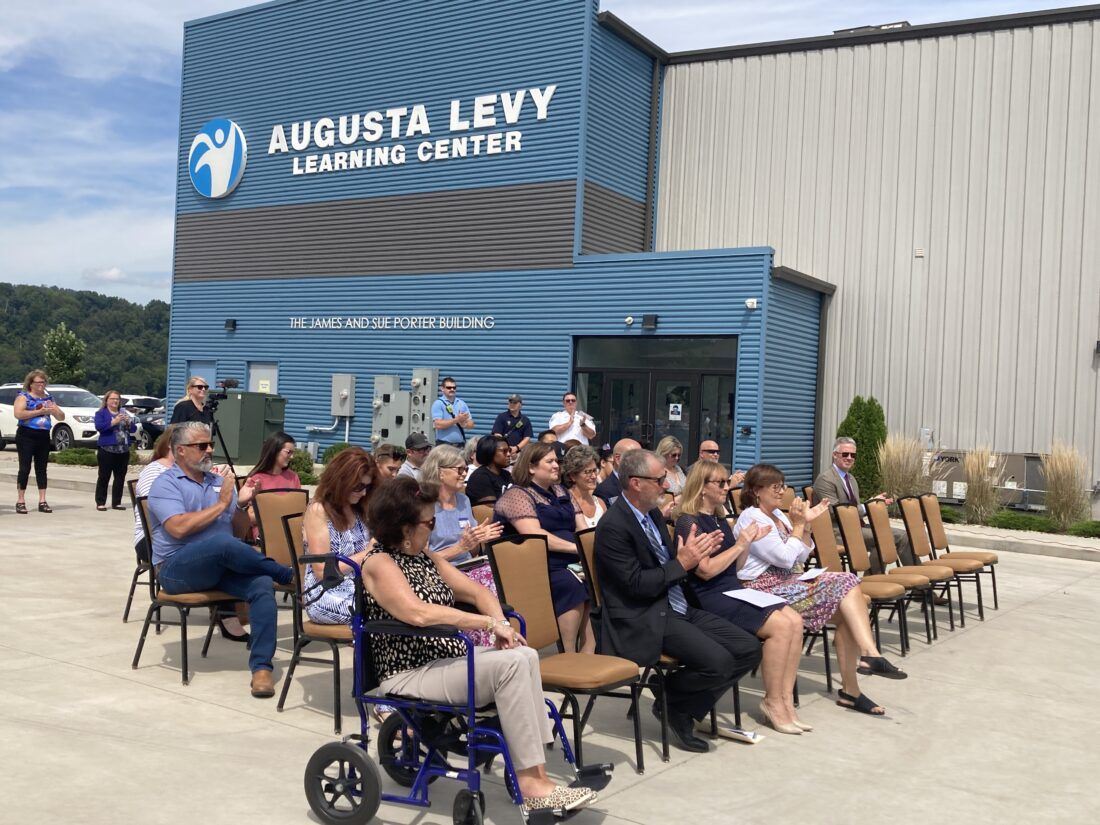
The Regional Economic Development Partnership provided temporary space on Main Street, above the Children’s Museum in downtown Wheeling. Then the center set out to build something it had never had: a permanent home of its own. In 2019, Augusta Levy broke ground on a new facility. In 2022, supporters gathered for the ribbon-cutting of the James and Sue Porter Building, a facility constructed specifically for the center and named for Shapell’s parents. “It is truly a dream come true for Augusta Levy Learning Center to finally have a home to call our own,” Shapell said at the groundbreaking. “For its entire history, the center hasn’t been about a building or a classroom or a space. It has always been about children and autism. The children we work with are faced with unbelievable challenges and they tackle them like true super heroes.”
The Legacy
Shapell stepped down as executive director in 2017, after 12 years leading the center, handing the role to Angela Wood, who had begun her career at Augusta Levy as a college intern and holds a master’s degree in early intervention with an autism specialization from the University of Pittsburgh. Shapell did not leave the work. She became an emeritus board member, continued in an advocacy role, and remains on the board of directors today. “I saw an urgent need and I hoped our team would meet that need,” she reflected at the time of the transition. “I think it has.”
Her influence extends well beyond the center she founded. Shapell is a founding board member and the first president of the Mountaineer Autism Project, the statewide advocacy organization that helped make West Virginia the 25th state to mandate autism insurance coverage and now coordinates statewide ABA workforce development; she currently serves as an executive board member and secretary. She has worked to expand WVU Medicine Children’s Neurodevelopmental Services across the state and to build West Virginia’s first Children’s Neuroscience Center of Excellence. She has served on the WVU Center for Excellence in Disabilities Country Roads Program Advisory Committee and the advisory board of the West Virginia Infant/Toddler Mental Health Association. Before all of it, she created and published the magazine that first connected her to the families she would spend her career serving.
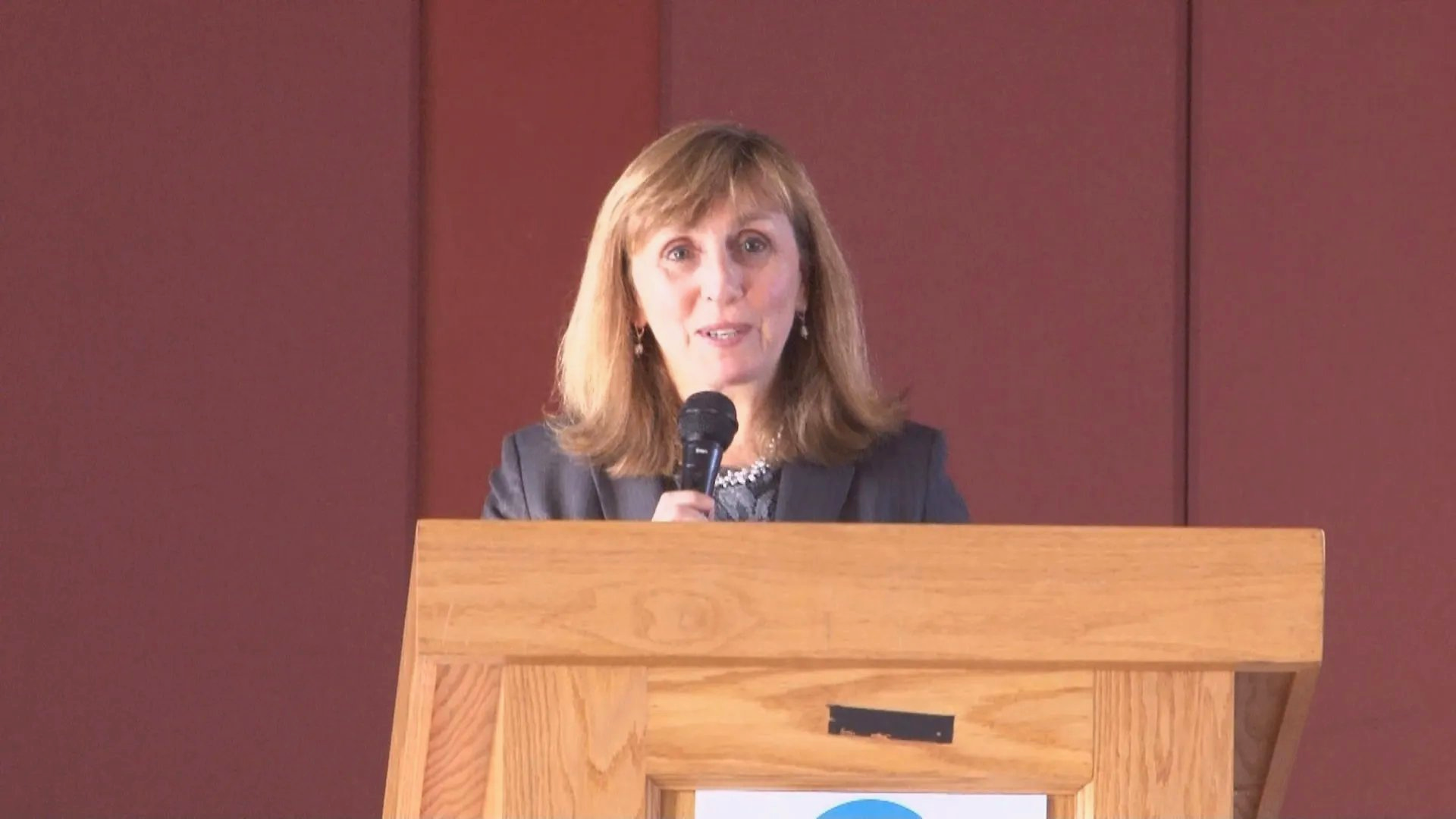
In September 2025, Augusta Levy marked its 20th anniversary at a celebration at Waterfront Hall in Wheeling. The event was a dual milestone: the center announced that it had been recognized by the state as a licensed behavioral health center and would operate going forward as Augusta Levy Behavioral Services, expanding beyond autism into broader behavioral health. And it honored its founder. Shapell received the first Champion of Children Award, presented in recognition of the vision and dedication that laid the foundation for two decades of work. Angela Wood, who has now spent 18 years at the organization Shapell built, credited that foundation directly. “There’s no greater way to honor Kathy and the work that she’s done here,” Wood had said years earlier, “than to continue to provide the best evidence-based practices while serving more children with autism.”
Twenty years after a poem quieted a roomful of children, the institution that grew from that memory is still standing, still expanding, and still built on the conviction Augusta Levy gave Kathy Shapell: that no child is unreachable. From a magazine publisher who noticed a gap, to the founder of the state’s first ABA center, to the first person to carry home the award named for the children she served, Shapell’s career is a study in what one determined advocate can build in a place that had nothing before she arrived.
AT A GLANCE
| Name: | Kathy Porter Shapell; native of Wheeling, WV |
| Education: | Shadyside HS (1983); Bethany College (1987); MEd special education, George Mason University (1992) |
| Early career: | Lead teacher, The Ivymount School (Rockville, MD), 12 years from 1987; ABA training with Lovaas Institute (1992) |
| Ohio Valley Parent: | Founded the magazine in 2000; created, published, and edited it 2000-2006 |
| Augusta Levy: | Named for Shapell’s teacher and mentor, a Brooklyn autism educator who recited poetry to her students |
| Center founded: | 2005 at Zion Lutheran Church, Bethlehem, WV; first evidence-based ABA autism program in West Virginia |
| ABA model: | As many as 30 hrs one-on-one per full-time student; BCBA-supervised; strong parent-training component |
| Outcomes: | Served 50+ children by 2017; 83% graduated to typical classrooms; named “55 Good Things About WV” (2012) |
| 2018 fire: | Sacred Heart Church space destroyed; staff served children in homes across 7 counties the next day |
| Porter Building: | Permanent home opened 2022; named for Shapell’s parents, James and Sue Porter |
| Tenure: | Executive director 2005-2017 (12 years); now emeritus board member; founding board member and first president, Mountaineer Autism Project (now executive board secretary) |
| 2025: | 20th anniversary; received first Champion of Children Award; center rebranded as Augusta Levy Behavioral Services |
SOURCES & REFERENCES