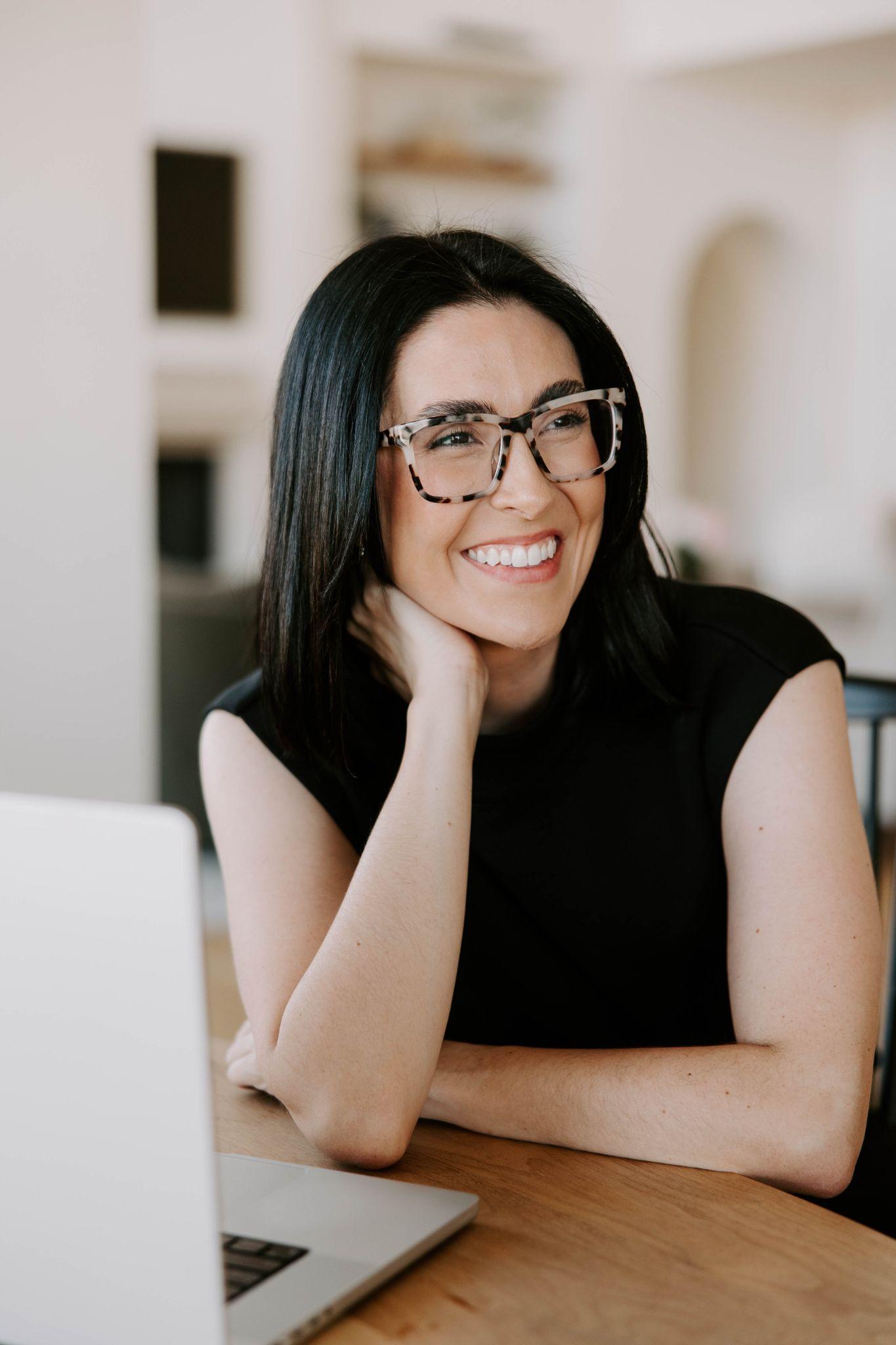

Melissa Kozak has spent close to 20 years watching caregivers move from the center of ABA to its edges. When she started, parents had to complete mandatory training before a child’s services could begin. Now, she says, families are treated as an add-on. Kozak Consulting, the practice she founded in January 2024, is her bet that the field got that backward.
The controlling idea behind everything Kozak offers is simple, and she states it plainly: caregivers have been pushed out of the parts of ABA where they matter most, and pulling them back in is the work.
From School Psychology to a Clinic Floor
Kozak did not set out to become a behavior analyst. She was on the school psychology track, working toward a master’s in special education, when a classmate described her own job working with children. “She was talking about how she was just playing games and working with children, and I thought it sounded so fun,” Kozak said. She met her first client, and that crystallized that she needed to move from special education to ABA. She was 23. She is 40 now, certified as a BCBA in 2013, with a master’s in education from California State University, Sacramento, and training in behavior analysis from the Florida Institute of Technology.
What set her path apart came early. She began supervising about six months into her first job, before the insurance mandates that made BCBA certification a requirement. That put her in charge of staff twice her age and running parent meetings before she had children of her own.
“When you’re put into that situation at such a young age, you kind of have no choice but to grow,” she said. “Those leadership skills that I gained super early on then lent themselves to me being able to do all of the business owner things, because they are all those same skills.”
She did not start Kozak Consulting as a new clinician testing an idea. “Nothing scares me, because I feel like I’ve done it all. I’ve seen it all. I’ve supervised it all.”
What Changed in Two Decades
Ask Kozak for the biggest shift she has seen since certifying, and she does not name a billing code or an acquisition wave. She names the families.
Caregivers are “less and less part of the treatment plans, less and less part of the assessments,” she said. “They are less involved in IEP meetings. They’re just kind of secondary. They are treated as an add-on to treatment.”
She traces the change to how services get paid for. When she started, working through California’s regional centers, parent training classes were required before a child could begin ABA. The insurance mandate removed that condition. Whether caregivers are involved now depends on each company’s internal rules, and by her account, too many companies have let it slide.
“As a profession, we are leaving caregivers out far too much.” – Melissa Kozak, BCBA, founder of Kozak Consulting (2026)
The Case for Bringing Families Back
Kozak’s argument for caregiver involvement is a clinical one, not a sentimental one. Bring parents in, she said, and generalization happens, the rate of skill acquisition rises, and families report a higher quality of life because someone is finally helping them too, not only the child.
“It’s huge. It’s massive,” she said. “If you see it, you can’t unsee it.”
Her framing treats the family as the unit of treatment rather than the child in isolation. ABA, in her view, belongs in the routines that structure a household. “Nighttime routines, morning routines, mealtime routines, they’re all routines, and routines typically don’t involve just one person,” she said. That conviction is why she built a practice deliberately unlike the clinic model she came up in. “I’m going to create a practice that is different from the typical model out there right now, and I’m really going to push for it.”
Where Kozak Consulting Plugs In
Kozak Consulting is built around caregiver support, and the clients arrive from three directions. She mentors individual BCBAs. She helps ABA companies design the caregiver systems they never built. And she advises technology firms, including her partnership work with Therapprove, on making products that actually support families rather than adding to a clinician’s documentation load. She markets the approach as a proprietary framework, the Caregiver Optimization Model.
“If you’re having trouble with caregiver support in any way, whether you’re the individual BCBA, the ABA company, or the tech platform, that’s where I plug in,” she said.
The buyers are usually leadership: clinical directors, founders, and owners struggling with caregiver buy-in or trying to align to values-based care. Increasingly, she said, they come because they have to. Insurance requirements are tightening, and audits are rising, and payers are starting to expect the caregiver involvement that many providers never structured. Her whole-group training reaches beyond BCBAs to admin and intake staff, covering soft skills for talking with parents and navigating hard conversations.
How She Measures It Working
Kozak points to data, as a behavior analyst would. The clearest signal is the utilization of parent-training hours under the family CPT codes, which she says often go entirely unused. A recurring complaint is that companies schedule sessions, and parents simply do not show up. When Kozak’s model takes hold, utilized hours climb, and caregiver attendance improves. She also tracks caregiver-specific goals, the rate of skill acquisition on those goals, and increased generalization on the child’s goals.
There is a softer metric she watches, too: the confidence of the clinicians and staff she trains, measured by how they handle difficult parent conversations they once avoided.
Going Independent
Because a caregiver-led practice is not the standard shape, Kozak fields the same questions constantly. How did you start? Why did you do it? Can I do it too? Does insurance approve? She turned those questions into a Substack, Going Independent, and a community for BCBAs building their own practices.
She is, by her own description, a fully independent BCBA who works for no one else and still does the direct therapy herself. Other clinicians see the autonomy and flexibility and want a map. So she interviews BCBAs who have gone independent and gets them to “spill your secrets,” on the premise that independence does not require copying her exact model. Some run social skills groups only. Some do one-on-one work. Some build practices around supervision or continuing education. “In this world where there are so many large ABA companies, small providers can make a difference too,” she said.
ABA Outside the Clinic
The furthest edge of Kozak’s work is also the clearest test of her thesis. She partners with local nonprofits to run group parent-training classes for very young women, many of them previously unhoused or survivors of trafficking, who are learning how to parent after traumatic backgrounds. She works with them in community centers to build routines and change their environments.
It sits well outside where ABA is usually practiced, and that is the point. “It’s just working with caregivers,” she said. “It’s just in a different setting.” The clinic and the home, in her telling, were never the boundary of the field. The caregiver is the through line.
The insurance requirements are tightening, and the audits are mounting. Kozak bets that payers are about to start mandating what she has spent her career arguing for.
Kozak is hosting a conference scheduled for February 2027. She is planning to continue to build resources to allow BCBAs to continue to “be independent” and will be exploring these strategies there.
AT A GLANCE
| Founder: | Melissa Kozak, M.A., BCBA (certified 2013) |
| Company: | Kozak Consulting LLC, founded January 2024 |
| Core thesis: | Caregivers have been pushed out of ABA assessment and treatment and belong back at the center |
| Model: | Caregiver-led ABA, marketed as the Caregiver Optimization Model |
| Clients: | Independent BCBAs, ABA leadership and owners, ABA technology firms (including Therapprove) |
| Services: | Caregiver-system design, BCBA mentorship, whole-staff training, product consulting |
| Metrics she cites: | Parent-training CPT hour utilization, caregiver attendance, caregiver-specific goals, generalization on child goals |
| Community and outreach: | Going Independent Substack for independent BCBAs; nonprofit parent-training for formerly unhoused women and trafficking survivors |
SOURCES & REFERENCES
| 1. | Melissa Kozak, BCBA. Interview with BreakingNewsABA, July 2026. |
| 2. | Melissa Kozak. Professional profile, Himalayas. Accessed July 2026. https://himalayas.app/@melissakozak |
| 3. | “Melissa Kozak, Founder, Kozak Consulting LLC and Clinical Partnership Consultant, Therapprove.” Tim Talks: Behavioral Health, Episode 65. March 2026. |
| 4. | Melissa Kozak. Going Independent (Substack). 2026. https://goingindependent.substack.com |