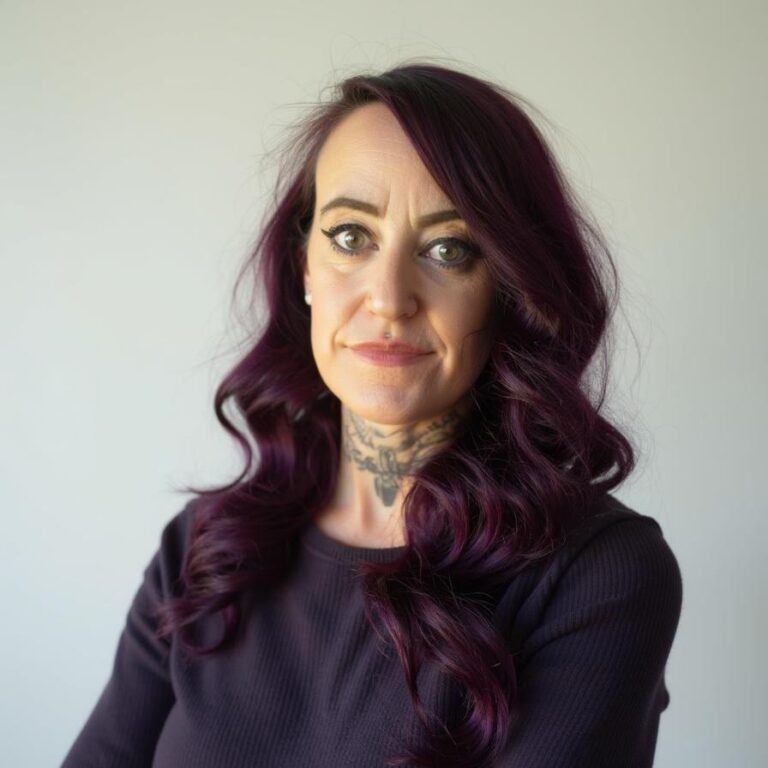


From Direct Care to Entrepreneurship
Ask Mellanie Page what burns out a clinician, and she will not start with the hours. “I could literally wake up in the morning and work all day long,” she told BreakingNewsABA in an interview. “…I could be up till midnight, and I would not get burned out, genuinely. But if you asked me to do something in a system where I didn’t have the autonomy or the choice or the passion to serve that way, I would be burnt out within a week.”
She has spent enough time in the field to test that claim. Page started in direct care in 2011, she said, and became a BCBA in 2014, the same year she joined a large ABA organization. She was immediately promoted into director roles that piqued her interest in OBM, operations, and business. As a regional director, she led the company’s expansion into two new states and grew those practices into 8 centers across 6 communities. Today she uses the science to improve workplaces, increase employee engagement, and support quality.
Her path into the science was traditional: a bachelor’s in psychology from Florida International University in 2011, then an M.Ed. in special education (ABA) from the University of Utah in 2014. What came next was not. “I discovered OBM, which is organizational behavior management, and realized, wow, I can really make a difference if I can apply the science that I already learned through my BCBA to business,” she said. She later went back to school for an MBA.
Page runs two companies of her own. The ABA Collective offers CEUs, OBM training, and conference registrations. Clinical Boss teaches licensed clinicians how to package their expertise into courses, CEUs, and coaching programs. The ABA Collective grew out of a first CEU she says she sold on Venmo with a YouTube link; she felt terrified, and the product was totally unpolished.
A Different Diagnosis of Burnout
Page saw the strain in the industry up close, back when she was a clinician wearing multiple hats. “It always felt like a fire,” she said of those early years. “And then when you zoom out and look at the whole industry, it was like, everything’s on fire. Everybody’s constantly in chaos.”
The industry’s usual explanation for burnout is the one she pushes back on. In the groups and forums where clinicians gather, the reflex is that burnout means working too much. She says, when describing those Facebook groups, “every BCBA wants to flee from the field because everybody’s burnt out and tired and exhausted.”
Her diagnosis for burnout is different. “To me, burnout more likely means that you have a misalignment or a lack of fulfillment in what you’re doing,” she said. Clinicians a year or two into their certification are already looking at other jobs, she said, and she does not believe the math of their schedules explains it. “That to me is not your caseload. It’s not how many clients you have. It’s not how many hours you work. It’s that you are locked into a job where you don’t have those things, those choices, money, [control of] time, and freedom.”
The standard prescription fails, she argues. “You argue for that, you get a smaller caseload, and then you’re still miserable,” she said.
“It’s not that you don’t love the work, it’s that you don’t love the system in which you’re working.” – Mellanie Page, Founder, The Collective ABA (2026)
The same trap catches clinicians who hit rock bottom and open their own practices expecting relief, she said. They bring along the same insurance companies, restrictions, and staffing challenges. “You’re going to run into the same things that are probably burning you out right now.”
She saves her sharpest criticism for her own field’s failure to take its own advice. “Behavior analysts – our whole job is not to address the problem unless you’ve diagnosed why it’s happening,” she said. “And yet we don’t do it for ourselves.”
Diagnosing What Drains the Battery
Page’s working model for resilience is a battery. “What is draining that battery and what is charging it up?” she said. “We just assume there is a fixed charge in each of our batteries.”
Her advice follows from the model. Find the parts of the work that still recharge you, whether that is parent training, a particular client population, or talking behavior analysis with friends after a long day, and then build toward more of them. “Those are the things you lean into, and you figure out, well, how do I build a system where I can do more of this,” she said. The answer is not always entrepreneurial, she added. “Maybe what reenergizes you is family and has nothing to do with work,” she said, in which case the goal becomes buying back hours.
She makes the same argument in an organizational version on industry podcasts. On an episode of the “How to ABA” podcast in 2026, Page framed clinician burnout as rooted in organizational systems rather than personal failure, and OBM as the toolkit for redesigning the environment instead of blaming the person in it.
She knows her ideas are not how the topic usually gets discussed. “Burnout is so misunderstood,” she said. “…It’s just tainted with all the wrong solutions.” But Page believes she has the right solution and has built businesses from it.
AT A GLANCE
| Education: | B.A. psychology, Florida International University, 2011; M.Ed. special education (ABA), University of Utah, 2014; MBA (ABS Kids bio; BreakingNewsABA interview) |
| Credentials: | BCBA; certified in Organizational Behavior Management (ABS Kids bio) |
| The ABA Collective, 2026: | Free monthly CEUs, a 30-plus course CEU library, and 7 virtual conferences (company website, July 2026) |
| Her burnout thesis: | Misalignment and lack of fulfillment in the daily work, not hours or caseload (BreakingNewsABA interview, July 2026) |
| Next conference: | Business of ABA, September 2026 (company website) |
SOURCES & REFERENCES
| 1. | Mellanie Page. Interview with BreakingNewsABA. July 2026. Recording on file. |
| 2. | The ABA Collective. Company website. theabacollective.com. Accessed July 2026. |
| 3. | Clinical Boss. Company website. clinicalboss.com. Accessed July 2026. |
| 4. | How to ABA. “Episode 238: Applying OBM in ABA to Reduce Burnout and Improve Workplace Culture with Mellanie Page.” howtoaba.com. 2026. |