The leading cause of injury death is the one BCBAs do not train for
MINNEAPOLIS, MINNESOTA. The numbers behavior analysts working with autistic clients should know are not subtle. They are also not in most BCBA coursework.
A 2017 Columbia University analysis published in the American Journal of Public Health screened more than 32 million U.S. death certificates and identified 1,367 deaths in individuals with autism between 1999 and 2014. Drowning was the third leading cause of injury death in that population, with a proportionate mortality ratio of 39.89, meaning the share of autism deaths attributable to drowning ran nearly 40 times what would be expected based on the general population. Behind that single number sits a cluster of facts the behavior-analysis field has been slow to absorb.
Roughly 74% of fatal drownings in autistic children are linked to wandering or elopement, the behavior pattern BCBAs are most often asked to address. When autistic children go missing, they are most often found in or near bodies of water, and within half a mile of where they were last seen. Drowning is also the leading cause of unintentional injury-related death for U.S. children ages 1 to 4 across all populations, and roughly 88% of child drownings occur with an adult present.
None of this lives in standard BCBA coursework. Water safety is taught to swim instructors, lifeguards, and parents. It is not in the BACB Task List, not in the Ethics Code as a required competency, and not in most agency onboarding for BCBAs or RBTs. The behavior analysts whose caseloads carry this risk are not the people the existing water-safety credentialing system was built for.
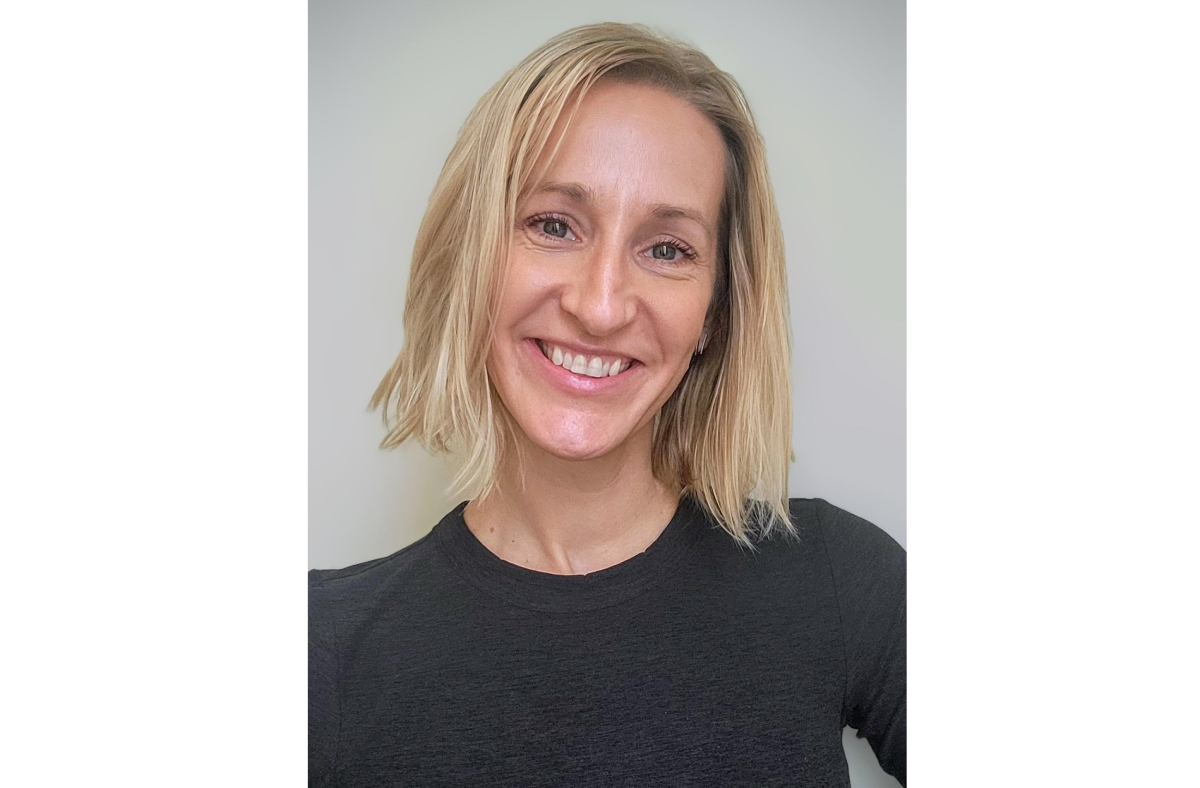
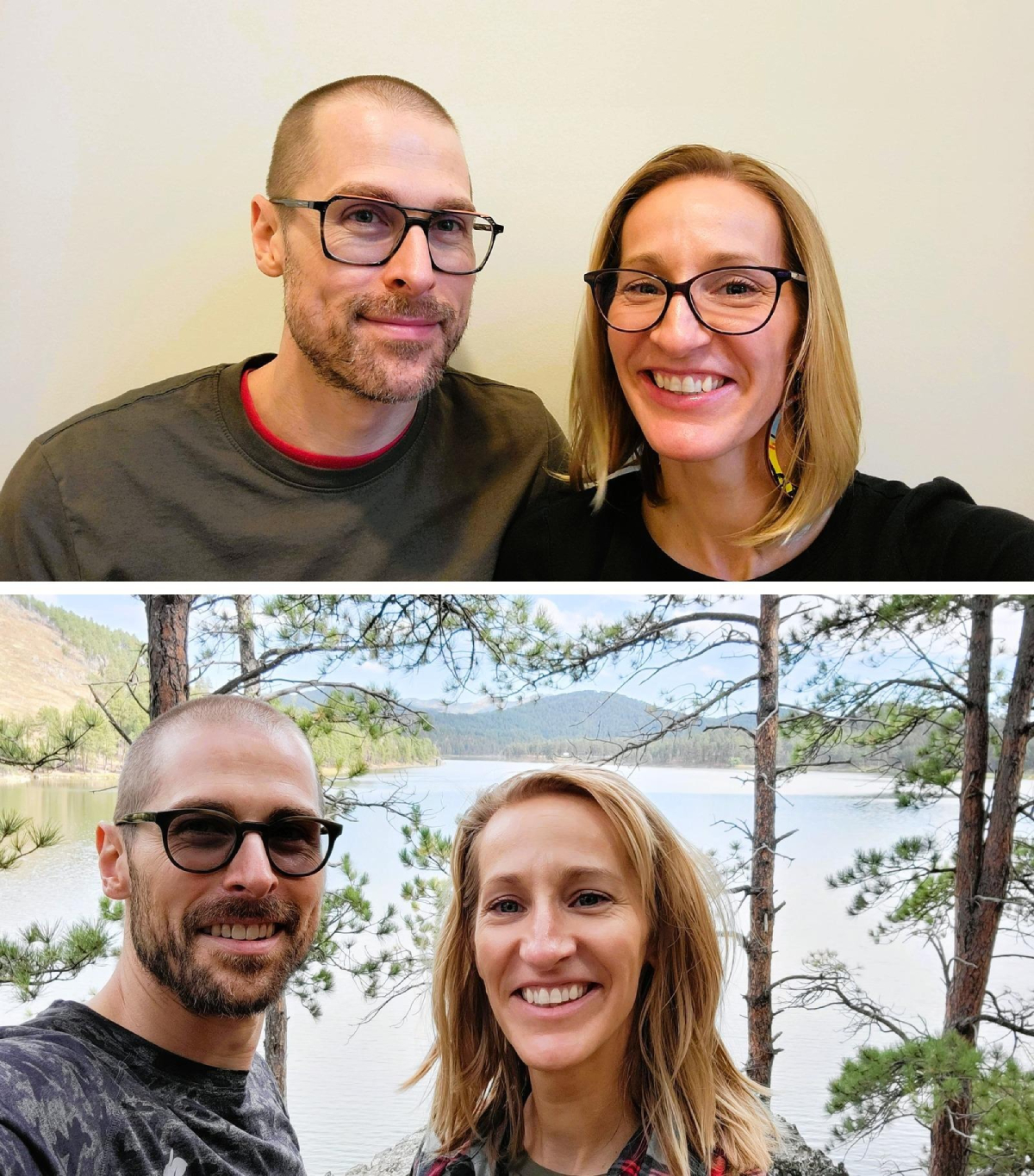
Breanna Merhar sits across both worlds. Raised in Minneapolis and shaped by the lake culture that defines a Minnesota summer, she has been teaching adaptive swim lessons since 2012, working in ABA since 2013, and earned her MA in Special Education with an ABA emphasis from Webster University. In Fall 2022 she and her husband Bill, an art-and-design professional who runs the operating side of the company, launched Blended Aquatics. The flagship product is a certification called BRIDGE to Safety, a six-module program built specifically for behavior analysts.
Drowning sits inside the caseload of nearly every BCBA working with autistic children. Most behavior analysts have never been trained to see it that way, and the field’s CEU pipeline has not, until recently, given them a reason to.
Seattle, Rapid City, and the case for a framework
The framework did not start as a framework. It started as adaptive swim lessons, and the trip from one to the other ran through two very different markets.
Before launching Blended Aquatics, Merhar worked the pool side of her career in Seattle, an affluent metro where almost every autistic child she encountered had already been routed through early intervention. The behaviors at the pool were still hard. The children were still autistic. But the access-to-resources question was, in her own framing, invisible to her, because everyone had it. When she and Bill opened the company in 2022, they were in Rapid City, South Dakota. The contrast was immediate.
Rural South Dakota is not Seattle. Funding for adaptive services is thinner. Specialized providers are rarer. Families were driving an hour to her pool sessions because there was nowhere closer. Watching the same diagnostic population behave differently across two resource environments is what reframed the work for her. The variable was not autism. It was access. Three years of running adaptive lessons in an under-resourced market produced a clear secondary observation: the in-person, pool-based delivery model was not going to scale to the families who needed it most.
In 2025 she and Bill moved back to Minneapolis, where her family is, and reorganized the company around that observation. In-person adaptive lessons are paused. The full operating focus is now on building the BRIDGE to Safety certification as a remote, behavior-analyst-facing product that does not require the family or the BCBA to live near a specialized provider in the first place.
The variable was not autism. It was access.
Water safety, without the pool
The structural choice in BRIDGE is what separates it from existing options. The American Red Cross Water Safety Instructor track and the various lifeguarding certifications teach people to teach swimming. The U.S. Coast Guard’s Operation Make A Splash, the YMCA’s Safety Around Water program, and the National Drowning Prevention Alliance’s 5 Layers of Protection campaign target parents, caregivers, and aquatic facilities. None of those programs assume their participant has a master’s degree in behavior analysis and a billable caseload of autistic clients. BRIDGE does.
No pool required. The framework treats water safety as behavior plus context, not as a location. The premise is that risk lives in the daily routines, home environments, and community settings BCBAs already work in: an open backyard near a neighbor’s pool, a school field trip to a lake, a caregiver who cannot supervise the bathtub during dinner. The BRIDGE modules are structured around recognizing, predicting, and planning for that risk using clinical tools the participant already has.
Six modules and a behavior-science backbone. Each letter of BRIDGE corresponds to one module. The framework combines core behavior-analytic principles with the National Drowning Prevention Alliance’s 5 Layers of Protection, the dominant public-health model in the U.S. drowning-prevention field. Participants move through behavior, risk recognition, instruction, environmental design, generalization, and sustainable motivation, finishing with a competency assessment and a water-safety certificate. The work runs entirely outside an aquatic environment.
Behaviors most BCBAs already see. The clinical content is built around patterns behavior analysts encounter every day and may not have connected to drowning risk. A child who fixates on the running tap during hand-washing, then generalizes that pattern to repeatedly flushing the toilet, then races to the kitchen sink, then to the school drinking fountain, is showing exactly the kind of water-attraction sequence the existing literature has connected to elevated drowning risk. The BRIDGE modules teach BCBAs to recognize that pattern, target it functionally, and shape it into safer alternatives, drinking from a designated cup, washing hands within a defined sequence, before the same attraction generalizes to a backyard pool.
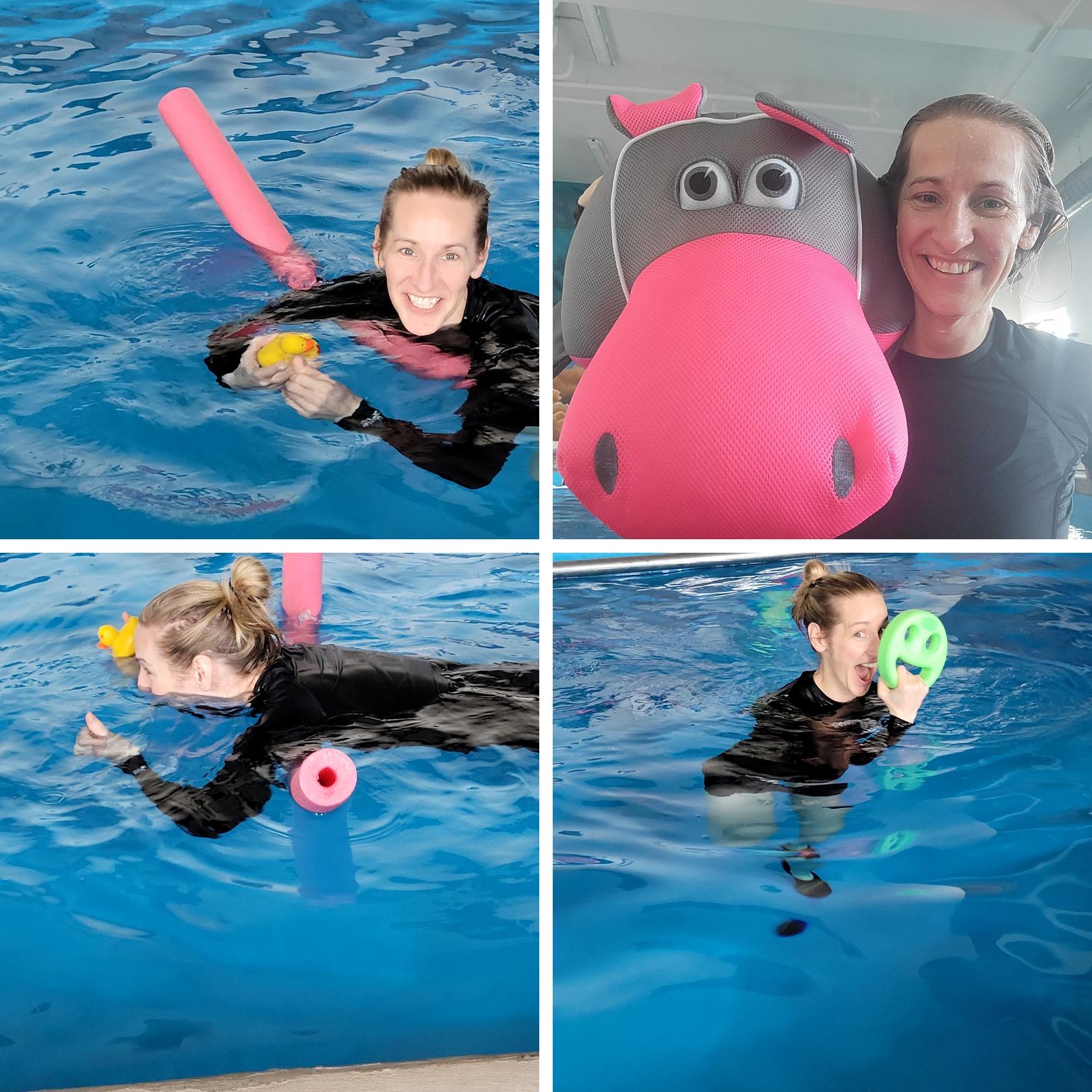
What every behavior analyst already encounters
The conditions that make BRIDGE relevant are the conditions every operator in the autism-care field is already navigating. The Centers for Disease Control and Prevention’s ADDM Network estimates 1 in 31 U.S. children is now diagnosed with autism, up from 1 in 36 in the prior cycle. The active U.S. BCBA workforce sat at roughly 75,600 as of mid-2025, against more than 103,000 open BCBA-level postings at the end of 2024. Smaller centers report annual turnover near 80%, and surveys put roughly 93% of behavioral-health workers somewhere on the burnout spectrum. The supply side is stretched, and the average BCBA caseload is built around skill acquisition and behavior reduction targets, not environmental safety planning.
Wandering and elopement, however, are squarely in scope. The Anderson et al. study published in Pediatrics in 2012 was the canonical paper on the topic, documenting that nearly half of autistic children eight and younger had attempted to elope at least once after age four, and that water was the most common destination when those children went missing. That paper is roughly as old as most current BCBAs’ careers, and its findings have informed elopement-related goals in countless behavior-intervention plans. What it has not done is translate cleanly into water-safety planning at the BCBA level. The risk has been documented; the protocol layer has not.
The 5 Layers of Protection framework BRIDGE incorporates is also worth pausing on, because the second layer is where Merhar sees the most consistent failure pattern. Layer one is barriers and alarms; layer two is supervision; layer three is water competency; layer four is life jackets; layer five is emergency preparation. The supervision layer is the one that breaks down most often even in the presence of attentive adults, and Merhar comes back to a common aquatic saying.
If everyone’s watching, no one’s watching. Adult-supervised drownings still happen, often because the adults are talking to each other and no one has the explicit watching role.
What BRIDGE does, and what it does not
Three operational features anchor Merhar’s pitch to BCBAs and the agencies that employ them.
Behavioral observation translated into risk recognition. The first modules of BRIDGE are about teaching BCBAs to see water-related risk in the same way they already see antecedent-behavior-consequence patterns: as observable, predictable, and addressable through clinical tools. The framework is built on the premise that risk recognition is a clinical skill, not a swimming skill, and that the BCBA already has the diagnostic instincts the work requires.
Environmental design and generalization. The middle modules move from observation into intervention. Participants build environmental safety plans for the contexts in which their clients actually live: in-home, school, community, and transition settings. The work is intended to slot into existing behavior-intervention plans rather than sit alongside them as a separate document.
Sustainable motivation and caregiver coaching. The final modules address the maintenance problem every BCBA knows. A safety plan that exists only in a binder does not prevent a drowning. BRIDGE puts a structured caregiver-coaching layer at the end of the certification, focused on getting families to run the plan when no professional is in the room.
What BRIDGE does not claim. Merhar is explicit, in her course descriptions and in interviews, that BRIDGE does not credential BCBAs to teach swimming, deliver aquatic therapy, or expand into a clinical scope they do not already hold. The framework explicitly stays inside the BACB scope of practice. It is also not, to date, the subject of a peer-reviewed efficacy study, and the company does not market it as a randomized-trial-validated intervention. What it markets is a structured way to operationalize a known risk that the field has, by its own admission, undertrained for.
What changes for families when the framework runs
The behavioral-data argument is the analytical case. The family-impact case is what Merhar has been collecting in her own practice for years, and it lands harder when described in the families’ own framing.
Before adaptive lessons, parents told her swim instruction was not the part they were avoiding. The transitions were. House to car. Car to parking lot. Parking lot to pool deck. Pool deck to water. Each handoff carried its own elopement risk, its own supervision lapse, its own potential meltdown. By the time some families reached the pool, they were exhausted, embarrassed, and skipping pool parties and birthday parties to avoid repeating the experience. The structural takeaway is one Merhar comes back to: water-related risk is rarely about the water itself. It is about the chain of routines, environments, and supervision moments that lead up to the water and surround it.

One family Merhar worked with had extended relatives, a boat, and a recurring family activity that had never included their autistic daughter. One parent always stayed home with her, because the supervision math on a boat with a child who could not yet manage the water around her did not work. Over time, with structured skill-building and explicit safety planning, the daughter learned to swim, to ride the boat, and to go tubing. The activity changed shape, but the more important change was what the parents reported: they felt safe, the child had skills, and a family routine that had previously been a binary (one parent in, one parent home) became something everyone did together. The technical wins (basic water competency, supervision protocols, environmental design) are the means. The reassembled family routine is the outcome that matters.
The next decade
The forward bet for Blended Aquatics is two-track. The first track is the certification flywheel: get BRIDGE in front of more BCBAs through CEU pathways, agency-level training contracts, and integrations with state-level licensing renewal cycles. South Dakota and Minnesota both require Licensed Behavior Analysts to complete continuing education for renewal, and similar requirements apply in most state-licensure jurisdictions. A water-safety credential that can be slotted into existing CEU obligations has a clearer adoption path than one that sits outside the licensing flow.
The second track is the institutional one. The argument for incorporating water-safety planning into ABA agency operations is the same argument that has surrounded elopement programming for years: it is a known, documented risk, and its absence from a treatment plan is harder to defend after a fatal incident than its presence. Agencies that build BRIDGE into onboarding, supervision, or quality-assurance review can credibly position the work as a risk-management feature for both their clients and their malpractice posture. Pausing in-person adaptive lessons to focus the company’s capacity on the certification is, in that frame, a deliberate scaling decision: in-person delivery is geographically constrained; a remote BCBA-facing curriculum is not.
The open questions are specific and worth naming. Will the Behavior Analyst Certification Board signal water safety as a recommended or required competency in a future Task List revision, or will it stay outside the formal scope? Will payers credit water-safety planning as a billable activity within behavior-intervention plans, or will it remain an unreimbursed professional-development category? Will agencies choose to invest in BRIDGE certification for their clinical teams ahead of any regulatory pressure, or will they wait? And will the underlying drowning data improve as the next decade of post-pandemic autism prevalence and elopement-incident reporting comes in, or will the gap the framework was built to close hold steady?
The Guan and Li paper landed in 2017. The behavior-analysis field has had nearly a decade to integrate its findings into routine clinical work and largely has not. Merhar built BRIDGE on the assumption that the integration is overdue, that BCBAs are the right professionals to lead it, and that the field will move once the framework is sitting in front of it. The numbers say she is right about the risk. The next decade is whether the field agrees about the response.
AT A GLANCE
| Founder & CEO: | Breanna (Brea) Merhar, MA, BCBA |
| Co-founder & COO: | Bill Merhar, art-and-design background |
| Headquarters: | Minneapolis, Minnesota (relocated 2025 after three years in Rapid City, South Dakota) |
| Founded: | Fall 2022 |
| Brea’s background: | In ABA since 2013; in adaptive aquatics since 2012; MA, Webster University |
| Flagship product: | BRIDGE to Safety Certification, six modules, competency assessment, water-safety certificate (waitlist: go.blendedaquatics.com/bridgewaitlist) |
| Framework spine: | Behavior science combined with the National Drowning Prevention Alliance’s 5 Layers of Protection |
| Current operating focus: | Building BRIDGE as a remote, BCBA-facing certification; in-person adaptive lessons paused |
| CEU offerings: | “Behavioral Buoyancy” (1.5 CEUs, Study Notes ABA) and “BCBA, Are You Water Ready?” (2 CEUs, 123 Behavior Analyst CE, OP-23-10561) |
| Drowning mortality in autism: | Proportionate mortality ratio 39.89 vs. general population (Guan & Li, AJPH, 2017) |
| Wandering link to drowning: | ~74% of fatal drownings in autistic children involve wandering or elopement (Denny et al., Pediatrics, 2021) |
| Where missing autistic children are found: | Most often in or near bodies of water, within half a mile of last-seen location (Anderson et al., Pediatrics, 2012) |
| Adult-present drownings: | ~88% of child drownings occur with an adult present (NDPA, 2024, citing Safe Kids Worldwide) |
| U.S. ABA market context: | $7.97B in 2025; projected $9.96B by 2030; ~75,600 active BCBAs vs. 103,000+ open BCBA-level postings |
SOURCES & REFERENCES
| 1. | Blended Aquatics. Submission to BreakingNewsABA, including company timeline, BRIDGE to Safety Framework documentation, and Merhar bio. April 2026. |
| 2. | Blended Aquatics. Interview with Breanna Merhar, conducted by BreakingNewsABA. April 2026. |
| 3. | Merhar, B. LinkedIn profile. Retrieved April 2026. https://www.linkedin.com/in/brea-merhar-ma-bcba-04623a75 |
| 4. | Blended Aquatics. About page and company website. Retrieved April 2026. https://www.blendedaquatics.com |
| 5. | Guan, J., & Li, G. Injury Mortality in Individuals With Autism. American Journal of Public Health. 2017;107(5):791-793. doi:10.2105/AJPH.2017.303696 |
| 6. | Anderson, C., Law, J. K., Daniels, A., Rice, C., Mandell, D. S., Hagopian, L., & Law, P. A. Occurrence and family impact of elopement in children with autism spectrum disorders. Pediatrics. 2012;130(5):870-877. doi:10.1542/peds.2012-0762 |
| 7. | Denny, S. A., Quan, L., Gilchrist, J., et al., and Council on Injury, Violence, and Poison Prevention. Prevention of drowning. Pediatrics. 2021;148(2):e2021052227. doi:10.1542/peds.2021-052227 |
| 8. | American Red Cross. Drowning facts and prevention. Retrieved 2024. https://www.redcross.org/get-help/how-to-prepare-for-emergencies/types-of-emergencies/water-safety/drowning-prevention-and-facts.html |
| 9. | National Drowning Prevention Alliance. Drowning facts and data; 5 Layers of Protection. 2024. https://ndpa.org/ |
| 10. | Behavior Analyst CE (Provider OP-23-10561). “BCBA, Are You Water Ready? Awareness, ethics and safety across real-life contexts.” Course listing, 2 CEUs. Retrieved April 2026. https://behavioranalystce.com/product/bcba-are-you-water-ready/ |
| 11. | Study Notes ABA. “Behavioral Buoyancy: Enhancing Water Safety and Drowning Prevention Strategies.” Course listing, 1.5 CEUs, instructor Breanna Merhar. Retrieved April 2026. https://ceu.studynotesaba.com/product/bxbuoyancy-rec/ |
| 12. | Centers for Disease Control and Prevention. ADDM Network autism prevalence reports. 2024-2025 release. |
| 13. | Behavior Analyst Certification Board. BCBA certification requirements and Task List. Retrieved April 2026. https://www.bacb.com/bcba/ |
| 14. | Blended Aquatics. BRIDGE to Safety Certification waitlist. Retrieved April 2026. https://go.blendedaquatics.com/bridgewaitlist |